Introduction
You have probably noticed it. Everywhere you look, someone is talking about AI. Companies are racing to adopt it, job postings demand it, and the salary gap between AI-skilled professionals and everyone else keeps widening.
The numbers back this up. The global AI market is projected to hit $1.67 trillion according to the latest AI Market Size Statistics 2026. Meanwhile, 90% of enterprises expect serious AI skill shortages this year, as highlighted in the AI Skills Gap 2026 report. That is a massive opportunity.
So how do you capture it?
For many professionals, the answer is getting certified. A solid credential from a respected program shows employers you can actually work with AI, not just talk about it. But here is the problem.
There are hundreds of courses out there. Google offers something. Coursera has a dozen options. Universities are launching new programs every month. How do you know which one is worth your time and money?
That is exactly why this guide exists.
We have done the research so you do not have to. This article breaks down the best AI certification courses in 2026 using real data, industry demand, and recruiter feedback. You will learn which programs actually help you land jobs, which skills matter most, and how to choose the right path for your career goals.
And if you want to stay ahead of the curve, consider subscribing to The AI Newsletter Worth Reading. It delivers daily, curated AI insights straight to your inbox so you never miss what matters.
The AI revolution is not coming. It is already here. Let us find the certification that gets you in the game.

Why AI Certifications Matter in 2026
By now you might be asking: do I really need a piece of paper to prove I know AI? The honest answer is yes, and the reasons go deeper than you think.
Here is the thing about traditional education. By the time a university updates its machine learning curriculum, the industry has already moved on twice. AI evolves that fast. Stanford HAI’s latest research confirms that AI capabilities are accelerating at a rate that leaves conventional degrees struggling to keep up.
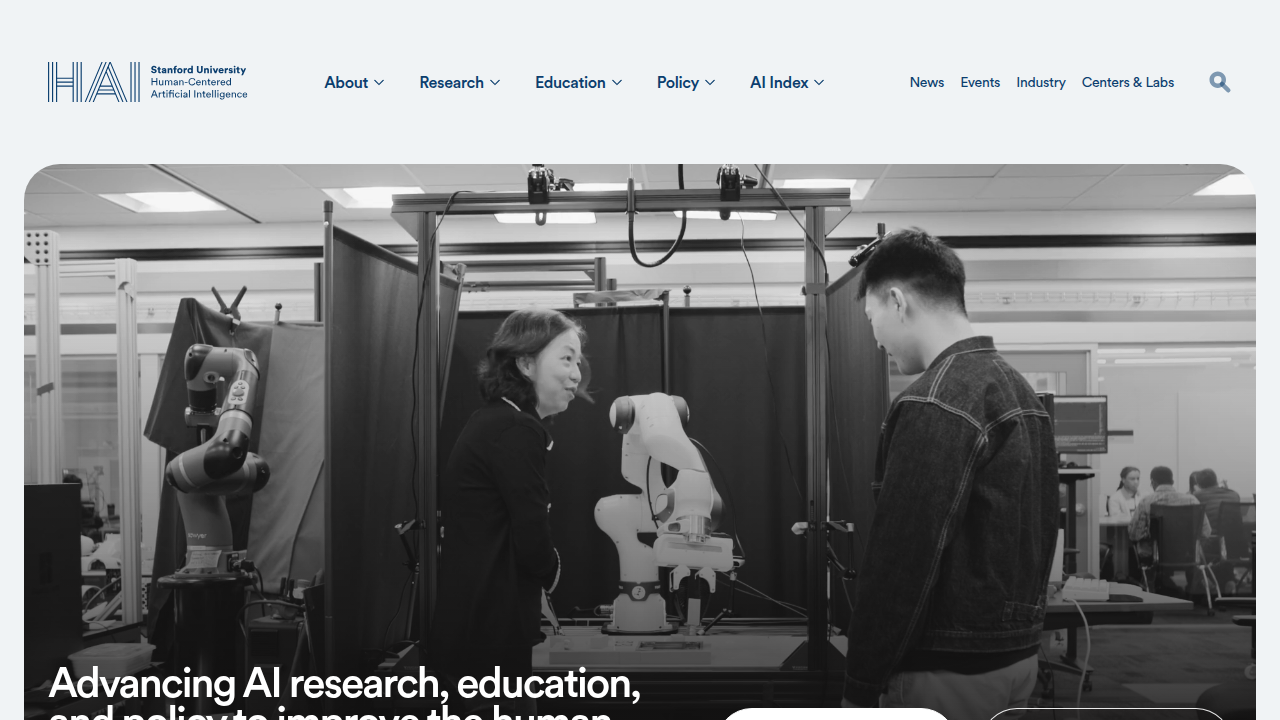
You can see the full context in the 2026 AI Index Report.
Certifications flip that model. They are built around practical, hands-on skills that companies need today, not what they needed three years ago. That is a big advantage.
And employers have noticed. According to the Top 10 AI Certifications in 2026 to Boost Your Career guide, AI certifications are no longer just nice-to-have resume fillers. They are becoming real career accelerators. Recruiters list certification credentials right next to experience when reviewing applications.
The results speak for themselves too. Professionals who earn recognized certifications report faster promotions and bigger project responsibilities.

They get pulled into the work that matters, the high-impact AI initiatives that get noticed by leadership.
If you are serious about growing your career, this is a straightforward path. For more context on how credentials stack up in the broader tech landscape, check out this roundup of IT certification courses in 2026 that actually boost your career.
The bottom line is simple. A certification shows you can do the work, not just talk about it. And in a field moving as fast as AI, that is exactly what hiring managers want to see.
How We Evaluated the Best AI Certification Courses
With hundreds of AI certifications flooding the market in 2026, picking the right one can feel overwhelming. You want something that actually moves your career forward, not just another badge sitting on your LinkedIn profile. So we built a clear, repeatable process to find the programs that truly deliver.
We started by listing every major AI certification program we could find. That meant scanning vendor-specific credentials from AWS and Google, university-backed certificates, and independent offerings. After the first pass, we had over 40 programs to analyze.
Then we scored each one using a weighted system. The criteria we focused on:
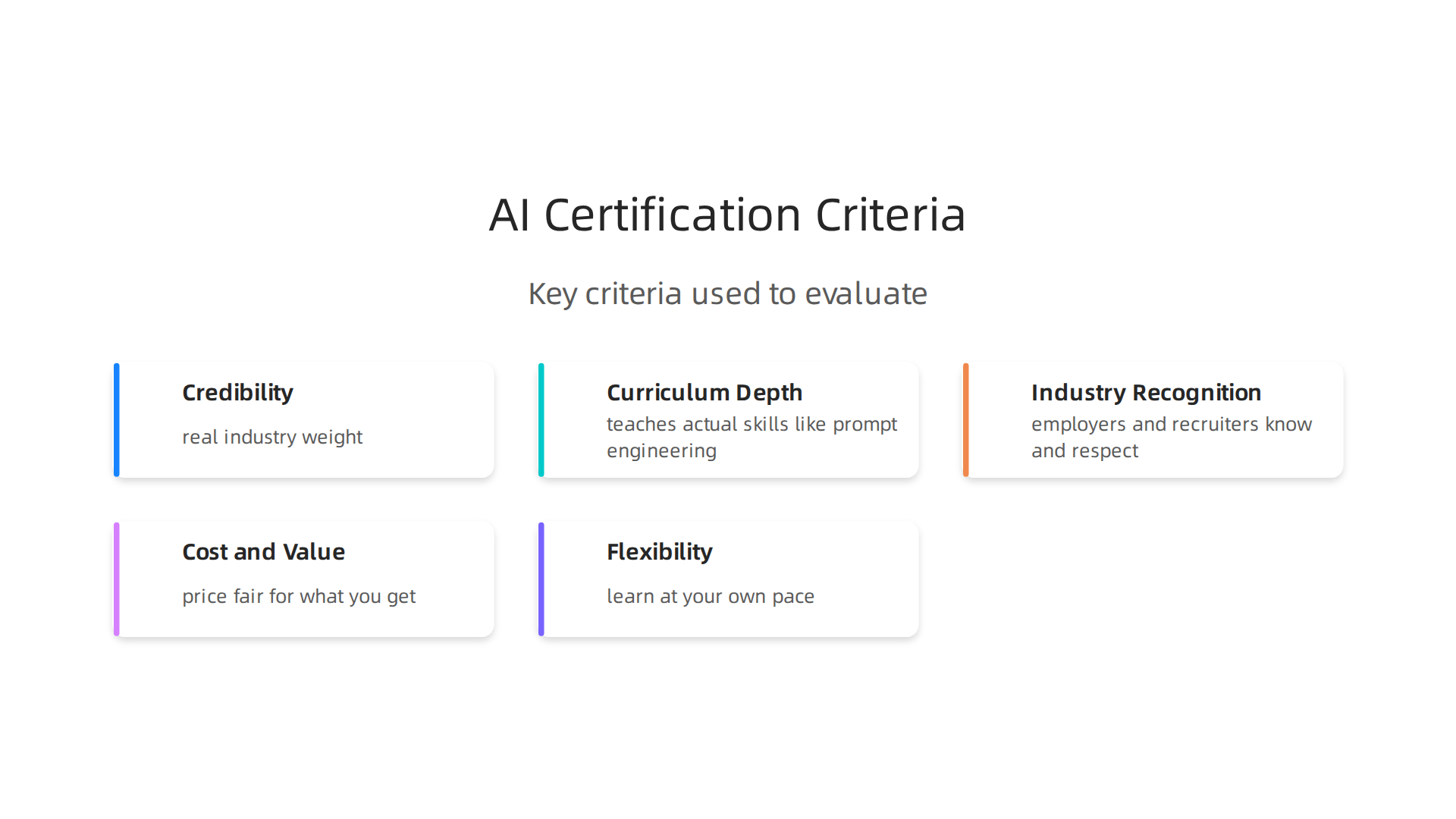
- Credibility of the issuing organization. Does it have real industry weight or just a flashy website?
- Curriculum depth. Does it teach actual skills like prompt engineering or working with ai platforms, or is it just theory?
- Industry recognition. Do employers and recruiters know and respect this credential?
- Cost and value. Is the price fair for what you get?
- Flexibility. Can you learn at your own pace while holding a full time job?
We also pulled in real learner feedback and spoke with hiring managers to see which certifications actually open doors. For a deeper look at how different programs compare, you can check out this Best AI Certifications in 2026: Full Comparison Guide.
The result is a shortlist of the best ai certification courses that you can trust. If you want to stay ahead of the curve on AI developments while you train, consider subscribing to The AI Newsletter Worth Reading for daily updates that keep your knowledge fresh.
Top AI Certification Platforms Compared
Before you pick a program, you need to know which learning platforms actually deliver. The major players include Coursera, edX, Udacity, LinkedIn Learning, and Fast.ai. Each one has a different strength, so the right choice depends on your experience level, budget, and career goals.
Here is a quick head to head comparison to help you decide.
| Platform | Typical Cost | Certification Validity | Hands-On Projects | Industry Partnerships |
|---|---|---|---|---|
| Coursera | $49 to $79 per month | No expiration, widely recognized | Many courses include real world labs and capstone projects | Partners with Google, IBM, Stanford, DeepLearning.AI |
| edX | $50 to $300 per course | No expiration, respected by employers | Project based courses, especially in professional certificates | Backed by MIT, Harvard, Microsoft |
| Udacity | $249 per month (Nanodegree) | No expiration, known for skill focused credentials | Heavy project focus with portfolio ready work | Collaborations with Google, AWS, Mercedes Benz |
| LinkedIn Learning | $29.99 per month or included with Premium | No expiration, less recognized than vendor certs | Some exercise files and quizzes, limited real projects | Integrated with LinkedIn profile, less deep industry ties |
| Fast.ai | Free (courses) | No official certification, but highly respected in ML community | Very hands on, code first approach using PyTorch | No formal partnerships, strong open source community |
Coursera and edX stand out for university backed credibility. If you want a credential that hiring managers already know, these are the safest bets. Udacity shines when you need to build a project portfolio that proves you can do the job. LinkedIn Learning is great for quick skill refreshers but carries less weight on its own. Fast.ai is the best free option for those who already code and want to dive deep into deep learning.
A detailed AI Certification Comparison Table for 2026 can help you see how these platforms stack up against specific credentials like Google’s AI Essentials or Microsoft’s AI 900.
If you are just starting your certification journey, you might also find it useful to read about IT certification courses in 2026 that actually boost your career. The same thinking applies to AI learning paths.
The key takeaway: pick the platform that matches your learning style, not just the cheapest price. Your choice will shape how quickly you can apply these skills at work.
Best AI Certifications for Beginners
If you are new to AI and feel overwhelmed by all the options, you are not alone. The good news is that several entry-level certifications exist that teach core concepts without demanding a background in calculus or coding.
One of the most beginner-friendly options is Coursera’s AI For Everyone, taught by Andrew Ng. This course explains what AI can and cannot do, how to spot opportunities for AI in business, and the basics of machine learning workflows. No math required.
Another strong pick is Google’s AI for Everyone, a course available on the Google Cloud Skills Boost platform. It introduces AI terminology and real-world use cases. For a more structured path, IBM’s AI Foundations Professional Certificate on Coursera covers everything from natural language processing to computer vision, all built for absolute beginners.
A full list of the best beginner certifications can be found in the Datamation guide to 9 best AI certification courses to future-proof your career for 2026. It grades each program by difficulty level and time commitment.
What makes these programs special is that they assume zero prior knowledge. You learn by doing small projects and quizzes, not by writing complex algorithms. Once you complete one, you will have the vocabulary and confidence to move on to advanced topics like machine learning engineering or deep learning.
If you are already considering Google-specific credentials, you might also want to check out the latest Google courses in 2026 that help advance your tech career. The same learning principles apply.
One more tip: subscribe to a daily AI newsletter to keep your momentum going after certification. The AI Newsletter Worth Reading delivers clear, daily updates on AI trends and tools that reinforce what you just learned. It is a simple habit that turns certification knowledge into practical awareness.
Get started with a beginner certification this week. Even a short course will show you how AI thinking works.

That foundation is all you need to grow from there.
Advanced AI Certifications for Experienced Professionals
Once you finish a beginner course and feel comfortable with AI basics, it is time to go deeper. Advanced certifications are built for people who already understand machine learning workflows and want to master the math and engineering behind them.
If you are searching for the best AI certification courses for experienced professionals, three programs should be at the top of your list: DeepLearning.AI’s Deep Learning Specialization, Stanford’s CS229, and MIT Professional Education’s certificate in machine learning and AI. These are considered the gold standard in the industry.
These courses cover deep learning, reinforcement learning, natural language processing, and computer vision. You will work on real hands-on capstone projects that require solid skills in linear algebra, calculus, and Python.

Many top AI platforms use these same concepts, so learning them prepares you for real-world work.
Stanford CS229 is a legendary course that teaches the theory behind algorithms. MIT’s Professional Certificate Program in Machine Learning and Artificial Intelligence offers a structured path through deep learning and AI engineering. Both expect you to come in with programming experience and a lot of time for problem sets.
What makes these certifications special is employer recognition. Companies actively look for candidates who have completed rigorous programs from top universities or recognized providers like DeepLearning.AI. If your goal is to become a machine learning engineer or AI specialist, these credentials can make a difference.
After you earn an advanced certification, you might want to explore the top AI companies defining 2026. Knowing where the leaders are hiring helps you plan your next career move.
Expect to spend at least three to six months on a program like these. The capstone projects you finish will become strong portfolio pieces for job applications. Stay patient and keep going. The payoff is worth it when you can build and deploy real AI systems.
Niche AI Certifications: NLP, Computer Vision, and MLOps
But what if your goal is a very specific role, like a computer vision engineer or an NLP specialist? That is where niche certifications come in. General AI knowledge is great, but employers in 2026 want people who can solve targeted problems.
Specialized roles demand targeted certifications. For example, the TensorFlow Developer Certificate proves you can build and deploy models using one of the most popular AI platforms. The AWS AI Practitioner certification shows you understand how to run AI workloads in the cloud. And MLOps with Azure teaches you how to manage the entire machine learning lifecycle from training to production.
These niche certs help you stand out for specific roles. A company hiring someone to tune a large language model does not just want general AI knowledge. They want proof that you have worked with transformer architectures, tokenization, and prompt optimization. That is why dedicated tracks for generative AI and LLM tuning have exploded in 2026.
According to a breakdown of the top 10 AI certifications in 2026, cloud-specific and role-specific credentials often lead to premium salaries. Why? Because you can hit the ground running. You already know the tools and workflows.
If you are considering these paths, check out the online certifications for software engineering to see how they compare with AI tracks.
Here is the thing. Niche certs do not replace the foundational knowledge from courses like Stanford CS229. They build on top of it. Once you understand the math and general principles, a targeted certification teaches you exactly how to apply those ideas to one area.
And with new areas like generative AI, the AI certifications most recognized by employers in 2026 are evolving fast. Do not get stuck learning yesterday’s tools. Pick a niche that excites you and go deep.
The AI Newsletter Worth Reading: Want to stay ahead of every new certification trend? Get clear daily AI updates from The Deep View Newsletter. It will help you decide which niche is worth your time and which ones are just hype.
Cost and Time Commitment: A Practical Breakdown
So you have an idea of which certifications exist. Now comes the practical question. How much do the best AI certification courses actually cost? And how much time do you need to set aside?
The answer varies a lot. But here is the good news. There is an option for almost every budget.
At the low end, you can start completely free. Google AI Essentials on Coursera costs nothing if you audit the course. If you want the official certificate, it costs about $49. And the whole thing takes roughly 10 hours. That is a weekend project, not a semester.
For a mid-range option, consider certifications from Microsoft or Google. Azure AI Fundamentals costs $99. The Google Professional Machine Learning Engineer exam is $200. According to a detailed guide on AI and ML course fees in 2026, short online certifications typically run from about $240 to $960 depending on the provider and depth.
On the higher end, comprehensive nanodegrees and professional bootcamps can cost $1,000 to over $5,000. These programs often include mentor support, hands-on projects, and career coaching. They take longer too. Expect 3 to 6 months of part-time study.
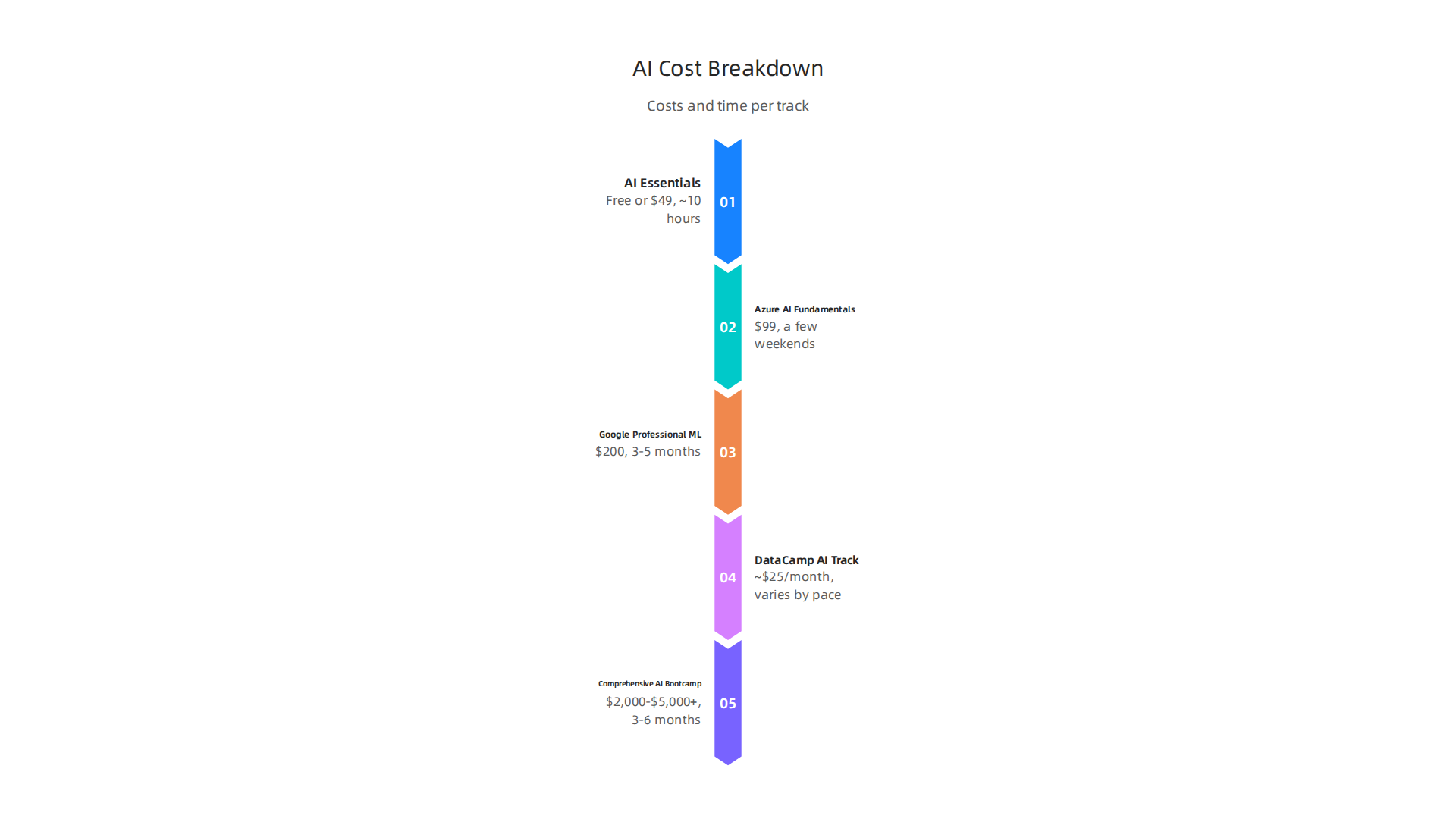
Here is a simple breakdown of costs and time for popular tracks in 2026:
| Certification Track | Provider | Typical Cost | Time to Complete | Best For |
|---|---|---|---|---|
| AI Essentials | Google (Coursera) | Free / $49 cert | ~10 hours | Absolute beginners |
| AI-900: Azure AI Fundamentals | Microsoft | $99 | A few weekends | Cloud newcomers |
| Google Professional ML Engineer | $200 | 3-5 months | Experienced engineers | |
| DataCamp AI Track | DataCamp | ~$25/month | Varies by pace | Hands-on learners |
| Comprehensive AI Bootcamp | Various providers | $2,000 to $5,000+ | 3-6 months | Career switchers |
A comparison of top AI certifications in 2026 shows that vendor exams stay affordable, while full bootcamps cost more but offer deeper training.
Here is the thing. The most expensive option is not always the best for you. A $49 Google cert might be all you need to land an entry-level role. A $5,000 bootcamp is overkill if you already have a technical background.
If you are on a tight budget, check out this list of IT certification courses in 2026 that boost your career. Many affordable paths exist that do not require a big upfront investment.
Think about your time budget too. Can you commit 10 hours a week for six months? Or do you need something you can finish in a month? Be honest with yourself. A certification you actually finish is worth far more than one you buy but never touch.
How to Choose the Right AI Certification for Your Career Goals
You know the costs. Now comes the real question. Which of these best ai certification courses actually fits your career plan?
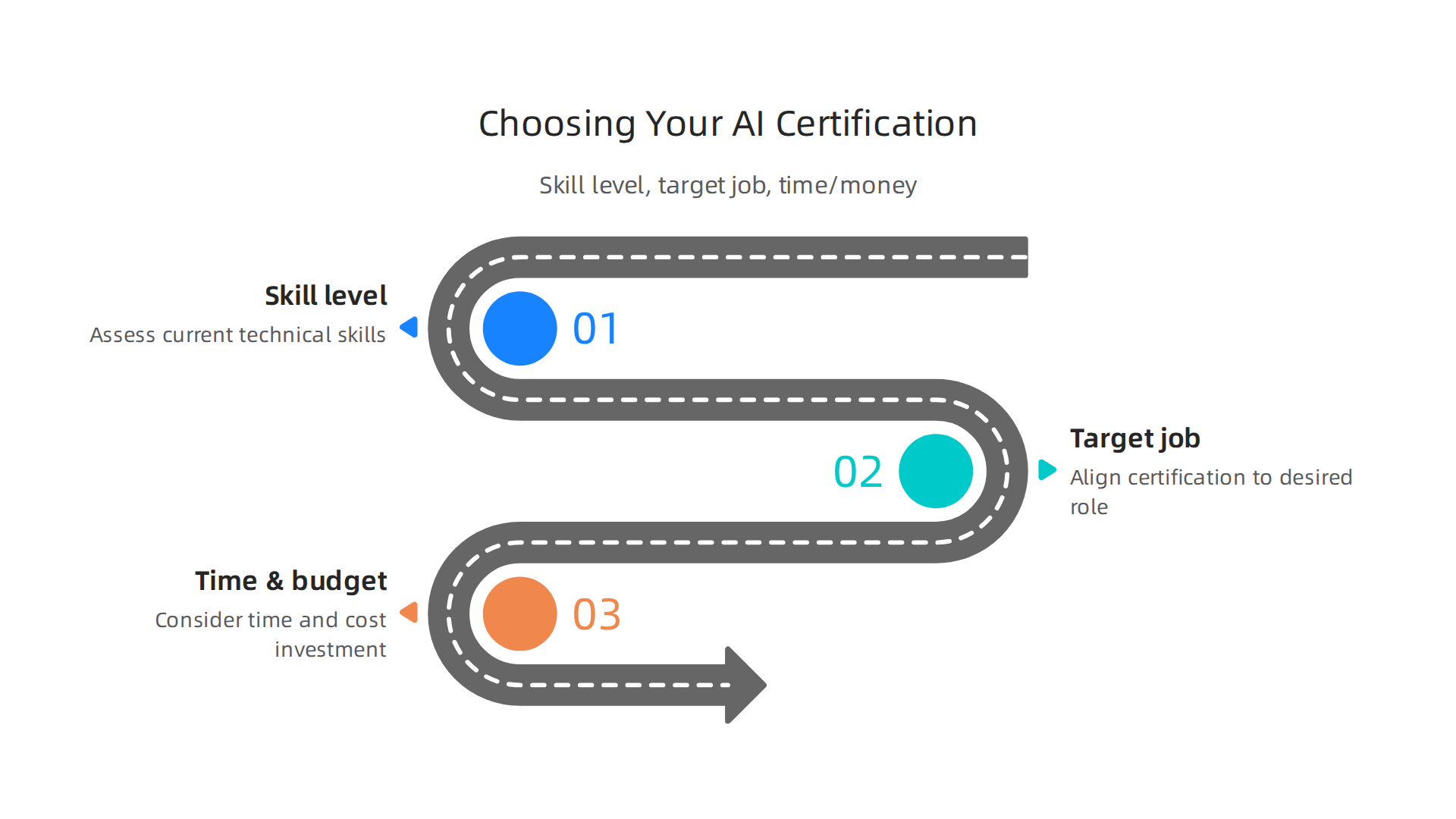
The answer depends on three things: your current skill level, the job you want next, and how much time or money you can invest.
A great starting point is to look at what certifications are trending by role. This guide on 12 AI certifications trending in 2026 by role breaks down options for tech workers, business leaders, and security auditors.
Match the certification to the job title.
If you are a software engineer who wants to build and deploy models, the AWS ML Engineer Associate path is a strong pick. If your job is more about deciding which AI tools to use and communicating results to stakeholders, the AWS AI Practitioner certification makes more sense. A detailed comparison of AWS AI certifications in 2026 shows how these role-specific tracks differ.
For product managers or executives, look for business focused credentials that emphasize risk, governance, and practical deployment. The key is to align the curriculum with your daily work.
Check the certification’s shelf life and provider reputation.
Not all credentials hold their value. Some certs from smaller providers fade fast. The best ones come from established organizations like Google, Microsoft, AWS, or recognized industry bodies. An analysis of which AI certifications will actually matter in 2026 recommends choosing certifications backed by institutions with a long track record.
Also look for practical project work. A certificate that includes hands-on labs and real case studies teaches you more than one with only multiple choice questions.
Keep learning beyond the certificate.
The field changes fast. After you earn a certification, you need to stay current. If you want to keep up with new tools and trends without spending hours searching, consider The AI Newsletter Worth Reading for daily updates that help you decide your next learning step.
For more guidance on building your tech career, check out this list of online certifications for software engineering that covers options beyond just AI.
Summary
This guide explains why AI certifications are a practical way to close the growing skills gap and get noticed by employers in 2026. It describes our evaluation method—scoring credibility, curriculum depth, industry recognition, cost, and flexibility—and uses that framework to shortlist trusted programs. You’ll find a comparison of major platforms like Coursera, edX, Udacity, LinkedIn Learning and Fast.ai, clear recommendations for beginner, advanced and niche tracks (NLP, computer vision, MLOps), and guidance on expected costs and timelines. The article shows which certifications build real, portfolio-ready skills and which are primarily resume fillers, and it emphasizes matching certificates to specific job roles. It also explains how to choose between low-cost vendor exams and more expensive bootcamps based on your background and goals. After reading, you’ll know which programs to consider, how much time and money to plan for, and how to turn a certificate into concrete career progress.