
Introduction
As a software developer in 2026, you are facing a landscape that changes faster than ever. Maybe you have felt it too. The bar keeps rising, job descriptions look different, and the skills that worked before might not cut it anymore.
Here is the thing. The market is still growing. In fact, according to the Software Engineer Job Market 2026 report, employment is expected to grow 17 percent through 2033, adding over 327,000 new jobs in the US alone. The global software market hit $743 billion in revenue this year. So the opportunities are real. But so are the challenges.
AI tools are changing how code gets written. Entry level roles are harder to find. Companies want developers who can do more than just write code.

They need people who understand system design, cloud infrastructure, and how to work across teams.
That shift can feel overwhelming. But it also opens doors for those who know where to focus.
Whether you are updating your software engineer resume template or searching for full stack developer jobs, the core strategy is the same. You need a mix of strong technical skills, real soft skills, and a clear view of where the industry is heading. Employers are no longer just looking for coders. They want problem solvers who can think about the big picture.
This guide brings together expert insights and the latest data to help you map your next steps. We will look at which roles are growing, what employers actually want, and how you can position yourself for long term success. You will learn about the skills that matter most, the tools that are shaping modern development, and the habits that separate thriving engineers from the rest.
If you want to dive deeper into the numbers and trends shaping the market, check out this guide to tech jobs in 2026. It breaks down the roles, salaries, and skills that matter most right now.
And if you want to stay ahead of the curve without drowning in noise, The AI Newsletter Worth Reading delivers clear daily updates on AI and tech developments straight to your inbox.
Let us get started.
The State of Software Development in 2026: Key Trends Shaping Career Opportunities
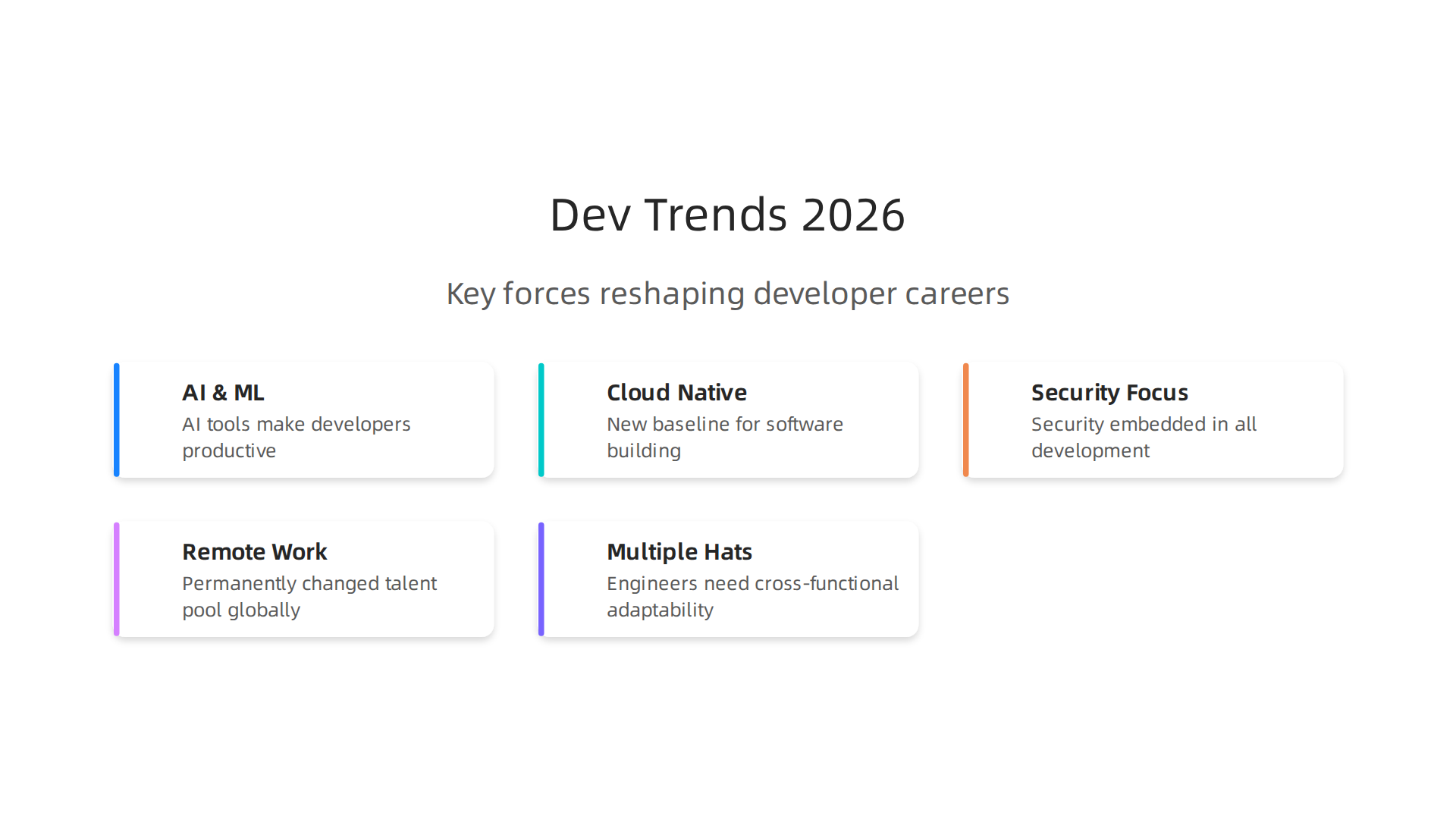
So what does the software developer landscape actually look like right now? A few big forces are reshaping everything.
The shift is real, but it is also full of opportunity if you know where to pay attention.
AI and machine learning are no longer optional. Every week seems to bring a new AI coding assistant or agent. More than 80% of developers now say AI tools have made them more productive, according to the AI’s impact on software engineers in 2026 report. Companies are hiring ML engineers who know TensorFlow and PyTorch at explosive rates. But the bigger change is deeper. The role of a software developer is shifting from someone who writes code to someone who supervises code. You still need to know how to build systems, but you also need to know how to guide AI tools to produce reliable results.
Cloud-native skills are the new baseline. Almost every organization runs on cloud services now. Platforms like AWS, Azure, and Google Cloud are central to how software gets built and deployed. The recent breakdown of tech and IT job trends in Canada shows that skills in continuous integration, DevOps, and cloud architecture are among the most in-demand. If you do not already know your way around containers, Kubernetes, and infrastructure as code, that is a gap worth closing.
Cybersecurity has become everyone’s job. With threats multiplying, companies are embedding security into every stage of development. Developers who understand secure coding practices, threat modeling, and DevSecOps pipelines are becoming indispensable. It is not just a niche anymore. Security awareness is a basic expectation across most roles.
Remote and hybrid work have permanently changed the talent pool. Your competition for full stack developer jobs is no longer limited to your city. Companies now hire globally. That means more opportunities but also more candidates for each role. The good news? If you have the right skills, you can work from almost anywhere. The key is standing out with a combination of technical depth and the ability to collaborate across time zones and cultures.
Employers want people who can wear multiple hats. The old job description that asked for a "React developer" or "Python developer" is fading. Companies are looking for engineers who understand system design, can debug in production, handle observability, and communicate clearly with product teams. The developer job market transformation in 2026 article covers exactly how these expectations are shifting. Being adaptable and cross-functional is now a core requirement, not just a nice addition.
In short, the market is rewarding developers who think beyond code. The ones who thrive are the ones who keep learning, stay curious, and build skills across AI, cloud, security, and teamwork.
Core Skills Every Software Developer Must Master
You know the market is shifting. But what should you actually learn? It can feel overwhelming with so many tools and frameworks coming out every month. Let me break it down into three clear areas.
Technical fundamentals still matter. Even with AI writing code for you, you need to understand the basics. Algorithms, data structures, and system design separate developers who patch things together from engineers who build reliable systems. The Software Engineer Skills: Top 16 Essential Skills for 2026 guide on LinkedIn lists these as the foundation. You need to know how to choose the right data structure for a problem, how to make a function run faster, and how to design a system that can handle millions of users. These skills don’t get old. They make you a better developer every day.
Soft skills are the real differentiator. I talk to hiring managers all the time. They all say the same thing: they can teach a motivated person a new framework, but they cannot teach communication or teamwork. The Top 6 Essential Skills for Software Development in 2026 article from Jalasoft highlights being proactive, setting expectations, and communicating clearly. In a remote world, writing a clear message or explaining a technical trade-off to a product manager is worth its weight in gold. Problem-solving is your superpower. If you can think through a tough bug logically and explain it to others, you will always be in demand.
Specialize in a high-demand area. Generalists are great, but specialists get hired faster. AI integration is the hottest right now. Companies need developers who can hook up large language models, build prompts, and handle the data pipelines that feed AI systems. DevOps and cloud skills are also critical. If you understand CI/CD pipelines, containerization with Docker, and cloud platforms like AWS or Azure, you become much more valuable. A great next step is to look into online certifications for software engineering that keep you ahead in 2026. Certifications like AWS Developer Associate or Kubernetes CKAD prove you have hands-on skills that employers trust.
One last thing. Technology changes fast. To stay sharp, you need a reliable source of daily updates. The AI Newsletter Worth Reading from The Deep View delivers clear daily insights on AI and tech trends. It helps you filter out the noise and focus on what actually matters for your career. Give it a try.
Strategic Career Moves: From Engineer to Engineering Manager to CTO
Learning the right skills is step one. But where do you want those skills to take you?
Most developers start as individual contributors (ICs). You write code, fix bugs, and learn the craft. As you grow, you can choose a lane. The three main lanes are IC, management, and architecture.

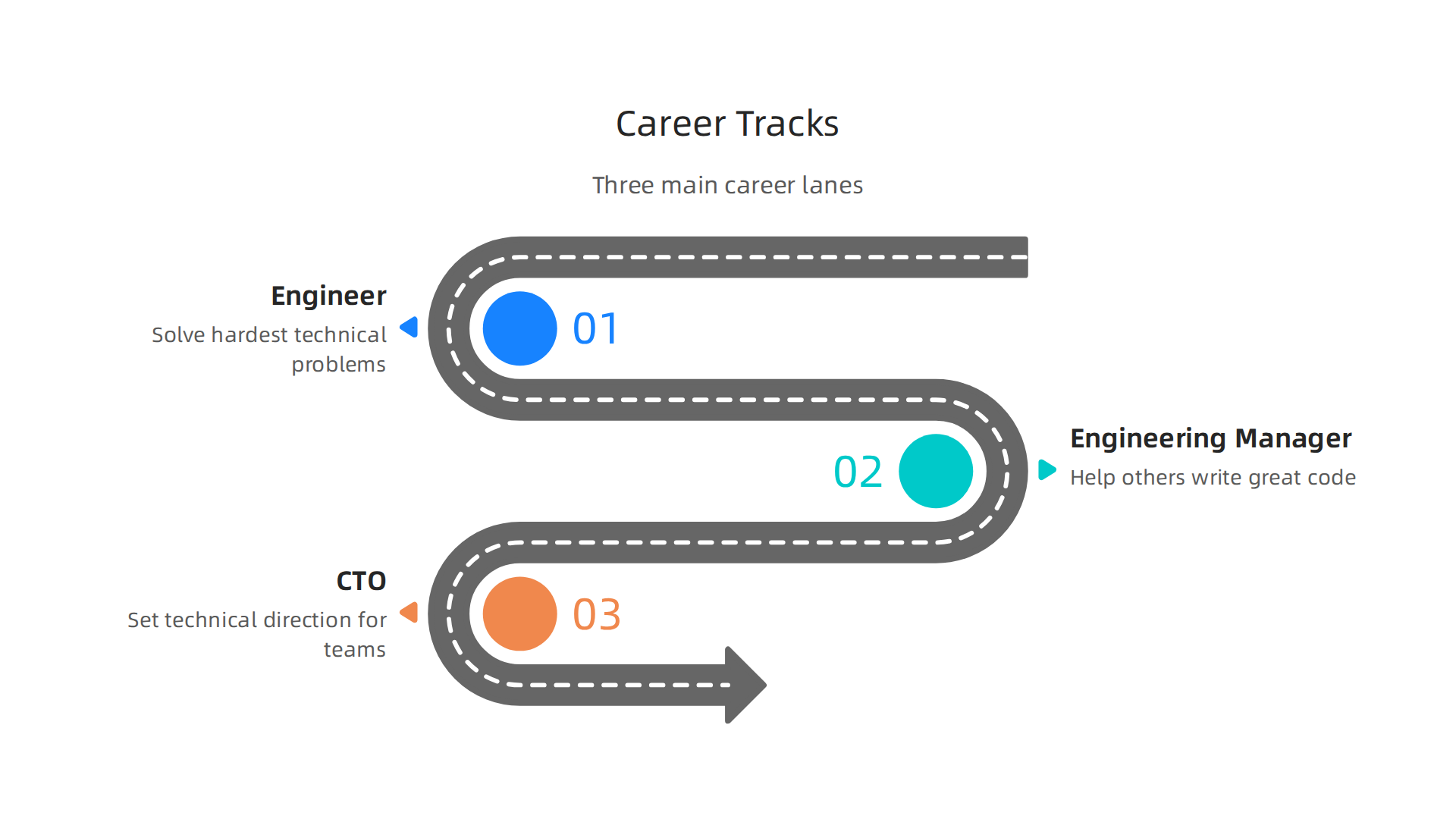
The IC Track. You stay close to the code. You become a senior, staff, or principal engineer. You solve the hardest technical problems. This is a great fit if you love building things with your own hands and diving deep into technology.
The Management Track. Your job shifts from writing code to helping other people write great code. You handle project planning, people growth, and strategy. The path is clear. Many companies follow a ladder from team lead to engineering manager to director to VP to CTO. This path is very structured, as shown in a recent discussion on the engineering management career ladder.
The Architecture Track. This is a hybrid. You stay an IC, but you set technical direction for many teams. You design the systems that everyone builds. It is a respected path for people who love technology but prefer managing code over managing people.
To move up, you must build the right competencies. On the management track, you need project management, conflict resolution, and public speaking. A great guide on transitioning to engineering manager says to take on leadership tasks voluntarily. Start by leading standups or mentoring a junior developer.
Mentorship and visibility are key. There is a simple rule for promotion: your boss’s boss needs to know your name. You cannot work in the shadows. Share your wins. Volunteer for high-visibility projects. Find a mentor who can guide you and advocate for you. The roadmap for how to become a CTO explains that promotions are about your future potential, not your past performance.
A strong resume is your best tool for proving that potential. Whether you are a software developer aiming for a staff role or targeting full stack developer jobs, your resume must tell a clear story. A good senior software engineer resume template focuses on impact. How did your work help the company? What problem did you solve?
For a deeper look at how roles and salaries are shaping up, you can read this blueprint for tech jobs in 2026. It helps you understand where the market is headed so you can plan your next move.
Leveraging AI and Automation for Career Advancement
You have probably heard your coworkers talking about AI coding tools. Maybe you have tried one yourself. These tools are not just a trend. They are changing what it means to be a software developer in 2026.
Developers who learn to use AI effectively can get more done in less time. A study by JetBrains found that over 80% of developers who use AI tools say their productivity increased.
You can read more about this in their research on AI’s impact on developer workflows. That is a big advantage.
AI helps you skip the boring parts. Instead of writing the same boilerplate code over and over, you can let the assistant handle it. That frees your brain for harder problems. Problems that actually move your career forward.
But here is the thing. Using AI blindly can backfire. You still need to review the code. You still need to understand what the tool is doing. The best software developers in 2026 are the ones who use AI as a partner, not a crutch.

They know when to trust it and when to write things by hand.
That skill sets you apart. When you are updating your senior software engineer resume template or applying for full stack developer jobs, AI experience matters. Companies want people who can ship faster without breaking things. Showing that you work well with AI gives you an edge.
The field moves fast. New tools and updates come out every week. Staying current on AI trends is becoming a competitive necessity. That is why many engineers rely on a trusted source to summarize the most important updates. The AI Newsletter Worth Reading delivers clear daily AI updates so you stay ahead without the noise.
For a deeper look at how to make AI really work for you and your team, check out this guide on how to bridge the AI to human gap in your code. It covers practical ways to get the most out of these tools without losing quality.
Adopting AI is not optional anymore. It is how you keep growing as a developer. And it is how you show the world you are ready for the next step.
Building Your Personal Brand and Professional Network
Having strong technical skills and knowing how to use AI tools is great. But that alone might not be enough to land your next big role. In 2026, the best software developer opportunities often come through the people you know and the reputation you build online.
Think about it. When a hiring manager looks for a senior engineer, they do not just scan resumes. They search LinkedIn, check GitHub repos, and look for blog posts or conference talks. Your personal brand is what shows up in those searches. It tells your story before you even say a word.
Building that brand does not have to be complicated. Start small. Write a blog post about a problem you solved at work. Share a code snippet on LinkedIn with a short explanation. Fix a bug in an open source project you use. Each of these actions adds a piece to your professional identity. Over time, they build a picture that recruiters and peers recognize.
A recent study by Frontline Source Group found that candidates with intentional personal brands appear in recruiter searches three to five times more often than those with similar credentials but weak online presence. You can read more about this in their article on why personal branding matters for career development. That is a huge difference.
Networking is the other side of the coin. You do not need to attend every conference or shake every hand. Focus on building real relationships. Connect with people who work in areas you want to explore. Join Slack groups or Discord servers for developers in your niche. Ask thoughtful questions. Share what you learn. The goal is to be present and helpful, not pushy.
Even within your own company, strategic networking matters. Talk to people on other teams. Learn what they do. Offer to help with cross-functional projects. These connections can lead to promotions, mentorship, or recommendations when you start looking for full stack developer jobs or other roles.
Your personal brand sets you apart in a crowded market. It turns you from a name on a resume into a person with a point of view. For a broader look at how the job market is shifting and where these skills fit in, check out this guide on tech jobs in 2026 with salary and growth insights. It will help you see where a strong brand and network can take you next.
The time you invest in building your brand pays back in ways you cannot predict. A tweet might lead to a podcast invitation. A GitHub pull request might catch the eye of a startup CTO. Make yourself visible. Your next opportunity depends on it.
Navigating Certifications, Education, and Continuous Learning
Speaking of making yourself visible, one of the best ways to build that reputation is to keep learning. The tech world does not sit still. In 2026, the most successful software developers treat learning like a habit, not a one-time event.
Certifications can help you prove your skills fast. Cloud certifications from AWS, Azure, or Google Cloud are especially valuable.
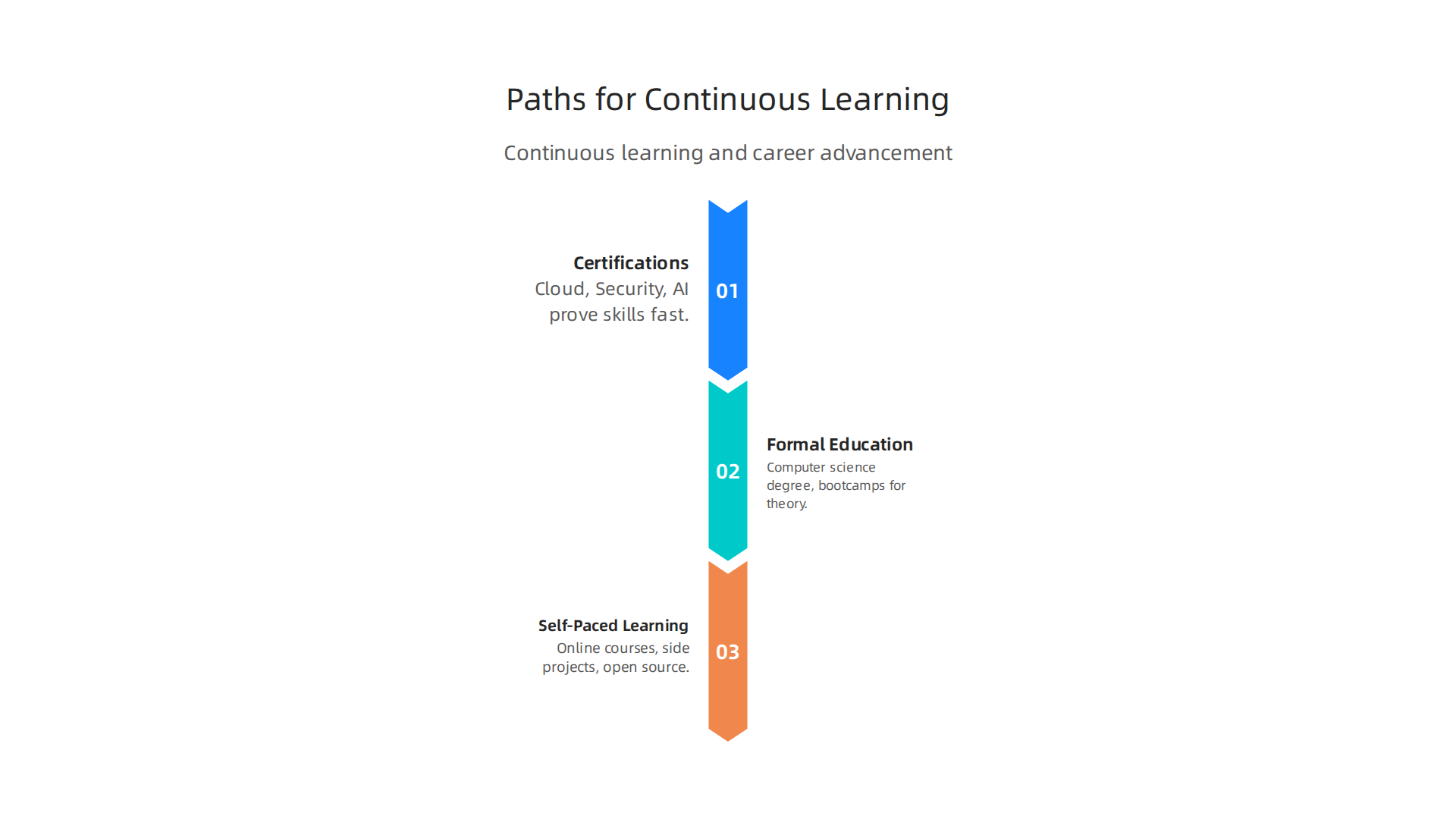
They show you can build and scale real applications. Security certifications like CompTIA Security+ or the Certified Information Systems Security Professional (CISSP) also carry weight. AI certifications are growing fast too, as more companies need people who understand AI models and how to integrate them. You can get a full overview of what to study next from the guide on top programming certifications for high pay in 2026.
Formal education still matters, but it is not the only path. A computer science degree gives you deep theory and a solid network. Bootcamps can fast-track you into a full stack developer job or a specialized role. What really matters is what you do with the knowledge. Self-paced learning through online courses, side projects, and open source contributions can be just as powerful. Many hiring managers care more about your GitHub profile than your diploma.
The trick is to build a personal learning roadmap. Start with your career goal. Want to move into AI engineering? Focus on Python, ML frameworks, and cloud AI services. Aiming for a senior software engineer role? Sharpen your system design, architecture, and debugging skills. Break your roadmap into quarterly goals. Spend 30 minutes each day on something new.
One easy way to stay current without getting overwhelmed is to subscribe to a daily tech newsletter. It keeps you informed while you focus on deeper learning. I recommend subscribing to The AI Newsletter Worth Reading for clear daily AI updates that help you spot trends early.
If you want even more structured guidance on picking the right courses, check out this guide on online certifications for software engineering. It breaks down the best options for every stage of your career. Keep learning, keep growing, and the right opportunities will find you.
Summary
This guide explains how the software developer landscape has shifted by 2026 and what that means for your career. It covers major market trends—widespread AI adoption, cloud-native expectations, stronger security responsibilities, and permanent remote hiring—and explains why employers now value systems thinking, cross-functional skills, and communication as much as coding. You will learn which technical foundations still matter (algorithms, system design), which specializations accelerate hiring (AI integration, DevOps, cloud), and how to use AI as a productivity partner without losing quality. The article also maps clear career lanes (individual contributor, management, architecture), practical steps for promotion and visibility, and how certifications, continuous learning, and personal branding make you discoverable. By the end you’ll have a prioritized playbook for skills to learn, certifications to consider, networking moves to make, and how to position yourself for higher-impact roles in 2026 and beyond.