

Introduction: Why AWS DevOps Certification Still Matters in 2026
Here is the thing about the tech world in 2026. With AI tools automating more and more of the cloud pipeline, you might wonder if earning an AWS DevOps certification is still worth your time. The short answer is yes. Actually, it may matter more than ever.
Certifications are a strong signal of expertise in a crowded market.

Multiple industry surveys show that employers still list certifications in job postings and tie them to higher pay. So when you pursue an AWS DevOps certification, you are proving you can handle real DevOps work, not just run an AI prompt.
The AWS Certified DevOps Engineer Professional credential is a big deal. It is one of the highest-paying and most respected cloud certifications out there. It tells hiring managers you understand automation, monitoring, and infrastructure as code at an expert level. And in 2026, that kind of proof helps you stand out from candidates who only know the basics.
But getting certified takes real planning. That is where this guide comes in. We cut through the noise and give you a structured, evidence-based roadmap for preparation. We cover the best study resources, including official AWS documentation, online courses for professional development, and even lessons from programs like microsoft free certification courses to round out your skills.
If you want to stay ahead of the curve in software engineering, do not stop here. **For daily clear updates on AI and cloud trends, subscribe free to The Deep View Newsletter.

** It delivers the insights you need to navigate this fast changing field.
Why AWS DevOps Certification Matters in 2026
Let’s face it: the cloud operations world looks nothing like it did just a few years ago. In 2026, platform engineering has become the dominant model for managing infrastructure at scale. And AI tools now handle many of the repetitive tasks that used to take up your day. But here’s the thing: that shift does not make your AWS DevOps certification less important. It makes it more valuable.
Why? Because when everyone has access to the same AI copilots, what sets you apart is the ability to design, troubleshoot, and optimize the entire system. A certification signals that you understand the full picture. You know how to set up CI/CD pipelines that actually work. You can implement monitoring that catches problems before customers notice. You have real skills in security, automation, and infrastructure as code. The AWS Well-Architected DevOps Guidance shows just how deep that expertise needs to go, covering advanced test selection and deployment strategies that AI tools alone cannot handle.
Employers see this clearly. Research on the role of IT certifications in modern tech hiring shows that certifications are frequently named in job postings and are tied to higher pay PDF source. Companies use certifications as a reliable hiring filter, cutting through the noise of self-taught claims. They also use them as an internal benchmark to map out career paths for their engineering teams.
The salary data backs this up. Multiple 2026 salary reports from Henderson Scott and IT Search highlight that certified cloud professionals command premium compensation, especially in roles that span DevOps, platform engineering, and AI-ops. Even if the direct salary bump from a single certification varies, the overall market trend is clear: employers are hungry for people who can prove they can handle complex, automated environments.
So in 2026, an AWS DevOps certification is not just a piece of paper. It is proof that you can lead the machines, not just follow them. And as the industry continues to change fast, you need to stay informed. For daily clear updates on AI and cloud trends, subscribe free to The Deep View Newsletter. It delivers the insights you need to keep your skills sharp and your career on track.
AWS DevOps Certification Paths and Exam Breakdown
Alright, so you are convinced that an AWS DevOps certification is a smart move for your career in 2026. Now the real question is: which one do you go for? And what does it take to actually pass?
AWS gives you two main paths here. The first is the Associate level. This actually splits into two separate exams: AWS Certified Developer – Associate and AWS Certified SysOps Administrator – Associate. Both cover important ground, but neither is strictly a pure "DevOps" cert. Think of them as the foundation. They prove you can operate in the AWS cloud and handle basic automation tasks.
The second path is the one most people target: the AWS Certified DevOps Engineer – Professional (exam code DOP-C02). This is the gold standard. The official AWS exam guide lays out exactly what you need to know.
The exam covers six core domains.
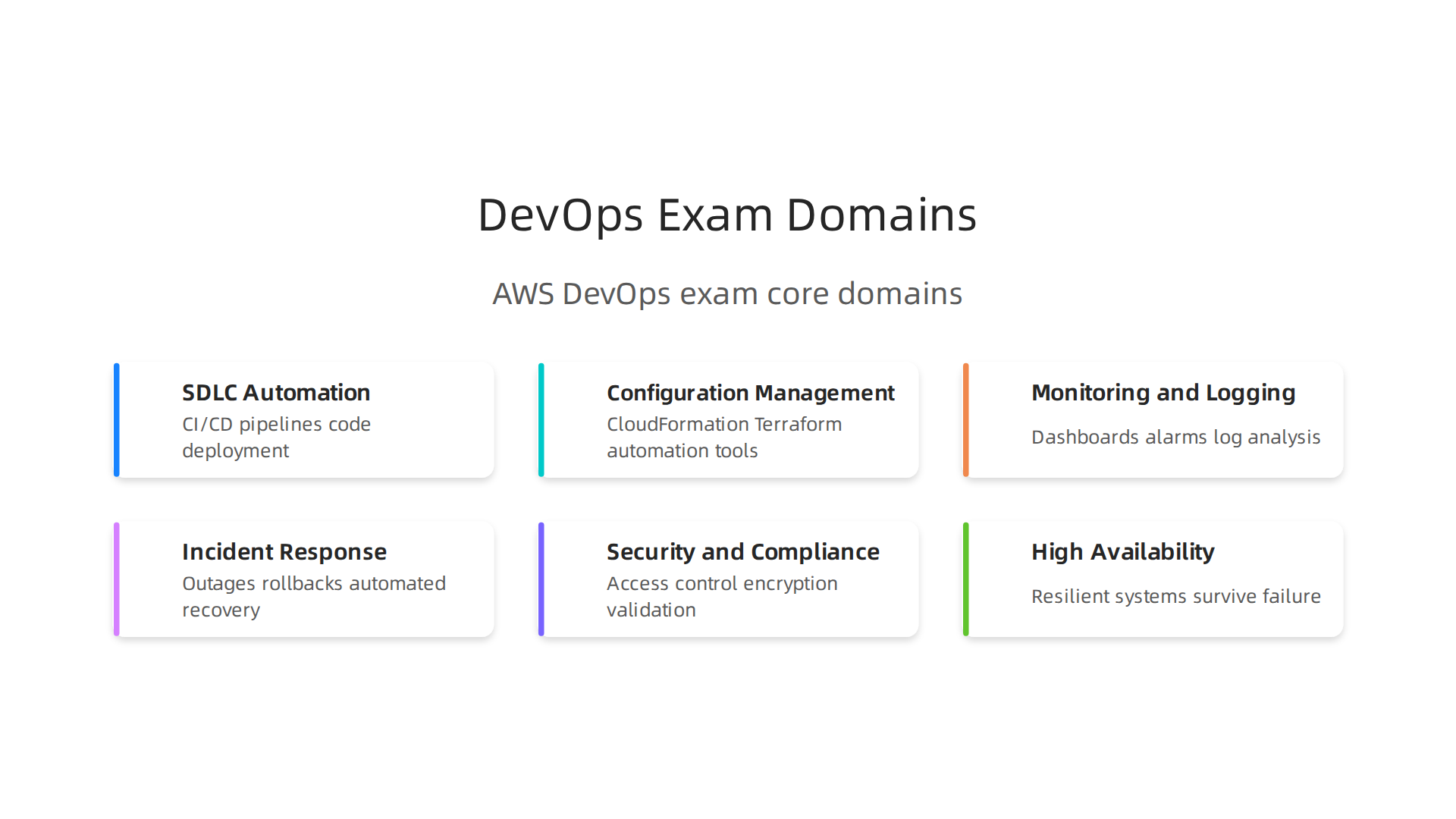
- SDLC Automation (22%): This is all about CI/CD pipelines, code reviews, and deployment strategies.
- Configuration Management and Infrastructure as Code (17%): Think CloudFormation, Terraform, and automation tools.
- Monitoring and Logging (16%): How you set up dashboards, alarms, and log analysis to catch problems fast.
- Incident and Event Response (14%): Handling outages, rollbacks, and automated recovery.
- Security and Compliance (12%): Access control, encryption, and compliance validation.
- High Availability, Fault Tolerance, and Disaster Recovery (12%): Designing systems that survive failure.
That is a lot of ground to cover. But the AWS certification page confirms that this exam validates real-world ability to automate testing and deployment at scale. You are not just memorizing facts. You are proving you can design and run complex systems.
Now for the practical stuff. AWS says you should have at least two years of hands-on experience provisioning and managing AWS infrastructure before attempting the Professional exam. You should also already hold one of the Associate certifications or have equivalent knowledge. The exam costs $300 USD. And like all AWS certifications, it expires after three years. You will need to recertify to keep your credential active.
There are plenty of online courses for professional development that can help you prepare. One popular approach is using practice exams from Tutorials Dojo which include detailed explanations and cheat sheets.
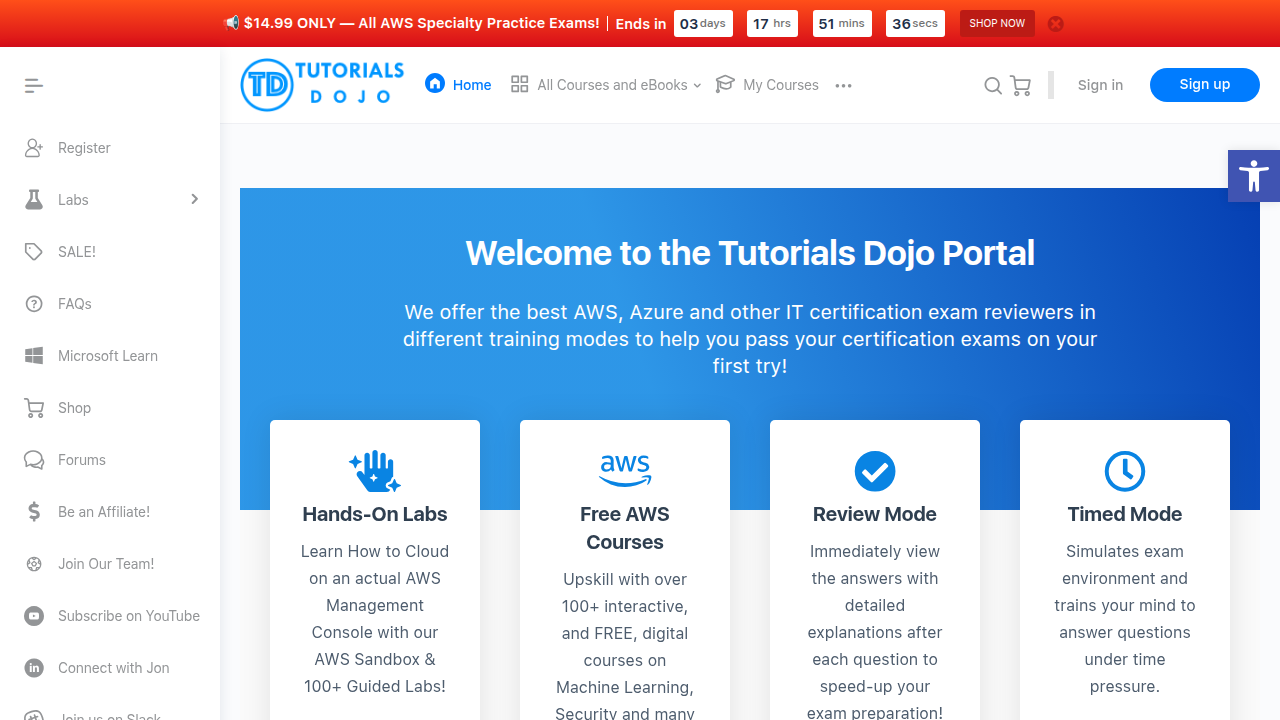
Whizlabs also offers training with hands-on labs and expert videos. AWS themselves provide free prep resources through their Skill Builder portal.
Choosing the right path comes down to your current experience level. If you are new to DevOps on AWS, start with an Associate cert. If you have been running pipelines for a while, go straight for the Professional. Either way, this aws devops certification will open doors. And if you want to stay ahead of the curve with daily insights on AI and cloud trends, Get Free Updates from The Deep View Newsletter to keep your knowledge fresh.
Official AWS Learning Resources
Now that you know which path to take and what the exam covers, the next step is figuring out where to actually learn the material. You could jump straight into random online courses, but the smartest move is to start with the official stuff. AWS provides a solid set of free and low cost resources that are built specifically around the exam blueprint.
The best place to begin is AWS Skill Builder. This is AWS’s own training portal, and they offer a dedicated exam prep plan for the DevOps Engineer Professional certification. The AWS Skill Builder exam prep plan walks you through a four step study path.

You get free digital courses, exam prep labs, and official practice questions. Everything is aligned with the actual exam domains, so you are not wasting time on topics that won’t show up.
Beyond Skill Builder, you should dig into AWS re:Invent sessions and whitepapers. These are not organized into a neat study guide, but they are incredibly authoritative. AWS publishes hundreds of session recordings and white papers covering DevOps practices, automation, and architecture. You have to curate them yourself, which takes time, but the depth of knowledge is unmatched. The official AWS certification page also links to recommended reading.
Another key resource is the AWS Well-Architected Framework. This is not strictly a training tool, but it reinforces exactly the concepts tested on the exam. The pillars of operational excellence, security, reliability, performance efficiency, and cost optimization all map directly to the DevOps engineer role. Studying the Well-Architected documentation will teach you how to design systems that are both automated and resilient.
To supplement these official resources, many learners turn to structured courses and practice tests. For example, Tutorials Dojo offers comprehensive practice exams with detailed explanations that help you identify weak spots. And Whizlabs provides hands on labs and expert videos for practical application.
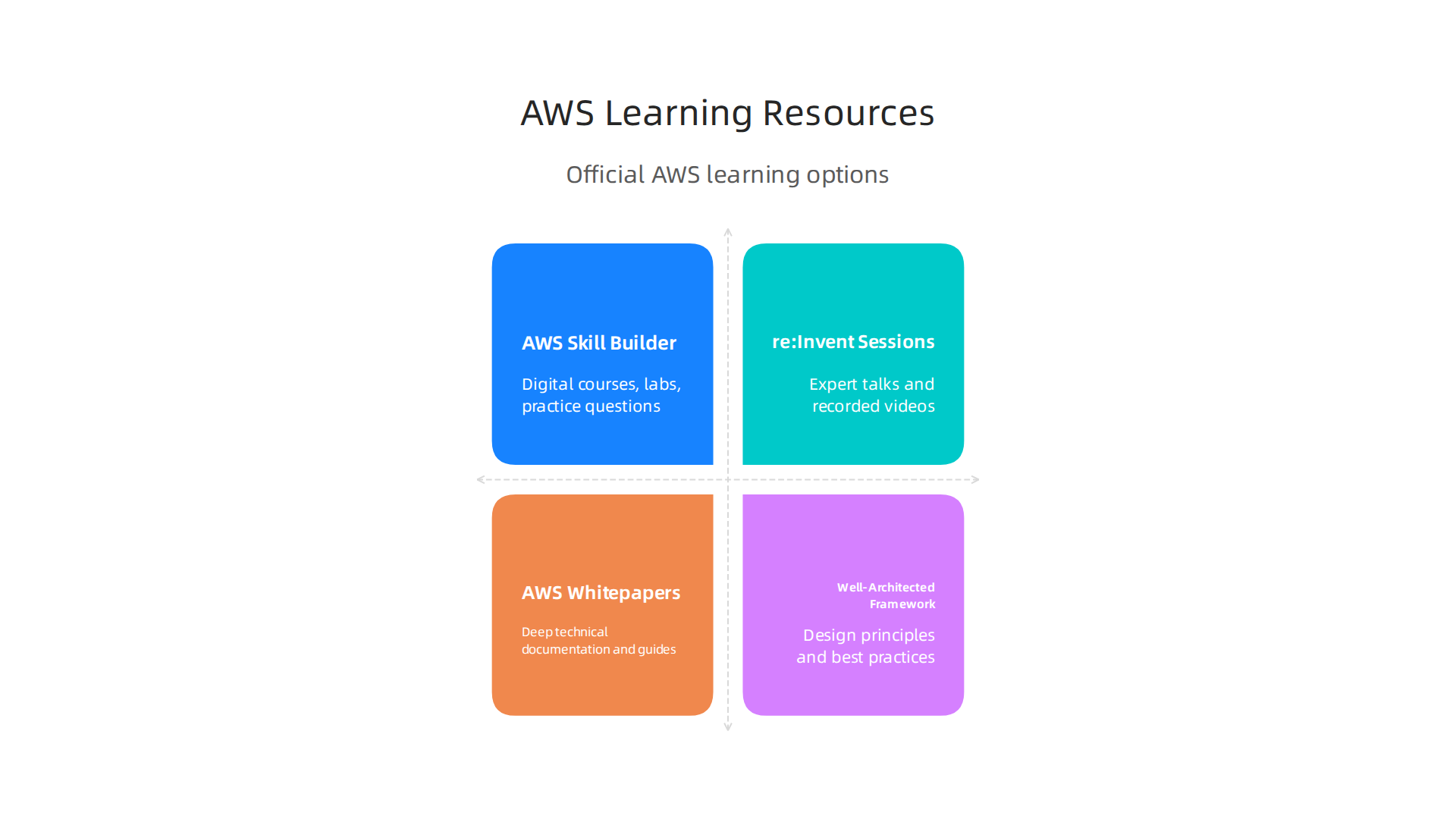
Here is a quick comparison of the main official learning options:
| Resource | Cost | What You Get |
|---|---|---|
| AWS Skill Builder | Free (most content) | Digital courses, labs, practice questions |
| re:Invent Sessions | Free | Video recordings of expert talks |
| AWS Whitepapers | Free | Deep technical documentation |
| Well-Architected Framework | Free | Proven design principles and best practices |
The bottom line? Start with Skill Builder and the official exam guide. Then use the Well-Architected Framework and re:Invent content to fill in any gaps. Combine these with practice tests from a trusted provider, and you have a complete study plan.
If you want to stay on top of the latest AWS updates and industry trends without spending hours digging through content, Get Free Updates from The Deep View Newsletter. It delivers clear daily insights straight to your inbox so you can keep learning even after you pass the exam.
Third-Party Courses and Platforms
Official AWS resources give you a strong foundation. But many people find that mixing in third-party courses makes the material click faster. That is totally normal. Different instructors explain things in different ways, and sometimes you just need to hear the same concept from a fresh voice.
Structured online courses are the most popular choice. Platforms like A Cloud Guru (which includes the old Linux Academy content) and Udemy offer full video courses built around the AWS DevOps Engineer Professional exam. These courses often include hands-on labs and real-world scenarios. A recent review of the best DevOps courses in 2026 tested over ten platforms and found that paid courses with structured curricula tend to be very effective for exam prep. You can check out that breakdown in this Best DevOps Course 2026 video. Coursera also offers DevOps certifications and guided projects that let you practice with real tools. Their article on popular DevOps certifications in 2026 lists the AWS DevOps Engineer Professional as a top choice, alongside certifications from Microsoft and Google.
Hands-on lab environments are another piece of the puzzle. Platforms like Qwiklabs and Cloud Academy give you temporary AWS accounts where you can follow step-by-step lab exercises. This is critical because the exam tests your ability to actually implement automation, not just recall facts. Working through labs builds muscle memory for tasks like setting up CI/CD pipelines or managing infrastructure as code.
Community-led materials fill in the gaps for free. YouTube has dozens of playlists from creators who explain exam topics in plain language. The AWS DevOps Full Course by Edureka is a solid all-in-one resource. GitHub also has study guides and cheat sheets shared by engineers who already passed the exam. These are great for last-minute review or for topics you find confusing.
The key is to mix official content with third-party courses to cover all learning styles. Use video courses to understand concepts, then use labs to apply them. And as you move through your study plan, you will want to stay current with AWS changes. That is where a trusted daily newsletter can help you save hours of research.
Get Free Updates from The Deep View Newsletter. It delivers clear daily AI and cloud insights straight to your inbox so you never miss a major update while you prepare for your aws devops certification.
Hands-On Preparation: Labs, Sandboxes, and Real-World Projects
Video courses and tutorials are only half the story. The AWS DevOps Engineer Professional exam heavily emphasizes practical application. You have to prove you can build and manage automated systems, not just recall facts.

The official AWS certification page states that earning this badge validates your ability to automate the testing and deployment of AWS infrastructure and applications. That is a skill you build by doing, not just by reading the aws documentation.
Think of it like training for a sport. You can watch game films all day, but you still need to step onto the field. The same goes for this certification. The online courses for professional development give you the plays. But the practice projects are your scrimmage.
Start with the AWS Free Tier. It gives you a safe sandbox to experiment with CloudFormation, CodePipeline, and CodeBuild. Do not worry about breaking anything. That is the point of a sandbox. You can try and fail without any cost.
Focus on building small, real-world projects. For example, set up a CI/CD pipeline that automatically deploys a static website to S3 every time you push an update. Or use CloudFormation to script a complete monitoring stack with CloudWatch alarms. These tiny projects directly mirror the tasks you will see on the exam.
You can also look for exam-focused GitHub repositories. Many engineers who have already passed the aws devops certification share their practice projects. Searching for "aws devops exam projects" or "CI/CD pipeline templates" will give you templates to study and deploy.
These hands-on projects build muscle memory. When you face a multiple-choice or multiple-response question about CloudFormation templates or CodePipeline actions, you will already understand the workflow. You will answer faster and with more confidence. Study plans in 2026 emphasize a mix of courses and practical labs to ensure you are ready for this professional level certification.
Mixing official resources with these hands-on techniques is the fastest way to prepare. And as you work through your labs, staying updated on new AWS features saves you hours of research.
Get Free Updates from The Deep View Newsletter. It delivers daily AI and cloud insights straight to your inbox so you never miss a critical update while you prepare for your aws devops certification.
Study Strategies and Time Management for Busy Engineers
If you are juggling a full-time job, family, and study time, the idea of adding another certification to your plate can feel overwhelming. The good news? You do not need to quit your job or study for months straight. A focused 8 to 12 week plan with short daily sessions works better than cramming on weekends.

The AWS Certified DevOps Engineer – Professional exam is designed for people who already work with CI/CD pipelines, monitoring, and infrastructure as code. That means your daily job is already preparing you. Use your work projects as real-world case studies. When you debug a CloudFormation template at work, you are also building exam knowledge. Leveraging existing work experience cuts your ramp-up time significantly.
Break your study into micro-sessions. Spend 30 minutes each morning on a single topic. One day focus on CodePipeline triggers. The next day review CloudWatch alarm actions. This approach beats a four hour binge every Saturday because your brain retains more in small, repeated doses.
Spaced repetition is a proven memory technique. Practice exams are perfect for this. Take a timed practice test, review your wrong answers, and revisit those weak areas the next day. Over 8 to 12 weeks, you will naturally fill knowledge gaps without last minute panic.
Another smart move is to treat AWS documentation like a reference library. You do not need to read it cover to cover. Look up specific services when you hit a confusing practice question. This builds a habit of finding answers quickly, which is exactly what you will do on the job.
Many engineers find it helpful to mix in online courses for professional development that fit into short time slots. Video lessons you can watch during lunch or while commuting work well alongside hands-on labs.
Staying consistent is the hardest part. To keep yourself accountable, set a weekly goal like "complete 50 practice questions" or "deploy one CloudFormation stack." Small wins build momentum.
And while you work through your study plan, do not let new AWS feature announcements catch you off guard. Get Free Updates from The Deep View Newsletter delivers daily AI and cloud insights straight to your inbox so you stay informed without extra search time.
Beyond Certification: Building a DevOps Career with AWS
Passing the exam is a big win. But the real value of your aws devops certification shows up in what comes next. That credential opens doors to roles like DevOps Engineer, Cloud Architect, and Site Reliability Engineer (SRE). According to recent salary data, the certification alone can push your earning potential significantly higher. Payscale reports that AWS Certified DevOps Engineers see an average base salary around $132,000, while other sources note that engineers with this certification can earn up to $141,000 or more.
But here is the thing. A certification is a starting point, not a finish line. The engineers who get the biggest career jumps are the ones who keep learning after the test.
Keep building your skills
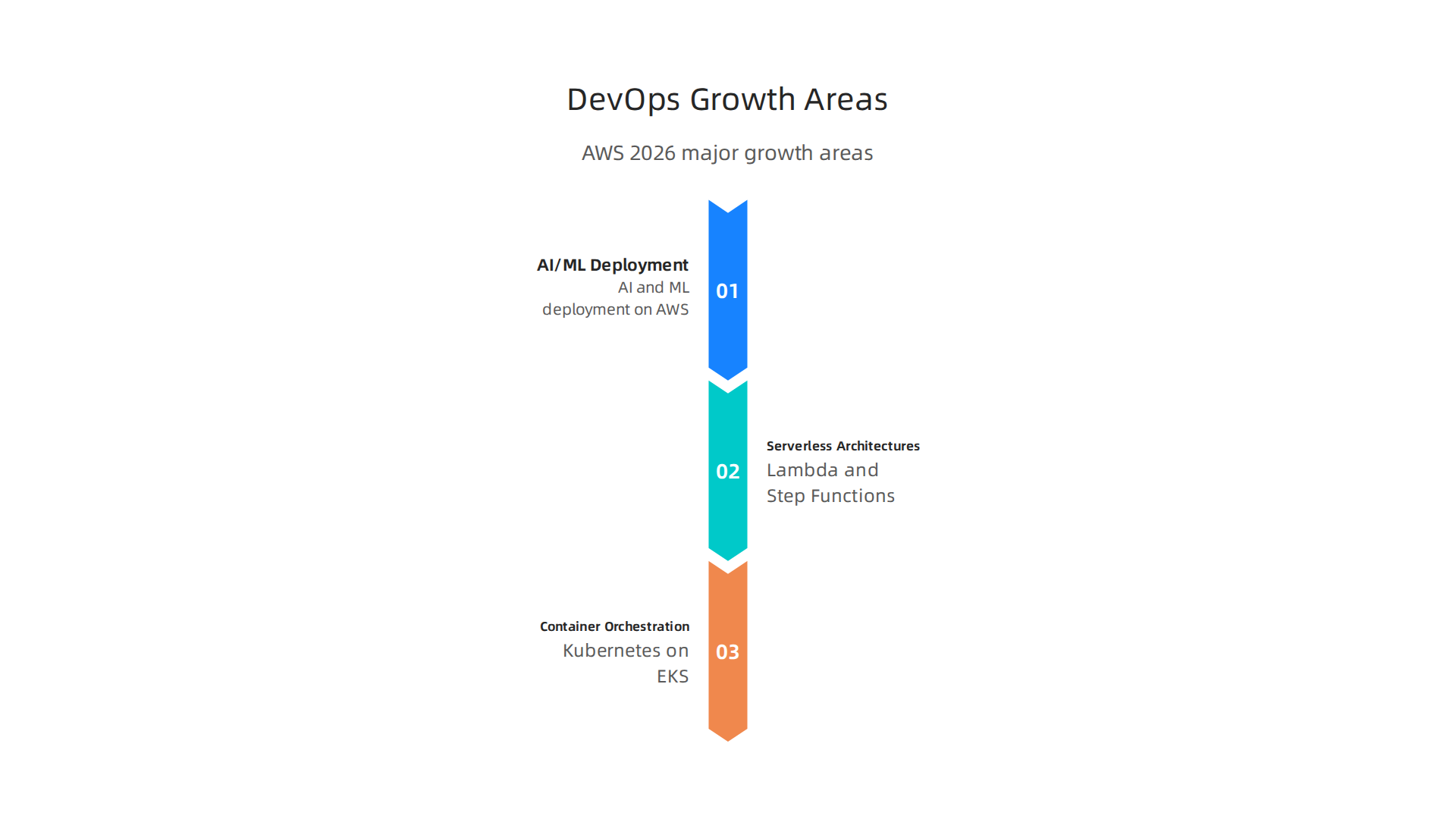
Cloud technology moves fast. In 2026, the biggest growth areas include AI and ML deployment on AWS, serverless architectures with Lambda and Step Functions, and container orchestration with Kubernetes on EKS.
To stay relevant, you should actively pursue additional training in these areas.
That is where online courses for professional development come in handy. Many platforms now offer hands-on labs and simulations that go deeper than what the exam covers. And if budget is a concern, keep an eye on microsoft free certification courses and other vendor offerings. Cloud skills transfer between platforms, and even free training expands your toolkit.
Connect with the community
Networking makes your certification worth more. Join local AWS User Groups. Attend re:Invent or smaller regional conferences. Talk to other engineers about real world problems they solve with CodePipeline, CloudFormation, and monitoring tools.
When you share what you know and learn from peers, you build a reputation. That leads to better job offers, consulting gigs, and promotions. Many of the highest paid DevOps engineers got there through community connections, not just exam scores.
Stay updated without the noise
One of the biggest challenges in 2026 is information overload. New AWS features drop constantly. AI tools change weekly. You need a way to stay informed without spending hours searching.
That is why Get Free Updates from The Deep View Newsletter matters. It delivers daily AI and cloud insights straight to your inbox. No fluff, just the updates that matter for your career. Staying current keeps your aws devops certification valuable long after you pass the exam.
Common Mistakes to Avoid in Your Certification Journey
Going for your aws devops certification is a smart move, but the path is full of easy traps. Knowing what to watch out for can save you weeks of wasted study time and a failed exam attempt.
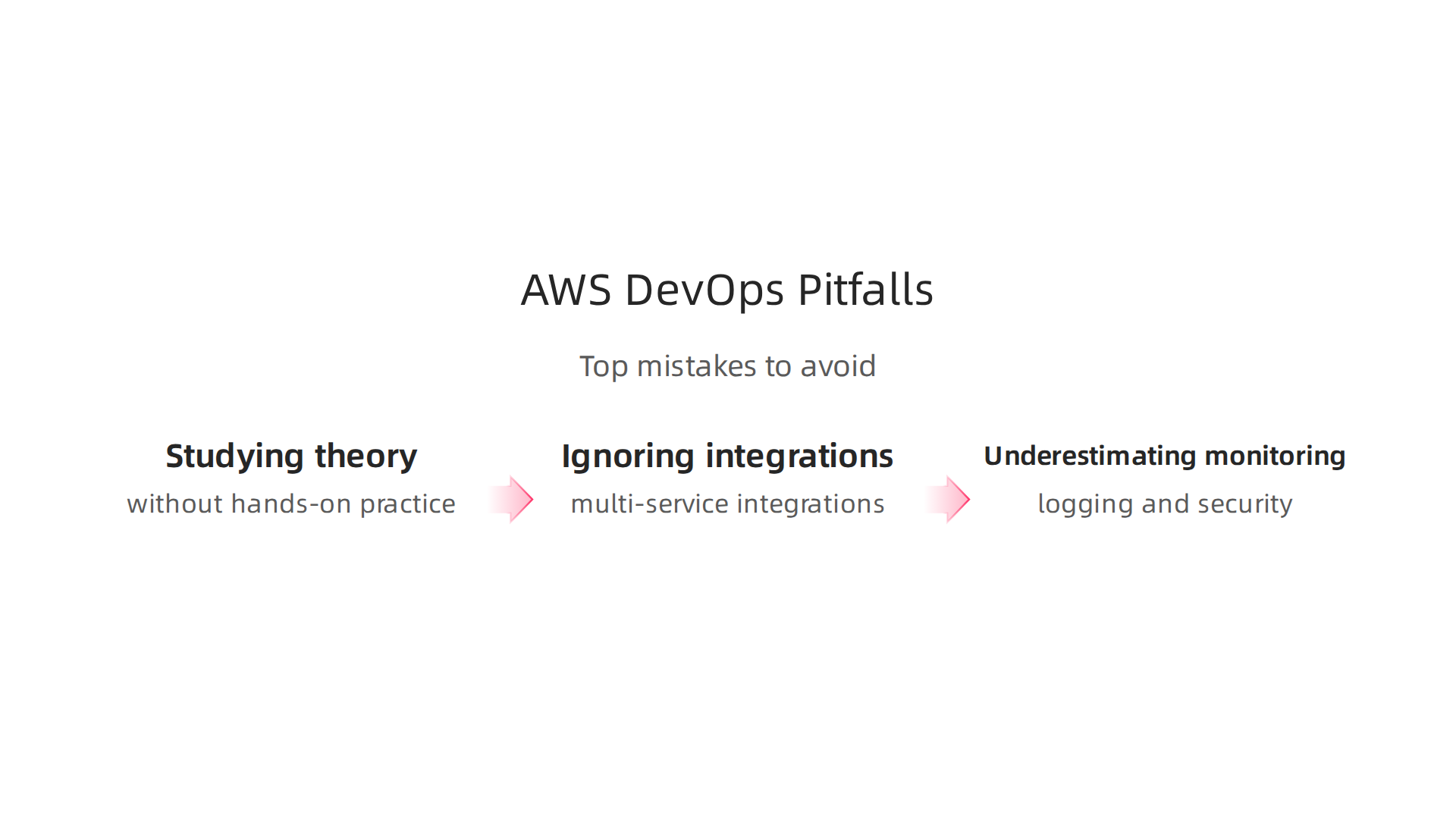
Mistake 1: Studying theory without hands-on practice
This is the biggest one. Reading whitepapers and watching videos feels productive, but the exam tests your ability to do the work. You need to actually build pipelines, configure CloudFormation templates, and set up monitoring dashboards. The official AWS exam page makes it clear: the certification validates your ability to automate testing and deployment. You cannot get that from theory alone. Set up a free AWS account and go through real labs.
Mistake 2: Ignoring multi-service integrations
The exam rarely asks about services in isolation. You will see scenarios where CodePipeline connects to Lambda, which triggers Step Functions, which updates CloudFormation stacks. Many people focus on individual tools and miss the big picture. According to a 2026 preparation guide by iCert Global, the advanced exam specifically tests how services work together to solve end to end problems. Practice chaining services together in small projects.
Mistake 3: Underestimating monitoring, logging, and security
These domains make up a huge part of the exam. You need deep knowledge of CloudWatch, X Ray, CloudTrail, and AWS Config. A study plan from PrepZee emphasizes that hands on work with monitoring and security is non negotiable for 2026. Many candidates spend all their time on CI/CD and get surprised by alerting and access control questions. Balance your study time.
Avoid these three mistakes, and your preparation will be much smoother. And to stay on top of the latest AWS updates and exam changes in 2026, Subscribe Free to The Deep View Newsletter for daily AI and cloud insights delivered to your inbox.
Conclusion: Your Actionable Roadmap to AWS DevOps Certification
Getting your aws devops certification in 2026 is absolutely doable, but you need a clear plan. Let’s pull everything together into a simple roadmap you can start using today.
First, combine the best resources. Start with the official AWS documentation to understand core services. Then back that up with hands on practice using a free AWS account. You can also explore online courses for professional development to fill any knowledge gaps. The key is to never study theory alone.
Second, set realistic milestones. Break your study time into weekly goals. Take timed practice exams every two weeks. Use the results to find your weak spots, especially in monitoring, security, and multi service integrations. Review those areas before moving on. This iterative approach beats cramming every time.
Third, remember that the certification is just a stepping stone. The real value comes from applying what you learn in real projects. AWS Certified DevOps Engineers earn around $141,000 on average, but that salary growth depends on continuous learning. Keep building pipelines and automating workflows after you pass the exam.
Stay informed about the latest AWS updates and industry trends. A great way to do that is to Subscribe Free to The Deep View Newsletter, which delivers daily AI and cloud insights straight to your inbox. It’s a simple habit that keeps your knowledge fresh.
Your certification journey is a marathon, not a sprint. Stick with the plan, practice every day, and you will earn that credential. Go get it.
Summary
This article explains why the AWS Certified DevOps Engineer — Professional remains a high-value credential in 2026, even as AI automates routine cloud tasks. It walks through which certification paths to take (associate foundations vs. the DOP-C02 professional exam), the six exam domains and their weightings, and practical preparation resources such as AWS Skill Builder, Well‑Architected guidance, re:Invent sessions, and third‑party courses. You’ll learn why hands‑on labs, free‑tier sandboxes, and multi‑service projects matter, plus a realistic 8–12 week study approach that fits busy engineers. The guide also highlights common mistakes to avoid, exam costs and recertification rules, and ways to turn the certification into sustained career growth in DevOps, platform engineering, and SRE roles.