
It’s 2026, and new AI tools for building websites are everywhere. These AI website builders promise to help you create sites super fast. But for engineering teams, choosing the wrong tool can lead to big problems later on.

Think of it like this: You want to build a strong treehouse. If you pick weak wood just because it’s cheap and easy to find today, your treehouse might fall apart later. The same goes for these website tools. A quick-fix AI website builder might not be able to handle more visitors as your website grows. It might also not work well with other important systems your company uses. This can cause a lot of extra work for your engineers, leading to something called "technical debt." This means spending time fixing old issues instead of building new, useful features.
This is why picking a durable AI website builder is very important. You need tools that are made to last and can grow with your needs. Experts say that when we build things with AI, we should focus on how long they will stay useful, not just on how fast we can get them done. This helps avoid big problems later, as highlighted in a recent discussion on Govern AI for Durability, Not a Deadline. Our guide will help your engineering team learn how to check these new AI website tools. We’ll give you a clear plan to find a durable AI website builder that will save you time and trouble in the future. We want to make sure your choices in web design software help reduce long-term technical debt, not add to it. Learning how engineering teams evaluate technology services to prevent failures is key to making smart choices.
To keep up with all the fast changes in AI and technology, you need good information. Consider checking out The AI Newsletter Worth Reading to get clear daily AI updates from The Deep View Newsletter.
The 2026 landscape: who builds AI website builders and why it matters
When looking for a durable AI website builder, it is important to know who makes these tools. The market for AI-powered website builders is booming in 2026, reaching about $3.24 billion this year and expected to grow much more by 2035. This big growth means many different kinds of companies are jumping in to create new options for web design software and tools for software design web.
We can mostly group these builders into three types:
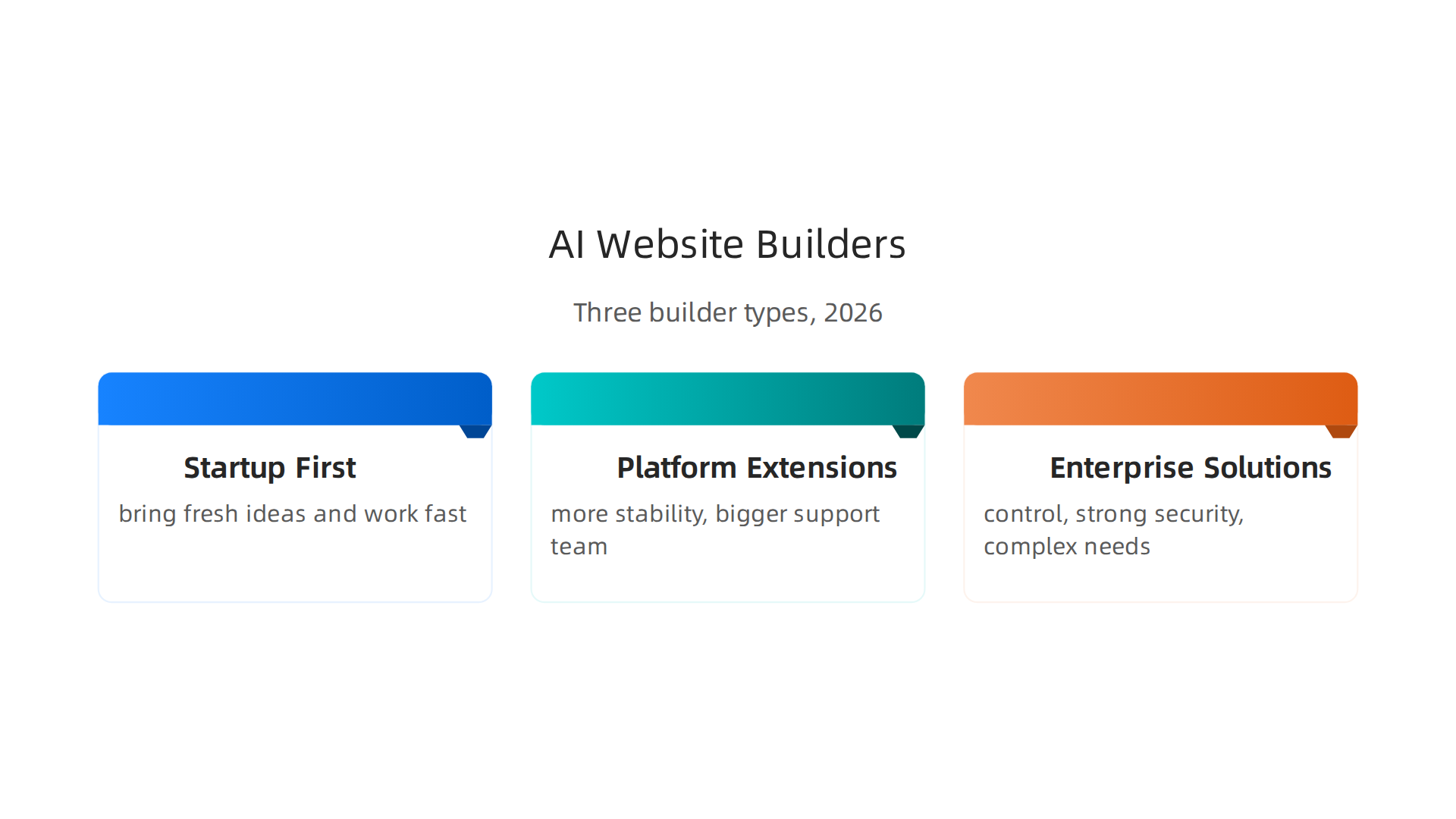
- Startup-First Companies: These are new, smaller companies that focus only on AI website building. They often bring fresh ideas and work very fast. Think of them as eager young builders with exciting new tools. However, because they are new, there’s a risk they might not be around in a few years, or they might change their services a lot. Their tools might not have the long-term support or wide range of features bigger companies offer.
- Platform Extensions: Many bigger, older companies that already offer website services are adding AI features to their tools. Companies like Wix or Shopify are good examples. They are using AI to make their existing platforms even better. When you pick a tool from these companies, you often get more stability and a bigger support team. They’ve been around for a while, so their solutions are often more integrated and reliable.
- Enterprise-Focused Solutions: Some AI website builders are made for very large businesses with complex needs. These tools often offer a lot of control, strong security, and ways to connect with many other business systems. They are built for long-term use and can handle a lot of traffic and custom features. However, they can also be more complex and expensive.
Understanding these different types of builders is key.

A recent report mapped out the AI Website Builders Market Map 2026, showing how diverse this space truly is.
The way this market is growing can also affect your choices. If there are too many small companies (this is called market fragmentation), some might not last. This could leave your team with a tool that no longer gets updates or support, turning it into technical debt. On the other hand, if a few big companies take over most of the market (called market consolidation), you might have fewer choices, but the tools could be more stable and well-supported.
For engineering teams, the risk is clear: choosing a tool from a less stable provider can lead to big integration problems down the road. You might find it hard to connect your website with other important systems, or the tool might not scale as your company grows. This is why thinking about the vendor’s strength and future is part of picking a truly durable AI website builder. Good strategic website software design starts with choosing the right foundation.
What we mean by a ‘durable AI website builder’
The previous section talked about how picking the right foundation is key for strong website software design. Now, let’s dive into what we truly mean by a durable AI website builder. For engineering teams, "durable" is more than just a buzzword. It means choosing a tool that will stay strong, safe, and useful for many years, not just for a quick project. As one expert put it, we should Govern AI for Durability, Not a Deadline.
Here is what durability really means for an AI website builder:
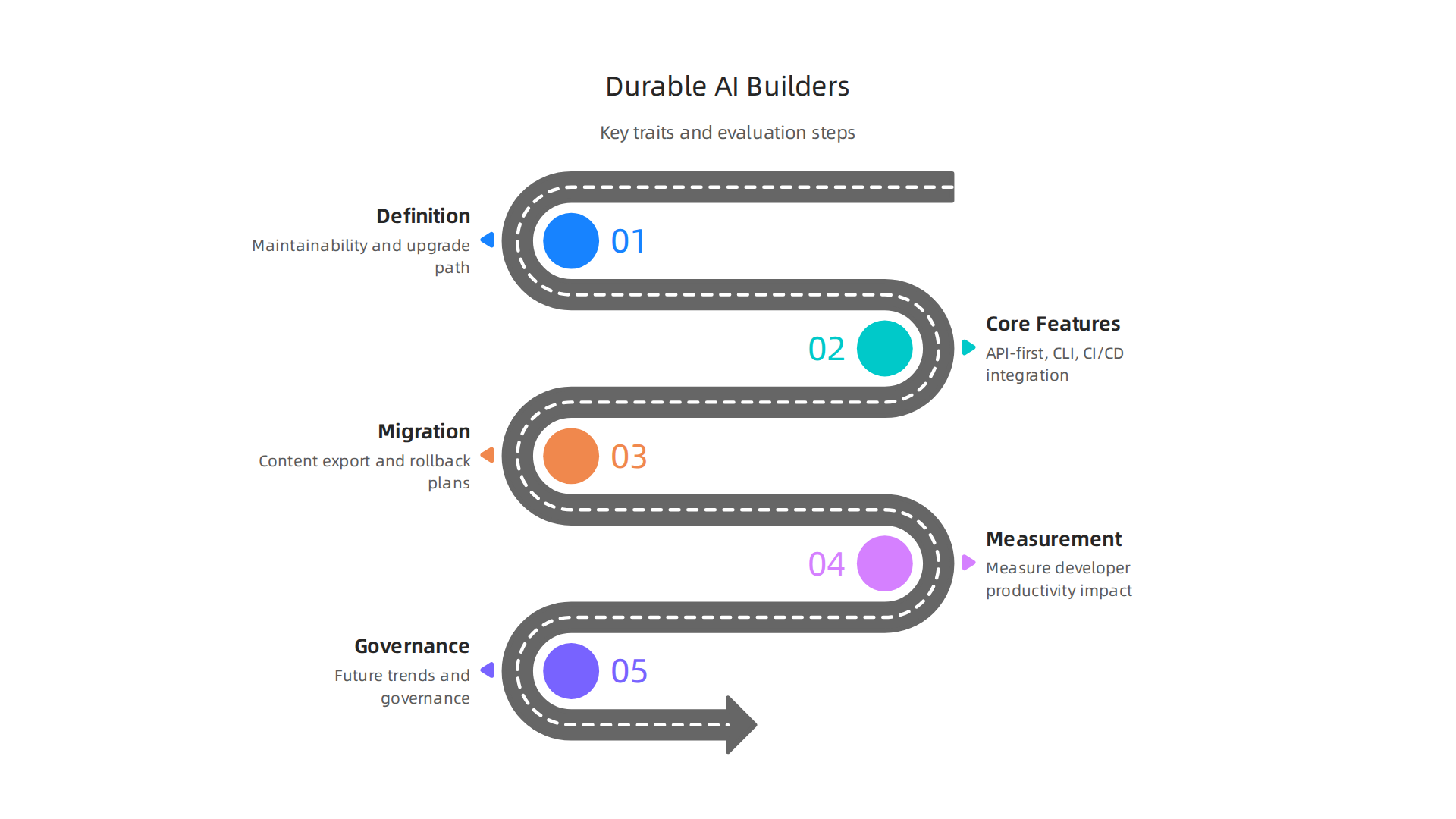
- Maintainability: Can your team easily keep the website updated, fix problems, and make changes over time? A durable builder makes this simple.
- Upgrade Path: Will the builder keep getting better? Technology changes fast in 2026, especially with AI. A durable tool needs to have a clear way to get new features and stay current with the modern web development ecosystem.
- Dependency Hygiene: How well does the builder manage all the other tools and code it relies on? If it uses too many risky or old parts, it could break easily. Good software design web means clean dependencies.
- Integration API Stability: Can your website connect smoothly with your other important business systems, like customer relationship tools or inventory software? A durable AI website builder offers stable connections (APIs) that won’t suddenly change and break your setup. The goal is "operational stability" for AI systems, according to research on the AI Governance Control Stack for Operational Stability.
It’s important to see the difference between simple, quick-win consumer builders and those built for bigger business needs. Many consumer-focused AI website builders are great for individuals or small businesses to get online fast. They are often easy to use, letting anyone create a site without much technical skill, sometimes called a no-code development platform strategic guide. However, they might not offer the deep control, strong security, or complex integration options that engineering teams need.
Enterprise-grade AI platforms, on the other hand, are designed for the long haul. They give you the tools for advanced customization, high traffic, and connecting with many other systems. These are the solutions that offer true durability, letting your website grow and adapt with your business without constant rebuilds. When choosing your web design software, think about tomorrow’s needs, not just today’s.
Want to stay informed on the latest advancements in AI and technology?
The AI Newsletter Worth Reading
Now that we know what makes an AI website builder durable, let’s look at the key things engineering teams should check.
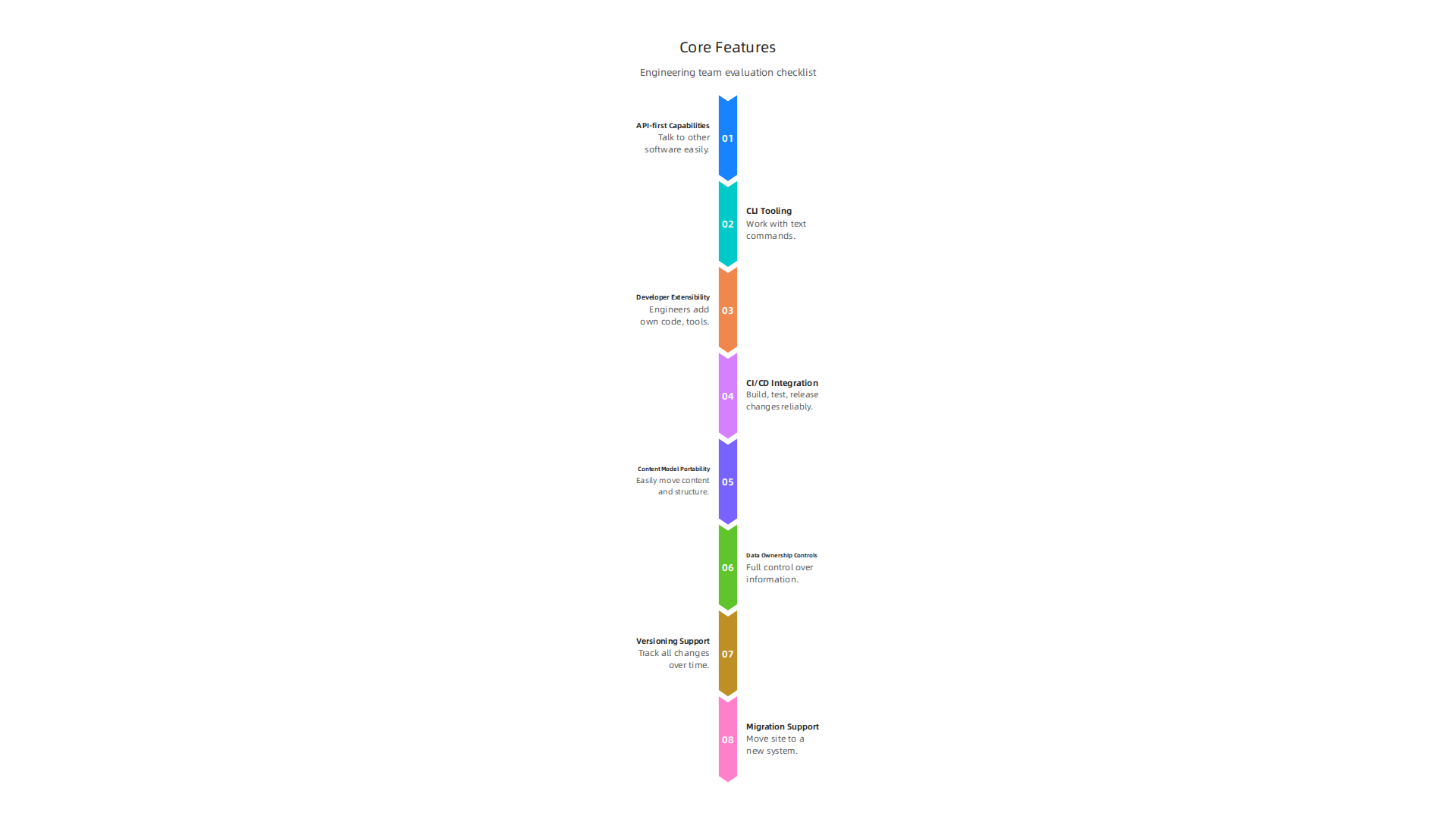
These features help make sure your website works well today and can grow with your business in the future. When choosing your web design software, think about these important points:
- API-first Capabilities: This means the builder can talk to other software easily. An API-first system acts like a central hub, letting your content be used across many different platforms, not just your website. This is often called a "headless CMS" setup, where the content is separate from how it looks, as explained in a guide to API-first CMS. It allows for flexible and modern website building.
- CLI Tooling and Developer Extensibility: CLI stands for Command Line Interface. It lets developers work with the website builder using text commands, which is often faster and more powerful for complex tasks. Developer extensibility means engineers can add their own code and tools, making the builder do exactly what they need. This boosts how fast developers can work, leading to better results. For more on improving workflows, consider how to accelerate developer productivity with Slack AI for engineering teams.
- CI/CD Integration: CI/CD stands for Continuous Integration and Continuous Delivery. These are practices that help teams build, test, and release new website changes often and reliably. A durable AI website builder should fit smoothly into these automated processes. This helps quickly deliver updates and improvements, which is a big part of what makes engineering teams productive. These practices are also measured by DORA metrics, which Google’s team developed to rate how well software is delivered, as discussed in The complete guide to DORA metrics in the AI era.
- Content Model Portability, Data Ownership Controls, and Versioning/Migration Support:
- Content Model Portability: Can you easily move your website’s content and its structure (how pages and parts are organized) from one system to another? This is crucial for avoiding being stuck with one platform.
- Data Ownership Controls: You need to truly own your website’s content and data. A good builder makes sure you have full control over your information, including how it’s stored and who can access it. When evaluating platforms, it is important to ask about these controls to ensure your organization keeps full command of its content, especially with AI features, as highlighted in a guide on Headless CMS with AI Capabilities: What to Look For.
- Versioning and Migration Support: This means the builder can keep track of all changes made to your website over time (versioning) and help you move your entire site or parts of it to a new system if needed (migration). This makes sure your website’s history is safe and future changes are easy to manage.
Choosing a durable AI website builder with these features means your engineering team can build a strong, flexible website ready for anything. It’s about smart software design web choices that last.
Choosing the right web design software is only the first step. To make sure your website lasts and grows, you also need to think about how it’s built on the inside. This means looking at its technical setup, or "architecture," and how different parts of it work together. This is crucial for a durable AI website builder.
Common Architectures for AI Website Builders
There are a few main ways to build a website using an AI builder, each with its own good points and bad points:
- Headless CMS with AI: This is like having a brain for your website (the "content management system" or CMS) that holds all your text, pictures, and videos, but no body (the "head" that shows it to people). You can then connect this brain to many different bodies, like your website, a mobile app, or even smart screens. It’s very flexible. For example, a Headless CMS lets you use your content anywhere. AI tools can then help create or manage this content. The good part is huge flexibility and being able to make changes without messing up your main website. The tricky part is that it often needs more technical setup to get everything talking to each other.
- Monolithic Builder: Think of this as an all-in-one website solution. The content, how it looks, and how it works are all bundled together in one system. These builders are often easier to start with because everything is in one place. They might be good for smaller, simpler websites. However, they can be less flexible if you want to add very specific or complex features in the future, or if you want to move your content to a different system.
- SDK-Based Approach: An SDK (Software Development Kit) is a set of tools that developers use to build custom features. With this approach, the AI website builder gives you the basic parts, and your team uses an SDK to build the website exactly how you want it. This offers the most control and lets you create truly unique experiences. The downside is that it needs more coding and time from your engineering team to set up and maintain. This is a very custom approach to strategic website software design for engineering teams.
How AI Website Builders Connect with Other Tools
No website lives alone. It needs to work with other systems for things like user logins, getting data, or checking for problems. These are called "integration patterns":
- Authentication: This is about how users log in safely. Your AI website builder needs a good way to connect with your existing login systems.
- Data Pipelines: These are like special roads for moving information. For a durable AI website builder, it’s important that data can flow smoothly between your website and other services, like customer databases or marketing tools. Good integration patterns help different systems share information easily, as highlighted in guides on Headless CMS Integration Patterns.
- Observability: This means having ways to see how your website is working at all times. If something breaks or slows down, you want to know right away. Your builder should make it easy to plug into tools that watch your site’s performance. There are different Cloud CMS Integration Patterns for Developers that help with this.
- Testing: Before changes go live, you need to test them. A good AI website builder should have ways to connect to your testing tools, making sure new features work perfectly and don’t break old ones.
Choosing the right technical setup and understanding how it integrates with your other systems is key to building a robust and lasting website. It helps ensure your software design web choices are sound for years to come.
Want to keep up with the fast pace of AI and tech in 2026?
The AI Newsletter Worth Reading
Even with the best plans for your website’s technical setup, things can change. You might want to move to a different web design software, or maybe your current AI website builder no longer fits your needs. This is why planning for "migration," "rollback," and how to "exit" a vendor is super important for a truly durable AI website builder.
It’s about having a safety net for your digital home.
Practical Migration Playbook
Moving your website or data from one system to another can feel like moving houses. You need a good plan.
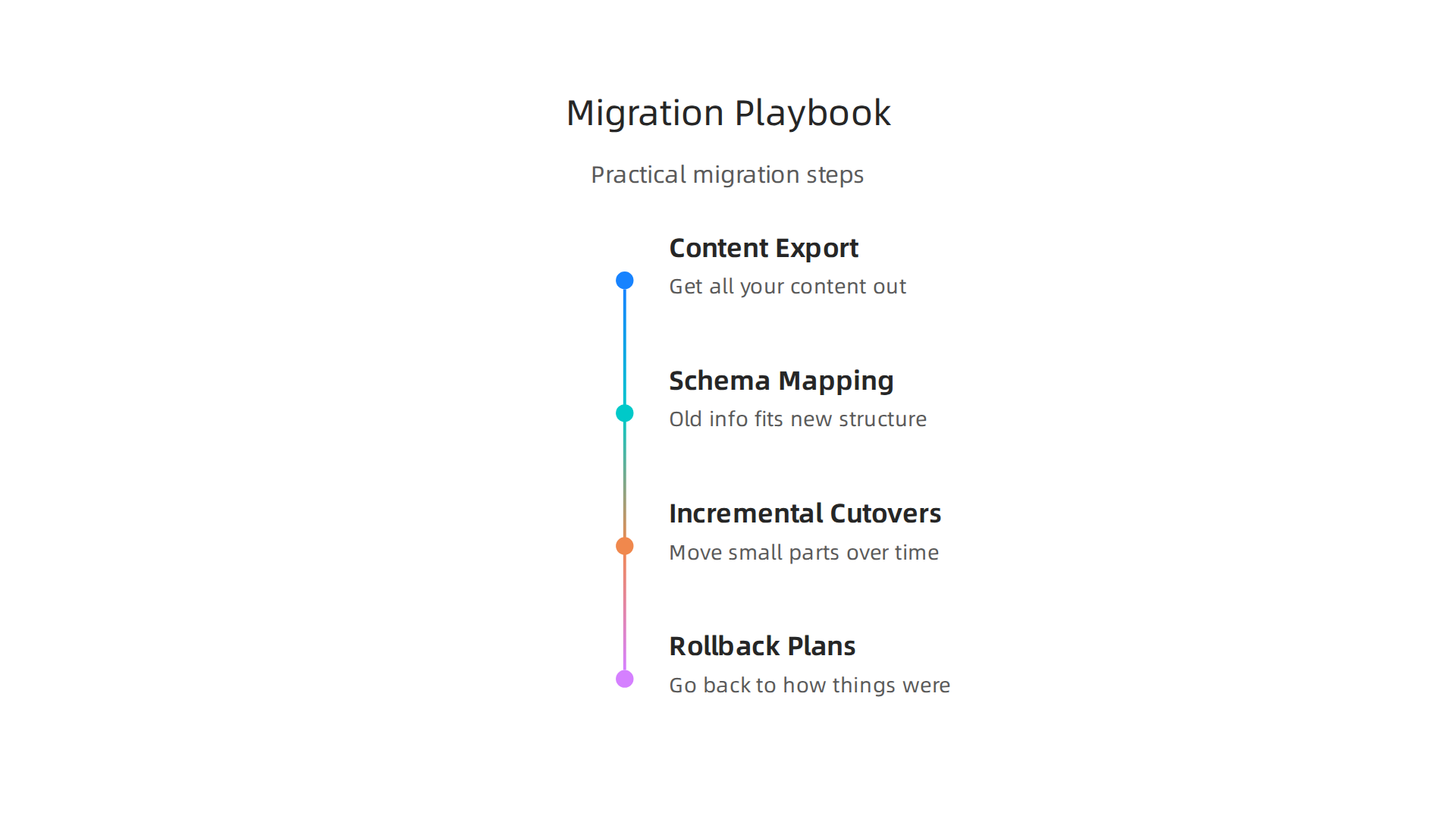
- Content Export: The first step is to get all your content out of your old system. Look for tools that let you export everything in common formats like CSV, JSON, or XML. These are like universal languages for data, making it easier to move your information to a new platform. Many experts agree that getting data in standard, machine-readable formats is key to avoiding issues later on when moving content and avoiding vendor lock-in situations, which can make things hard. Make sure your chosen software design web tools allow this. You should test these export processes even before you need to migrate, so you know they work well when the time comes to really move your data, as advised in guides on SaaS Data Portability Best Practices for 2026.
- Schema Mapping: Your old website stored information in a certain way. Your new website might store it differently. "Schema mapping" means figuring out how the old information fits into the new structure. It’s like making sure your old furniture fits into the new rooms. This step helps keep all your data organized and correct after the move.
- Incremental Cutovers and Rollback Plans: Instead of moving everything at once, you can move small parts over time. This is called an "incremental cutover." It helps you test things bit by bit. A "rollback plan" is your undo button. If something goes wrong during the move, you need a way to go back to how things were before, so your website stays working for your users.
Commercial Protections for Smooth Exits
Before you even start using a new AI website builder, think about the future.
- Contracts and SLAs: Your agreements with software providers, called contracts and Service Level Agreements (SLAs), should protect you. These documents should clearly state how you can get your data back if you decide to leave. For example, a good contract will specify that your data can be exported in standard, machine-readable formats and within a clear timeframe, often without hidden fees, as noted in a guide on Avoiding Vendor Lock-In: Cloud Portability Best Practices (2026).
- Data Portability Guarantees: Look for clear promises about "data portability." This means you have the right to easily move your data to another service. Without strong data portability, you could get "locked in" with a vendor, making it very hard and expensive to leave later. You should aim to own all your data and have the right to export it easily, helping you avoid vendor lock-in, as explained in articles about Vendor lock in prevention with a data portability playbook. When choosing a durable AI website builder, always ask what happens if you need to switch later.
Thinking about these steps from the beginning helps ensure your website can adapt and grow, no matter what changes come in the future. It’s an important part of making good Strategic Choices for Developer Tools and Cloud Platforms in 2026.
When you make smart choices for your website’s future, it’s also important to think about the money side. We need to look at how much things will cost, what kind of return we will get (ROI), and if our team is working better or worse. This is extra true when picking a durable AI website builder.
Cost, ROI, and measuring developer productivity impact
Buying a new web design software or using an AI website builder isn’t just about the monthly fee. There are many other costs to think about, known as the Total Cost of Ownership or TCO.
- Platform Fees: This is the easiest cost to see. It’s what you pay to use the software each month or year.
- Migration Costs: Remember how we talked about moving your website? Moving your data and setting up the new system takes time and effort. Sometimes you need to hire special help, and that costs money too.
- Developer Time: Your team will spend time learning the new system, building things, and fixing problems. Even if they are using smart tools, their time is valuable. In 2026, many companies see AI tools boost developer tasks completed by as much as 26%, which can save a lot of money over time, according to the Global AI Productivity Impact Report 2026. But you still need to account for their time.
- Hidden Vendor Lock-in Costs: This is where our earlier talk about smooth exits comes in handy. If you get stuck with a web design software that makes it hard to leave, switching later can be very expensive. These hidden costs can show up as high fees to export your data or needing to rebuild parts of your site from scratch. Planning ahead with a durable AI website builder helps avoid these costly surprises.
Measuring How Well Your Team Works
When you use a new AI website builder, you want to make sure it’s helping your team work better, not slowing them down. Measuring developer productivity means looking at how fast and well your team gets things done.

It’s not just about how many hours they work.
Some key things to track include:
- Cycle Time: How long it takes for an idea to go from start to being live on your website. Shorter cycle times usually mean your team is working faster. Studies in 2026 show that AI can reduce review cycle times significantly, sometimes by over 30% for certain tasks, as seen in research on Measuring AI’s True Impact on Developer Productivity.
- Release Frequency: How often your team puts out new updates or features. The more often, the better, as it shows quick progress.
- Defect Rates: How many bugs or problems are found after new features go live. Lower defect rates mean your team is building higher-quality work.
- DORA Metrics: These are four important measures that show how well a team is doing in software delivery. They include deployment frequency, how long changes take, how often things fail, and how quickly problems are fixed. Using these metrics can help teams understand and improve their work, as explained in The complete guide to DORA metrics in the AI era.
By keeping an eye on these numbers, you can tell if your new software or AI tool is truly helping your team. If you’re looking for ways to boost your team’s output, consider exploring clever AI engineering tools that maximize developer productivity in 2026. The global AI-powered website builder market, for example, is growing fast, reaching an estimated $3.41 billion in 2026, showing many businesses are already seeing the value, according to 45 AI Website Builder Statistics (2026).
Staying on top of these trends and understanding the real impact of AI on your costs and team’s work is crucial in 2026. For daily updates and deeper insights into AI and technology developments, you might be interested in The AI Newsletter Worth Reading.
Staying on top of these trends and understanding the real impact of AI on your costs and team’s work is crucial in 2026. Now, let’s look at how we can make sure these AI tools stay good and useful for a long time. This involves thinking about future trends and how we manage AI systems.
Future trends, governance, and ensuring long-term stability
When you choose a durable AI website builder, you are not just picking a tool for today. You are making a choice for the future. This means thinking about how technology will change and how you can keep your website safe and working well over time.
What’s Next for AI Website Builders?
The world of AI is always moving forward. For AI website builders, this means new standards and ways for different systems to work together.
- New Rules and Standards: Just like we have rules for building houses, we are getting new rules for building AI systems. In 2026, many places are adopting things like ISO/IEC 42001, which is the first global rulebook for managing AI systems. These standards help make sure AI is used safely and fairly, as explained in a guide to AI Governance and Regulation 2026. The National Institute of Standards and Technology (NIST) is also working on important AI Standards to help guide development.
- Working Together (Interoperability): Imagine if your phone could only call people who had the same brand of phone. That would be frustrating! It’s the same for websites and software. We want different tools to talk to each other easily. This is called interoperability. Open-source tools, which are like shared recipes for software, help a lot with this. They reduce the risk of getting stuck with one company’s product, a problem known as vendor lock-in. This helps create a more modern web development ecosystem. You can learn more about how open source AI unleashes innovation for IoT developers.
- Open-Source Choices: Using open-source pieces for your durable AI website builder means you have more control. It’s like having the blueprints for your website, so you can fix things or change them without asking permission every time. This makes your website more stable in the long run.
Managing Your AI-Driven Website Safely
Having an AI website builder also means thinking about how you manage the AI itself. This is called governance.
- Keeping AI Models Updated: AI models get smarter over time. You need a plan for how you will update the AI that builds and runs your website. This ensures it stays effective and secure.
- Content Moderation: AI can create a lot of content. You need ways to make sure that content is good, safe, and follows your rules. This is called content moderation. New tools are coming out to help with this, like special AI models that check content for safety automatically, as seen in news about Mistral’s Open-Weight Safety Classifier Shifts Content Moderation Governance. You want to make sure your AI website builder has good content moderation built in.
- Following the Rules (Compliance): There are many laws about privacy and data. Your AI-driven website needs to follow these rules. Good governance practices mean you track how your AI uses data and makes decisions, making sure everything is clear and follows the law. This helps you build for durability, not just a deadline, which is key for a truly durable AI website builder. Thinking about a strategic website software design for engineering teams includes these long-term considerations.
By thinking about these future trends and governance practices, you can pick a durable AI website builder that will serve your needs not just now, but for many years to come.
Summary
This article explains why engineering teams should choose a durable AI website builder instead of chasing a quick, easy solution that creates long-term technical debt. It walks through the 2026 market landscape, the three main vendor types, and the core attributes that make a builder durable — maintainability, upgrade paths, clean dependencies, and stable integration APIs. You’ll get a practical checklist covering API-first capabilities, CLI tooling, CI/CD fit, content portability, versioning, and data ownership. The guide compares common architectures (headless, monolithic, SDK-based), outlines integration patterns like authentication and observability, and gives a step-by-step migration and exit playbook to avoid vendor lock-in. It also breaks down the true costs to consider (TCO, migration, developer time) and metrics to measure productivity impact. Finally, the article looks ahead to governance, interoperability, and standards that keep AI-driven sites safe, compliant, and future-proof.