

Why developer levels matter for teams, careers, and strategy
Have you ever seen job titles like "Junior Developer," "Software Engineer II," or "Principal Engineer" and wondered what they truly mean? It can be confusing! One company might call someone with two years of experience a "Senior Developer," while another might call a person with ten years a "Mid-Level Engineer." This big difference makes it hard to know what a job really involves, how much you should be paid, or what steps to take in your career.
This mixed-up way of naming jobs causes problems for everyone. For companies, it makes hiring tricky because they don’t have a clear idea of what skills to look for at each developer level. This can also lead to unfair pay if people doing the same level of work have different titles and salaries. For developers, it can be tough to plan your career path or even understand what you need to learn next to grow. If you’re a talented java full stack developer aiming for a leadership role, or a controls engineer looking to move up, a clear path is important. Even for those seeking product analyst jobs, understanding the different levels in a tech company is key.
Actually, having clear developer levels is very helpful. It creates a proper map for everyone. A career framework is a structured guide that shows different job levels, what each level expects, and how to get promoted, as explained in a career framework guide for 2026. These levels help companies set clear tasks, responsibilities, and pay for each role. This means if you’re a junior developer, you know exactly what skills you need to become a mid-level developer. If you’re an engineering manager, you know what to expect from your team members and how to help them grow.
In this article, we’ll give you a clear and easy-to-understand overview of common developer levels you’ll see in 2026. We’ll talk about what each level means, what kind of work is expected, and how these levels help companies hire better, pay fairly, and build strong teams. You’ll also learn how a good system of developer levels can help you plan your own career steps, making sure you’re always moving forward.

Knowing about these levels can greatly impact your job search and overall career plan in today’s changing developer job market in 2026.
Staying updated on the latest trends and roles in the tech world is a smart move for any software professional.
Get clear daily AI updates from The AI Newsletter Worth Reading.
Now, let’s talk about those common developer levels you’ll hear about in 2026. While company names can differ, the actual work and responsibilities usually follow similar paths. Think of it like steps on a ladder, where each step means more experience and bigger tasks.
Here’s what each main level generally means:
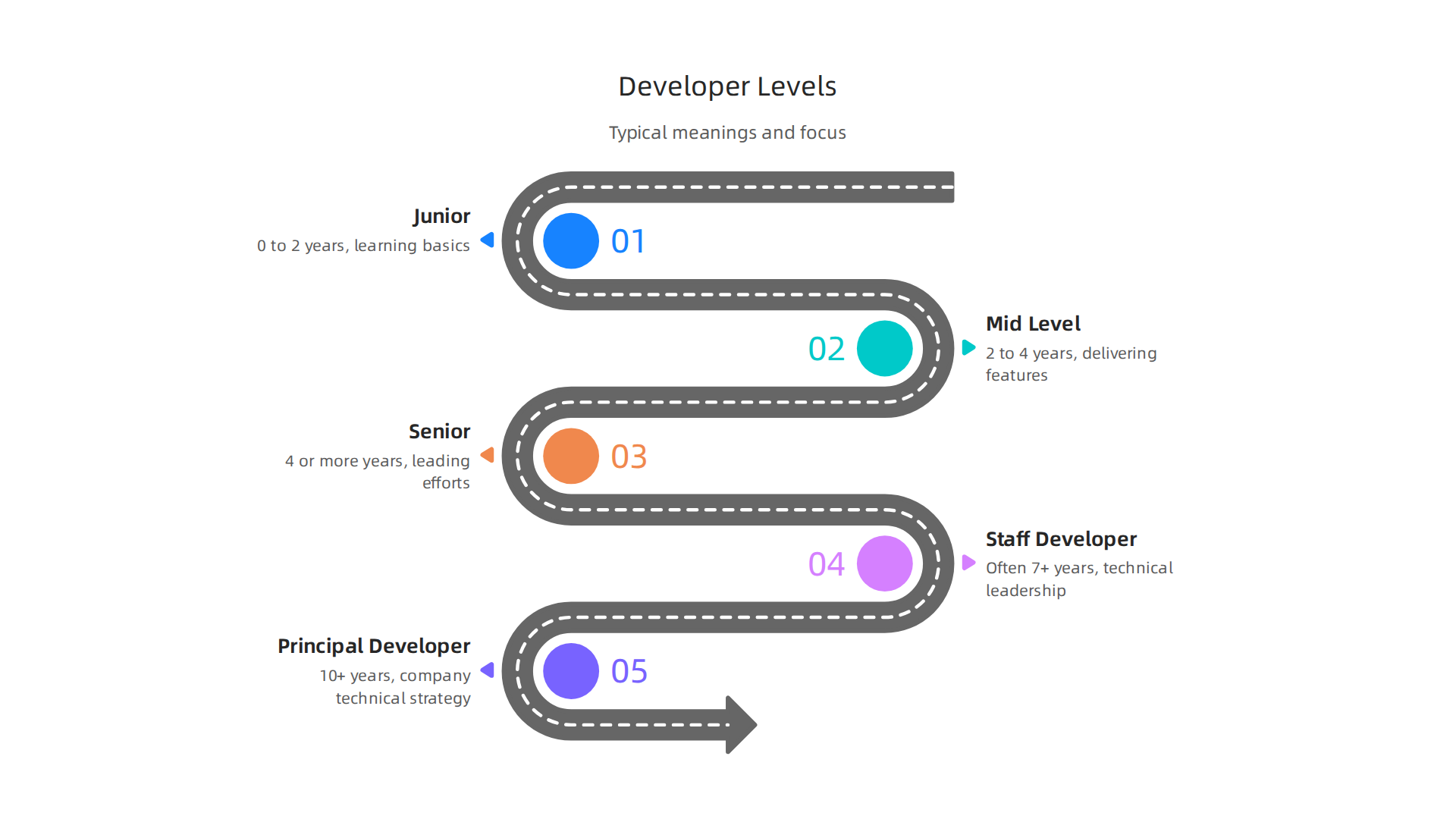
Junior Developer
This is often the first step for someone starting their coding journey.
- Experience: Usually 0 to 2 years.
- What they do: Junior developers focus on learning the basics. They get clear tasks, like fixing small bugs or writing simple parts of code. They work closely with more experienced people who guide them. They are learning how codebases work and how to ship their first changes with help, according to a guide on Mapping the Developer Career Ladder.
- Focus: Learning, asking questions, getting good at coding tools.
Mid-Level Developer
After learning the ropes, developers move to this level.
- Experience: Typically 2 to 4 years.
- What they do: Mid-level developers can work on bigger parts of a project, often called "features," with less help. They understand how different parts of a system work together and can solve problems on their own. Their work is reviewed for how they designed it, not just every line of code, as highlighted in a guide on How We Level Developers.
- Focus: Delivering complete features, working more independently, understanding more complex code. This is where a java full stack developer starts to shine on full projects.
Senior Developer
This is a big step where developers become very skilled and helpful to the team.
- Experience: Generally 4 or more years.
- What they do: Senior developers own larger parts of a project or even small projects from start to finish. They help design how things should be built, review other people’s code, and mentor junior developers. They solve hard technical problems and often make important technical decisions.
- Focus: Leading technical efforts for specific areas, mentoring, making key design choices. Knowing the difference between roles like a software engineer and a full-stack developer becomes important at this stage. Learn more about the different paths in Software Engineer Vs Full Stack Developer 2026.
Staff Developer
These developers are seen as experts who can solve big problems for many teams.
- Experience: Often 7+ years, but it’s more about impact than just years.
- What they do: Staff developers influence not just their own team, but many teams. They help set the technical direction for larger parts of a company, guide complex projects, and unblock challenges that others can’t. They often act as technical leaders without directly managing people. The Developer Career Growth Roadmap notes that this role involves a broader scope of impact.
- Focus: Wide-ranging technical leadership, influencing architecture across multiple teams, solving company-level technical issues. A controls engineer might move into this level by leading complex system designs for entire departments.
Principal Developer
This is one of the highest individual contributor developer levels, often shaping the entire company’s tech future.
- Experience: Many years of deep experience, usually 10+.
- What they do: Principal developers are top-tier experts. They set the long-term technical vision and strategy for the whole company or very large parts of it. They tackle the most difficult and important technical problems, and their decisions have a huge impact. They often represent the company in the wider tech community. These top levels, like Principal and Distinguished, are part of the individual contributor track in an Engineering Career Ladder (2026).
- Focus: Company-wide technical strategy, innovation, advanced research, and mentorship at the highest level.
Understanding Title, Level, and Role Scope
It’s important to remember that a "title" is just a label, while a "level" describes the expected abilities and impact. The "role scope" is the actual work a developer does. A company might call someone a "Lead Developer," but their actual level and scope of work might be similar to a Senior or Staff Developer at another company.
What truly matters is the impact you make, the autonomy you have (how much you work on your own), and the complexity of problems you solve. These are the main things that tell you what level someone is truly operating at, even if titles are different. Companies often outline these expectations in their career frameworks to make things clear, detailing the scope and impact expected at every level, as seen in the Dropbox Engineering Career Framework. Knowing these differences can help professionals in roles like product analyst jobs better understand the technical teams they work with.
When you understand the different developer levels, the next step is to know what is expected at each one. It’s not just about how long you’ve worked, but about the skills you show, the problems you solve on your own, and how much you help others and the company. These are often called "competencies" and they guide what a developer should be able to do at each stage.
Companies use special guides, called career frameworks, to spell out these expectations clearly. These frameworks help everyone understand what it takes to grow from one level to the next, covering technical skills, how well you work with a team, and any leadership you show. Many companies in 2026 use models like the Software Engineering Competency Model to define what engineers should know and do to help build and change software systems reliably and successfully Software Engineering Competency Model.
What Each Level Needs
Let’s look at the main things expected at each of the common developer levels:
- Junior Developer: At this starting level, the focus is on learning the core technical skills. Junior developers should be able to write basic code that works and get familiar with the tools their team uses. They often need help from others to finish tasks. For example, they might fix a simple bug or add a small part to a larger program. Asking good questions and learning from feedback are very important here. Mentorship is key for juniors, helping them grow their skills and understand the codebase Technical Mentorship Programs.

-
Mid-Level Developer: Mid-level developers have a better grasp of technical skills and can work more independently. They’re expected to take on a complete feature, from planning to finishing, even if it’s a small one. They understand how different parts of a system fit together. They also start to help junior developers and work well with teammates. A mid-level java full stack developer might be responsible for building a new part of a web application from front to back. To keep growing, they need chances to learn new skills, which often comes from good optimize software development training for tech team success in 2026.
-
Senior Developer: Senior developers are highly skilled and can lead technical efforts for bigger parts of a project. They design how new features should be built and make important technical choices. They’re very good at solving complex technical problems and mentoring others. Their work has a larger impact, often affecting how their entire team builds things. For example, a senior developer might be in charge of a whole system area, with a time frame of months for their impact Engineering Skills Matrix Template (2026). They often help design high-impact software developer training programs for newer team members.
-
Staff and Principal Developer: These are expert developer levels with a very wide reach. Staff developers influence many teams and help set the technical direction for bigger parts of the company. Principal developers are at the top, often shaping the entire company’s technical future, making big decisions that affect everyone. Their leadership is mostly technical, guiding strategy and innovation. A highly experienced controls engineer might operate at this level, leading complex system designs for whole departments. Their impact is often company-wide, focusing on big picture challenges and advanced technical solutions SmithSpektrum Blog.
Focusing on Outcomes, Not Just Tasks
When thinking about expectations, it’s best to look at "outcomes" instead of just "tasks." A task is what you do, like "wrote code." An outcome is what happened because you did it, like "helped customers sign up faster" or "made the website load quicker."
For example, for a junior developer, instead of saying "write a new login page," the expectation might be "successfully build a new login page that connects to our user database, with help from a mentor." The outcome is a working page, not just the act of writing code.
For senior or staff developers, outcomes might be about improving system performance by a certain amount, or leading a project that makes other teams more efficient. Career frameworks often focus on these outcomes, making it clear how someone’s work truly helps the company. Understanding this helps those in roles like product analyst jobs better communicate with and measure the success of engineering teams. This clear way of thinking about what needs to be done helps everyone grow and improve.
Staying informed about how these expectations and competencies evolve, especially with new technologies like AI, is crucial for any developer.
The tech world is always changing. To keep up with the latest in AI and how it affects software development, you should consider subscribing to The AI Newsletter Worth Reading. It offers clear daily updates to help you navigate the future of engineering.
Hiring and interviewing by level: designing fair, level-appropriate rubrics
After understanding what each developer level needs, the next big step for companies is to make sure they hire people correctly for those levels. This means designing good interview plans and ways to judge candidates that are fair and truly test the skills needed for each role. A good hiring process helps find the best people and also makes sure everyone gets a fair chance, which helps reduce unfair treatment.
When a company interviews for different developer levels, they should change what they focus on:
- Junior Developer Interviews: For junior roles, the interview should check basic coding skills. Can the person write simple code that works? Do they understand basic programming ideas? Interviewers might ask them to fix a small piece of code or add a tiny new part to a program. It’s also important to see if they are eager to learn and how they ask for help. Questions about how they learn new things or deal with feedback are useful.
- Mid-Level Developer Interviews: For mid-level positions, companies look for more independence. Can the candidate build a small feature from start to finish? Do they know how different parts of a system connect? Interview tasks might involve designing a small system or writing a more complex piece of code. They should also show they can work well with others and solve problems on their own. For example, a candidate for a mid-level java full stack developer role might be asked to plan and code a new login system for an application.
- Senior Developer Interviews: Senior developer interviews focus on bigger picture thinking. Can the person design a whole new part of a system? How do they solve very complex problems? Questions will often be about how they lead projects, mentor junior teammates, and make important technical choices. Their tasks might involve drawing up system designs or talking through tricky software problems.
- Staff and Principal Developer Interviews: At these very high developer levels, interviews are about technical leadership and wide influence. Candidates should show how they set the technical direction for many teams or even the whole company. They might be asked to discuss big company-wide technical strategies or how they solved a major, long-standing technical challenge. A strong candidate for a principal role, such as an experienced controls engineer, would show their ability to guide large-scale engineering efforts.
Using Interview Rubrics for Fairness
To make sure interviews are fair and helpful, companies should use "interview rubrics." A rubric is like a scorecard that lists all the important skills and traits for a job. It also describes what a "good" answer or performance looks like for each skill, often with different score levels. This helps all interviewers judge candidates in the same way, making the process much more fair and less biased Interview Rubric: Definition, Templates and Examples.
A good rubric for developer levels should include:
- Specific Skills: What technical skills are truly needed for this level?
- Problem-Solving: How well can they figure things out?
- Teamwork: How do they work with others?
- Leadership (for senior roles and up): Can they guide and teach?
Companies should make sure interviewers use these rubrics and are trained to score candidates based on clear behaviors, not just feelings. Structured interviews, where everyone asks similar questions and uses the same rubric, are known to be much better and fairer than casual, unstructured talks The Structured Employment Interview: Narrative and Quantitative Review …. This clear way of judging helps everyone understand what it takes to get hired and grow in their career. It also ensures that the hiring process accurately measures a candidate’s real potential and fit for the specific developer level.
Following how companies hire for different developer levels, what happens next is how people grow in their jobs. This is where "career ladders" come in. A career ladder is a clear plan that shows how you can move up or even sideways in a company. It helps everyone understand what they need to do to get promoted. This makes things fair and keeps people happy and growing in their jobs.
In 2026, most tech companies have more than one way to move up. It’s not just one straight path anymore. There are usually two main paths and sometimes specialist roles too, helping people navigate their growth within different Developer Career Paths in 2026 — IC, Management, and ….
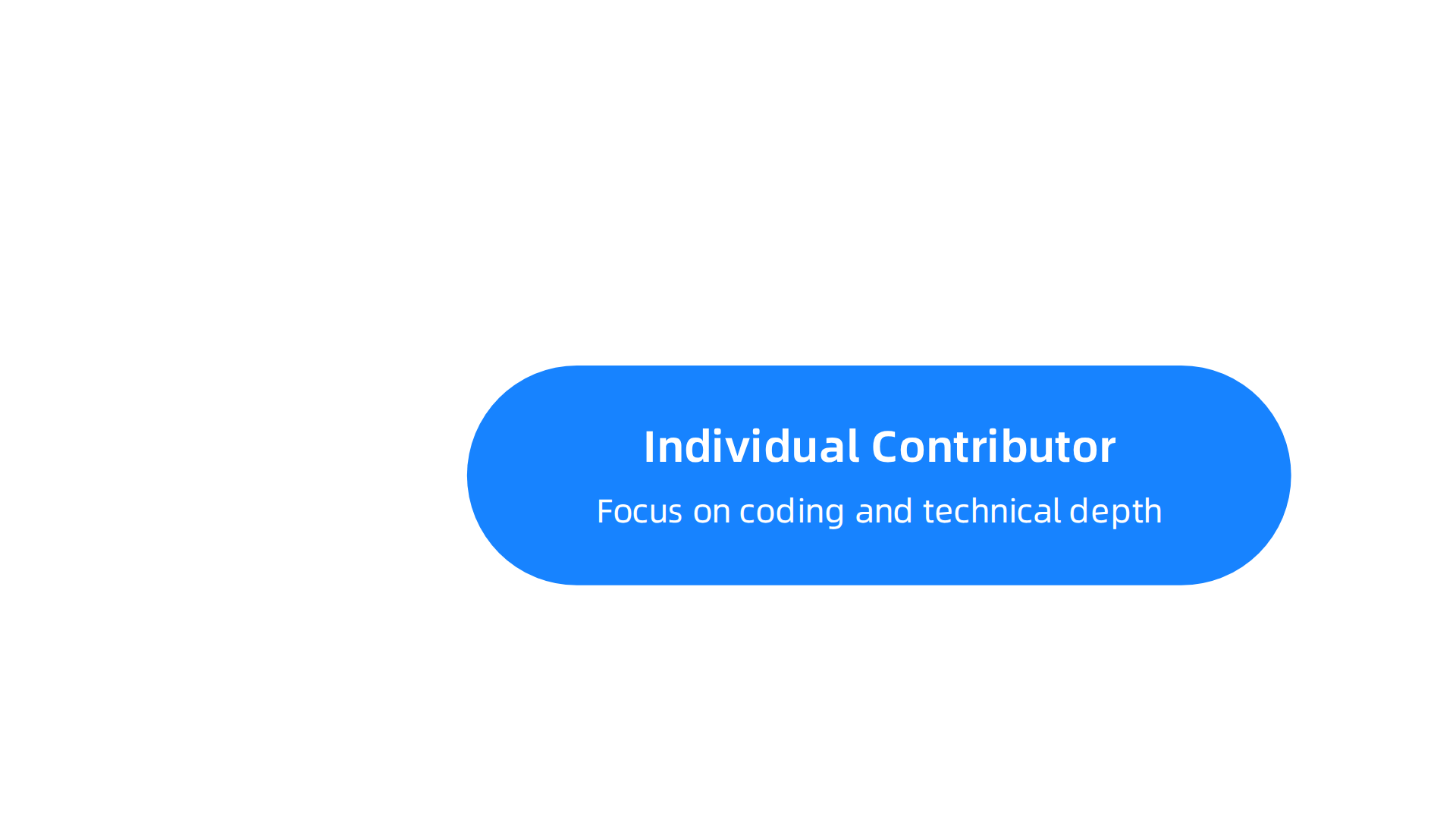
The Individual Contributor (IC) Track
This path is for people who love to code and solve technical problems without managing others. You might start as a junior developer, then move to mid-level, senior, staff, and maybe even principal developer. At each step, your work becomes bigger and more important. For example, a junior might work on a small part of a project, while a senior Software Developer Skills 2026 may include designing a whole new feature. At the highest levels, like principal or distinguished engineer, you’re guiding the technical direction for many teams or the whole company Staff and Principal Engineer Career Guide 2026 — How to Reach IC6+. These very high developer levels mean you are an expert who influences big decisions. For example, a specialized role like a controls engineer might reach these top levels by mastering complex automation systems and guiding their development across an organization.
The Management Track
This path is for people who want to lead and grow teams. You might start as a tech lead, then become an engineering manager, and maybe even a director or CTO. Here, your focus shifts from writing code to helping your team do their best work, planning projects, and dealing with people.
Lateral Paths and Specialist Roles
Sometimes, people want to move to a different type of role that isn’t strictly IC or management. These are "lateral moves." For example, an experienced java full stack developer might move into a product analyst jobs role or become a developer advocate. These roles often need a mix of technical know-how and other skills. Being clear about these different developer levels and paths helps people see all their options.
Transparent Promotion Criteria
To make sure promotions are fair, companies need clear rules. These are called "promotion criteria." They explain exactly what you need to do to move from one level to the next. This could include:
- Scope of Impact: How many people or projects does your work affect?
- Autonomy: How much can you work on your own without constant help?
- Leadership: Do you guide others, share knowledge, or mentor new hires?
- Technical Skills: Do you have the right skills for the next level?
Companies should write down these criteria in a clear document, often called a "career framework" or "engineering ladder" Career Ladder Examples by Role (2026) – Harmny. This document acts like a map for your career. It shows what’s expected at each developer level and how you can meet those expectations. For example, it might list specific behaviors or achievements for a mid-level developer versus a senior developer Full Scale Career Ladder: How We Level Developers. When these rules are public and easy to understand, it helps everyone feel that decisions about their career are fair and not based on favoritism. It also helps managers give better feedback and support their team members’ growth. Continuing to learn is key, and exploring Best Computer Courses 2026 for Software Engineers can definitely help you prepare for that next step.
Staying updated on the latest tech trends and insights is vital for navigating these career paths successfully in 2026. Get clear daily AI updates from The AI Newsletter Worth Reading.
After understanding the different developer levels and career paths, the next big question is often about pay. How do companies decide how much to pay people at each step? This is where "compensation benchmarking" comes in. It is how companies figure out fair salaries by looking at what other companies pay for similar jobs.
How Pay Connects to Developer Levels
When a company has clear developer levels, it also sets up clear pay ranges for each level. This helps make sure everyone at the same level gets paid fairly. These pay ranges are not just about your base salary. They also include other parts of your "total compensation" like bonuses and company stock or equity What Total Comp Looks Like at Each Level: Base, Equity, and ….
In 2026, companies often think about a few things when setting these pay ranges for each developer level:
- Your Job Level: A junior developer will earn less than a senior developer because the senior developer has more experience and a bigger impact.
- Location: Where you work makes a big difference. For example, a software engineer in New York City might earn more than someone in a smaller town, even at the same level.
- Company Type: Big tech companies often pay more than smaller startups or non-tech companies.
- Specific Skills: If you have special skills, like being an expert in AI or a specific programming language, you might get paid more. For instance, a highly skilled controls engineer working on complex automation systems could command a higher salary, especially at higher levels.
Looking at the Market for Fair Pay
Companies don’t just guess what to pay. They look at "market data." This means they check surveys and reports that show what similar roles pay in other companies. This helps them stay competitive and attract good people. For example, a Software Engineer Salary in 2026 report shows that the national average total compensation for a software engineer is about $192,000 in mid-2026. At top tech firms, senior and staff engineers can make much more, sometimes over $400,000 Software Engineer Salary Guide [2026].
Here’s a general idea of what a software engineer might earn in the US in 2026, based on their level:
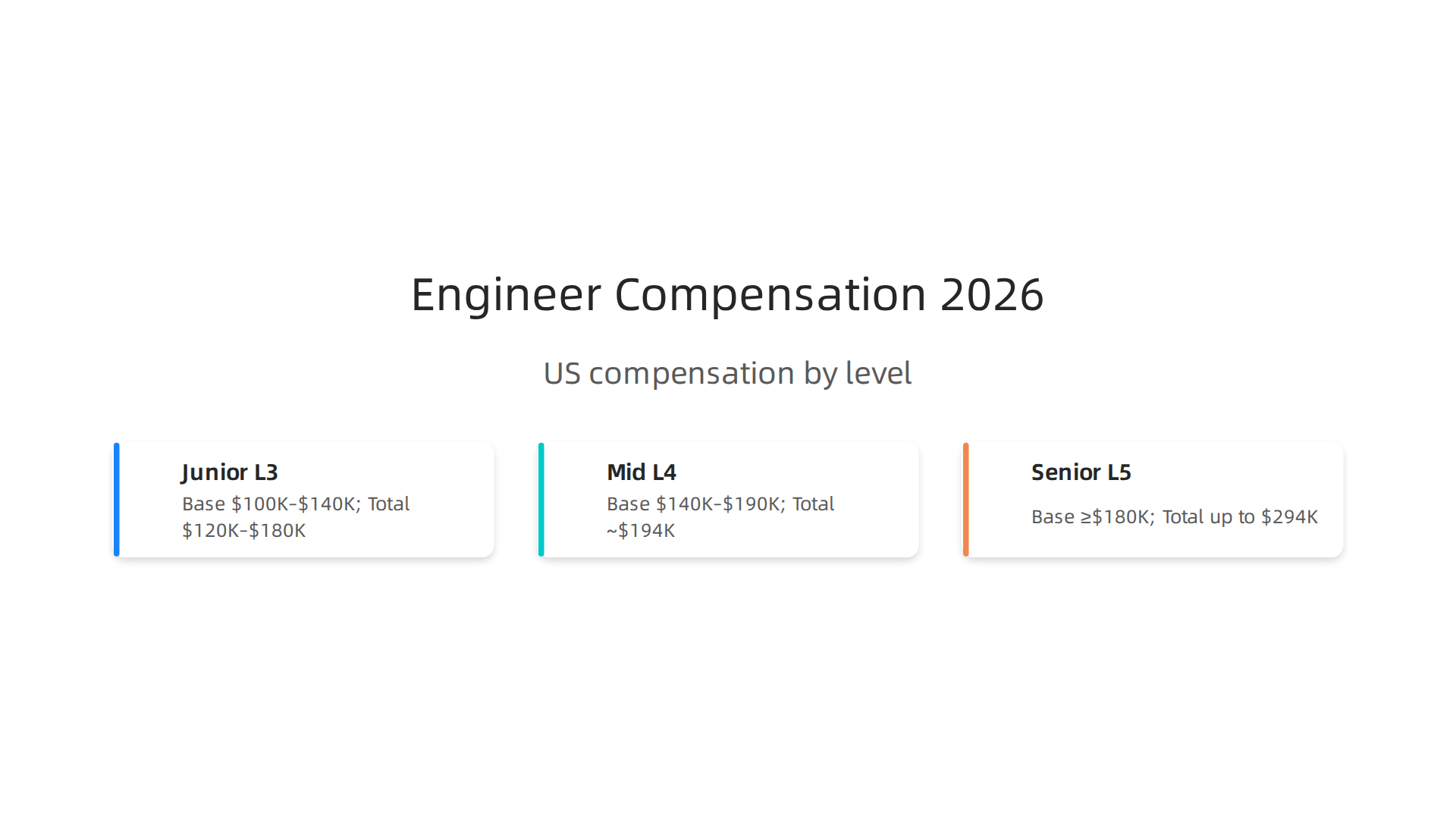
- Junior (L3): Around $100,000 to $140,000 base pay, with total compensation generally between $120,000 and $180,000 Software engineer salary in the US in 2026: bands by level ….
- Mid-Level (L4): Base pay of $140,000 to $190,000, and total compensation often around $194,000 Software Engineer Salary Guide (2026): Entry to Staff Comp.
- Senior (L5): Base pay starts at $180,000 and can go higher, with total compensation sometimes reaching $294,000 Software Engineer Salary Guide (2026): Entry to Staff Comp.
These numbers can change a lot based on where the company is and how big it is. For example, a remote Software Developer Salary Report 2026 might show different rates across various countries. Also, the stage of a company, like if it’s a small startup or a large public company, plays a role in how much equity you get Why The Spread Exists.
Companies also use salary surveys to compare pay for different types of roles. This is true for a java full stack developer or someone in a product analyst jobs role. Making sure pay is fair and matches market value helps companies keep good employees happy and motivated to keep growing through their career ladders.
Once companies understand developer levels and how to pay them fairly, the next step is making sure everyone works well together. This means managing teams that have people at different experience levels. Good team management helps everyone learn, grow, and build great things, which boosts overall team happiness and retention.

Mentoring Across Developer Levels
A great way to help everyone grow is through mentoring. This is when more experienced developers guide those with less experience. For example, a senior developer might pair up with a junior developer. This setup helps new team members learn the ropes faster and feel supported. Structured mentoring programs, which have clear goals and regular meetings, are very effective for accelerating growth across your entire team in 2026 Mentorship: Accelerate Growth Across Your Entire Team. These programs often have experienced engineers mentor mid-level professionals, who then guide newer team members How Engineering Mentorship Builds Future Leaders. This kind of "vertical mentoring" builds strong teams and leaders for the future.
Mentorship isn’t just for beginners. Mid-level developers can also mentor newer hires or interns. This helps them grow their leadership skills. A structured approach to mentorship, with clear check-ins and honest feedback, makes sure everyone benefits Mentorship That Scales: Growing Your Team’s Next Engineering ….
Pairing and Code Review Workflows
Working together on code, known as "pairing," is another helpful tactic. It allows two developers to work on the same task. This is especially good for mixing developer levels, as a senior developer can guide a junior or mid-level developer through a problem in real-time. This helps share knowledge quickly. It’s often helpful to pair new hires with a senior engineer for their first few months Elaborating on Multilevel Engineering Teams.
Code reviews are also key. This is when one developer checks another’s code for mistakes, better ways to do things, or to make sure it follows company rules. For teams with varied developer levels, code reviews are a great learning tool. Junior developers learn from feedback, and senior developers can ensure code quality. To make reviews fair and consistent, many companies use an interview rubric system, which can also apply to code evaluations How to create an interview rubric that actually works.
Workload Distribution and Career Development
Distributing work effectively means giving tasks that match each developer’s skill level while also offering chances to grow. For example, a junior java full stack developer might get smaller, well-defined tasks, while a more experienced controls engineer could lead a complex project. Regularly talking about these growth opportunities helps teams become more productive and keeps everyone happy in their jobs.
Companies also use "career ladders" to show clear paths for growth within the company Engineering Career Ladders: How to Build and Use Them – EM Tools. These ladders outline what skills and behaviors are needed for each of the developer levels. This clarity motivates employees and helps them understand what they need to do to get promoted. Offering training programs and focusing on essential software developer skills 2026: what every developer must master also helps people move up. For a product analyst jobs role, this might mean learning new data tools or improving communication skills to work better with engineering teams.
By using good mentoring, smart workload sharing, and clear career paths, companies can build strong, productive teams where everyone feels supported and excited about their future. This kind of environment can lead to compound engineering explained: achieve exponential team growth.
To stay ahead in the fast-changing world of software engineering and team management, getting up-to-date information is crucial.
The AI Newsletter Worth Reading
Summary
This article explains why well-defined developer levels matter for teams, hiring, pay, and career growth. It walks through common levels—Junior, Mid-level, Senior, Staff, and Principal—describing typical experience, responsibilities, and expected impact at each step. You’ll learn how companies translate levels into interview rubrics, fair hiring practices, and compensation bands, and why focusing on outcomes (not just tasks) makes promotion decisions clearer. The piece also covers practical career paths (individual contributor vs. management and lateral moves), transparent promotion criteria, and team practices like mentoring, pairing, and code review that help multilevel teams thrive. By the end, readers will understand how to read titles versus real level and how to use career frameworks to plan promotions, hiring, and personal development.