
Why Online Certifications Are the Key to Staying Ahead in Software Engineering
Here is a truth every software engineer faces in 2026. The tools you mastered last year might already feel outdated. New frameworks appear weekly.

AI assistants change how you write code. And the tech industry keeps moving faster than most of us can keep up.
That is not just a feeling. It is real. Software development is a massive field with nearly 29 million developers worldwide, and the global market sits at over $823 billion. With numbers that big, the pressure to stay relevant hits hard.
But here is the thing. You do not need to go back to school for two years or spend a fortune to keep your skills fresh. Online certificate programs have become one of the smartest ways to stay ahead. They are flexible, affordable, and focused on exactly what employers need right now.
Think about what is shaping the industry in 2026. Python remains the most in-demand language, with nearly 46% of recruiters actively looking for it. Cloud computing and cybersecurity skills are exploding. AI certification courses are everywhere because companies cannot find enough people who understand them. And platforms like Google Cloud Skills Boost offer hands-on training that matches real job requirements.
The demand is clear. According to the latest research, the most in-demand tech skills this year include AI, machine learning, cloud architecture, and cybersecurity. Companies are desperate for engineers who actually know these tools, not just people who have read about them.
Yet there is a real gap between what schools teach and what the industry needs. Many traditional programs move too slowly to keep up with change. That is where online certifications shine. They let you learn at your own pace, often with real projects, and they show employers you can work with current technology.
If you are wondering where to start, some credentials have proven their worth over time. For example, if you work with cloud infrastructure, understanding how an AWS DevOps certification still matters in 2026 is a smart move.
This article is your complete guide to picking the right programs and getting real value from them. We will cover what to look for, which certifications open doors, and how to avoid wasting time on courses that do not matter.
The bottom line is simple. You do not have to fall behind. The tools to grow your career are available right now, and they fit into your schedule.
Get Free Updates and stay ahead of the curve with daily insights on AI and software engineering trends. Subscribe to The Deep View Newsletter and never miss what matters.
The Growing Importance of Certifications in Tech
Here is something you might have noticed. Companies are struggling to find engineers who can actually do the job. That is not just a feeling, it is backed by data. Industry reports show a widening skills gap in cloud computing, artificial intelligence, and cybersecurity The Most In-Demand Tech Skills for 2026 – ONLC. The tools are changing faster than traditional education can keep up.
So what does that mean for you? It means that a degree alone might not be enough anymore. Employers are looking for proof that you can work with current technology. And that is exactly where online certificate programs come in.
Think about it this way. When a hiring manager sees a certification on your resume, they know you have spent time learning hands-on skills. You did not just read a textbook. You practiced with real tools, completed projects, and passed an exam. That carries weight, especially in fast-moving fields like AI and cloud.
According to the latest research, the most in-demand tech skills for 2026 include AI, machine learning, cloud architecture, and cybersecurity The 6 most in-demand tech skills in 2026 | Pluralsight.
Companies cannot find enough people who are skilled in these areas. If you earn a credential in any of these, you immediately stand out from the crowd.
Let me give you a practical example. Suppose you want to work with cloud infrastructure. You could take online ce courses from a provider like Google Cloud Skills Boost. These programs teach you exactly what is needed for roles like cloud engineer or DevOps specialist. They are short, focused, and directly tied to real job responsibilities.
The same goes for ai certification courses. AI is reshaping software development. Engineers who understand how to build, deploy, or even just use AI tools are in high demand. A certification in AI or machine learning tells employers you are ready for the future.
And here is the thing. You do not need to quit your job or spend years studying. Most online certificate programs take weeks or months, not years. They fit into evenings and weekends. That flexibility makes them a smart choice for busy engineers.
If you are already working with cloud, you might want to check out our guide on why an AWS DevOps certification still matters in 2026 link to internal article. It shows you exactly how certifications can boost your career in cloud roles.
The bottom line is clear. The skills gap is real, and employers are hungry for people who can close it. Certifications give you a way to prove your expertise without going back to school. They help you differentiate yourself in a crowded job market.
Want to keep learning about what matters in tech? Subscribe Free to The Deep View Newsletter and get daily AI and software engineering insights delivered to your inbox.
Categories of Online Certificate Programs in 2026
Not all online certificate programs are the same. The type you choose makes a big difference in your career path. In 2026, three main categories stand out above the rest.
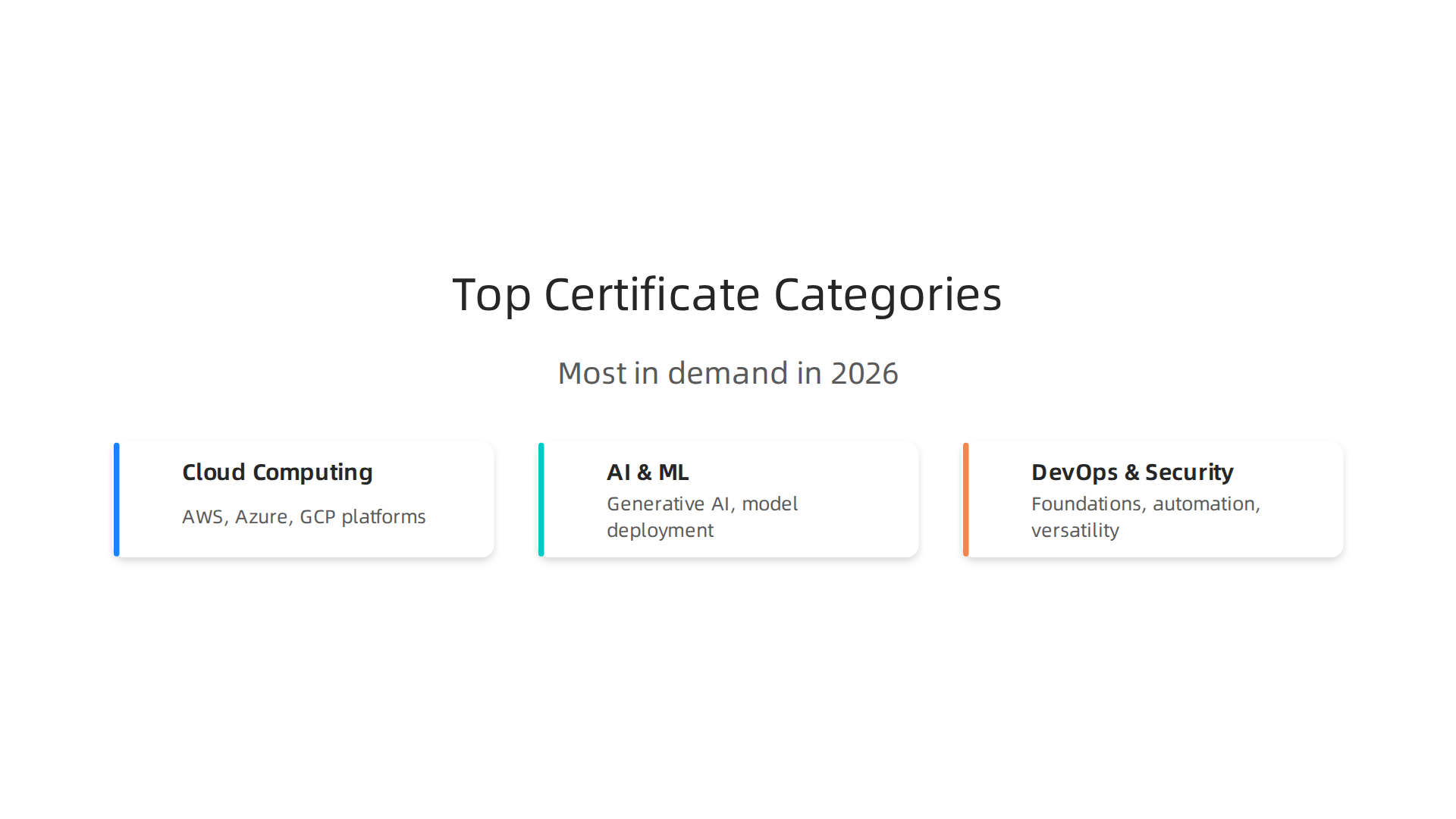
Cloud Computing: AWS, Azure, and GCP
Cloud skills are still the number one request from employers. Companies of all sizes run their operations on cloud platforms. That means they need engineers who can manage, secure, and optimize those systems.
If you want to work in cloud, you have plenty of options. AWS, Microsoft Azure, and Google Cloud all offer their own certification paths. The Google Cloud Skills Boost program is one example of a focused path that teaches you real job skills quickly. These online ce courses are built around hands-on labs, not just theory.
Cloud certifications are also practical. They prove you can handle tasks like setting up virtual servers, managing databases, and scaling applications. That is exactly what hiring managers want to see.
AI and Machine Learning Certifications
Here is where things get exciting. Generative AI has completely changed the tech landscape. Companies cannot hire enough people who understand how to use AI tools and build AI-powered applications.
That is why ai certification courses are growing so fast. Programs from providers like Coursera and university partners teach you everything from prompt engineering to model deployment. A great starting point is the software engineering courses available on Coursera, which include AI-focused tracks Coursera Software Engineering Courses.
These certifications are especially valuable for software engineers. You do not need to become a data scientist. You just need to know how to integrate AI into the products you build. And that is exactly what these programs teach.
DevOps, Security, and Full-Stack Development
The third big category covers the foundations that never go out of style. Security threats are growing every year. Companies need engineers who can build secure systems from day one.
DevOps is also still critical. The ability to automate deployments, manage CI/CD pipelines, and work with containers is a huge advantage. If you want to dive deeper into that area, check out our guide on why an AWS DevOps certification still matters in 2026 aws devops certification.
Full-stack development rounds out the list. Programs from universities like Maryville offer online software development certificates that cover front-end and back-end skills Maryville Software Development Certificate. These are great for engineers who want to become versatile and work on complete projects.
Which category is right for you? Think about where you want your career to go. Cloud and AI are the hottest areas right now. But DevOps and security will always be in demand.
Whichever you choose, picking the right online certificate programs is the first step toward a stronger career.
Want to stay ahead of the curve? Subscribe Free to The Deep View Newsletter and get daily insights on AI, cloud, and software engineering trends.
How to Spot High-Quality Programs
So you know which category of online certificate programs fits your goals. Now comes the hard part. How do you tell which ones are actually worth your time and money?
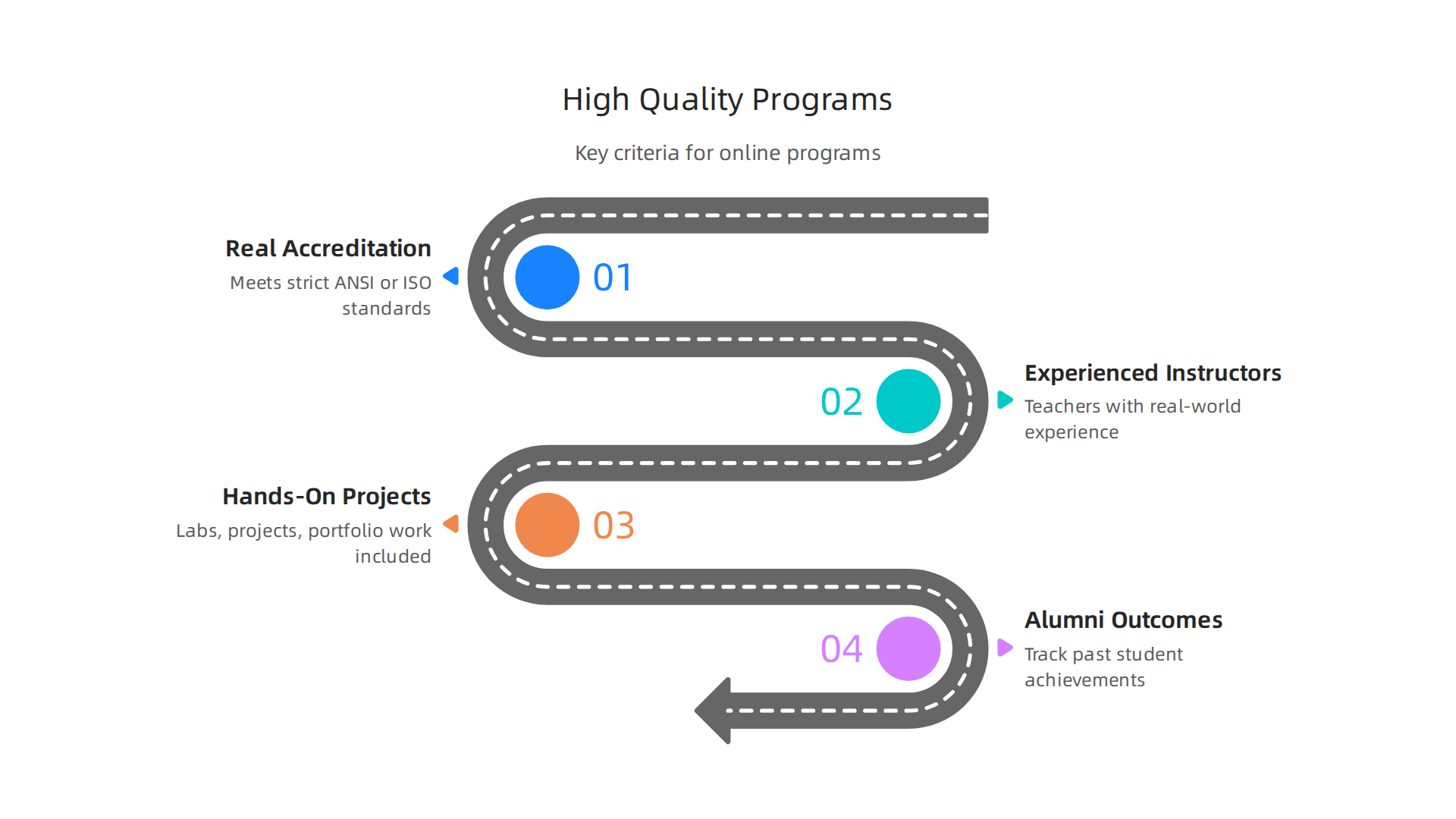
Not every program delivers the same value. Some will boost your career fast. Others will leave you with a certificate that employers barely notice. Here is how to spot the difference.
Look for Real Accreditation
This is the biggest red flag or green flag. Accreditation from recognized bodies like ANSI or ISO tells you the program meets strict standards. Universities that offer online ce courses through accredited programs have already passed quality checks.
Take Boston University’s online Software Engineering Graduate Certificate as an example. It comes from a respected university with a long track record BU Software Engineering Certificate.
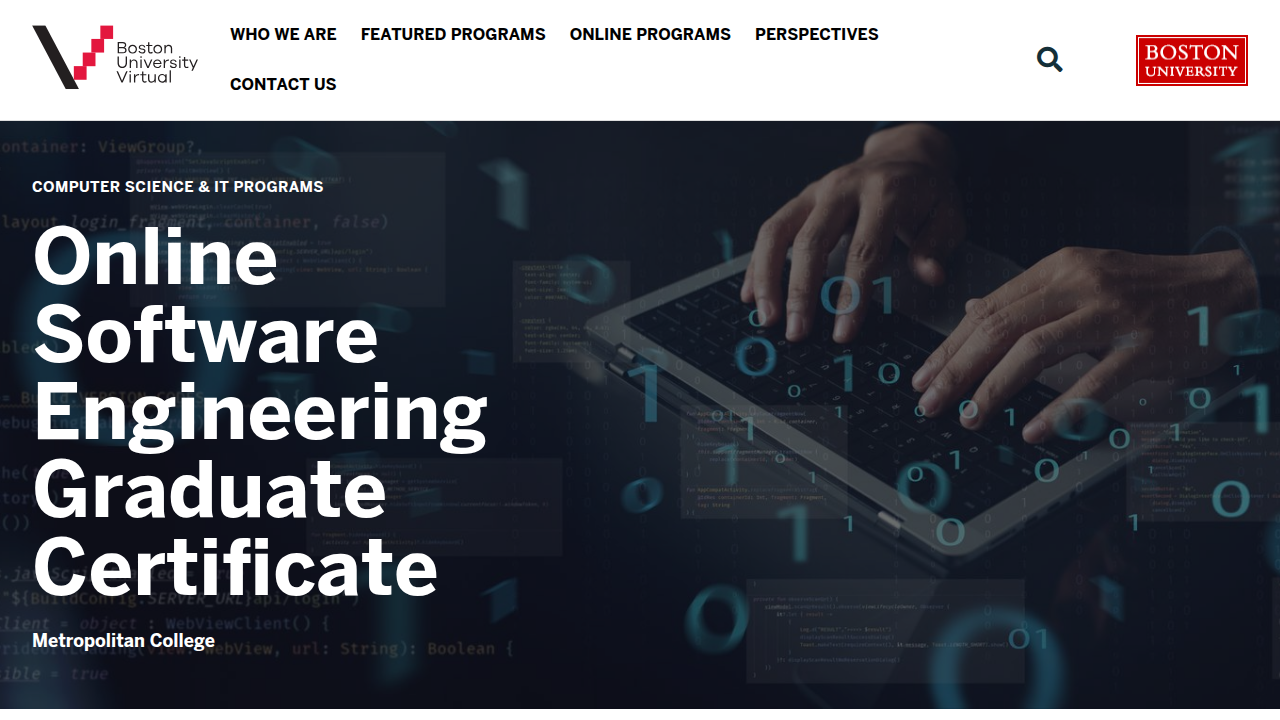
Programs like that carry weight with employers because the name behind them matters.
Check Who Teaches the Course
A flashy course description means nothing if the instructor has zero real-world experience. You want teachers who have actually worked in the field.
Look for programs where instructors come from companies you recognize. Programs like those from UC Berkeley Extension often have faculty with strong industry backgrounds UC Berkeley Software Development Program. When the person teaching you has built real systems, you learn real skills.
Demand Hands-On Projects
Theory is fine. But you need to actually build things. The best ai certification courses and cloud programs include labs, projects, and portfolio work.
Good programs make you solve real problems. They do not just show you slides. They push you to write code, deploy apps, and break things so you can fix them. That is the kind of experience hiring managers actually care about.
Research Alumni Outcomes
Here is a simple test. Can the program show you what past students achieved? Do graduates land jobs at companies you admire?
Credible programs track this data. If a program hides its results, that is a warning sign. Quality programs are proud of their alumni success stories.
For a deeper dive into one of the most respected certification paths, check out our guide on why an AWS DevOps certification still matters in 2026 aws devops certification.
Choosing the right online certificate programs comes down to doing a little homework. Check the accreditation, the instructors, the projects, and the outcomes. When you find a program that checks all four boxes, you have found a winner.
Want to stay ahead of trends in AI and software engineering? Subscribe Free to The Deep View Newsletter and get daily insights you can actually use.
Calculating ROI: Does Certification Pay Off?
So you picked a quality program. Now the real question. Will that online certificate program actually put more money in your pocket?
Here is the good news. The numbers look promising for 2026. In fact, the highest return AI certifications, like the AWS Certified Machine Learning Specialty, can boost your salary by around 20% EveryOneWhoCode AI Jobs. And across the board, professional certifications help software engineers earn more Flexhire Software Engineer Salary.
But not every certificate delivers the same return. The math depends on three things: cost, industry demand, and timing.
Factor in the Cost
Some online ce courses cost a few hundred dollars. Others run into the thousands. A cheap program with weak content is a bad deal. An expensive one with great instructors and hands-on projects can pay for itself in months.
Always compare the total cost against your current or expected salary. A $2,000 program that leads to a $10,000 raise is a clear win. The same program that only improves your skills without a raise? Harder to justify.
Watch Industry Demand
Right now, AI skills carry a premium. In 2026, software engineers average around $148,000, but AI engineers earn about 12% more Hakia Software Developer Salaries 2026. That means ai certification courses in machine learning or cloud computing often give the best ROI.
Certifications from Google Cloud Skills Boost or AWS also align with growing demand. When you match your certificate to a hot field, you move faster into higher paying roles.
Timing Matters Too
Getting certified right before a job switch or promotion push can tip the scales. Many engineers use certificates to accelerate job transitions. The software engineer career outlook in the US remains strong through 2026, with continued growth expected Flashfire Career Outlook. Employers see certifications as proof you are serious about staying current.
For a closer look at one certification that still pays off, read our deep dive on why an AWS DevOps certification still matters in 2026 aws devops certification.
Bottom line: Certifications can pay off handsomely when you choose a program that is affordable, in demand, and well timed. Do the math before you enroll, and you will know exactly what you are getting into.
Want to stay ahead of certification trends and salary data? Subscribe Free to The Deep View Newsletter and get daily insights you can actually use.
Real-World Case Studies: Certifications That Made a Difference
The numbers in the last section tell one part of the story. But real people, real careers, and real paychecks show the full picture.

Let’s look at three different roles and how the right online certificate programs changed their path.
Case 1: The Junior Developer Who Jumped 20%
Maria was a junior dev at a mid size SaaS company making $85,000. She felt stuck in bug fixes and small feature work. She decided to invest in the AWS Certified Machine Learning Specialty, one of the highest ROI certifications this year, which can boost salary by about 20% EveryoneWhoCode. After three months of study and hands-on labs, she passed. Within two months of listing the cert on her LinkedIn, a recruiting firm placed her at a cloud consulting firm for $105,000. Her online ce courses cost $1,500. The raise paid for it in under two months.
Case 2: The Architect Who Pivoted Into AI
James was a solutions architect at a Fortune 500 company. He saw AI taking over more pipelines and wanted to stay relevant. He completed Google Cloud Skills Boost courses for the Professional ML Engineer path. The certification combined with his existing architecture experience made him a perfect fit for a new AI infrastructure team. His total comp jumped 12%, matching the premium AI engineers now earn over standard software engineers Hakia. His salary went from $155,000 to $174,000. The certification cost $200 in exam fees plus the learning subscription.
Case 3: The Manager Who Built an AI Team
Sarah was an engineering manager who wanted to lead a new AI squad. She had no ML background. Instead of a generic degree, she picked a focused ai certification courses pathway on Coursera and AWS. She persisted through eight weeks of night study. After earning the certification, she pitched a new AI feature roadmap to her VP. She got the team lead role and a $20,000 bonus. As professional certifications continue to boost marketability and salary Flexhire, her choice to specialize paid off fast.
What These Stories Teach Us
All three people shared one thing: they chose a certification that matched real market demand and stuck with it. They didn’t chase the easiest exam or the cheapest one. They looked at where the industry was heading and bet on themselves.
If you want to see another certification that keeps delivering, check out our deep dive on an AWS DevOps certification still matters in 2026 here. It could be your next step.
Want to hear more real-world success stories and stay ahead of certification trends? Subscribe Free to The Deep View Newsletter and get daily insights that actually help your career.
Integrating Learning into a Busy Schedule
You just read about Maria, James, and Sarah. They didn’t have extra hours. They just used the hours they had differently.
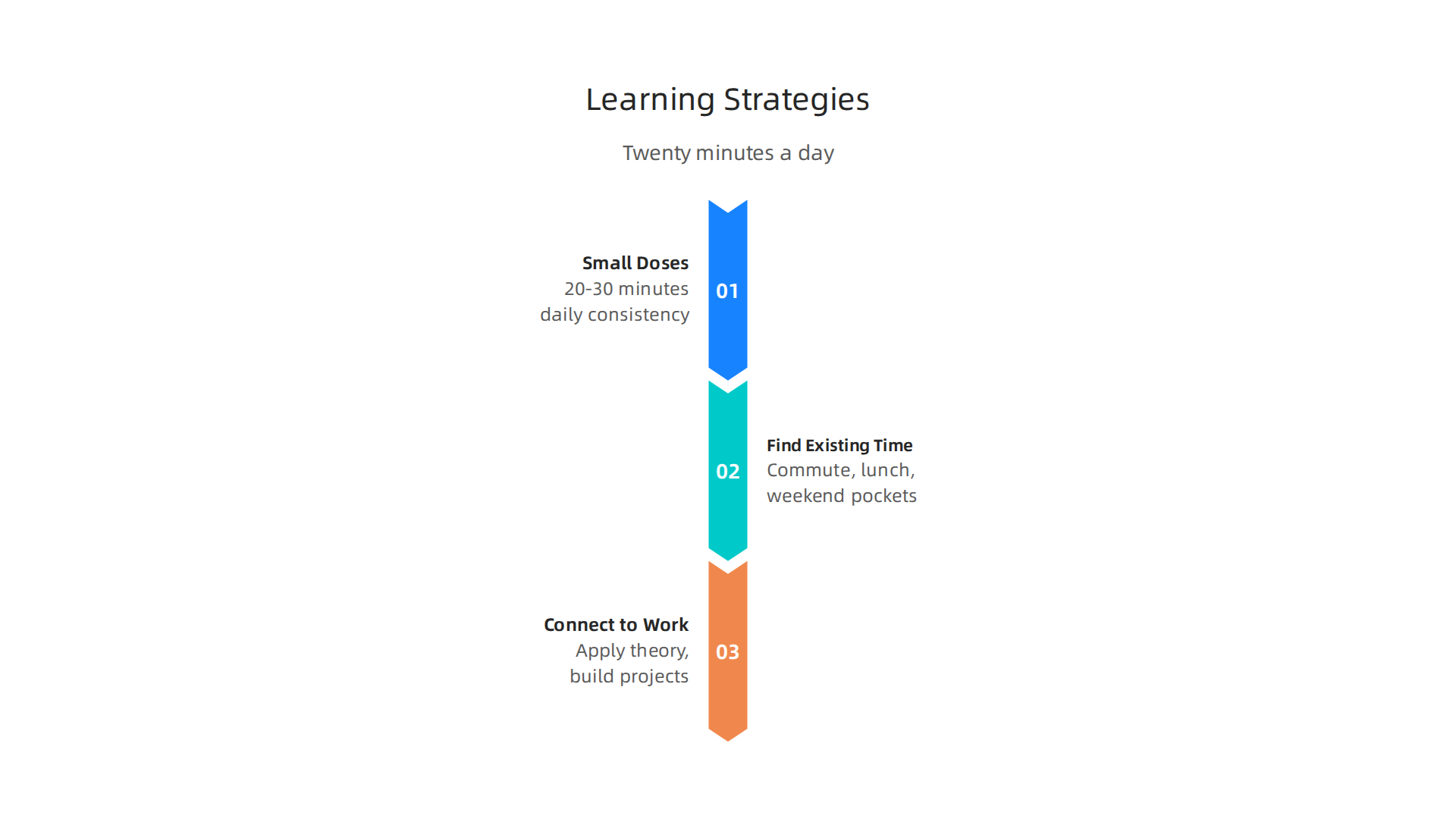
Here’s the truth: you don’t need two hours a night. You need twenty minutes a day.
Small Doses Beat Big Cram Sessions
Your brain learns better in short, consistent chunks. Research on stackable micro-credentials shows that bite-sized learning paths help people build skills without burning out VirtualBadge. Think of it like exercise. Thirty minutes every morning does more for your health than running five hours on Saturday.
The same goes for online certificate programs. Cramming for an exam over a weekend feels productive. But you forget most of it by Monday. Instead, set a timer for 20 to 30 minutes each day. Read one chapter. Do one lab. Watch one video. Repeat.
That small habit adds up fast. In three months, you’ll have 30 hours of focused study. That’s enough to pass most ai certification courses without feeling like you gave up your life.
Find Time Where It Already Exists
Look at your day. Where is the wasted time?
- Your commute. If you drive, listen to audio courses or podcasts about online ce courses. If you take the train, watch a lecture.
- Lunch break. Eat your sandwich with one hand and follow along with a hands-on lab with the other. Fifteen minutes a day is 75 minutes a week.
- Weekend power hours. Pick one weekend morning. Block two hours. Turn off notifications. Study like it’s your job.
These small pockets of time are perfect for google cloud skills boost lessons or any modular certification path. The key is consistency. One hour every Saturday is good. Ten minutes every day is better.
Connect Study to Real Work
The fastest way to learn is to build something real. Don’t just read theory. Apply it.
If you’re studying cloud architecture, redesign a piece of your own infrastructure. If you’re learning machine learning, run a model on data your team already uses. This does two things: you remember more, and you can show your boss what you built.
That real-world proof is what makes online certificate programs worth the effort. It’s why our guide on how to pass the AWS DevOps certification in 2026 focuses on hands-on labs, not just theory.
One Tip to Stay on Track
You will miss days. That’s fine. Don’t try to make up for it by doubling up the next day. Just restart your 20 minute habit. Over a year, those small days add up to a new skill and a higher salary.
So pick your certification today. Calendar your 20 minutes. Start tomorrow.
If you want daily tips on fitting learning into your life and staying ahead of tech trends, Get Free Updates from The Deep View Newsletter. It takes two minutes to read and gives you one actionable insight. That’s a micro-learning win right there.
The Role of Micro-Credentials and Badges
So you have your 20 minutes carved out. Now comes the big question: what do you actually learn in that time?
You do not need to sign up for a massive course right away. In fact, starting small with micro-credentials and digital badges is often the smarter move. These are quick, focused programs that teach you one specific skill at a time.
Think about it this way. Instead of taking a six month bootcamp, you take a 10 hour module on cloud security. You pass the test. You earn a digital badge you can share on LinkedIn right away.

That badge matters. It is quick proof that you know your stuff.
Small Skills, Bigger Picture
Micro-credentials work so well because they are targeted. You learn exactly what you need without wasting time on topics you already know.
Research from UbisGlobal shows that these bite sized programs help people enhance their skills and stay relevant in their careers UbisGlobal. And according to UW-Superior, digital badges give you industry recognition and help you stand out from other candidates UW-Superior.
Here is the real magic. You can stack these badges together. Each one is a building block. Collect enough of them, and you have built the equivalent of a full certification.
Magic EdTech explains that smart credential programs are designed to be stackable. Learners can combine them into larger credentials over time Magic EdTech.
So you can earn one badge on Python basics this month. Earn another on data pipelines next month. By the end of the year, you have the skill set of someone who finished a full online certificate program.
Do Employers Actually Care?
They do. And that is a big shift in 2026.
Employers today want proof. They want to see verified skills, not just a degree name on a resume. The University of Hawaii is currently rolling out new stackable micro-credentials to bridge the gap between learning and actual workforce needs University of Hawaii.
BCdiploma confirms that micro-credentials are booming and employers are prioritizing verified skills more than ever BCdiploma. A study from Taylor & Francis Online also found that micro-credentials are an effective way for universities to improve graduate employability Taylor & Francis Online.
For software engineers and tech professionals, this is great news. When you complete a lab on google cloud skills boost and earn a badge, managers can see exactly what you know. The same applies to ai certification courses. A badge proves you did the work.
Your Next Move
Start with one small micro-credential. Finish it in your 20 minute windows. Collect the badge. Then stack another one on top of it.
Before you know it, you will have the skills and proof to ask for a raise or land a new role.
If you are aiming for a big certification, stacking foundational micro-credentials can make the final exam much easier. Check out our guide on how to pass the AWS DevOps certification in 2026 to see how small building blocks lead to big results.
And if you want daily tips on which micro-credentials actually matter in tech today, Get Free Updates from The Deep View Newsletter. It takes two minutes to read and helps you decide what to learn next.
Now that you know how micro-credentials and badges can stack into bigger skills, the next big choice is what kind of certification to chase. Should you go for a vendor-neutral certificate that covers broad concepts? Or a vendor-specific one that dives deep into a single platform?
This decision shapes your entire online certificate programs journey.
Let’s break it down so you can pick the right path for your career in 2026.
What Is a Vendor-Neutral Certification?
A vendor-neutral certification teaches you skills that work across many tools and platforms. Think of it as learning how to drive any car, not just a specific model.
Common examples include CompTIA Network+ and the Project Management Professional (PMP) certification. These focus on general principles. For instance, CompTIA Network+ covers networking fundamentals that apply whether you are using Cisco, Juniper, or any other hardware Coursera.
Vendor-neutral certs are great for building a strong foundation. They are especially useful if you work in a multi-vendor environment or plan to switch companies often ExamCollection.
What Is a Vendor-Specific Certification?
A vendor-specific certification focuses on one company’s products. You learn the ins and outs of that single ecosystem.
Examples include AWS Certified Solutions Architect, Google Cloud Professional Data Engineer, and Microsoft Azure certifications. These prove you know exactly how to work within that vendor’s environment.
Vendor-specific certs are valuable when you have a clear job target. If you want to work as a cloud architect for a company that uses AWS, getting the AWS DevOps certification can open doors. InfoSec Institute explains that these certs show employers you can hit the ground running with their specific tools InfoSec Institute.
Vendor-specific credentials also fit well with platforms like google cloud skills boost and ai certification courses from major providers. They are the deep end of the pool.
How to Choose the Right Path
Your career goals and target industry should drive your decision. Here is a quick comparison:
| Type | Best For | Examples | When to Choose |
|---|---|---|---|
| Vendor-Neutral | Broad foundation, multi-vendor roles | CompTIA Network+, PMP, CISSP | You are early in your career, switching fields, or working as a consultant |
| Vendor-Specific | Deep expertise, specialized roles | AWS Certified Solutions Architect, Google Cloud Professional | You know your target industry or employer, need deep hands-on skills |
If you are just starting out or want a portable credential, start with vendor-neutral online ce courses. They give you a big picture view that works anywhere.
If you already know you want to specialize in one cloud provider or platform, go vendor-specific. This approach often leads to faster career growth because employers pay a premium for deep expertise.
Stacking Both Approaches for Maximum Impact
You do not have to pick just one. Many professionals start with a vendor-neutral certification to build foundational knowledge. Then they layer vendor-specific credentials on top.
For example, you might earn CompTIA Security+ first to understand security basics. Then you pursue the AWS Certified Security Specialty to deep dive into cloud security Pass4Sure.
This stacking strategy is smart. It gives you both breadth and depth. And it fits perfectly into those 20 minute learning windows we talked about earlier.
Want to see how this works in practice? Check out our guide on how to pass the AWS DevOps certification in 2026. It shows you exactly how to stack vendor-specific credentials for maximum career impact.
Your Next Step
Here is the simple rule: if you are unsure, start vendor-neutral. If you have a clear target, go vendor-specific.
But no matter which you choose, the key is to start. Pick one certification, block out 20 minutes a day, and commit. The path to career growth begins with that first step.
If you want daily guidance on which certifications actually pay off in today’s job market, Get Free Updates from The Deep View Newsletter. It takes two minutes to read and helps you avoid wasting time on the wrong certs.
Summary
This article explains why online certificate programs are one of the fastest, most practical ways for software engineers to stay current in 2026. It covers the major categories employers want—cloud, AI/machine learning, DevOps, security and full‑stack development—and explains how to evaluate programs by accreditation, instructor experience, hands‑on projects and alumni outcomes. You’ll learn the economics of certification, including cost, timing and the likely salary upside for high‑demand skills, plus real case studies that show measurable career gains. The guide also shows how to integrate learning into a busy schedule with short daily sessions, why micro‑credentials and digital badges matter, and when to choose vendor‑neutral versus vendor‑specific paths. By the end, you’ll know how to pick programs that deliver real skills, prove them to employers, and stack smaller credentials into larger career wins.