

Why the developer job market matters now – signal, not noise
The world of technology changes super fast. It can feel like a noisy place with new tools, ideas, and jobs popping up all the time. For anyone working in tech today, from new engineers to experienced leaders, it’s really important to know what’s true and what’s just hype. Understanding the signals in the market, rather than just hearing the noise, helps you make smart choices for your career and your team.

In 2026, the demand for information technology jobs is still strong, but it’s shifting. It’s not just about how many jobs are out there, but what kind of jobs. For example, some reports show that software engineering job listings were up in places like the US and UK recently, while other areas saw a decrease for software developer roles specifically in early 2026, according to one monthly tech job market trends report Tech Job Market Trends Monthly | Zero To Mastery. This tells us that looking closely at the details really helps.
What’s driving these changes? Well, a few big things are shaking up the market. Artificial intelligence, or AI, is at the top of the list. AI is changing how we code, what tools we use, and even what skills are most needed. Many AI jobs are growing quickly, and knowing about them is key. Remote work is another huge factor. More companies are open to hiring people from anywhere, which changes how and where we look for jobs. Also, businesses are always changing what they need, meaning that job roles and responsibilities can quickly grow or shrink. For instance, knowing the typical full stack developer job description in 2026 might be very different from just a few years ago.
Keeping up with these changes is not just a good idea; it’s a must for staying ahead. Whether you’re aiming for software engineering internships or looking to move into a part time bi developer role, understanding these trends helps you prepare. It helps you pick the right skills to learn and find opportunities that truly fit what the world needs now.
Want to stay informed about how AI is shaping the tech landscape? The AI Newsletter Worth Reading delivers clear daily updates from The Deep View Newsletter.
Current State of the Developer Job Market (2024–2026)
Now that we know why keeping up with tech market changes is so important, let’s look at what’s actually happening in 2026. The world of information technology jobs is buzzing, but it’s also shifting. We see differences in how many jobs are open and how fast companies are hiring, depending on where you look and what type of job it is.
For instance, some good news shows that job listings for software engineering are up by a good amount in places like the US and UK. But in other countries, like Germany, there might be a small drop in job openings for software roles. This tells us that the global picture is not all the same; some regions are growing faster than others, as shared in the State of the software engineering job market in 2026.
So, which types of developer jobs are really in demand right now?
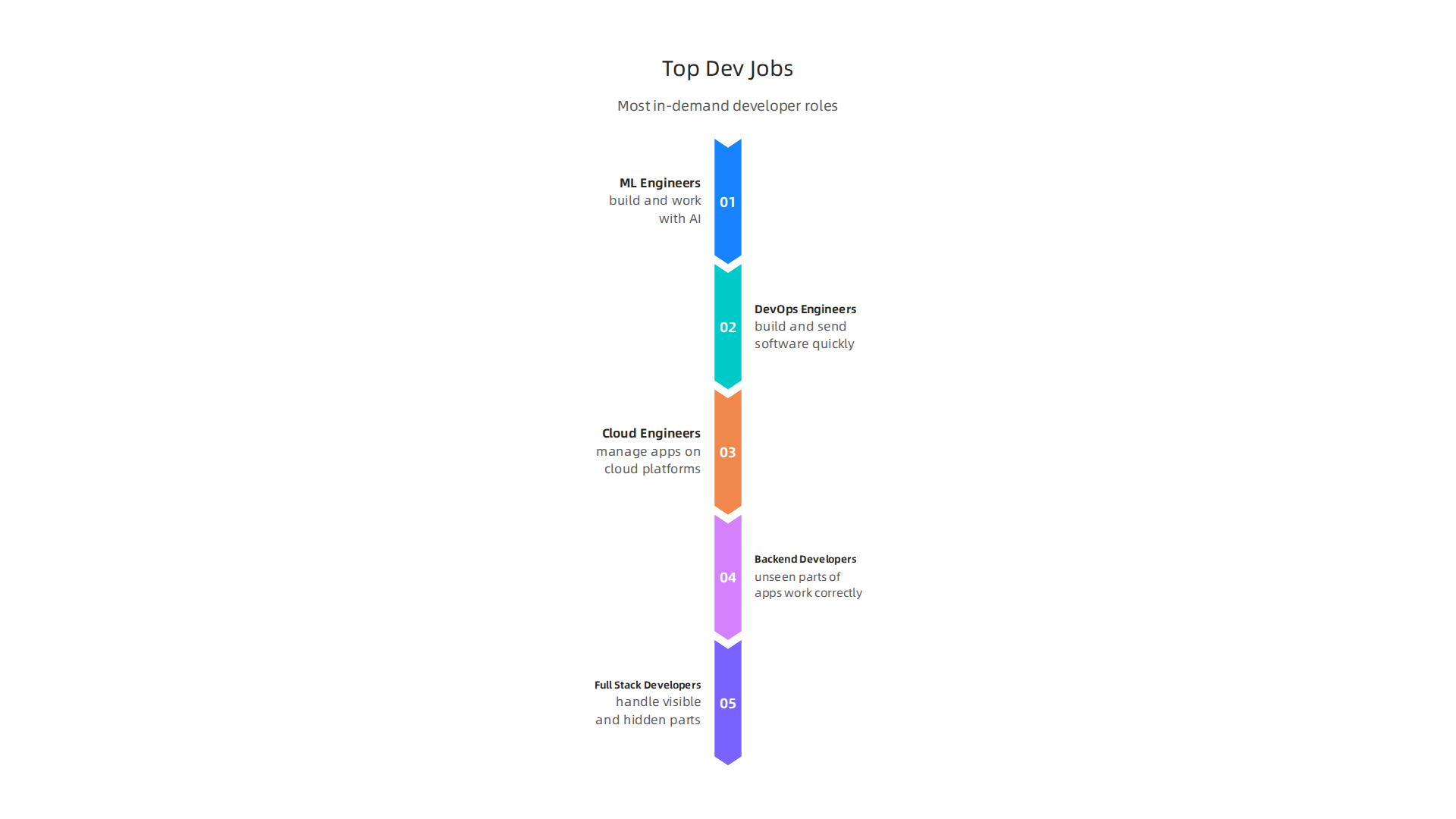
- Machine Learning (ML) Engineers: These are the people who build and work with Artificial Intelligence. With AI changing everything, roles focused on
ai jobsare super hot. Companies need experts to create smart systems and teach computers to learn. In 2026, Machine Learning jobs are showing very strong demand, according to data that looks at the job market. To help with this, learning how to use tools like AWS Sagemaker in 2026 can be a big advantage. - DevOps Engineers: These developers help make sure that software is built and sent out to users quickly and without problems. They are like the glue between coding and keeping systems running smoothly. As businesses want to move faster, skills in DevOps are more important than ever. If you’re thinking about this path, getting an AWS DevOps Certification Still Matters in 2026.
- Cloud Engineers: With more and more computer power and data moving to the internet’s "cloud," experts who know how to manage things on platforms like AWS, Azure, or Google Cloud are essential. This skill often blends with DevOps and backend work. Making sure you understand tools beyond just the basic console is key to staying ahead in cloud operations, and you can learn more about why Your AWS Console Isn’t Enough Anymore.
- Backend Developers: These roles focus on the "behind-the-scenes" part of apps and websites, making sure everything works correctly and securely. Good backend skills are always needed because they are the foundation of any digital product.
- Full-Stack Developers: These are the versatile developers who can handle both the visible parts of an app (front-end) and the hidden workings (backend). While specific job needs for a
full stack developer job descriptioncan vary, the ability to work on all parts of a project is a valuable skill.
So, why are these particular roles seeing such strong hiring activity? It’s mostly because of the big changes we talked about before: the rise of AI, the ongoing move to cloud computing, and the constant need for businesses to deliver software faster and better. These trends mean that general information technology jobs are still out there, but specialized skills that match these new demands are the ones getting the most attention. The market is showing a strong preference for specific types of expertise in 2026, with tens of thousands of software engineer jobs and many ai jobs currently available, as noted in The 2026 Job Market: What the Data Actually Shows.
So, what are the exact skills that companies are looking for in 2026? It’s not just about knowing how to code anymore. Employers want a mix of technical know-how and people skills.
Key Technical Skills in Demand
For information technology jobs, certain technical skills stand out. We already talked about roles like Machine Learning Engineers and Cloud Engineers. What makes them so popular?
- Artificial Intelligence (AI) and Machine Learning: Knowing how to build and work with AI systems is a top skill. This includes understanding machine learning tools, data analysis, and how to make AI smart enough to solve real problems. Many
ai jobsrequire these skills. Data from 2026 shows a lot of demand for these skills, and you can even explore detailed insights into the AI Jobs Market 2025-2026. - Cloud Computing: Being an expert in cloud platforms like AWS, Azure, or Google Cloud is a must. This means knowing how to set up, manage, and keep applications running smoothly in the cloud. It’s about more than just using the basic tools; it’s about understanding how cloud systems work at a deeper level. To keep your skills sharp, looking into Online Certifications for Software Engineering Keep You Ahead in 2026 can be very helpful.
- DevOps and Infrastructure as Code: This is about automating how software is built, tested, and released. Companies want people who can make these processes fast and reliable. Knowing tools that let you manage computer setups using code, rather than manual steps, is a huge plus.
- Backend Development: Strong skills in backend programming languages and databases are always needed. This ensures the unseen parts of websites and apps are powerful and secure.
- Cybersecurity: With more and more digital threats, knowing how to protect systems and data is very important for many developer roles.
Soft Skills that Matter
Beyond technical skills, employers also look for certain personal qualities.

These are often called "soft skills" and they are super important for working well with others.
- Problem-Solving: Can you figure out tough problems and come up with good solutions? This is key for any developer.
- Teamwork and Communication: Being able to work well with other people and clearly explain your ideas is crucial.
- Adaptability: The tech world changes fast. Being able to learn new things quickly and adjust to new tools or ways of working is very valuable.
- Attention to Detail: Making sure your code is clean and works right is important to avoid mistakes.
Emerging Roles to Watch in 2026
The tech industry is always growing, and new types of jobs are popping up. Here are a few exciting emerging roles:
- AI Integration Engineers: These folks focus on taking AI models and making them work smoothly within existing software and systems. They bridge the gap between AI research and real-world products.
- MLOps Engineers: This role combines machine learning, DevOps, and data engineering. MLOps engineers ensure that AI models are built, tested, and deployed to users efficiently and reliably, much like DevOps for regular software.
- Developer Productivity Engineers: These developers create tools and systems that help other developers do their jobs better and faster. They streamline workflows and remove roadblocks so teams can build more effectively.
- Prompt Engineers: As AI language models become more common, prompt engineers learn how to ask AI the right questions to get the best and most useful answers. This is becoming a skill that some
ai jobsspecifically seek out.
Staying updated on these new roles and the skills they require can really boost your career in information technology jobs. You can find many opportunities, including software engineering internships, to get started in these fields. In February 2026, LinkedIn data showed over 72,000 software engineer job listings in the US, indicating a steady demand in the market, as shared in the Tech Job Market Trends Monthly | Zero To Mastery.
For those keen on navigating the complex and ever-changing landscape of AI and technology, staying informed is paramount.
Get clear daily AI updates from The AI Newsletter Worth Reading.
How AI and coding assistants are reshaping skill requirements
The world of technology, especially in information technology jobs, is always moving forward. One of the biggest changes we see in 2026 is how much AI and coding assistants are helping developers. These smart tools are changing what software engineers do every day.
Many developers are already using AI tools. Reports show that a large number of developers, around 84%, use AI coding tools daily. But only about 29% fully trust what these tools create AI Coding Assistant Stats 2026: 84% Adoption, 29% Trust. Other studies from 2026 confirm that most developers, up to 90%, regularly use some kind of AI tool for coding
AI Coding Adoption 2026: 50 Statistics From 7 Surveys.
How AI Changes Daily Tasks
Before AI, developers spent a lot of time writing basic code, fixing small errors, and doing tasks that were a bit repetitive. Now, AI coding assistants can handle many of these jobs faster. This means developers can:
- Write code quicker: AI can suggest code as you type or even generate whole sections of code. This speeds up the work a lot.
- Fix bugs easier: AI tools can help find and suggest fixes for mistakes in code.
- Automate simple tasks: Things like setting up new parts of a project or writing basic tests can be done by AI.
This shift helps developers be more productive. For example, some studies found that AI tools can make developers four times faster AI Coding Assistants in 2026: 4× Faster, 10× Riskier. The Hidden …. But it’s not all easy. While AI makes things faster, it can also bring new challenges, especially with security. AI-generated code might be less secure sometimes, so checking its work is super important.
New Skills Becoming More Valuable
When AI takes over the routine coding, other skills become much more important for ai jobs and all developer roles.
- System Design and Architecture: With AI writing more of the simple code, developers need to focus more on the bigger picture. They need to design how different parts of a software system will work together. This is about making sure the whole project is well-planned and solid. Good architecture is still very important because people need to be confident about the software, and AI isn’t directly responsible for that Skills Developers NEED In 2026 (Because Vibe Coding … – YouTube.
- Prompt Engineering: We touched on this role earlier. It’s about learning how to ask AI the right questions to get the best code or solutions. Thinking clearly about what you want the AI to do is a key skill. You can learn more about how to get the most out of AI with top no code machine learning platforms and prompt engineering tips for 2026.
- Code Review and Quality Assurance: Since AI code can have errors or security holes, carefully reviewing what the AI produces is very important. Developers need to be good at spotting issues and ensuring the code meets high standards. Code review becomes even more critical than just coding itself The Impact of AI Coding in 2026: Developer Productivity Revolution ….
- Critical Thinking and Problem-Solving: Instead of just writing code, developers now spend more time solving complex problems that AI can’t handle alone. They need to understand the business needs and find creative solutions.
- Understanding AI Limitations: Knowing what AI can and cannot do well is crucial. This helps developers decide when to use AI and when to do things manually, or how to combine human and AI efforts. It’s about learning how to bridge the AI to human gap in your code.
So, while AI tools change how we work in information technology jobs, they also open up new chances for developers to focus on higher-level thinking and design. It’s an exciting time to be in tech, requiring a blend of new and old skills to master the changes.
The changes in skills we just talked about are very important. But where you live and work also makes a big difference for information technology jobs in 2026. Different countries have different levels of demand for tech talent and pay different salaries. This really matters for both job seekers and companies looking to hire.
How Pay and Demand Change by Region
Let’s look at some key regions:
- United States: The US market often leads in pay for software engineers.
For example, the average software engineer salary in the US is around $110,140 in 2026, with some areas in California paying even more, up to $146,770 Global Software Engineer Salary Research 2026 – CodeSubmit. Remote information technology jobs with US companies can also offer good pay, often between $120,000 and $180,000 for mid-level to senior roles The Complete Remote Job Search Strategy for Developers in 2026. There’s high demand for various roles, including many ai jobs.
- United Kingdom and Canada: These countries also have strong tech markets. Canada ranks as the fifth highest globally for software engineer salaries, showing good growth Global Software Engineer Salary Research 2026 – CodeSubmit. In the UK, salaries for software engineers are generally lower than in the US, but they are still competitive within Europe Software engineer salary trends in 2026. Job postings for software engineering roles are trending up in both the UK and the US in 2026 State of the software engineering job market in 2026.
- Other Advanced Economies: Countries in Europe and other regions offer varied opportunities. Some countries might have lower average salaries, but they can still be attractive for
information technology jobsdepending on living costs and work-life balance. For instance, Latin American developers can offer a 60-65% saving compared to US engineers, with salaries often between $55,000-$67,000 in 2026 The Real 2026 Cost of Hiring Software Engineers: US vs. Latin….
Remote Work and Global Hiring
Remote work has changed a lot. Many top software engineers are now choosing remote jobs, and companies are hiring talent from all over the world

Why Top Software Engineers Are Choosing Remote Jobs – Karat. This means a company in the US might hire a full stack developer job description from Canada, or a part time bi developer from Europe. This gives more options to both companies and workers. It can even open doors for software engineering internships that are remote.
However, global hiring also means dealing with different rules about visas and employment. Companies need to understand these rules when they look for talent outside their home country. This can make hiring more complex but also allows them to find the best people for the job, no matter where they are. If you’re looking for global roles, especially from countries like India, understanding the remote job market is key. You can learn more by exploring guides for Remote Jobs in India 2026: A Software Engineer’s Guide to Landing Global Roles.
Now, let’s look at how companies actually hire people and how remote work has changed things. The way companies find new talent for information technology jobs in 2026 is very different from before.
How Hiring Has Changed
Companies are looking for special skills now. They often give candidates real work tasks to do at home, or even short paid trials, instead of just interviews. This helps them see how someone performs on the job. Also, you might talk to many different people from various teams. This includes folks from engineering, product, and even sales. It helps make sure you fit well with the whole company, not just your direct team. For new ai jobs, this kind of deep check is even more important because the skills needed are very new.
These changes mean that for jobs like a full stack developer job description, companies don’t just list what they want you to know. They now test how well you can solve problems and work with others. Even for software engineering internships, you might get a coding challenge to show what you can do.
Remote Work and Team Changes
Remote and hybrid work policies have also made a big difference in who companies hire and how fast. When people can work from anywhere, companies can look for talent all over the world. This makes it easier to find the best person, no matter where they live. This also means a wider mix of people in teams. For example, a company might hire a part time bi developer from a different time zone. This helps build a team with many different viewpoints.
Looking globally for talent can sometimes take a bit longer for companies because of different hiring rules in each country. But it also helps them get the right people faster in the long run, especially for jobs that are hard to fill locally.
Because the tech world changes so fast, companies are also putting more effort into training their current workers. They want to make sure everyone has the newest skills. For example, 80% of workers will need to learn new AI skills by 2027 to stay relevant. This means companies need to focus on AI Upskilling 2026: Stay Relevant as 80% Must Retrain. If you’re looking to keep your skills sharp, especially in new areas like AI, getting online certifications for software engineering keep you ahead in 2026.
Career Pathways and Practical Upskilling Strategies for Developers
Keeping your skills sharp is super important in today’s fast-changing tech world. It’s not just about learning new things, but learning the right things. Let’s look at good ways to learn and how to pick what skills to focus on, especially for information technology jobs.
Smart Ways to Upskill
Growing your skills doesn’t always mean going back to school. There are many ways to get better at what you do:
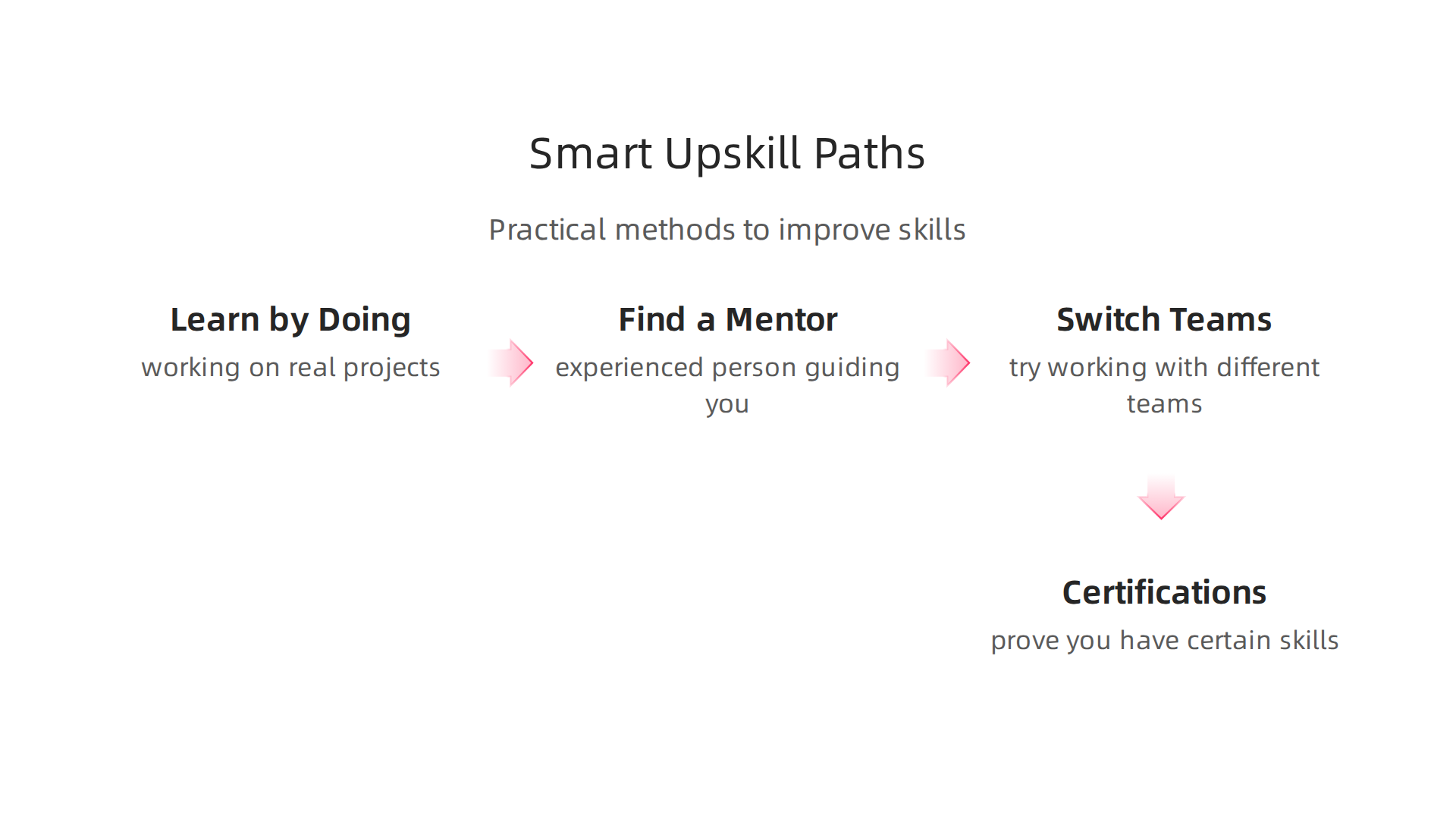
- Learn by Doing: The best way to learn is often by working on real projects. This could be a side project you do alone, or a new task at your current job. For example, if you want to understand
ai jobsbetter, try building a small AI tool. This hands-on experience shows what you can really do. - Find a Mentor: A mentor is an experienced person who can guide you. They can share advice, help you solve problems, and point you to good learning resources. This is especially helpful if you’re aiming for a complex role like a
full stack developer job description. - Switch Teams at Work: Some companies let you try working with different teams for a short time. This is called an internal rotation. It helps you learn new tools and ways of working without leaving your company. You might even discover a new area you really like, like becoming a
part time bi developer. - Get Targeted Certifications: Sometimes, a special certificate can prove you have certain skills. These are great for showing employers you’re serious about your craft. For example, you can unlock tech career growth with computer certification courses in 2026 that are directly related to your career goals. Many companies also offer training programs to help employees stay updated, with a strong focus on new tech skills. In fact, many organizations see employee training as a critical investment for 2026 to help their teams grow and succeed.
Picking the Right Skills to Learn
With so much to learn, how do you choose? Think about these two things:
-
Look at the Market: What are companies looking for right now?
- AI is everywhere: AI coding assistants are widely used by developers in 2026. Reports show that around 84% of developers use AI coding tools daily, though only 29% fully trust their output, meaning you still need to understand the code yourself, not just let AI do all the work. Learning how to use these tools well and understand their limits is key for almost all
information technology jobstoday. You might even find some insights on what skills developers truly need in 2026. - Specific Job Needs: If you’re looking at
software engineering internships, check what programming languages and tools they ask for. For more senior roles, afull stack developer job descriptionoften requires a wide range of skills, from front-end design to back-end databases. - Employer Training: Many companies are helping their employees learn new skills. For instance, 64% of companies provide AI tools, but only 25% of their workers feel like their employer has a clear plan for using AI. This means there’s a big need for people who can not only use AI tools but also understand how they fit into the bigger picture. This also shows a strong push for training and development from companies themselves.
- AI is everywhere: AI coding assistants are widely used by developers in 2026. Reports show that around 84% of developers use AI coding tools daily, though only 29% fully trust their output, meaning you still need to understand the code yourself, not just let AI do all the work. Learning how to use these tools well and understand their limits is key for almost all
-
Think About Your Goals: What do you want to achieve?
- Your Passions: What topics do you find most interesting? Learning is easier when you’re excited about the subject.
- Your Career Path: Do you want to become a team leader, a specialized AI expert, or perhaps work on big data as a
part time bi developer? Your long-term goals should guide your learning choices.
Staying current with changes in AI and technology is crucial for developers in 2026. If you want to keep up with the latest in AI and broader technology developments, consider checking out The AI Newsletter Worth Reading for clear daily updates. By thoughtfully choosing your learning path and using effective upskilling methods, you can build a strong and future-proof career in tech.
What Engineering Leaders Should Measure: Hiring KPIs and Skills ROI
After looking at how developers can grow their skills, it’s just as important for engineering leaders to measure how well these efforts are working.

You need to know if your team is getting better and if you are making smart choices about who to hire and what skills to teach. This helps you build a strong team for all kinds of information technology jobs.
Key Hiring Numbers to Track
As a leader, you want to make sure your team is effective. Here are some key things to measure:
- Time-to-Proficiency: How quickly does a new team member become fully helpful on projects? If it takes a very long time, it might mean your hiring process needs a look, or your training for new people could be better.
- Hiring Quality: Are the people you hire good fits? Do they meet expectations? One way to check this is to see how long they stay with the company and how they perform.
- Employee Retention: Keeping good people is super important. When people leave often, it costs a lot of money and time to find and train new ones. In 2026, many companies see benefits from hybrid work. For example, some data shows that hybrid work setups have cut down how often employees leave by about a third, which is great for team stability Remote Work Statistics 2026: What Employers Need to Know.
Getting Value from Training (Skills ROI)
It’s not just about hiring; it’s also about making your current team better. Here’s how to think about getting value from training:
- When to Upskill vs. Hire: Should you teach your current team a new skill or hire someone new who already has it? For example, if you need someone for specific
ai jobsor a complexfull stack developer job description, sometimes training an existing employee is faster and cheaper than a long hiring search. If you are exploring options for your team, consider resources on Best Computer Courses 2026 for Software Engineers at Every Career Level. - Cost of Hiring: Finding new people, especially for specialized
information technology jobs, can be expensive. Think about job advertising, interviewing, and training time. Sometimes, you might even consider hiring remotely from different regions. You can find out more about what that means for your team with guides like Remote Jobs in India 2026: A Software Engineer’s Guide to Landing Global Roles. - Market Trends: The job market changes fast. What skills are most in demand for 2026? Checking the overall job market, like the insights in The 2026 Job Market: What the Data Actually Shows, can help you decide if a skill is common enough to hire for or rare enough to train for.
By tracking these numbers and thinking about your team’s growth, engineering leaders can make smart choices that help everyone succeed.
Summary
The article explains why following developer job market signals—not the noise—is essential in 2026, highlighting how AI, cloud adoption, and remote work are reshaping which roles employers hire and how teams operate. It reviews the strongest hiring areas (ML/AI, DevOps, cloud, backend, full‑stack), the technical and soft skills now most valued, and emerging jobs such as MLOps and AI integration engineers. The piece shows how AI coding assistants speed up routine work while making system design, prompt engineering, and careful code review more important. It also compares regional pay and the impact of global remote hiring, explains how companies are changing hiring practices, and offers practical upskilling strategies—projects, mentors, internal rotations, and targeted certifications. Finally, it gives engineering leaders concrete KPIs to track hiring quality and training ROI so organizations can prioritize the right hires and learning investments.