
The web development job market is booming in 2026. According to the U.S. Bureau of Labor Statistics, employment in this field is growing much faster than average. The pay is solid too. The median annual wage for web developers and digital designers is around $98,790.
You do not always need a four-year degree to qualify for these roles. A web development class online offers a flexible and affordable way to build the exact skills companies need.

You can easily find a web development online course that fits your schedule and budget. Or you can test your interest with free online certificate programs before making a bigger commitment.
Here is the challenge. With so many options available, choosing the right one can feel overwhelming. You need a program that is well-reviewed, up-to-date, and aligned with your personal career goals. Whether you want to freelance or land a software engineering internship remote, the best course depends on your specific plan.
In this guide, we break down everything you need to know to pick the perfect web development class online in 2026. To keep your skills fresh and stay informed about the tech landscape, we also recommend The AI Newsletter Worth Reading.
It provides clear, daily insights into AI and technology trends. For more ways to grow your career, take a look at our post on Google Courses 2026 That Will Advance Your Tech Career.
Why Web Development Skills Are in High Demand in 2026
You have probably noticed it. Every company, from your local coffee shop to a global bank, now depends on a website or a web app to do business. That shift is not slowing down. It is actually speeding up.
This digital transformation touches every industry. Retail, healthcare, education, and even farming need people who can build and maintain digital storefronts and tools. The U.S. Bureau of Labor Statistics projects that employment for web developers and digital designers will grow 7 percent from 2024 to 2034. That growth rate is much faster than the average for all jobs. Companies simply cannot find enough skilled developers to keep up.
The financial reward matches this demand. According to the Bureau of Labor Statistics, the median annual wage for web developers and digital designers is around $98,790.

But your earnings can go much higher. Robert Half reports that experienced web developers can earn between $94,000 and $165,000 depending on their skills and location. That kind of salary makes investing in a quality education a no-brainer.
Here is the great news. You no longer need a traditional four-year degree to get your foot in the door. Employers today care more about what you can actually do than the name of the school you attended. They actively look for candidates who have completed a relevant web development class online or earned a recognized certificate. Many hiring managers see these credentials as proof that you have the latest, practical skills.
Taking a web development online course lets you learn exactly what the market needs right now, without spending years in a classroom. It is a direct path to a role that pays well and offers flexibility. Some people even start by testing their interest with free online certificate programs before committing to a full course.
If you want to stay on top of what employers are looking for, you need current insights. Staying informed is just as important as learning the code itself. The AI Newsletter Worth Reading delivers daily, clear updates on technology trends that shape the job market. For more on building your skills, check out our guide to online certifications for software engineering in 2026 to see which credentials carry the most weight.
What to Look for in a Web Development Class Online
So you are ready to pick a web development class online. That is a smart first step. But with so many options out there, how do you choose the right one? You do not want to waste time or money on a course that leaves you behind. Here is what really matters.
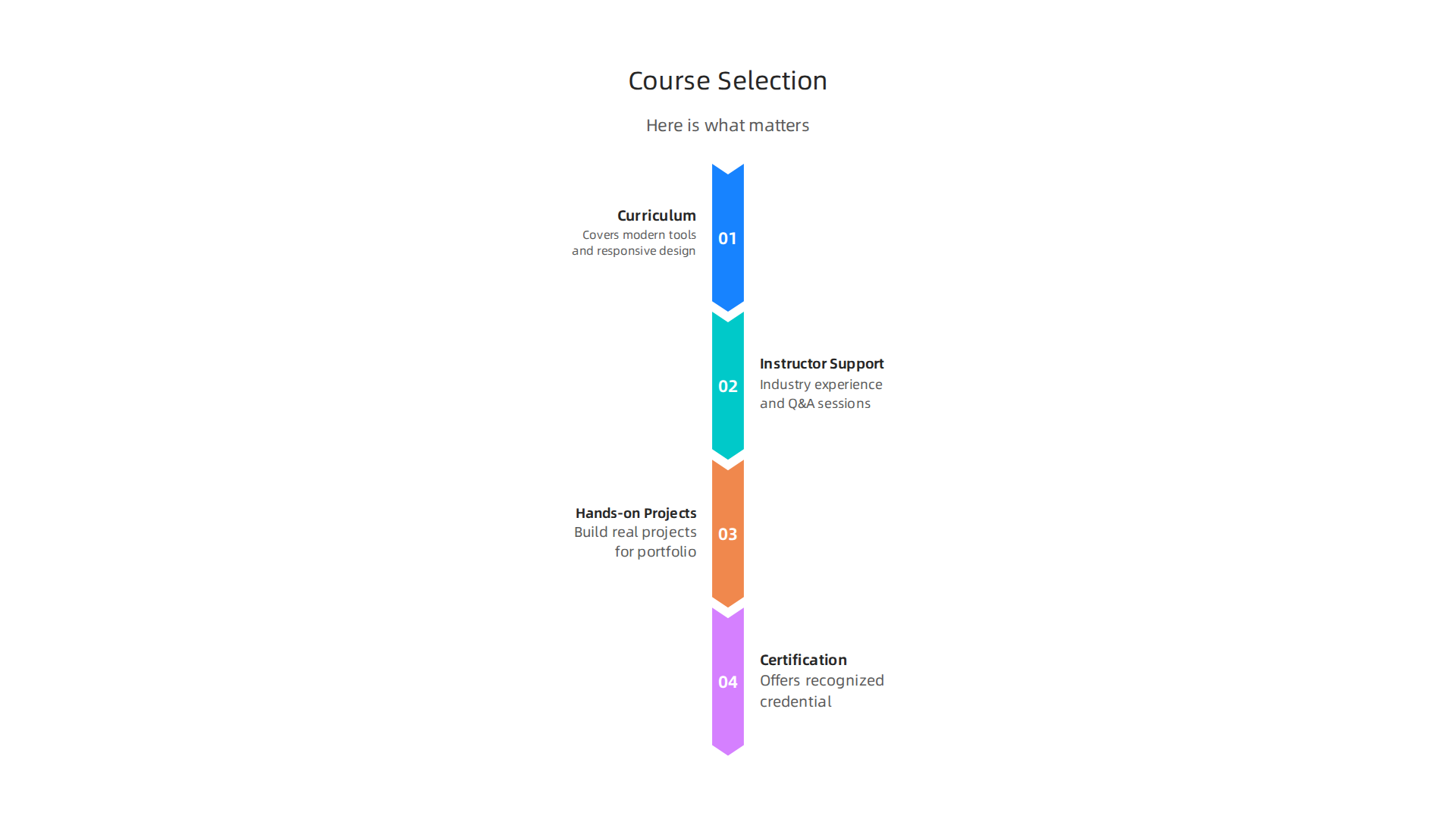
First, check the curriculum. Does it cover modern tools? In 2026, the best courses teach more than just basic HTML and CSS. They dive into JavaScript, React, Node.js, and Python. They also include current practices like version control with Git and API integration. A good web development online course will also teach you about responsive design and web accessibility. If the syllabus looks like it was written five years ago, move on. Look for courses that update their content regularly. Some of the top-rated options in 2026 include programs from platforms like Mimo and Meta, as highlighted in a list of the 13 best online web development courses for 2026.
Second, look at the instructor and learning support. Who is teaching the course? Do they have real industry experience? A great instructor can turn a confusing topic into something clear. Also, check if the course offers mentorship, Q&A sessions, or a community forum. You will get stuck at some point, and having support makes a huge difference. Many platforms now include hands-on coding environments where you can practice right in the browser. This is a feature you should not skip.
Third, prioritize hands-on projects. Theory alone will not get you hired. The best web development classes online make you build actual projects. These projects become your portfolio. They prove to employers that you can do the work. Some courses even simulate real-world workflows, which is excellent preparation for a role like a software engineering internship remote. You want to leave the class with something you can show.
Finally, look for a course that offers a certificate or credential. While you do not need a degree, having a recognized certification from your class helps you stand out. For more on which credentials matter most, check out our guide to online certifications for software engineering in 2026.
Making a smart choice now sets you up for success. And if you want to stay updated on the latest tech trends while you learn, The AI Newsletter Worth Reading delivers daily insights that will keep you ahead of the curve.
Top Platforms for Web Development Certifications
Now that you know what to look for in a web development class online, let’s get into the platforms that actually deliver. In 2026, several established providers offer structured tracks that end with a certification. That piece of paper matters. It shows employers you finished a serious program.
**Here are the top platforms worth your time:
**
1. Mimo
Mimo offers a full path from beginner to job-ready. Their courses cover HTML, CSS, JavaScript, React, and Python with real projects. You can learn on your phone or desktop. The pricing runs on a subscription model, which gives you access to everything. They update their content regularly for 2026. According to a roundup of the 13 best online web development courses for 2026, Mimo ranks highly for its practical approach.
2. Meta on Coursera
The Meta Front-End Developer Professional Certificate is a strong choice. It teaches modern skills like React, version control with Git, and responsive design. You build a portfolio project at the end. The course is part of a subscription platform, but you pay per month. A recent review of top 7 web development courses for 2026 highlights Meta’s curriculum as current and employer-focused.
3. Great Learning Academy
This platform offers free online certificate programs that are surprisingly good. Their Advanced JavaScript Development course, for example, dives into ES6+, asynchronous programming, and API integration. The best part? It is completely free with a certificate upon completion. That makes it a low-risk way to test if you like coding.
4. Simplilearn
Simplilearn offers a full web development bootcamp with mentorship and hands-on labs. You get a recognized certification and career support. Their pricing is per course, which works if you want a focused program. They even have a Web Development Full Course 2026 on YouTube to preview their teaching style.
5. Boot.dev
If you prefer a subscription model with gamified learning, Boot.dev is worth a look. They teach Python, JavaScript, and backend development through challenges and projects. Their best online coding courses for 2026 guide compares platforms to help you decide.
Comparing pricing models
| Platform | Model | Typical cost |
|---|---|---|
| Mimo | Subscription | $10-$15/month |
| Meta on Coursera | Subscription | $49/month |
| Great Learning | Free | $0 |
| Simplilearn | Per course | $300-$500 |
| Boot.dev | Subscription | $25/month |
Why certification matters
A certificate from a recognized platform like Mimo or Meta signals to hiring managers that you can stick with a program and learn modern skills. It is not a replacement for a degree, but it can boost your application for roles like a software engineering internship remote.
For a deeper look at which credentials carry weight in 2026, read our guide to online certifications for software engineering in 2026.
You have the platforms. Now pick one that fits your budget and style. And while you learn, keep your finger on the pulse of tech. The AI Newsletter Worth Reading sends daily updates that will help you connect what you learn to the real world.
Frontend vs Backend vs Full Stack: Which Path to Choose?
Stuck between frontend, backend, or full stack? You are not alone. Many beginners ask this same question when they start a web development class online.
The good news is there is no wrong answer, only the path that fits you best.
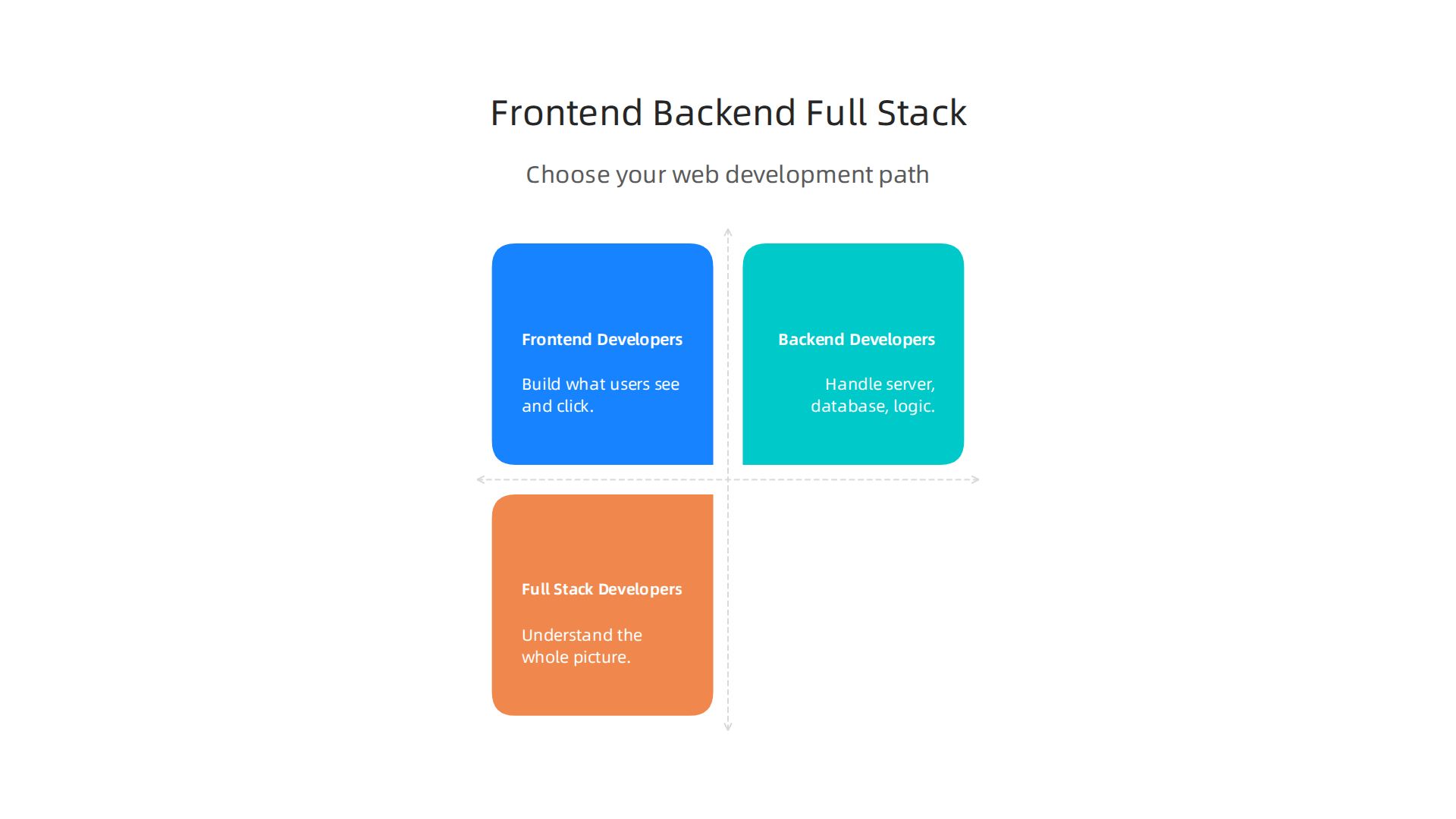
Frontend developers build what users see and click. They work with HTML, CSS, and JavaScript to create layouts, buttons, and animations. If you enjoy design, colors, and making things look great, frontend might be your thing.
Backend developers handle the server, database, and logic behind the scenes. They use languages like Python, Node.js, or SQL to make sure data flows correctly. If you like solving puzzles and working with data, backend could be a better fit.
Full stack developers do both. They understand the whole picture. According to a guide from Indeed, full stack roles require a broader skill set but offer more flexibility. And in 2026, full stack development is a strong career choice because companies value developers who can handle multiple layers of a project. The GSD Council notes that full stack skills lead to higher earning potential and more job options.
Still, each path has its own learning curve. Frontend is often easier to start with because you see results quickly in a browser. Backend takes more time to set up but teaches you how systems really work. A full stack web developer certificate can open more doors, but you need to learn twice as much at first. The DSDT blog explains that full stack certification offers broader possibilities, while frontend and backend certifications can still lead to rewarding careers.
Your choice should match your interests and the market. Right now, companies hiring for a remote software engineering internship often look for full stack skills because interns help across the entire product. But if you love visuals, frontend roles are plentiful too.
The best way to decide? Try a free online certificate program in frontend or backend and see which feels more natural. And if you want to keep learning after you pick, check out our list of Google courses in 2026 that can help you go deeper in either direction.
Whichever path you choose, staying updated on industry trends will give you an edge. The AI Newsletter Worth Reading delivers daily insights to help you connect your new skills to real-world tech developments.
How to Choose the Right Certification for Your Career Level
Now that you have a clearer picture of frontend, backend, and full stack, it is time to pick a certification that matches where you are right now. The best web development class online will look different depending on whether you are just starting out, already working, or leading a team. Here is how to choose the right credential for your career stage.
Junior developers benefit from foundational certifications. If you are new to coding, look for a web development online course that covers the basics. A full stack web developer certificate can give you a broad start, but a simpler frontend or backend foundation might be easier to digest first. Many free online certificate programs let you test the waters without spending money. According to DSDT, frontend and backend certifications can still lead to rewarding careers, so do not feel pressured to master everything at once. A foundational credential also helps when applying for a software engineering internship remote, where hiring managers want proof you understand the fundamentals.
Mid-level developers should focus on specialized or stack-specific credentials. If you already have a year or two of experience, a generic introductory course will not help you stand out. Look for certifications that prove deeper knowledge in one area, like React, Node.js, or cloud deployment. The GSDCouncil notes that full stack skills lead to higher earning potential, so at this stage a full stack certification can make sense because you can already handle one side. Specialized certifications also show employers you are serious about growing. For a list of top options, check out the MentorCruise guide to full stack certifications in 2026.
Senior developers may pursue advanced or architect-level certifications. If you have several years of experience, you need credentials that prove you can design systems, lead teams, and make high-level decisions. Look for certifications like AWS Solutions Architect, Google Professional Cloud Architect, or enterprise-level full stack certifications. These go beyond code and cover scalability, security, and business strategy. A senior certification can open doors to roles like engineering manager or principal developer. To stay current while you study, the computer science news resources at Software Engineering News Today can keep you updated on industry shifts.
Whichever level you are at, choosing the right certification can speed up your career growth. And if you want to keep learning beyond certifications, consider subscribing to The AI Newsletter Worth Reading. It delivers daily insights that help you connect your credential to real-world tech trends.
The Role of Project-Based Learning in Online Classes
Imagine spending months on a web development class online, only to realize you have nothing concrete to show an employer. That is why project-based learning matters so much. Courses that include real coding exercises and capstone projects help you retain what you learn. A study from the Online Innovations Journal found that implementing a comprehensive project-based learning model in a large online computer science course led to better outcomes. When you build actual things, the concepts stick.
For job seekers, a portfolio is your single most powerful tool.

Employers care more about what you can do than the certificate on your wall. A web development online course that makes you ship a working app, deploy a site, or fix real bugs is worth more than ten courses with only quizzes. According to Connections Academy, project-based learning increases engagement and satisfaction. That engagement translates into skills you can show off.
This is especially true if you are targeting a software engineering internship remote. Hiring managers sift through hundreds of applications. A link to a live project or a GitHub repo full of well-documented code will set you apart. Even free online certificate programs that include a final project can help you build that proof.
So when you pick a web development class online, look for one that forces you to build. To see how top tech companies structure their learning, check out our guide on Google courses in 2026 that will advance your tech career. And if you want daily insights that can inspire your next project, get the The AI Newsletter Worth Reading. It helps you stay connected to the trends that make your portfolio stand out.
Accredited vs Non-Accredited Certifications: Does It Matter?
You have found a web development class online that looks perfect. Then you see it is not accredited. Should you walk away?
Here is the short answer: It depends on your goals.
Accreditation can be a helpful signal. Many employers and universities do look for it. It means a third party has checked the program meets certain quality standards. That trust can matter if you are applying to a big corporation or a government job.
But here is the thing: The tech industry cares more about what you can do than where you learned it. Some of the most well-known web development online course options from platforms like Coursera, Udemy, or freeCodeCamp are not accredited. Yet they have helped thousands of people land jobs. Why? Because they teach real, project-based skills. Research shows that project-based learning increases engagement and satisfaction with your education, according to Connections Academy. And a study on large online computer science courses found that a project-based model led to better learning outcomes. When you build real projects, you learn deeper.
So what matters more: the seal of accreditation or the skills you gain?

In many parts of the tech world, especially startups and agile companies, your portfolio speaks louder. Even free online certificate programs that include hands-on projects can open doors. A certification from an accredited university may help you get past HR filters. But a strong GitHub repo with solid code will get you hired.
The truth is recognition varies by region and company culture. In some places, a degree or accredited cert is king. In others, your last deployed project is all that counts.
If you want to compare the best options for 2026, read our guide on online certifications for software engineering. And stay updated on industry shifts that affect hiring. Subscribe to The AI Newsletter Worth Reading for daily insights on what employers really value.
The Future of Web Development Education: Trends to Watch
So what comes next? The way we learn web development class online is changing fast. Three big trends are shaping 2026 and beyond.
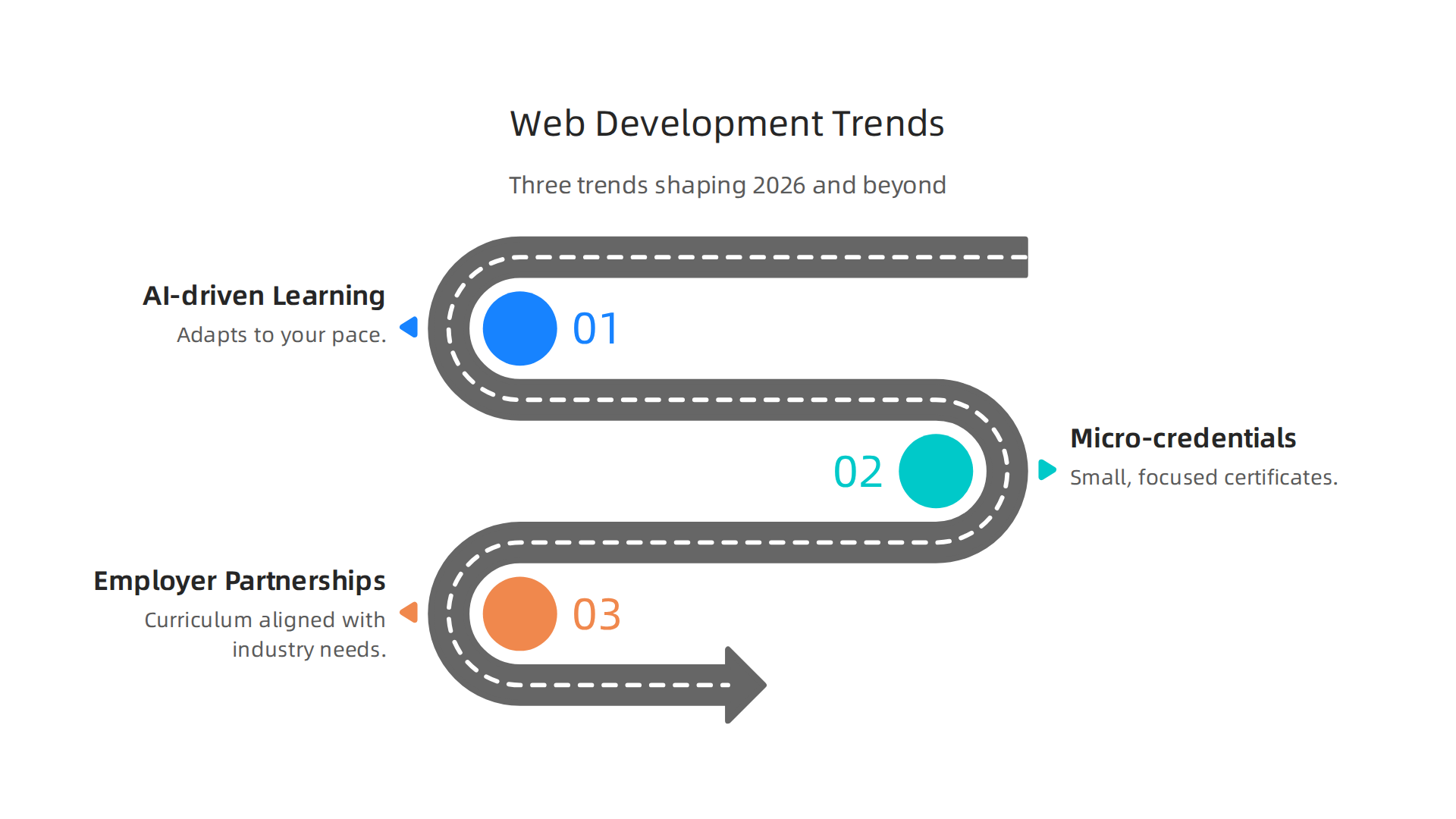
AI-driven personalized learning paths
Imagine a web development online course that adapts to your pace. It knows when you are stuck and gives you extra practice. It skips topics you already know. That is happening now. AI tools are becoming a core part of how we build websites, and they are also changing how we learn. According to LogRocket, AI-first development is one of the top web development trends for 2026. Learning platforms are using the same technology to create custom study plans for each student. This makes learning faster and more focused.
Micro-credentials and stackable certificates
Big degrees are not the only way to prove your skills anymore. Employers are starting to accept small, focused certificates. These are called micro-credentials. You can stack them together to build a larger qualification. For example, you might earn a certificate in React, then another in Node.js, and another in databases. Combined, they show you are a full-stack developer. This is great news if you want to earn free online certificate programs or affordable short courses. If you want to see which certificates carry the most weight in 2026, check our guide on online certifications for software engineering.
Employer partnerships shaping curriculum
More schools and platforms are working directly with companies. They ask employers what skills they need. Then they build courses around those skills. This means you learn exactly what gets you hired. Some programs are even co-designed by big tech firms. That gives you a direct line to job opportunities. For example, specific university programs now offer courses built in partnership with industry leaders. You can read more about how UIUC technology services give engineering teams a real edge in 2026.
These trends make it easier to learn what matters most. The old debate of accredited versus non-accredited is fading. What counts now is whether the program teaches current, in-demand skills. Be ready for a future where your education adapts to you. Want to stay ahead of these shifts? Subscribe to The AI Newsletter Worth Reading for daily updates on tech trends and what employers really value.
Summary
This guide helps you choose the best web development class online in 2026 by explaining why web skills are in high demand, what modern courses must teach, and how to match a program to your career goals. It reviews key curriculum elements—JavaScript, React, Node.js, Git, responsive design and accessibility—plus the importance of hands-on projects and an employer-ready portfolio. You’ll find a comparison of leading platforms and pricing models, advice on choosing frontend, backend or full-stack paths, and guidance on picking certifications for junior, mid-level, or senior roles. The article also weighs accredited versus non-accredited options and looks ahead to trends like AI-driven learning and micro-credentials so you can invest time and money where it counts. After reading, you’ll know how to evaluate programs, build demonstrable projects, and select credentials that align with the jobs you want.