

Why this guide matters for software professionals today
The world of technology changes super fast. It seems like every day there’s a new tool, a new programming language, or a new way to build software. For anyone working in tech, especially software engineers, it can be really tough to keep up.

You might feel like your skills get old quickly, and you need to learn new things all the time to stay good at your job or move up in your career.
In 2026, the demand for skilled software professionals is still high, but the kinds of skills needed are always shifting. For example, the overall employment of software developers is expected to grow quite a bit from 2024 to 2034, which is faster than many other jobs
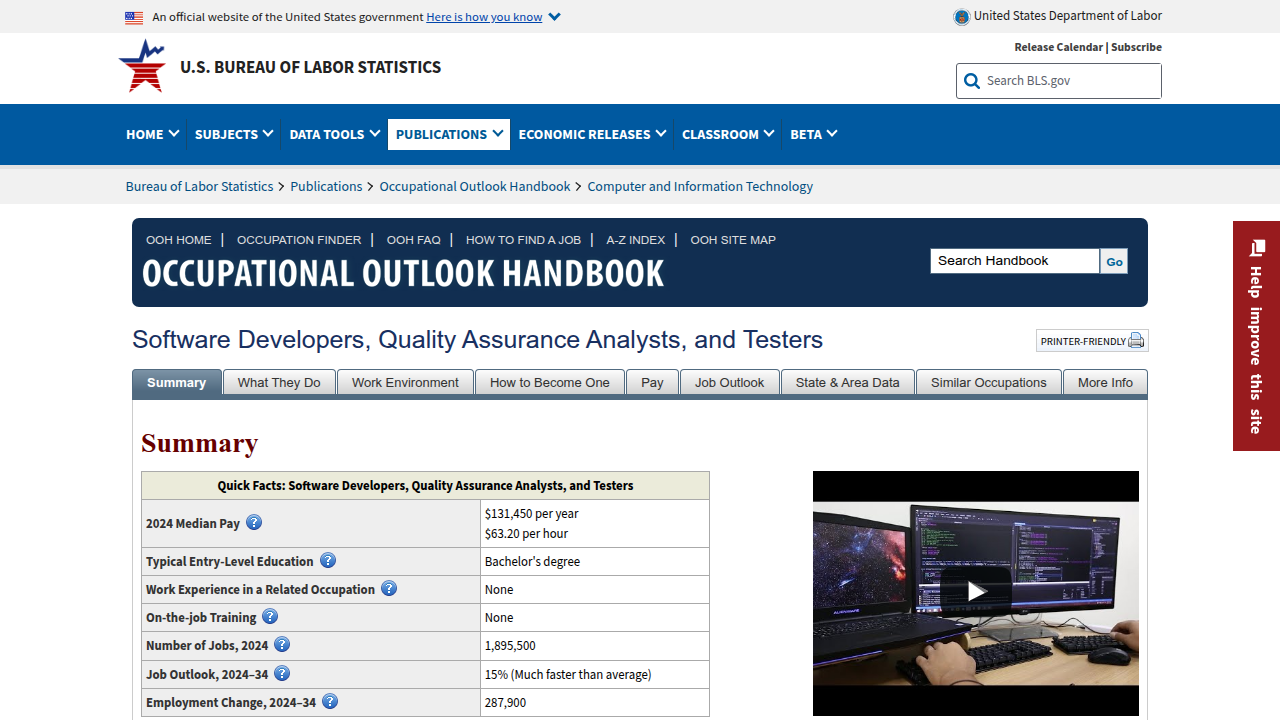
Software Developers, Quality Assurance Analysts, and Testers. This means there are chances to become a software developer, but you need the right knowledge. Many companies are even more likely to hire based on your actual skills than just your degree 2026 tech job market statistics and outlook – TechTarget.
This quick pace creates a problem: how do you know which new skills to learn? And, more importantly, how do you prove you have them? You’ve probably seen lots of options for computer certification courses, online software engineering degrees, and online web development courses. There are also many tech certifications online. It’s hard to tell which ones are truly worth your time and money. Which ones will actually help you get a better job, earn more, or just do your current job better?
That’s where this guide comes in. We’ll help you understand the world of computer certification courses. We’ll give you a clear roadmap to pick the best courses and certifications for your specific job role. Our goal is to show you how to choose learning paths that truly pay off and help your career grow in 2026 and beyond. If you’re looking for the best ways to learn, you might also want to check out our guide on the best computer courses 2026 for software engineers at every career level.
To stay truly ahead in this fast-moving industry, especially with all the changes in AI, it’s key to have up-to-date information. Get clear daily AI updates from The AI Newsletter Worth Reading.
Now, let’s talk about the big question: do these training programs, like computer certification courses, still make a difference for software engineers in 2026? The answer isn’t a simple yes or no. It really depends on a few things.
Where and How Certifications Help
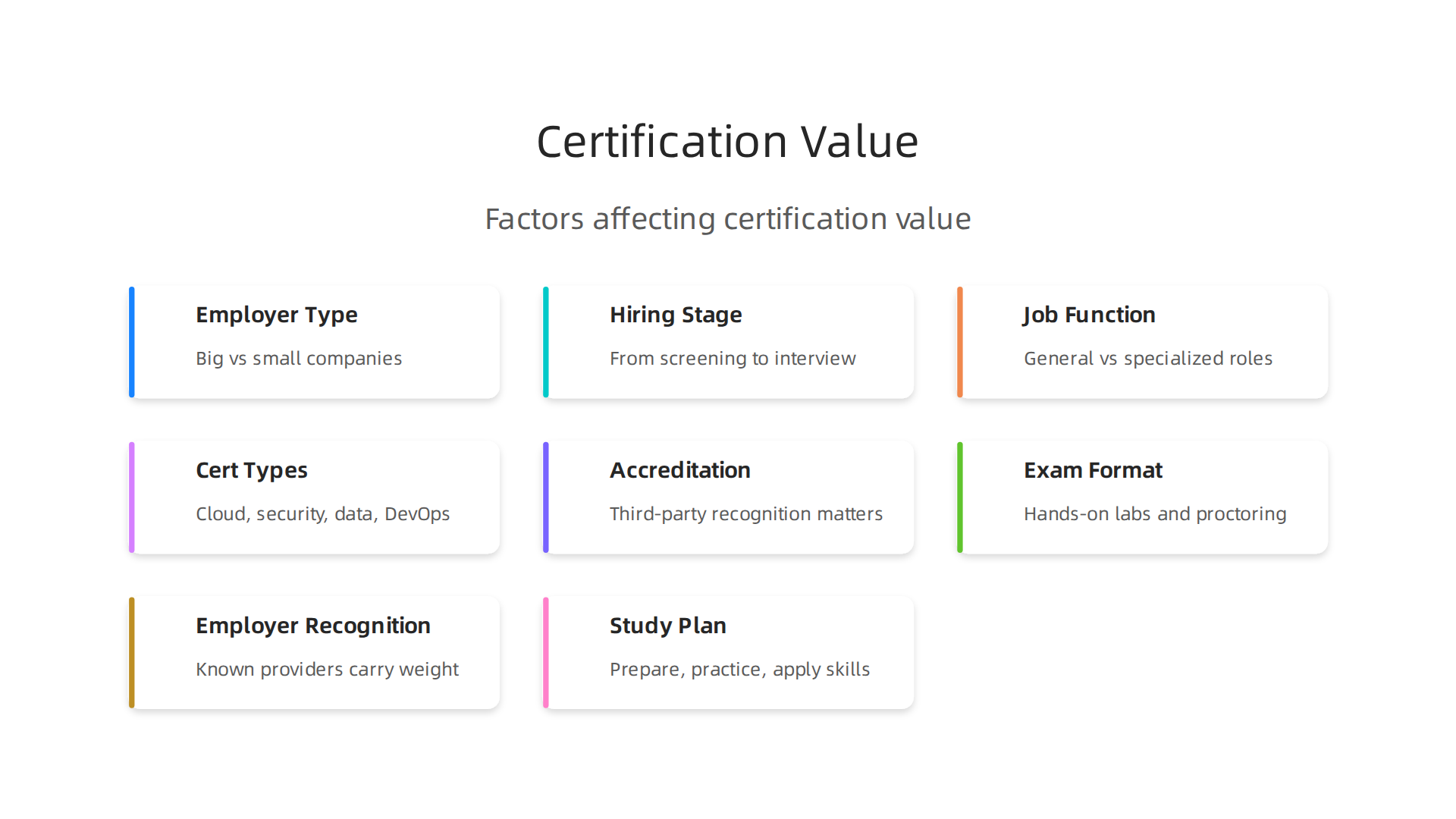
Think of it this way: the value of tech certifications online can change based on who is hiring, what job you want, and where you are in your job search.
-
Employer Type:
- Big Companies: Larger tech companies or government jobs often like to see certifications. They might use them as a first check to make sure you know your stuff, especially for specific tools or systems they use. They might even help you pay for your computer certification courses.
- Smaller Companies and Startups: These companies might care less about formal certifications. They often look more at what you can actually do and what projects you’ve built. They want to see your real-world skills in action. Still, a certification can show you are serious about learning.
-
Hiring Stage:
- Getting Noticed: Certifications can help your resume stand out. When hiring managers look through many applications, a well-known certification can catch their eye. This can get you past the first screening.
- During Interviews: Once you’re in an interview, you’ll need to talk about your skills and experiences. The certification shows you learned the material, but you’ll still need to prove you can use it.
- The tech job market is always changing, but in 2026, many companies still have high demand for skilled people, even if they are very careful about who they hire. For example, some reports show that the job market for software engineers has stayed pretty steady this year Software Development Statistics for 2026: Key Facts & Trends.
-
Job Function:
- General Software Developers: If you just want to become a software developer, general skills and a strong portfolio might be enough.
- Specialized Roles: For special jobs, like working with cloud computing (like Amazon Web Services or Microsoft Azure), cybersecurity, or big data, certifications are super helpful. They show you have specific, deep knowledge in those areas.
Types of Computer Certification Courses and What They’re For
Many different kinds of computer certification courses are available. Each one helps you learn a different set of skills:
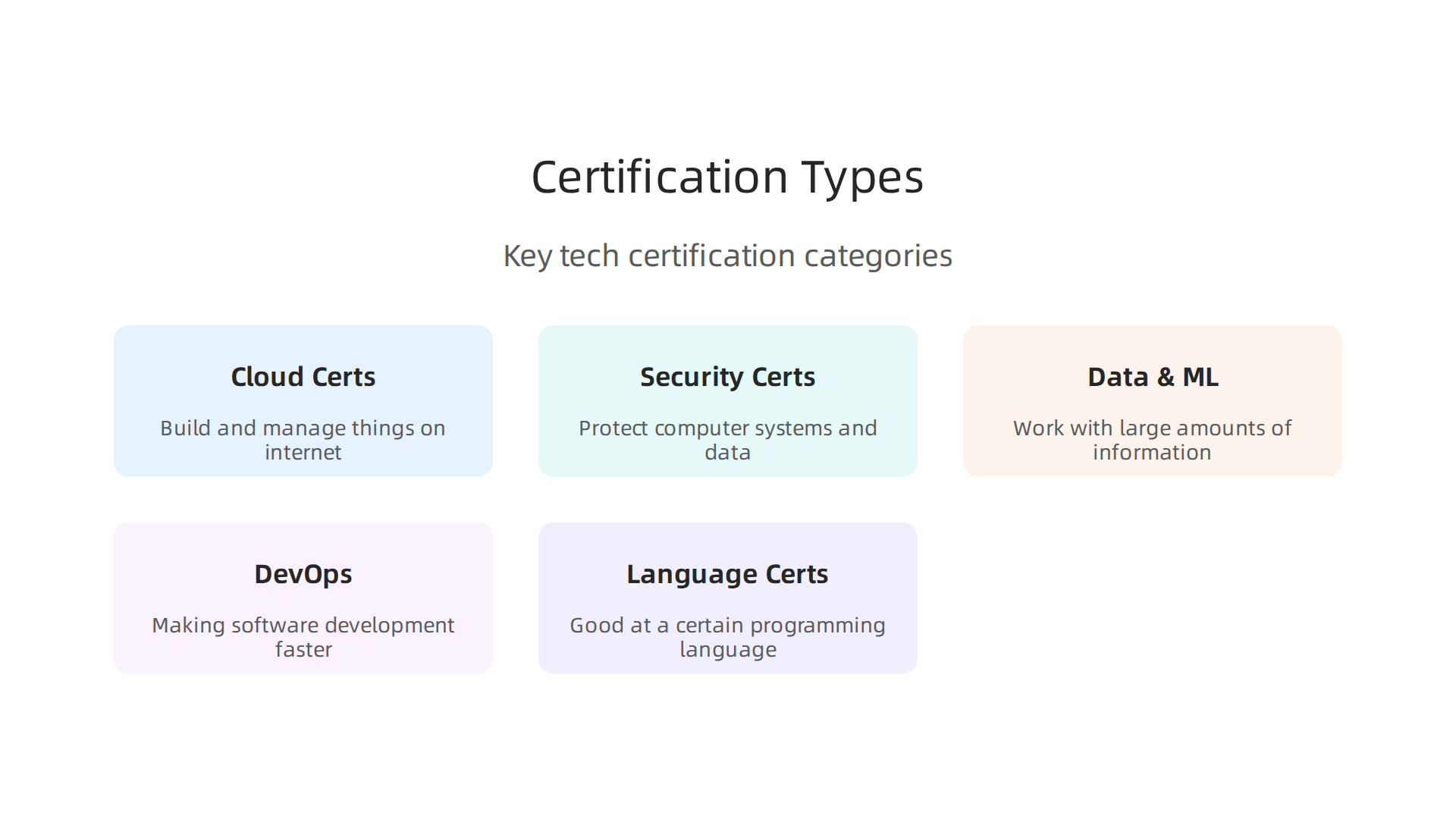
- Cloud Certifications: These are very popular. They show you know how to build and manage things on the internet using services like Amazon Web Services (AWS), Microsoft Azure, or Google Cloud. For example, an AWS DevOps certification still matters in 2026.
- Security Certifications: These teach you how to protect computer systems and data from bad actors. With more threats online, these are really important.
- Data and Machine Learning Certifications: These are for people who want to work with large amounts of information or build smart programs, like AI tools. You might explore topics related to AWS Sagemaker in 2026 for this.
- DevOps Certifications: These focus on making software development and delivery faster and smoother. They help teams work better together.
- Language or Platform-Specific Certifications: These prove you are good at a certain programming language (like Python or Java) or a specific software platform.
So, while an online software engineering degree or online web development courses give you a broad base, computer certification courses are like badges that show you’ve mastered a specific, in-demand skill. They can definitely give you an edge in the competitive tech world of 2026, especially for certain jobs and companies.
When we talk about computer certification courses, it’s not a one-size-fits-all situation. The best choice really depends on what you do every day or what you want to do next in your career.
Let’s look at which certifications can help you most, based on your job role.
Top Computer Certification Courses by Role: Engineers, Managers, and Leaders
Different roles need different kinds of knowledge. That’s why certain computer certification courses are better for some jobs than others.
- For Software Engineers (Individual Contributors)
If you’re a software engineer focused on building things, your certifications should show deep skill in key areas. Cloud certifications from Amazon Web Services (AWS), Microsoft Azure, or Google Cloud are great.
They prove you can work with modern cloud tools, which is super important in 2026. Also, certifications in specific programming languages or databases can help you stand out. For example, knowing how to use AWS for cloud computing can lead to good salary bumps, with cloud security engineers earning well over $100,000 yearly What Does AWS Certification Do.
-
For DevOps Engineers
DevOps is all about making software development and delivery smooth and fast. Certifications in DevOps tools and practices, like those for Kubernetes or Docker, are very valuable. They show you can connect coding, operations, and automation. To learn more about how to make teams work better, you can check out guides on Context Engineering the 2026 Guide for Agile and DevOps Teams. -
For Data Scientists and Machine Learning Specialists
If you work with data or build smart programs (AI), certifications in data science, machine learning, or artificial intelligence are key. These online software engineering degrees or specialized tech certifications online confirm your skills in big data tools, statistical analysis, and AI models. The demand for AI roles is growing a lot this year, with a 20% increase in tech sector vacancies showing strong demand for AI skills INDIA SKILLS REPORT 2026. Check out the Top No-Code Machine Learning Platforms and Prompt Engineering Tips for 2026 for more insights. -
For Engineering Managers
Managers need to understand the big picture and guide their teams. Certifications in project management (like PMP) or advanced cloud architecture can be helpful. They show you can plan, lead, and make smart technical decisions. Cybersecurity certifications are also great for managers, as they help protect company data. The importance of IT certifications for tech professionals is growing across North America Understanding the Essential Role of IT Certifications in Modern Tech …. -
For CTOs (Chief Technology Officers) and Tech Leaders
At the top, CTOs need to set the overall tech direction. Certifications that cover broad strategic topics, advanced security, or enterprise architecture are good. These show you can lead big changes and understand how technology affects the whole business. Staying updated on new trends like AI is also super important for these roles.
How to Prioritize Certifications Versus Short Courses or Nanodegrees
Deciding between a full certification and a shorter course depends on where you are in your career.
- Beginning Your Career or Changing Paths: If you want to become a software developer or completely change your job, a full certification is often better. It gives you a strong foundation and shows employers you’ve learned a whole skill set. An online software engineering degree can also provide a broad base.
- Boosting Specific Skills: If you already have a job but want to learn a new tool or improve one specific skill, short courses, often called "micro-credentials" or "nanodegrees," are perfect. They’re quicker and let you focus on just what you need. Many students who earn these micro-credentials say it boosts their confidence in their skills Micro-Credentials Impact Report 2025.
- Advancing in Your Current Role: For moving up, choose certifications that fill gaps in your knowledge or show mastery in areas your company values. For example, cloud security specialists can earn good money, from $93,900 to $141,800, depending on their role and experience Salary Guide.
No matter your career stage, learning is key. Whether it’s online web development courses, a full certification, or just a short skill-based course, continuous learning keeps you sharp. To stay truly current with the rapidly changing world of technology, especially AI, you need a reliable source for daily insights. Get clear daily AI updates from The AI Newsletter Worth Reading.
After figuring out if you need a big certificate or a small course, the next step is to make sure you pick a good one. Not all computer certification courses are the same. It’s smart to check a few things before you sign up, like you would when choosing an online web development class. This helps you know your hard work will actually count and lead you toward your goals, perhaps even helping you to become a software developer.
A Checklist for Picking Good Providers
When looking at who offers the courses and tests, think about these points.
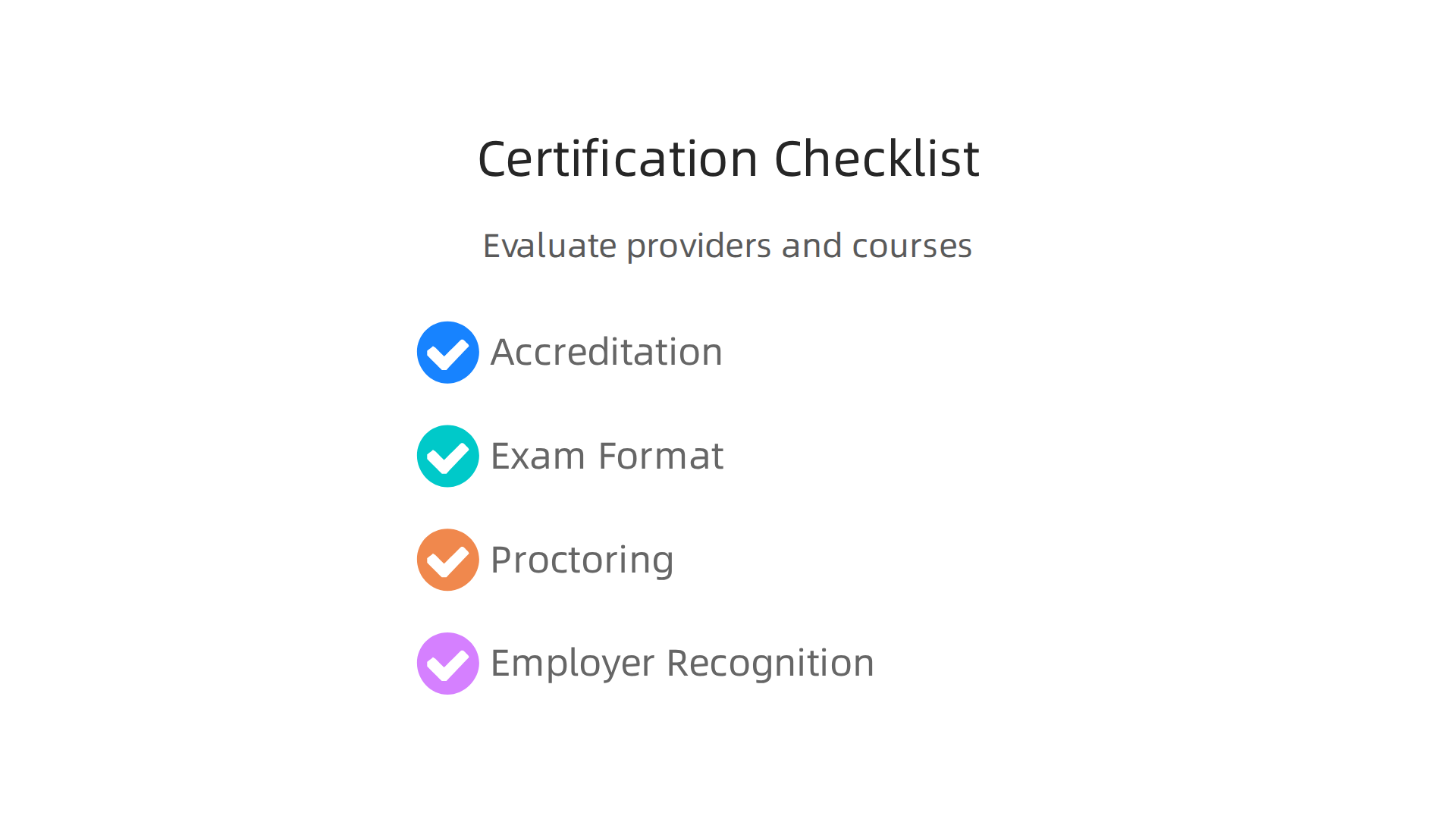
They help you find a trusted source for your tech certifications online.
- Accreditation: Is the company or group that gives the certificate recognized by others? This is super important. It means their standards are checked and approved by experts. Good accreditation helps make sure the certification is meaningful and recognized by employers Why Quality Certifications Matter.
- Exam Format: How do you take the test? Some exams are just multiple-choice. But the best ones often have "hands-on labs" where you actually do tasks on a computer. People are much happier with exams that include these practical tasks Exploring performance testing in certification. This shows you can do the work, not just know about it. Look for certifications that test your practical skills, like those from Knowledge Pillars, which use live-in-the-browser exams
- Proctoring: This is how they stop cheating during tests. Many online certifications today use "online proctoring." This means someone watches you through a webcam and special software while you take your exam at home. This helps keep the certification fair and strong, as explained by resources like the Remote Online Proctored Certification Exams guide.
- Employer Recognition: Do companies in your field know about and value this certification? Check job listings for your dream role and see which computer certification courses are mentioned most often. If a certification is often asked for, it means employers trust it and it can truly help you advance your career.
What Makes a Course High Quality?
Even if the provider is good, the course itself needs to be helpful. Here’s what to look for in the training materials:
- Real-World Tasks: Does the course teach you things you’ll actually do on the job? The best courses link what you learn to real problems and solutions in the tech world.
- Projects and Practice: Does it have projects you can build or problems you can solve? This is how you really learn. Getting to practice what you’re taught, maybe through project-based assessments, helps you remember and use the skills.
- Good Teachers: Who is teaching the course? Do they have real experience? Teachers with actual job experience can share valuable tips and tricks that come from working in the field.
By keeping these points in mind, you can find great computer certification courses that truly help you learn and grow. Whether you’re aiming for an online software engineering degree or just specific skill-based training, it’s important to know how to pick the best learning path. You can also explore best computer courses 2026 for software engineers for more ideas on top choices.
Choosing the right computer certification courses means looking at the money and time you’ll put in, and what you might get back.

It’s like planning for any important goal; you want to know if it’s worth it. Let’s break down these parts so you can make a smart choice for your tech career.
Cost, time commitment, and calculating ROI for certifications and courses
When you think about computer certification courses, it’s easy to just look at the price tag for the class or exam. But there’s more to it than that. We need to think about all the costs, even the ones you can’t see right away.
The Real Costs of Computer Certification Courses
There are two kinds of costs: direct and indirect.
Direct Costs: These are the clear prices you pay:
- Course Fees: The money you pay for the lessons, books, and other study materials. These can range from a few hundred dollars for a basic course to thousands for a deep dive into complex topics.
- Exam Fees: After studying, you pay a fee to take the test. For example, some professional certifications can have exam fees starting around $150 and going up to $400 or more, as seen with different industry certifications in 2026, according to the Q2 2026 Impact – McHenry County College.
Indirect Costs: These are important too, but they’re not always money out of your pocket:
- Your Time: This is a big one. You’ll spend hours studying, reviewing, and practicing. Many people balance studying with a full-time job. It takes effort and good planning to pass a certification exam while working, as experts suggest helpful strategies for passing a certification exam while working full time.
- Lost Work Time: If you take time off from your job to study or take an exam, that’s time you’re not earning money.
- Study Materials: Sometimes, extra books, online practice tests, or special software are needed and cost more.
Think about it this way: to become a software developer or advance in tech, the time you spend learning new skills is a big investment. You’re giving up other things you could be doing.
How Much Time Do You Need?
The time you need for computer certification courses changes a lot. Simple certifications might take 20-50 hours of study. More advanced ones, especially if you’re aiming for a high-level tech certification online, could need 100-200 hours or even more. This often includes reading, watching videos, doing practice problems, and hands-on projects. Remember, learning to use professional IT certifications is becoming more important for tech workers across North America, as noted in one understanding the essential role of IT certifications report.
Calculating Your ROI (Return on Investment)
ROI means getting more good stuff back than you put in. For tech certifications, this often means:
- Higher Salary: One of the clearest benefits. Many people see a pay raise after getting certified. For instance, some reports show that entry-level workers who earn a micro-credential may see raises of over 15%, as detailed in the Micro-Credentials Impact Report 2025. Also, certain cloud computing certifications, like those for AWS, can lead to much higher salaries for roles like Cloud Security Engineer, often in the range of $120,000 to $190,000 in 2026, depending on experience, according to What Does AWS Certification Do.
- Better Job Opportunities: Companies are often looking for people with proven skills. A certification can make your resume stand out and open doors to new jobs or promotions.
- Increased Productivity: The skills you learn can make you better and faster at your job, which benefits your employer and your own career growth.
- Job Security: Staying updated with current certifications helps you keep your skills sharp in a fast-changing tech world. This can lead to greater job security.
An online software engineering degree or specialized computer certification courses are truly an investment in your future. By carefully weighing the costs against the potential for higher earnings and better career paths, you can choose wisely. Want to stay on top of all the latest changes in the tech world that influence these paths? Get clear daily AI updates from The AI Newsletter Worth Reading. This helps you see how new technologies are shaping careers and what skills are most needed.
After figuring out the value you can get from computer certification courses, the next big question is often how you’ll actually take those courses. In 2026, you have more choices than ever: learning online, in person, or a mix of both. Each way has its own good and not-so-good points.
Types of Providers and Learning Formats
When you want to boost your tech skills, you’ll find different kinds of places offering computer certification courses:
- Vendor Certifications: These come from big tech companies like Microsoft, Cisco, or AWS. They teach specific skills for their products. You can often study for these exams through official online training, in-person classes, or self-study with books and online resources.
- University Certificates: Many colleges and universities offer shorter certificate programs. These can be a good way to get formal training without doing a full degree. They often come in online, in-person, or hybrid forms. You could pursue an online software engineering degree or a specialized certificate this way.
- Bootcamps: These are intense, short-term programs designed to get you job-ready quickly, often for roles like a software developer or web developer. Bootcamps can be fully online or in-person, providing lots of hands-on practice.
- MOOCs and Online Platforms: Websites like Coursera, edX, or Udacity offer Massive Open Online Courses (MOOCs) and specializations. These are usually affordable or even free for some content, giving you access to "tech certifications online" and specialized subjects. Many people choose these for Google Courses 2026 or other specific skills.
Online Learning: Freedom and Flexibility
Online learning is super popular because it offers a lot of freedom. You can study from anywhere, at any time that works for you. This is great if you have a job, family duties, or live far from a school. You can find many "online web development courses" and other tech certifications online.
Pros of Online Learning:
- Flexibility: Study at your own pace and schedule.
- Accessibility: No need to move or commute.
- Cost-Effective: Often cheaper than in-person options, saving on travel and sometimes tuition.
- Wide Choice: Access to courses from all over the world.
Cons of Online Learning:
- Self-Discipline: You need to be very motivated to keep up without a teacher right there.
- Less Direct Help: It might be harder to ask questions or get quick feedback.
- Isolation: You might miss out on talking with classmates face-to-face.
- Performance: Some studies from 2026 show that students who attend classes in person sometimes do better than those who take courses online, especially regarding learning outcomes and completion rates, according to research on Online Student Performance.
In-Person Learning: Hands-On and Community
In-person learning means going to a classroom or lab. This can be great for people who like a set schedule and direct help.
Pros of In-Person Learning:
- Direct Interaction: You can easily ask the teacher questions and get immediate answers.
- Teamwork: It’s easier to work on projects with classmates and build a network.
- Structured Environment: A fixed schedule can help you stay on track.
- Hands-On Labs: Some complex tech topics benefit from direct access to special equipment or labs.
Cons of In-Person Learning:
- Less Flexible: You have to be at certain places at certain times.
- Commute Time: Travel can take a lot of time and money.
- Higher Cost: Often more expensive due to facilities and in-person instruction.
- Limited Choice: You’re usually limited to what’s available nearby. Actually, a study looking at California community colleges found that Students Who Attend Class Outperform Those Online.
Hybrid Models: The Best of Both Worlds?
Hybrid courses try to offer a mix. You might do some lessons online at home and come to a classroom for labs or group discussions. This can give you some flexibility while still getting face-to-face time. These models are becoming more common for things like Best Computer Courses 2026.
Choosing the right format for your computer certification courses depends on how you learn best, your daily schedule, and what you hope to get out of the program.
After you decide on the best way to take your computer certification courses, the next step is to make a plan for success. It is not just about learning new things. It is also about showing what you know and using those skills at work.
Smart Study Plans for Certification
Getting ready for a certification exam needs a good plan. You cannot just wing it. A solid study plan helps you stay on track and use your time well.
- Start with the Basics: Find the "Body of Knowledge" (BoK) for your certification. This is a list of all the topics you need to know. Many certification bodies, like ASQ for quality certifications, offer this information to guide your study.
- Make a Schedule: Break down your study time into small, manageable chunks. If you are working full-time, finding time can be tough, but many professionals successfully pass exams by using smart strategies to study while working. A helpful approach is to plan your study sessions around your existing commitments.
- Use Practice Tests: Taking practice tests is super important. They help you understand the exam format and find areas where you need more study. Research shows that structured practice testing can help improve your chances of passing certification exams on your first try.
Hands-On Practice Makes Perfect
For tech certifications online, just reading books is not enough. You need to get your hands dirty with real-world practice.
- Labs and Projects: Many computer certification courses include labs or projects. This helps you apply what you learn. For example, some certification exams, like those from SACA for smart automation, even include a hands-on part to make sure you can "do" the work, not just "know" about it. Some exams from Knowledge Pillars also focus on building skills through secure, live-in-the-browser tasks. Studies show that people are happier with exams that have a lab component.
- Simulations: Use tools that let you simulate real tech environments. This is great for practicing tasks you would do in a real job, like when you become a software developer.
- Building Your Own: Try to build small projects related to your certification topics. This solidifies your understanding and gives you something to show for your effort.
Exam Day Strategies
When the big day comes, being prepared helps you stay calm and focused.
- Get Ready Ahead of Time: Make sure you know where your exam is, or if it is online, check your computer and internet connection. Many organizations, like AHIMA, offer remote online proctored certification exams, so understanding the setup is key. Learn about what to expect with online proctored exams to avoid surprises.
- Manage Your Time: During the exam, keep an eye on the clock. Do not spend too much time on one question. If you are stuck, move on and come back later.
- Read Carefully: Read every question twice. Make sure you understand what it is asking before choosing an answer.
Applying New Skills in the Workplace
Passing your computer certification courses is a huge win, but the real value comes from applying what you have learned.
- Lead by Example: Start using your new skills in your daily projects. This shows your team and boss the direct benefits of your certification. If you are aiming to become a software developer, immediately integrating new coding practices or tools will make a big difference.
- Share Your Knowledge: Do not keep your new smarts to yourself. Share what you have learned with your team. This helps everyone grow and makes your team stronger.

Maybe you can even mentor someone new on how to use an AI tool for coding, for example.
- Measure Your Impact: Look for ways to show how your certification has made things better. Did you fix a tricky problem faster? Did you help improve a process? Being able to point to these wins proves the worth of your tech certifications online. This is especially important as more employers are using skills-based hiring.
Staying current in the fast-changing world of tech is a continuous journey. You have to keep learning even after getting your certification. To make sure you do not miss out on the important stuff, especially when it comes to AI and broader technology developments, it is a great idea to keep up with industry news.
Get clear daily AI updates from The AI Newsletter Worth Reading.
Summary
This article explains how computer certification courses fit into modern software careers and offers a practical roadmap for choosing the right learning path in 2026. It covers who values certifications (big companies, startups, hiring stages), which types work best for different roles (cloud, security, data/ML, DevOps, managers, and CTOs), and how to weigh full certifications versus short courses or nanodegrees. You’ll get a checklist for evaluating providers, what makes a course high quality (hands-on labs, projects, experienced instructors), and how to calculate real costs, time commitments, and ROI. The guide also compares online, in-person, and hybrid delivery, gives study and exam-day strategies, and shows how to apply new skills at work to prove value. Overall, readers will learn how to select, complete, and leverage certifications so their learning actually advances their careers in a fast-changing tech market.