
Every year, AWS re:Invent draws tens of thousands of cloud engineers, leaders, and builders to Las Vegas. In 2026, the conference is even bigger. With more than 2,200 sessions covering generative AI, serverless, machine learning, and cloud native architectures, it’s easy to feel overwhelmed before you even look at the agenda.
This guide cuts through the noise. We’ve distilled the top announcements, the most important trends, and the practical takeaways that actually matter for your cloud strategy in 2026.

Whether you’re an engineer trying to decide which new AWS EC2 instance type to test or a leader planning your multi-cloud roadmap, you’ll find clear, actionable insights here.
AWS re:Invent 2026 runs from November 30 to December 4 in Las Vegas. The keynotes, including the opening keynote from AWS CEO Matt Garman, will reveal new services that shape cloud architecture decisions for the year ahead. But you don’t have to attend in person to benefit. We’ve curated the highlights that every engineering team should know.
From Amazon Bedrock updates to deeper SageMaker integrations, the conference will show how AWS is pushing AI and automation further into everyday cloud operations. At the same time, the rise of multi-cloud strategies means you need to think beyond a single provider. Understanding how to build a cloud native approach that works across platforms is more important than ever.
If you want to stay ahead of these shifts without spending hours sifting through session recordings, keep reading. We’ll cover what you need to know about re:Invent 2026 and how to apply those learnings to your own cloud environment.
For a deeper look at how to monitor and respond to cloud incidents effectively, check out our guide to the AWS status guide for engineering teams. And if you’re serious about keeping up with AI and cloud developments every day, the The AI Newsletter Worth Reading delivers clear daily updates straight to your inbox.
The Future of Serverless: AWS Lambda and Beyond
One of the biggest stories out of AWS re:Invent 2026 is how serverless computing is evolving. The line between serverless functions and containers is getting thinner. And that changes how you should think about building applications.
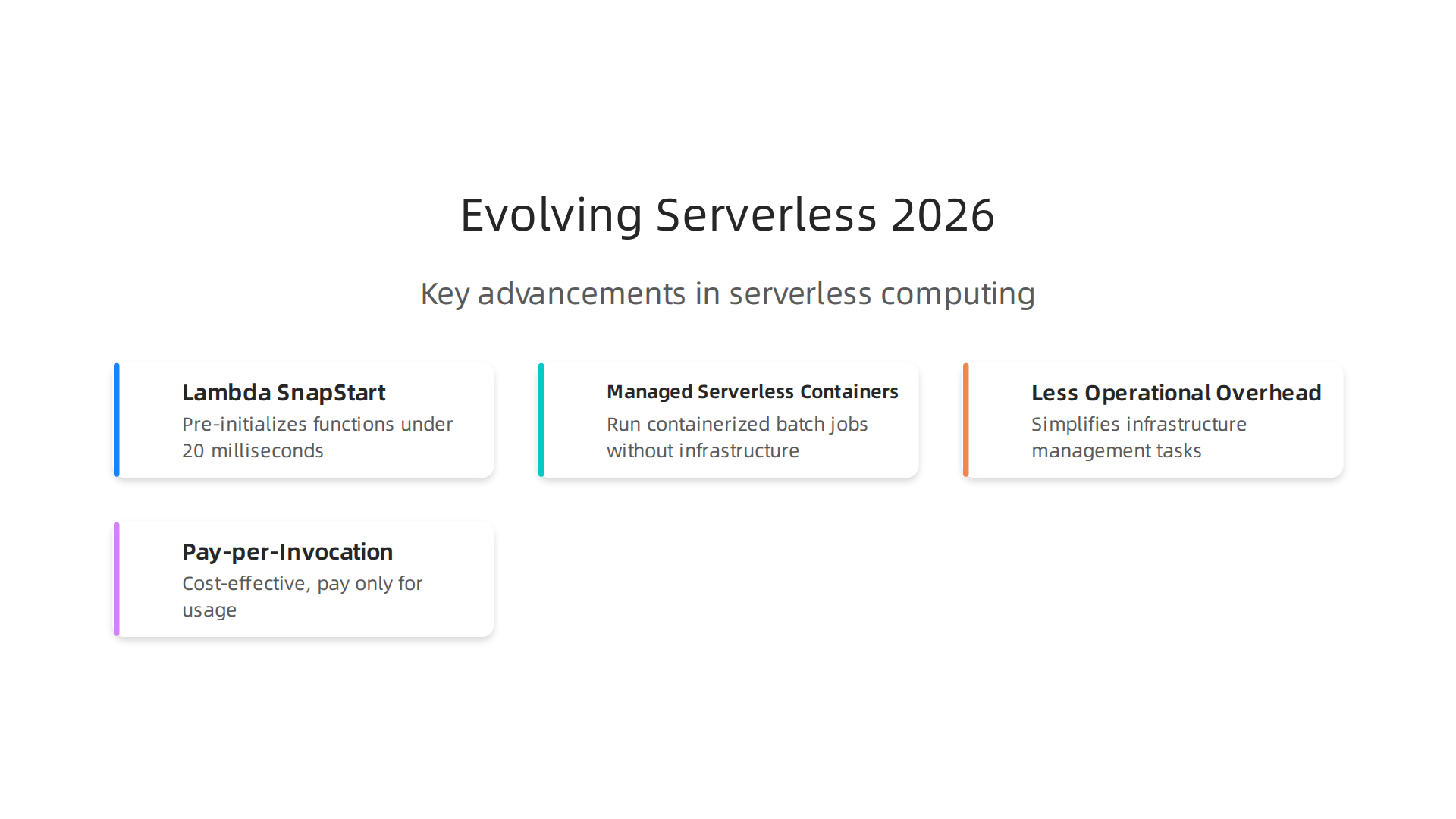
AWS Lambda has been the go-to for event-driven workloads for years. But cold starts have always been a pain, especially for latency-sensitive apps. At re:Invent 2026, AWS announced major improvements to Lambda SnapStart. This feature pre-initializes your functions so they start in under 20 milliseconds. No more waiting multiple seconds for Java or Go functions to warm up. That makes serverless a real option for more use cases, including APIs and microservices that need fast response times.
The other big announcement is managed serverless containers for batch workloads. Now you can run containerized batch jobs without provisioning any infrastructure. You just define your container image and let AWS handle the scaling. This is perfect for data processing, video encoding, and ML inference tasks that don’t need a full Kubernetes cluster.
Serverless adoption is already huge. According to the latest state of serverless report from Datadog, over 65% of AWS customers use Lambda, and serverless usage is growing across all major clouds. The reason is simple: less operational overhead and pay-per-invocation pricing. But the real win in 2026 is combining serverless with containers. Most engineering teams now run hybrid architectures. They use Lambda for bursty, event-driven tasks and containers for long-running, stateful services.
This shift toward cloud native patterns means you need to think about where each model fits. For example, if your traffic has long idle periods, serverless is cheaper. If you have steady high throughput, containers with reserved instances save money. The key is matching the workload to the right compute model.
If you want to understand how these trends fit into the bigger picture, check out our guide on engineering technology trends 2026. It covers how AI and platform engineering are shaping development practices this year.
For engineering teams, the takeaway is clear. Serverless is no longer just for simple functions. With SnapStart and managed serverless containers, AWS is making it possible to build more complex, performant applications without managing servers.
Start experimenting with these new capabilities now. They will be part of your standard toolkit by next year.
AI/ML Infrastructure in the Cloud: From Training to Edge
Training machine learning models in the cloud used to be a headache. You needed to manage GPU clusters, handle data pipelines, and worry about costs. But that is changing fast in 2026.
The same serverless ethos that transformed compute is now reshaping AI/ML infrastructure. At this year’s re:Invent, the focus was on making AI workloads easier from start to finish. AWS announced new GPU instances powered by their Trainium2 chips and NVIDIA H100 accelerators. These are purpose-built for training large models and running inference at scale. According to the latest ranking of AI/ML cloud providers 2026, AWS offers one of the widest selections of GPU options, with cluster sizes reaching tens of thousands of GPUs.
Managed ML pipelines also got a major upgrade. Amazon SageMaker now includes deeper integrations with popular frameworks like PyTorch and TensorFlow.
You can create end-to-end pipelines for data labeling, training, tuning, and deployment all from one console. No more stitching together separate tools.
But training is only half the story. Real-time inference demands low latency, and that is pushing AI to the edge. AWS is extending its infrastructure to edge locations with services like AWS Wavelength and local zones. You can run inference close to your users for faster responses. Serverless AI APIs also reduce overhead. Instead of managing GPU servers for inference, you just call an API and pay per request.
For a deeper look at building and deploying models, check out our guide on AWS SageMaker in 2026. It covers the new features step by step.
Staying on top of these AI infrastructure trends is crucial. That is why many engineers rely on The AI Newsletter Worth Reading for daily updates on AI and cloud developments.

The takeaway? AI/ML infrastructure is no longer a bottleneck. With purpose-built hardware and serverless AI APIs, you can train models faster and deploy them anywhere. Whether you are working on a small proof of concept or a large-scale production system, the tools are finally mature enough to handle both.
Cloud Security: Zero Trust and Compliance in 2026
But building powerful AI systems is only half the battle. You also need to keep them safe. That brings us to cloud security. In 2026, the old approach of trusting everything inside your network no longer works. The cloud, remote work, and API-driven apps have erased those boundaries. The new standard is zero trust.
Zero trust means you never trust any user or device by default. You verify every request, every time.
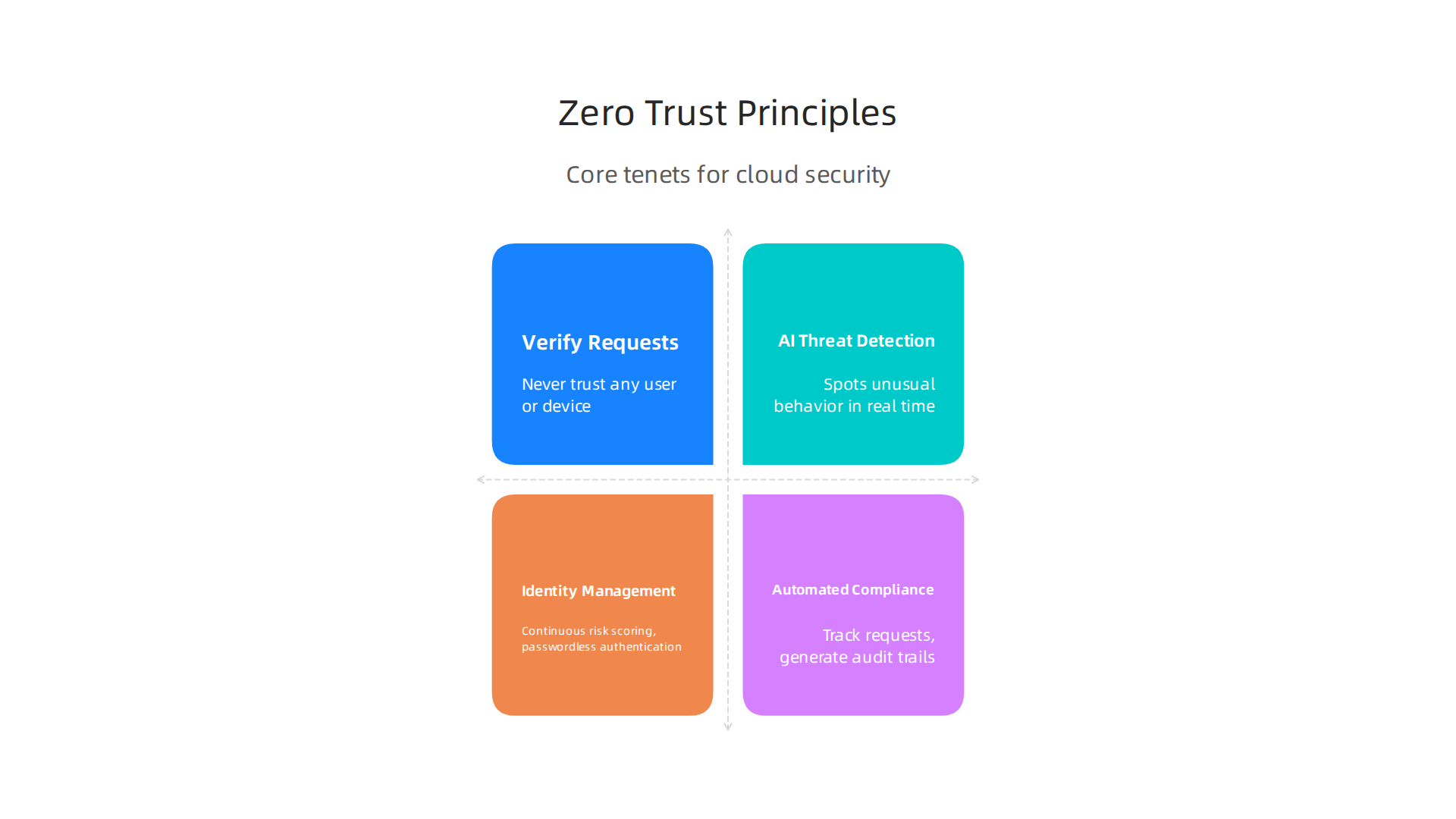
That simple shift makes a huge difference. According to key zero trust statistics for security leaders, over 70% of organizations are now adopting or actively using zero trust frameworks. And those who adopt it see 68% fewer cloud misconfiguration incidents.
AWS is fully on board with this shift. At re:Invent 2026, AWS announced new guardrails designed to enforce zero trust across your entire environment. These include AI-driven threat detection that spots unusual behavior in real time and improved identity management tools.
Instead of relying on static passwords, you get continuous risk scoring and passwordless authentication.
Compliance is also getting tougher. Regulations like GDPR, CCPA, and SOC 2 keep tightening. Manual audits are too slow. That is why automated compliance tools are now a must. They track every access request, generate audit trails, and flag violations instantly. This helps you prove to auditors that you meet strict standards without burning hours on paperwork.
For teams running cloud native workloads, zero trust principles apply at every layer: from your VPCs and EC2 instances to your container clusters and serverless functions. The key is to start auditing where implicit trust exists today and replace it with identity-based controls.
Staying ahead of security threats takes constant attention. For a practical resource on monitoring and responding to cloud incidents, check out our AWS status guide for engineering teams. It covers real-time alerting and best practices for keeping your infrastructure secure.
Zero trust is not just a buzzword; it is the foundation of cloud security in 2026. AWS gives you the building blocks. Your job is to assemble them deliberately. Start with your most critical assets and expand from there.
Cost Optimization and FinOps in a Multi-Cloud World
Security is essential, but none of it matters if you burn through your budget. Here is the truth about running infrastructure in 2026. Most teams now work across multiple cloud providers. In fact, nearly 89% of organizations have adopted a multi-cloud setup according to a future-ready multi-cloud strategy for 2026. That flexibility comes with a hidden cost: complexity. And complexity leads to waste.
The days of guessing your cloud bill are over. FinOps, or financial operations, is now a core practice for engineering teams. It combines finance, engineering, and product to make spending visible and controllable.
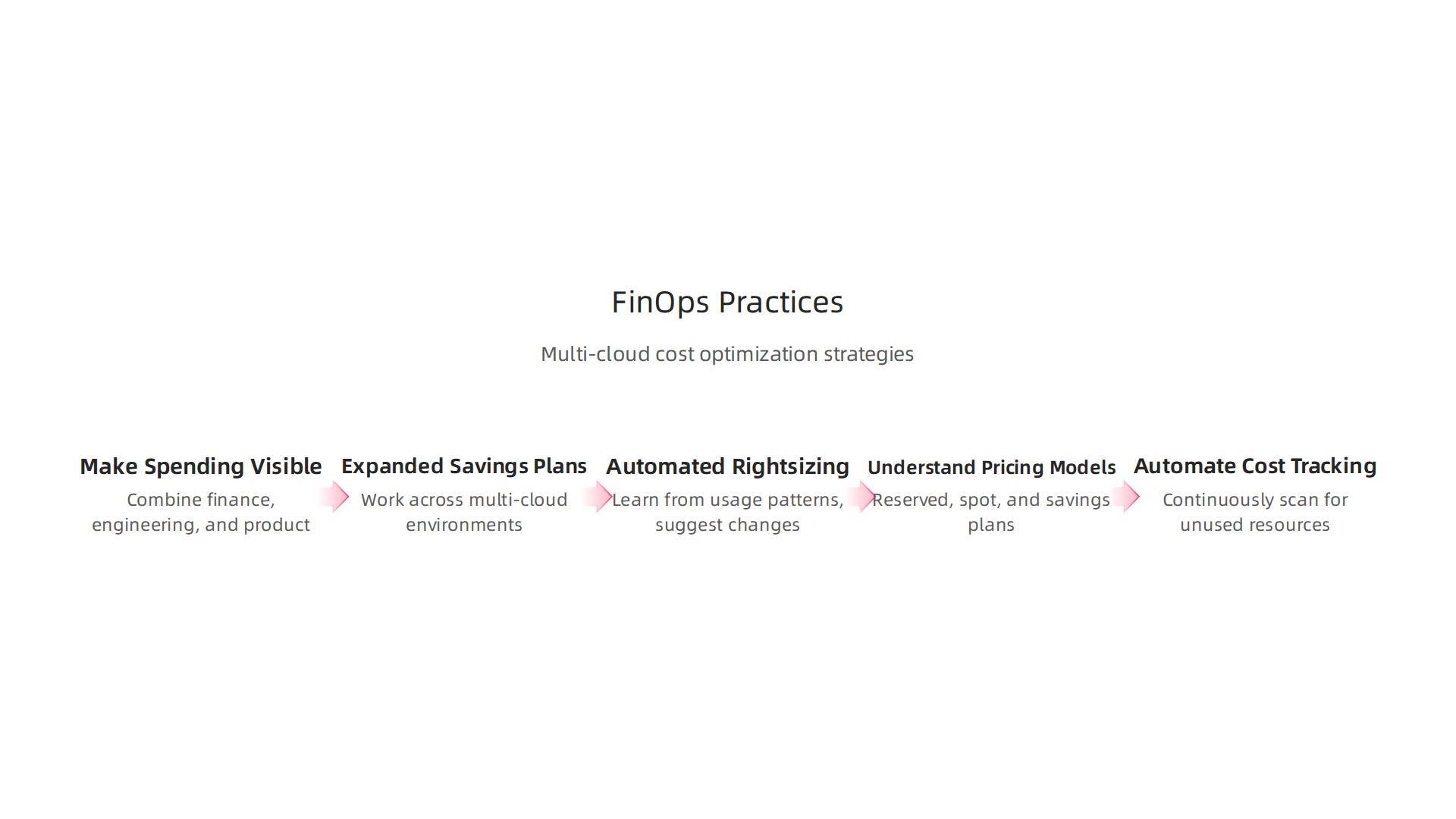
Without it, you risk paying for idle instances, oversized databases, and unused storage across every provider you use.
AWS re:Invent 2026 focused heavily on this problem. The conference introduced new cost management tools and expanded savings plans that work across multi-cloud environments.
You can now set budgets that follow workloads no matter where they run. You get real-time alerts when spending spikes. And automated rightsizing recommendations have gotten smarter. They learn from your actual usage patterns and suggest instance changes before you waste another dollar.
Understanding pricing models is also key. Reserved instances, spot instances, and savings plans each work best for different workloads. A batch processing job that can tolerate interruptions is a perfect fit for spot pricing. A steady state database needs a reserved plan. Mixing them right can cut your cloud bill by 30% or more.
The biggest shift in 2026 is automation. Manual cost tracking is too slow. Teams now use tools that continuously scan for unused resources, orphaned volumes, and oversized instances. They shut down non-production environments overnight. They enforce tagging policies so every dollar maps back to a team or project. This sounds like basic hygiene, but most organizations still leave huge savings on the table.
For a deeper look at moving beyond basic cloud monitoring, check out this guide on AWS console limitations for cloud operations. It covers practical ways to gain better cost visibility and control.
Staying on top of cost trends and new tools takes constant learning. For daily insights on AI and cloud topics, get The AI Newsletter Worth Reading from The Deep View. It delivers clear updates so you never miss an important shift.
Multi-Cloud and Hybrid Cloud Strategies
Cost optimization gets you far, but the real foundation of modern infrastructure is how you design your cloud architecture. Most organizations no longer bet on a single provider. According to a recent analysis of multicloud strategy in 2026, 92% of enterprises now use multiple cloud providers, and the average company runs workloads across more than 2.6 platforms simultaneously.

That is not just a trend. It is a deliberate move to avoid vendor lock-in and boost resilience.
AWS re:Invent 2026 leaned hard into this reality. The event introduced major updates to hybrid cloud services, including enhanced AWS Outposts that deliver a fully managed AWS infrastructure in your own data center. You can now run AWS EC2 instances on Outposts with the same console and APIs you already know. EKS Anywhere also got upgrades, making it easier to run Kubernetes clusters on premises with the same management tools you use in the cloud. These releases make hybrid deployments smoother than ever, letting you keep sensitive workloads local while still benefiting from AWS services.
Managing all these environments well requires a unified approach. You need consistent monitoring across every cloud, solid governance policies that apply everywhere, and data portability so workloads can move without friction. Platform engineering is emerging as the best way to achieve this. It builds internal tools and automation layers that hide the complexity of multiple clouds from your development teams. For a deeper look at this shift and other key trends, check out our coverage of engineering technology trends for 2026.
Adopting a cloud native mindset helps too. Building applications with containers, microservices, and standard APIs means you are not tied to any one provider. Your team can deploy on AWS, Google Cloud, or Azure without rewriting everything. And when you combine that with unified management tools, you get flexibility without chaos.
Edge Computing and the Cloud Continuum
Edge computing is growing fast. It is not just about IoT anymore. Today, edge computing handles real-time analytics and AI inference right where data is generated. Think about self-driving cars that need instant decisions or factory sensors that predict machine failures. All of this happens at the edge.
The market is huge. According to one analysis, the edge computing market is expected to grow from $46.7 billion in 2026 to $328.0 billion by 2033. That is a lot of investment in processing data closer to where it matters. You can read more details in the Edge Computing Market Size Report 2026-2033.
AWS re:Invent 2026 brought important updates to edge services. AWS expanded its Wavelength deployments to more 5G locations. Snowcone devices got upgrades for rugged environments. These tools let you run AWS EC2 instances and other services close to your users or devices. So your applications can respond faster, even in remote areas.
But edge is just one part of the picture. The real idea is the cloud continuum. That means workloads move across a spectrum from the central cloud to edge locations to on-premises data centers. Your tools and APIs should work the same way everywhere. That is exactly what cloud native practices deliver. When you build with containers and microservices, your code can run anywhere without major rework.
Platforms like Google Cloud Skills Boost help development teams learn the skills needed to manage these distributed environments. Staying up to date with edge capabilities takes ongoing effort.
Keeping everything consistent across the continuum is a challenge. You need unified management and observability. For a deeper look at how teams handle this, check out our guide on cloud operations in 2026.
As edge computing keeps expanding, staying informed on AI trends becomes vital. If you want daily insights on AI and technology, get clear daily AI updates from The Deep View Newsletter.
DevOps, GitOps, and Platform Engineering Trends
As the cloud continuum grows, teams need smarter ways to manage deployments. Old methods of clicking through dashboards just don’t cut it anymore. That is why platform engineering and internal developer platforms (IDPs) are taking off in 2026.
Platform engineering is all about giving developers a smooth, curated path to production. Instead of forcing every engineer to master raw YAML files and cluster configs, a platform team builds a layer of tools and services.
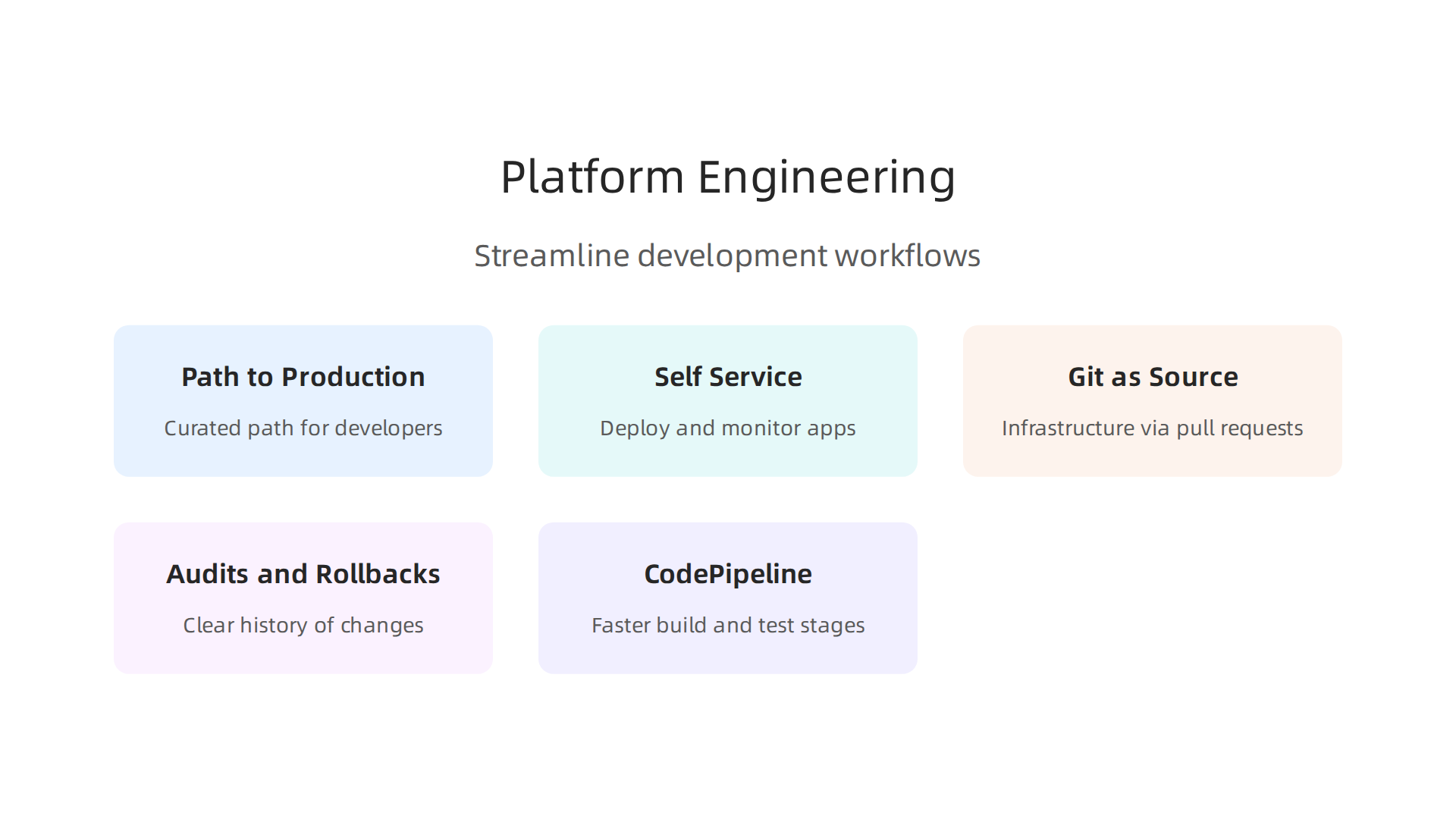
Developers get a self-service experience. They can deploy code, spin up environments, and monitor apps without getting bogged down in infrastructure details. According to a recent analysis of Kubernetes trends, platform engineering is replacing traditional DevOps as the go‑to approach for reducing cognitive load on development teams.
At the same time, GitOps continues to grow as the standard for continuous delivery and infrastructure management. With GitOps, your Git repository becomes the single source of truth. Any change to your infrastructure or application code goes through a pull request. That means better audits, easier rollbacks, and a clear history of who changed what. Teams that adopt GitOps find it much easier to keep their environments consistent across development, staging, and production.
AWS re:Invent 2026 brought several updates that support these trends. Amazon CodePipeline got new enhancements for faster build and test stages. AppConfig now makes it simpler to roll out application configuration changes with less risk. These tools help engineering teams automate their workflows and focus on building features instead of fighting deployment issues.
For a deeper look at how platform engineering and DevOps practices are reshaping the industry, read our guide on platform engineering trends in 2026.
Keep your skills sharp in a fast‑changing landscape
DevOps and platform engineering evolve quickly. New tools and practices appear all the time. To stay ahead, you need reliable, daily insights. That is where The Deep View Newsletter comes in. It delivers clear, curated AI and technology updates straight to your inbox every day. If you want to make informed decisions about your toolchain and career, it is a smart addition to your morning routine.
Sustainability in Cloud Engineering
Cloud computing lets you scale fast. But all those servers in data centers use a lot of energy. That energy comes with a carbon cost. In 2026, cloud providers are racing to offer tools that help you run greener workloads. And the changes are real.
At AWS re:Invent 2026, the company announced new features to help engineers measure and reduce their environmental impact. One big update is the sustainability dashboard.

It gives you a clear view of your carbon footprint across all your AWS accounts. You can see which services and regions produce the most emissions. Another addition is carbon-aware compute scheduling. This lets your applications run tasks when and where the energy grid is cleaner. That means you can lower your carbon output without changing how your apps work.
Engineers can take action today. Simple moves like right-sizing your AWS EC2 instances, using spot instances for flexible workloads, and choosing regions with greener energy make a big difference. The same cloud native best practices that save you money also help the planet. According to a report on data centre trends for 2026, sustainability is now a decisive factor in infrastructure decisions. It affects operating costs, regulatory compliance, and even your company’s reputation.
Sustainability is not just an AWS thing. Google Cloud, Microsoft Azure, and others are building similar tools. If you want to sharpen your skills, Google Cloud Skills Boost offers courses on sustainable cloud practices. Learning how to optimize for both cost and carbon has become a must-have skill for modern engineers.
Keeping up with all these cloud updates can feel overwhelming. To stay informed about the latest trends in cloud engineering and AI, The AI Newsletter Worth Reading delivers clear, daily insights straight to your inbox. It helps you make smarter decisions about your tools and career.
Summary
AWS re:Invent 2026 showcased a range of announcements that push serverless, AI/ML, security, and multi‑cloud practices into production-ready territory. This article distills the conference into practical guidance: faster Lambda cold starts with SnapStart, managed serverless containers for batch jobs, new GPU instances (Trainium2 and NVIDIA H100) and deeper SageMaker integrations, plus expanded edge and hybrid options like Outposts and EKS Anywhere. It explains why zero trust and automated compliance are now baseline controls, and how FinOps and automation cut costs across multi‑cloud environments. The guide also covers platform engineering and GitOps trends that simplify developer workflows, and new sustainability tools such as carbon‑aware scheduling. Readers will come away knowing which AWS updates matter for architecture, how to map workloads to the right compute model, and where to start experimenting to capture performance, cost, and security gains.