
Introduction: Navigating the Engineering Technology Landscape in 2026
Feeling overwhelmed by how fast engineering technology is changing? You are not alone. Every week brings new tools, updated frameworks, and fresh best practices. The noise can make it hard to focus on what actually matters for your work and your career.
Here is the thing. Staying informed does not mean reading everything. It means reading the right things.

That is exactly what this article is for.
We put together a clear, evidence-based overview of the key engineering technology trends shaping 2026. You will learn about the best code continuous innovations that actually improve how you build software. You will understand how a solid technology development program can help your team move faster. And you will get practical guidance on the AI or human question that keeps coming up in every engineering meeting.
Along the way, we share actionable insights to boost your productivity, guide smarter strategic decisions, and help you stay ahead of the biggest skill shifts in the industry. Whether you are a software engineer, an engineering manager, or a technical founder, you will find real strategies you can put to work right away.
One skill that matters more than ever is knowing how to use AI well. Many teams struggle to find the right balance between automation and human judgment. But when you know how to leverage the tools available, you can dramatically cut down busywork and focus on higher-value problems. If you want to explore the latest options, check out our roundup of the best AI tools for developers in 2026.
Engineering technology moves fast. But with the right roadmap, you can move with it instead of chasing it. This article is your starting point.
And if you want to stay ahead of daily AI developments without the noise, get clear daily AI updates from The Deep View Newsletter.
It is the simplest way to keep your finger on the pulse of what matters most.
The State of Engineering Technology 2026: Key Trends and Data
Now that you have a sense of the landscape, let’s dig into the actual numbers. The data from 2026 paints a clear picture of where engineering technology is heading.

And the trends are not subtle.
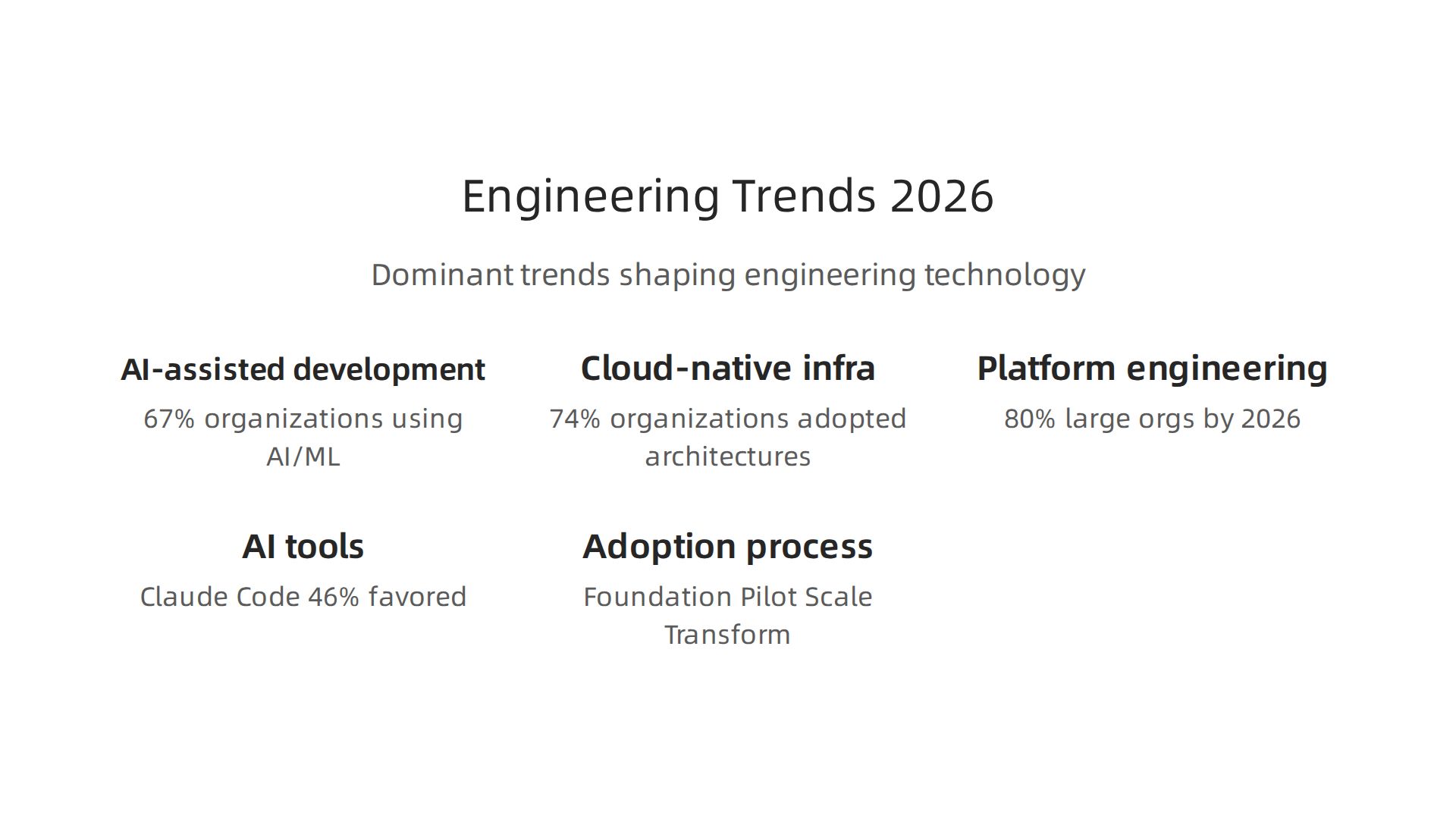
The biggest story is AI-assisted development. According to the 2026 enterprise technology adoption data from Keyhole Software, 67% of organizations are now using AI or machine learning in some form. That makes AI the dominant new trend this year. The same report shows that 90% of teams have AI in their development workflows, and over 80% report measurable productivity gains. Those numbers are hard to ignore. AI is not a side experiment anymore. It is becoming the standard way to build software.
But here is the thing. Not every team is getting the same results. The difference comes down to how well you integrate the tools and train your people. Simply turning on an AI code assistant is not enough. You need a solid technology development program that helps your team learn where automation helps and where human judgment still matters most.
Cloud-native infrastructure is another trend that has reached near-universal levels. The same report shows 74% of organizations have adopted cloud-native architectures. And that number is expected to hit 91% by 2028. Scalability, cost optimization, and faster delivery cycles are the main drivers. If your team is still running on legacy infrastructure, you are already behind.
Platform engineering is also rising fast. Gartner predicted that by 2026, 80% of large software engineering organizations would have dedicated platform teams. These teams build and manage internal developer platforms, or IDPs. The goal is to reduce friction for developers. When your engineers spend less time on infrastructure and more time on product features, everyone wins.
All of this adds up to a big shift in where budgets go. Companies are investing more in developer experience. They are funding tools that remove bottlenecks. They are hiring platform engineers and buying better observability systems. The old approach of just adding more developers is fading. The smarter move is to make your existing developers faster and happier.
If you want a deeper look at how your team can improve its setup in 2026, check out this practical roadmap for engineering teams. It covers the real steps to build a better developer experience this year.
The numbers are clear. Engineering technology in 2026 is about AI, cloud-native infrastructure, and developer-centric platforms.
Teams that lean into these trends are seeing big wins. Teams that ignore them are falling further behind. The choice is yours.
AI and Machine Learning as Engineering Catalysts
If the previous numbers made one thing clear, it is this: AI is not coming. It is already here. And in 2026, it is acting as a true catalyst for how we build software. Let us look at where the real action is happening.
Start with AI coding assistants. Tools like GitHub Copilot, Cursor, and Claude Code have gone from nice-to-have to nearly essential. According to the 2026 AI tooling survey from The Pragmatic Engineer, 95% of respondents now use AI tools at least weekly, and 75% use AI for at least half of their software engineering work. That is a massive shift in just a couple of years. The same data shows that Claude Code has become the most loved tool at 46%, far ahead of Cursor at 19% and Copilot at 9%.
Engineers are clearly voting with their keyboards.
But it is not just about writing code faster. The real power of AI in engineering technology comes when you embed machine learning directly into your delivery pipelines. Intelligent testing, automated monitoring, and predictive analytics are now being woven into CI/CD workflows. This means your pipelines can flag potential issues before they hit production, adapt test suites based on code changes, and even self-heal certain incidents. Teams that are doing this well are seeing the kind of productivity gains we talked about earlier.
However, there is a catch. AI-generated code comes with its own set of risks. Security vulnerabilities, license compliance issues, and plain bad logic can slip through if you are not careful. That is why new governance practices are emerging. The best engineering organizations are putting guardrails in place. They are using tools that scan AI-written code for security flaws, they are enforcing code review policies that specifically flag AI contributions, and they are training their developers to think critically about what the machine outputs. The question is not "AI or human." It is "how do we use AI responsibly?"
If you want to learn more about the specific tools and practices that top teams are adopting, check out this guide to AI tools for developers in 2026. It covers the agents, assistants, and automation frameworks that are making a real difference today.
And if you want to stay ahead of the curve on all things AI in engineering, you need a reliable source of daily intelligence. Get clear daily AI updates from The Deep View Newsletter. It will help you cut through the noise and focus on what actually matters for your team.
AI and machine learning are the catalysts that are accelerating engineering technology into a new era. The teams that embrace them thoughtfully, with the right governance and the right tools, will be the ones that thrive.
DevOps and Platform Engineering: Solving Productivity Bottlenecks
Let us shift gears and talk about another huge piece of the puzzle: DevOps and platform engineering. If AI is the engine, then your DevOps culture and your internal developer platform are the chassis. Without a solid foundation, even the best AI tools will not get you very far.
Here is the core idea. A well built Internal Developer Platform, or IDP, does one crucial thing: it reduces cognitive load for your developers. Instead of wrestling with infrastructure, dealing with complex configurations, and waiting for tickets to be filled, engineers get a self-service layer that handles the hard stuff for them. This is not a nice-to-have anymore. According to the 2026 platform engineering maturity data, teams that treat their platform as a product with clear success metrics see real gains in deployment frequency and developer happiness.
The data backs this up. DORA metrics remain the gold standard for measuring software delivery performance. Elite teams deploy 182 times more frequently than low performers, and their lead times are 127 times shorter. But here is the thing: DORA metrics alone are not enough in 2026. The strongest teams now layer developer experience metrics and AI attribution on top. They track the complete picture.
Observability and incident response are also shifting left. That means you are catching problems earlier, before they become full blown incidents. AI driven insights help you spot anomalies in real time, predict failures, and even suggest fixes. Instead of reacting to a fire, your team can prevent the spark. This is where a solid technology development program pays off. You train your engineers to use AI tools not as a crutch, but as a radar system for quality.
Another major trend: FinOps is now a core responsibility for platform teams. Cloud costs can spiral out of control fast. In 2026, platform engineers are expected to optimize spending, track cost per deployment, and tie infrastructure costs back to business value. It is not just about speed anymore. It is about building efficiently and sustainably.
If you want to go deeper into how to build a platform that actually helps your developers, check out this guide to context engineering for agile and DevOps teams. It covers the practical steps to reduce bottlenecks and improve flow.
Here is the bottom line. Without strong DevOps practices and a well designed IDP, your engineering technology stack will feel like a sports car stuck in traffic. The platform is what lets you accelerate. And when you combine it with the AI capabilities we discussed earlier, you get a compounding effect. Your best code continuous innovations reach users faster, with fewer failures, and at a lower cost.
The teams that invest in platform engineering today will be the ones that dominate tomorrow. It is that simple.
Strategic Technology Adoption for Engineering Leaders
But platform engineering is only one piece of the puzzle. The bigger challenge for engineering leaders is knowing which technologies to bet on.

With so many new tools and frameworks appearing every month, how do you decide what is worth your team’s time?
The answer starts with a structured framework. You cannot just chase every shiny new thing. Instead, you need a way to evaluate each option against your specific business goals. The most effective CTOs in 2026 use a phased approach. They start by checking their readiness. Before choosing any new engineering technology, they ask: Do we have the data we need? Do we have the right people? Is our current system stable enough to support change? This kind of honest self-assessment is the foundation of smart adoption.
One good model comes from the 2026 guide for CTO challenges.
It suggests a four-phase process: foundation, pilot, scale, and transform.
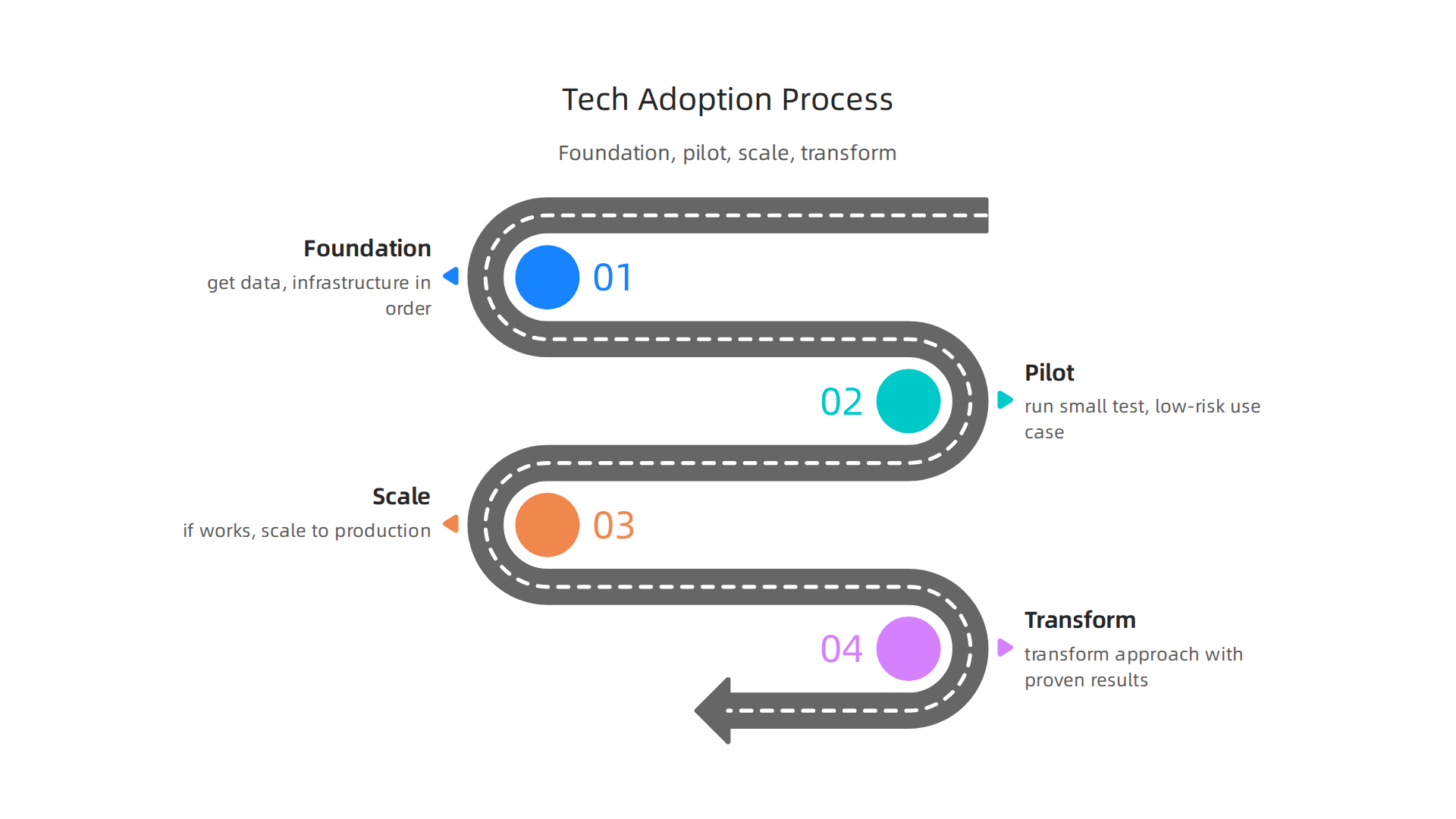
In the foundation phase, you get your data and infrastructure in order. In the pilot phase, you run a small test with a low-risk use case. If that works, you scale it to production. Finally, you transform your whole approach once you have proven results. This keeps you from jumping into big changes without proof.
Build versus buy is another big decision. Many leaders assume buying a tool is faster. But the total cost of ownership often goes beyond the license fee. You have to think about training, integration, and ongoing maintenance. If your team lacks the skills to run a bought solution, you might be better off building something simpler in-house. Talent availability matters just as much as cost. Before you buy, check if there are people on the market who can support that tool. If not, your adoption will stall.
Long-term architectural planning also has to account for AI’s impact. AI is not just a feature you add. It changes how you design systems. You need to think about where AI fits in your stack, how it affects your data pipelines, and how your team will work alongside it. The question "ai or human" is not the right one. The better question is how both can work together. Understanding what it means to bridge the AI to human gap in your code will help you make smarter architecture decisions from the start.
Your technology development program should also include continuous learning. The best leaders invest in their people. They make sure developers are trained on new tools before they are forced to use them. When your team knows how to use AI tools properly, adoption is faster and less painful.
Staying informed is critical. The tech landscape changes fast, and you cannot afford to fall behind. To keep your finger on the pulse, subscribe to The AI Newsletter Worth Reading. It delivers clear daily updates on AI and tech trends, so you always know what matters.
The bottom line: Smart adoption is not about picking the hottest tool. It is about having a clear process, knowing your team’s limits, and planning for the long term. Engineering leaders who do this well will build teams that can handle anything the future throws at them.
Upskilling for the Modern Engineer: Closing the AI and Platform Skills Gap
Strategic adoption is only half the battle. Even if you pick the right tools, your team needs the skills to use them well. And right now, there is a serious gap between what companies need and what engineers know.
The numbers back this up. According to the 2026 Engineering Productivity Benchmarks, teams that treat AI as part of a broader delivery transformation see the biggest gains.
But those gains only happen when engineers understand how to work with AI across the entire pipeline, not just while writing code. The report shows that top-performing teams ship changes in under 22.5 days, while bottom teams take more than 62 days. The difference often comes down to skills.
So what do modern engineers need to learn? Cloud computing is the top area for upskilling in 2026. A recent study by Pluralsight found that cloud computing is actually the number one field tech professionals are learning this year, even ahead of AI. But AI skills are right behind. The key areas include agentic AI, AI augmented development, and data engineering.
The good news is that learning does not have to be slow or boring. The best continuous learning programs in 2026 combine three approaches:
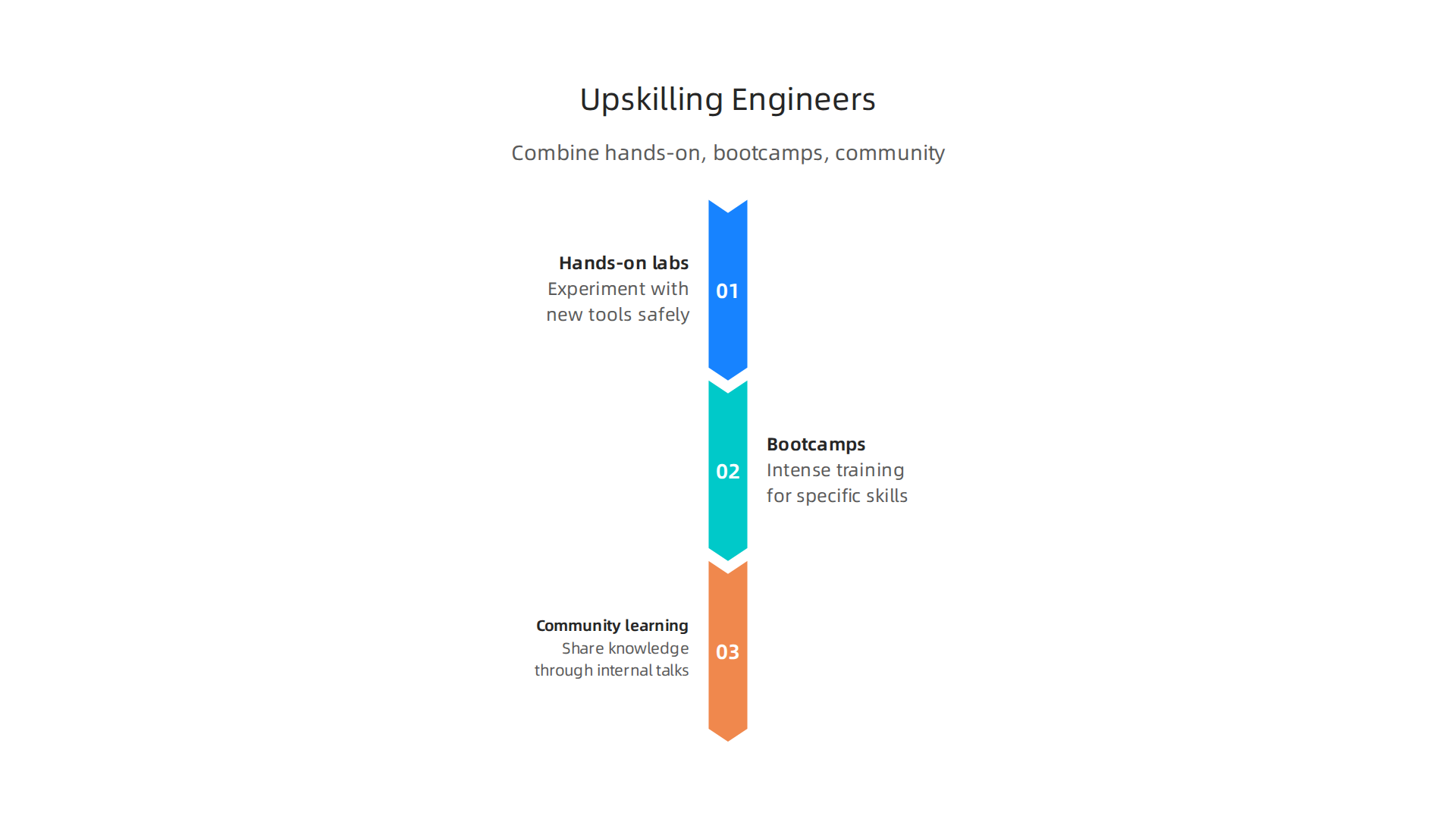
Hands-on labs let engineers experiment with new tools in safe environments. Instead of reading documentation, they build real things. This works well for cloud platforms like AWS and Azure.
Bootcamps are short, intense training sessions focused on specific skills like infrastructure as code or AI agent design. They deliver fast results without pulling people away from work for weeks.
Community-driven learning is also powerful. When engineers share what they know in internal tech talks or open source projects, the whole team gets better.
For a deeper look at which skills matter most right now, check out this guide on software developer skills in 2026.
It breaks down exactly what your engineers should focus on to stay relevant.
The bottom line: You cannot adopt new technology without investing in your people. Upskilling is not a one-time event. It is an ongoing part of your engineering technology strategy. Build a culture where learning is normal, and your team will handle whatever comes next.
Curating Signal from Noise: Building a Centralized Information Strategy
Here is a challenge almost every engineering leader faces in 2026. Your team is finally upskilling. They are learning new tools and getting comfortable with AI. But the moment they open their browser, they drown in content. New AI models launch every week. Hot takes flood social media. Engineering blogs publish hundreds of posts a day.
How do you find the signal in all that noise?
The answer is not to read faster. The answer is to build a centralized information strategy. You need a system that filters, organizes, and delivers the most valuable knowledge to your team without them having to hunt for it. This is a critical part of your overall engineering technology strategy.
Start with a Curated Information Feed
The easiest win is reducing the noise at the source. Instead of trying to monitor every blog and news site, pick one or two trusted sources that do the hard work for you. Curated newsletters are perfect for this. They save you time by summarizing the most important developments in a single email.
One option worth trying is The AI Newsletter Worth Reading. It delivers clear, daily AI updates so you stay informed without the hype. That frees up mental energy for deeper, focused work.
Build a Central Knowledge Hub for Your Team
External news is only half the problem. Inside your company, valuable knowledge is often trapped in Slack messages, old emails, or the heads of a few senior engineers. This slows everyone down. New hires struggle to get up to speed. Teams accidentally solve the same problem twice.
Top organizations in 2026 treat their internal wiki or knowledge base as a critical part of their tech stack. They document architecture decisions, incident runbooks, and lessons learned. This creates a single source of truth that every engineer can access.
For a deeper look at how teams build this shared understanding, check out this practical guide on context engineering for agile and devops teams. It explains how to keep everyone aligned as your team grows.
Use AI to Filter and Personalize
You can also use AI to fight information overload. AI-powered tools can now summarize long documents, highlight changes that matter to your specific team, and personalize learning feeds for each engineer. This takes the burden off individuals and puts the system to work.
As noted in this 2026 Guide for Engineering Leaders, effective CTOs are moving beyond just managing technical debt. They are actively curating knowledge to speed up decision-making across their organizations. When you use AI to handle the filtering, your team can focus on what only humans can do.
Make Knowledge Sharing a Habit
The final piece is culture. A centralized strategy only works when people contribute to it. Encourage your engineers to write down what they learn. Celebrate the person who documents a tricky bug fix or shares a new tool they tested.
When knowledge sharing becomes a normal part of your workflow, your team turns into a self-sustaining technology development program. They learn faster, make fewer mistakes, and innovate more. That is the real goal of any modern engineering technology plan.
Summary
This article surveys the key engineering technology trends shaping 2026, showing why AI, cloud-native architectures, and platform engineering are now core to competitive software teams. It explains how AI is moving from a novelty to an embedded part of delivery—powering coding assistants, intelligent pipelines, and predictive observability—while also introducing new governance and security risks. The piece covers practical approaches for platform engineering, including building an internal developer platform (IDP) to reduce cognitive load and tie deployments to business value, and it outlines a phased adoption framework for leaders to evaluate new tools. You’ll also find guidance on closing the skills gap through hands-on labs, bootcamps, and community learning, plus a plan to centralize and curate information so teams can focus on signal over noise. Read it to learn what to prioritize, how to pilot AI responsibly, how to measure impact, and what concrete steps your team can take next to stay productive and sustainable in 2026.