

Introduction
You have a big project coming up. It needs to run on Java, and you need a team you can trust. So you open your browser and start searching for a Java development company. Within minutes, you find dozens of options. Every one of them has a nice website. Every one of them promises expert engineers, modern architecture, and reliable delivery. They all sound great on paper.

Here’s the problem. How do you actually tell the difference between a strong partner and a team that just talks a good game?
In 2026, this question matters more than ever. Java continues to power the backbone of enterprise software. According to the latest Java trends of 2026, 62% of enterprises now rely on Java, and it holds a strong #3 spot on the TIOBE Index of programming languages. Over 90% of Fortune 500 companies run on Java somewhere in their stack. The demand for skilled Java developers is surging, not shrinking.
But finding the right development partner isn’t easy. You visit a company like FST Technical Services and see a clean site with nice case studies. You look at BTS Software Solutions and find a long list of services. You land on a gore website that confuses more than it clarifies. After a while, every site starts to blur together. The signal gets lost in the noise.
That’s exactly why we put together this guide. We’ve created a practical, step-by-step framework for evaluating any Java development company by analyzing their website. No hype. No guesswork. Just clear criteria you can use to separate real expertise from polished marketing. For a broader look at choosing technology partners, check out our guide on how to pick the right software development company in 2026.
In the sections that follow, we’ll walk through the key things to check. Things like their technical depth, their past project history, their communication style, and whether they practice what they preach with modern tools and processes. By the time you finish, you’ll have a repeatable process for identifying the right partner for your project.
Want to stay on top of the latest tech trends while you search? The AI Newsletter Worth Reading delivers daily AI and development insights straight to your inbox.
Let’s begin with the most important thing to look for: real technical expertise.
Identifying Core Java Expertise on the Homepage and About Pages
The fastest way to spot a strong Java development company is to check how they show their Java skills on their own site. Start with the homepage. Does the company talk specifically about Java, or do they just throw around generic words like "modern technology" and "expert developers"? A real Java specialist will mention Java by name. They might list Java frameworks like Spring Boot, Hibernate, or Jakarta EE. They often show little badges or icons for the technologies they use. If you see a homepage that talks only about "enterprise solutions" without naming Java once, that is a red flag.
Look for case study snippets right on the homepage. A company that builds real Java projects will want to show them off. They might include a short blurb about a banking app they built with Java or a logistics platform powered by Spring. These snippets tell you they have done this work before. Companies like FST Technical Services or BTS Software Solutions sometimes put these highlights right on the front page. If the homepage feels vague or goes to a confusing gore website, move on.
Now click to the About Us page. This is where you dig deeper. Real Java expertise shows up in three places: team tenure, Java certifications, and industry partnerships.
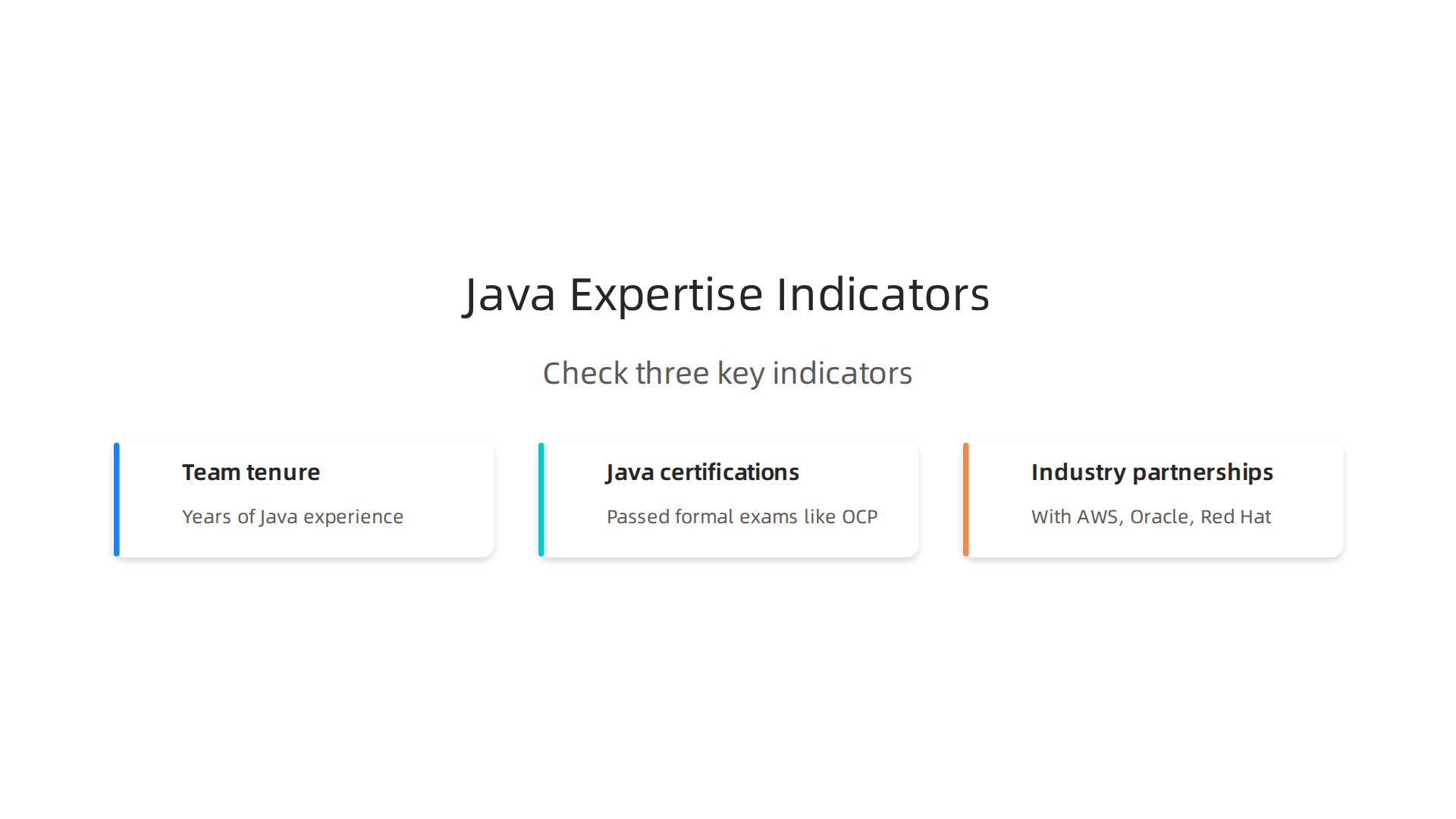
Team tenure: Look for bios that mention years of Java experience. A team with senior engineers who have been building Java systems for 5, 10, or 15 years signals real depth. Newer developers can be great too, but you want a mix of experience levels.
Java certifications: Certifications prove the team has passed formal exams. The best ones come from Oracle, like the Oracle Certified Professional (OCP) for Java SE 21. You can check the latest Java certifications in 2026 to see which ones matter most. If the company lists Oracle-certified engineers on their team page, that is a strong signal of real skill.
Industry partnerships: Does the company partner with big names like Amazon Web Services, Oracle, or Red Hat? Partnerships mean the company has passed some level of vetting. They also suggest the team stays current with enterprise tech.
Finally, look for a dedicated "Java Services" or "Enterprise Solutions" page. This page should describe specific Java services they offer: custom Java development, Spring Boot microservices, Java cloud migration, and so on. A page like this shows they treat Java as a core offering, not just one of fifty things they barely do.
As you evaluate companies, keep an eye on the developer skills that matter most in 2026 by reading about IT certification courses in 2026. This will help you understand which credentials to look for when checking a team’s background.
Evaluating Technical Depth Through Case Studies and Portfolio
Once you have scanned the homepage and About page, the next step is to dig into case studies and portfolio projects. This is where a Java development company proves what they can actually do. Real projects tell real stories. Look for details that go beyond buzzwords.
Key Metrics to Look For
A solid case study should include numbers. You want to see things like:
- Response times: How fast does the app respond under load? A Java microservice that handles 10,000 requests per second with sub-50ms latency is impressive.
- Scalability: Can the system grow? Look for phrases like "handled 3x traffic without downtime" or "scaled from 10 to 500 concurrent users."
- Migration results: Many Java projects involve moving from older systems to modern cloud setups. A good case study will show before-and-after data, such as "cut server costs by 40% after migrating to AWS with Spring Boot."
These numbers are not just marketing fluff. They show the company knows how to measure success. You can learn more about tracking project health by reading a complete guide to measuring project success.
Red Flags to Watch For
Not every portfolio is trustworthy. Watch out for these warning signs:
- Outdated projects: If the most recent case study is from 2020 or uses Java 8 without mentioning an upgrade path, the team may not stay current.
- Vague descriptions: "We built a scalable solution using Java" tells you nothing. Where is the architecture diagram? What frameworks were used? How many users?
- No measurable outcomes: A case study without numbers is just a story. If they can’t share results, they might not have any worth sharing.
- Confusing or broken website: If the portfolio page feels like a gore website with broken links and old design, that reflects poorly on their technical standards.
Cross-Verify Technical Claims
Do not take their word alone. Check client logos and see if those clients are real. Visit the client’s site or look for press releases. Also search for industry recognitions like "Clutch Top Java Developer" or "G2 Leader in Application Development." These third-party validations add credibility.
Another smart move is to look at the team’s profiles on LinkedIn. Do the engineers have certifications? You can check the latest Oracle Java SE certification path in 2026 to see what credentials are available. If multiple team members hold current Oracle certifications, that is a strong signal of real skill.
Finally, compare what they show in their portfolio with what actual clients say on platforms like GoodFirms or TechReviewer. If the case study claims a 50% performance boost but client reviews mention performance issues, something is off.
Need a broader view on choosing the right team? Read our guide on how to pick the right software development company in 2026. It covers everything from technical vetting to contract negotiations.
Assessing Client Success and Industry Experience
Now that you have looked at case studies and portfolio projects, it is time to check who the java development company has actually worked with. Client success tells you if they can solve real business problems. And industry experience tells you if they understand your specific world.
Where to Find Client Logos and Testimonials
Start on the company website. Most firms keep a dedicated "Clients" or "Case Studies" page. Some embed client logos right into their service descriptions. Look for logos from well known brands or companies in your field.
But do not stop there. Read the full testimonials. A good testimonial names a specific problem, shows the solution, and shares a measurable result. If the testimonial says "Great team, highly recommend", that is not enough. You want details.
Check platforms like Clutch, GoodFirms, or G2. These third party sites verify reviews. They help you spot patterns.

A company with many recent positive reviews from clients in your industry is a strong signal.
How to Evaluate the Relevance of Client Industries
Not every client is a good match. A java development company that works mostly with fintech firms might not understand healthcare compliance. So ask yourself:
- Have they built software for companies like yours?
- Do their case studies mention problems you also face?
- Are the project sizes and timelines similar to what you need?
For example, if you run a logistics startup, you want to see projects about supply chain or real time tracking. If they only show work for retail apps, the fit may be weak. A company like FST Technical Services or BTS Software Solutions may have deep experience in your sector, but always verify with actual project examples.
The Importance of Recent Success Stories and Repeat Engagement
Look for projects from the last 12 to 18 months. Technology moves fast. A java development company that shows work from 2022 using Java 8 may not be up to date on modern frameworks like Spring Boot 3 or cloud native tools.
Repeat engagement is another powerful sign. If a client worked with them on three projects over five years, that shows trust. Companies do not keep coming back unless the work is solid. According to a guide on 14 project management metrics to track to quantify success, repeat business is one of the clearest indicators of client satisfaction.
Stay away from vague portfolios that feel like a gore website with broken links and outdated designs. That usually means the company does not invest in its own brand, so it probably does not invest in client success either.
Finally, check if the developers have strong skills. The best companies hire engineers who keep learning. You can see what modern developers should know in our guide on software developer skills in 2026. If the team matches those skills, you are in good hands.
Reading Company Culture and Thought Leadership from the Blog and Careers Page
When you evaluate a java development company, the projects and client logos only tell part of the story. The other part lives in how the company thinks, writes, and hires. Their blog and careers page reveal the real engineering culture underneath.
What a Technical Blog Tells You
A strong technical blog shows that the team cares about learning and sharing. Look for posts that solve real problems with Java. For example, articles about refactoring legacy code, optimizing Spring Boot performance, or using the latest Jakarta EE features. If the blog only contains fluff pieces like "5 Tips for Better Code" with no depth, that is a warning sign.
The best java development company will also engage with the wider community. They might participate in open forums, speak at conferences, or publish on platforms like DZone. A blog that has been updated in the last quarter is a good sign. An archived blog with the last post from 2022 says the company stopped investing in thought leadership.
Check if they mention specific frameworks and tools you care about. A team that writes about modern Java 21 features and cloud-native deployment is likely up to date. If they still reference Java 8 without context, they may be behind. This matters because you want engineers who stay current with the ecosystem.
How the Careers Page Reflects Engineering Culture
The careers page is a goldmine. It tells you what the company values in its engineers. Look for the tech stack they list. Do they mention specific Java tools like Maven, Gradle, or Docker? Do they name test frameworks like JUnit or Mockito? A transparent careers page will also describe the interview process. If they say something like "We ask system design questions and give a take-home Java assignment," you get a sense of their rigor.
A strong careers page also reflects company culture. A great company culture is built on key elements like transparency and respect. You can read more about the core elements of great company culture to see what to look for. If the careers page includes employee testimonials, team photos, or a "day in the life" video, that signals they are proud of their workplace.
Avoid companies that hide their hiring process. If you cannot find what tools they use or how they interview, they may not have a strong engineering culture. This matters because you want a partner who invests in their own team before they invest in your project.
The Value of Open Source Contributions and GitHub Presence
Open source work is one of the best signals of a java development company’s real expertise. Check their GitHub organization. Do they maintain active repositories? Do they contribute to major Java projects? Even small contributions to libraries like Apache Commons or Spring Boot show the team gives back.
Look at commit history. A repo with regular commits from the last few months is far better than one that was abandoned years ago. Also check if they have a public profile that links to developer blogs. This shows pride in their work.
If you want to see what modern developer skills look like in 2026, check out the developer job market overview. It explains the skills that top companies expect today. A java development company whose engineers match those skills is a safe bet.
Bringing It All Together
Think of the blog and careers page as a window into the company’s soul. A java development company that writes well, hires thoughtfully, and contributes openly is much more likely to deliver solid work for you.
Ready to keep learning about the tech industry in 2026? Subscribe to The AI Newsletter Worth Reading for daily updates on how AI and engineering are evolving. It will help you make smarter decisions about the partners you choose.
Verifying Certifications, Partnerships, and Compliance Badges
Certifications and compliance badges are like a shortcut for trust. They show you that a java development company has passed outside checks and invested in real skill building. When you see these on a provider’s website, you know they care about quality.
Key Java Certifications That Matter
Not all certifications carry the same weight. The most respected one is the Oracle Certified Professional (OCP). This is the certification that proves a developer knows Java deeply. In 2026, many companies look for engineers who hold the OCP for Java SE 17 or higher. That tells you the team is working with modern Java, not stuck on an old version.
Another valuable certification is the Spring Certified Professional. Since Spring Boot powers most enterprise Java apps today, this cert shows practical framework skills. A java development company that lists these certifications on their team page is signaling they invest in continuous learning. You can read more about the Java Developer Certification Roadmap 2026 to understand which certs match different experience levels.
Some providers will also list certifications from other ecosystems like AWS or Azure. That is a good sign if your project needs cloud deployment. But the core Java certs are the ones to check first.
Oracle Partnerships and What They Mean
An Oracle partnership is more than a logo on the website. It tells you the provider has a formal relationship with Oracle. This affects licensing and support in real ways. A partner can get better access to Oracle’s technical teams, early updates, and sometimes discounted licensing for clients.
If your project needs strict Oracle licensing compliance, working with a partner makes the process smoother. They understand the rules around Java SE licensing changes that have happened over the years. Partner status also means the company has met Oracle’s own standards for technical training and customer satisfaction. This peace of mind is worth a lot when you are building critical systems.
Compliance Standards That Show Maturity
The most reliable compliance badges are ISO 27001 and SOC 2. These are not easy to get. They require a company to document and prove they follow strict security and data handling processes.
ISO 27001 focuses on information security management. It covers how a company protects data, handles breaches, and trains staff. SOC 2 is more about how a service provider manages customer data, with categories like security, availability, and confidentiality.
A java development company that holds either of these badges has passed an independent audit. This is especially important if you handle sensitive user data or operate in regulated industries like healthcare or finance. You can also check if the provider lists any industry-specific compliance like HIPAA or PCI DSS.
These certifications and badges do not guarantee perfect delivery. But they dramatically lower your risk. They show that the company has made real investments in quality, security, and professionalism. When you see OCP certifications, Oracle partnership, and ISO 27001 on the same page, you are looking at a mature partner.
Navigating Contact and Consultation Pages for a Smooth Evaluation
After you find a java development company with good certifications and compliance badges, the next step is to reach out. How a company handles that first contact tells you a lot about their real processes. A smooth, professional response shows they value clients and have good systems in place.
What a Professional Contact Process Looks Like
When you fill out a contact form or send an email, pay attention to the response time. A quality provider should reply within one business day, often within a few hours. They will ask specific questions about your project, not just "tell us what you need." Look for questions about your tech stack, timeline, budget range, and team size. These show they are thinking seriously about your needs.
A good initial consultation will include a discovery call or a detailed questionnaire. The team should explain their process for scoping work, estimating time, and managing communication. If they jump straight to a price without understanding your requirements, that is a red flag. The best providers follow a structured intake process similar to how they would manage a real project. This tells you they treat their own business with the same discipline they use for client work.
Red Flags to Watch For
Some warning signs are easy to spot. A website with no phone number or contact form is a big one. Broken forms that give error messages are another. If you get a generic reply with no personal details, that is also a sign of weak management. The way a company treats the first inquiry is often how they will treat you later. You want a partner, not a factory.
You can learn more about what to look for by reading a guide on how to pick the right software development company. It covers many of the same evaluation points from a broader angle.
How the Consultation Shows Project Management Skills
The initial consultation is actually a small project. A disciplined team will set an agenda, ask the right questions, and follow up with clear next steps. They will assign a point of contact and offer a timeline for the proposal. This mirrors how they run development sprints. If the consultation feels chaotic or rushed, the actual work probably will too. According to the 2026 software development outsourcing statistics, companies that use structured vendor evaluation processes see higher success rates. So take your time and observe how they communicate.
A good consultation leaves you confident that the java development company understands your goals and has a realistic plan to reach them. Trust your instincts here. If the process feels smooth and thoughtful at the start, it is a strong sign that the rest of the relationship will follow the same path.
Summary
This article gives a practical, repeatable framework for evaluating Java development companies by examining what their website reveals. It walks you through the fastest signals on the homepage and About page, how to read case studies for measurable outcomes, and where to check client relevance and repeat engagements. The guide explains what a healthy technical blog and transparent careers page say about engineering culture, and shows which certifications, partnerships, and compliance badges matter in 2026. It also covers how to judge a vendor by their initial contact and consultation process and lists clear red flags to avoid. After reading, you will be able to vet providers quickly, compare their technical depth and maturity, and shortlist partners who are likely to deliver on enterprise Java projects.