
The world of technology changes very fast, especially in 2026. Because of this, deciding how you will learn software development is a really important choice. It’s not just about picking any class. It’s about finding the right path for you so you can be ready for the jobs of tomorrow.

Many things come into play when you choose how to learn.
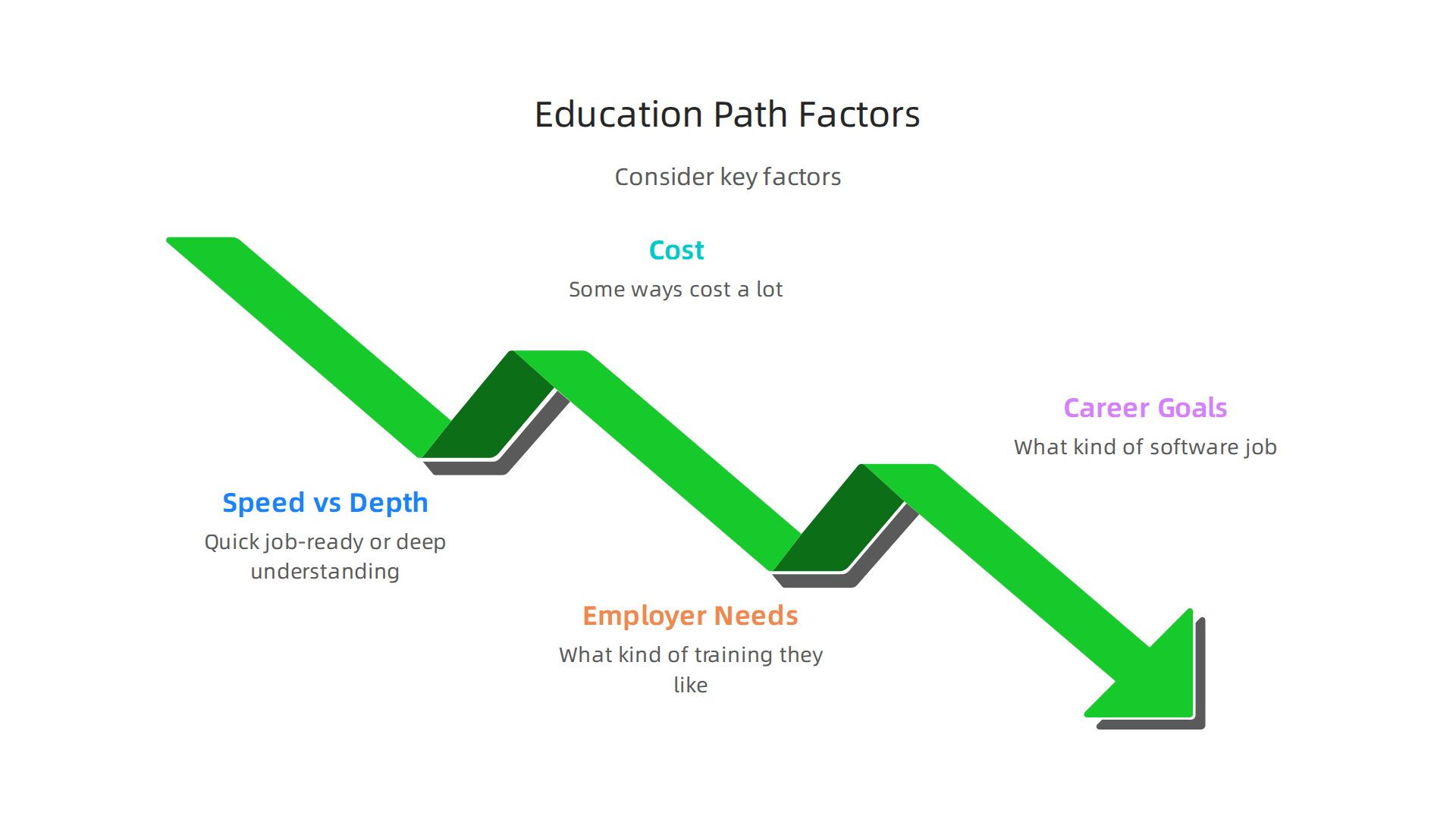
You have to think about:
- How fast you want to learn vs. how deep you want to go: Do you need to get job-ready super quickly? Or do you want to study for a long time to understand everything really deeply, like a full introduction to software engineering?
- How much it costs: Some ways to learn cost a lot of money, while others are cheaper or even free. For example, a software bootcamp can cost around $14,000 on average, but prices vary a lot.
- What companies are looking for: Employers have ideas about what kind of training they like. Many jobs for software developers are growing fast. Experts say these jobs will grow 16% by 2034, and you don’t always need a four-year college degree to get them, showing there’s a strong demand for skilled people in tech Best Online Coding Bootcamps and Courses 2026.
- Your own career goals: What kind of software job do you really want? Do you want to know the difference between a software engineer vs full stack developer in 2026 before you start? Your answer will help you pick the best way to learn.
In this guide, we will look closely at the main ways people learn to build software today. These include intensive training programs like a software bootcamp, getting a college degree, learning by yourself through things like Udemy online courses, working as an apprentice, or getting special training from a company. Each path has its own good points and things to consider. Staying updated on new tech trends, like AI, is also key for any learning journey.
If you want to keep up with the quick changes in AI and tech, make sure you don’t miss out.
The AI Newsletter Worth Reading

What is a software bootcamp? Types, formats, and common curricula
A software bootcamp is a fast and focused training program. It helps people learn important skills to become software developers very quickly, often in just a few months. Think of it like a very intense school where you learn practical skills for a new job. Instead of long years in college, a bootcamp packs a lot of learning into a shorter time, getting you ready for work in 2026. These programs are known for being very hands-on, meaning you learn by doing a lot of projects.
There are different ways a software bootcamp can be set up:
- In-person: You go to a classroom every day, just like traditional school. You learn with other students and can ask teachers questions right away. This can be good for people who like a structured schedule and being around others.
- Online synchronous: You learn from home, but you still follow a strict schedule with live classes online. You join video calls with your teachers and classmates at certain times. This offers the structure of in-person learning but with the comfort of being at home. Many online coding bootcamps fit this model 12+ Best Online Coding Bootcamps [2026].
- Hybrid models: These programs mix both in-person and online learning. You might go to a classroom sometimes and learn from home other times. This gives you some flexibility while still offering face-to-face interaction.
What you learn in a software bootcamp
The things you learn in a software bootcamp are usually very current and focused on what companies need right now. In 2026, a good bootcamp curriculum includes a lot of new topics. It’s not just about learning old coding rules. Today, it’s also about using smart tools that help you code faster and better What a Good Coding Bootcamp Curriculum Looks Like (2026).
Most software bootcamp programs focus on these main areas:
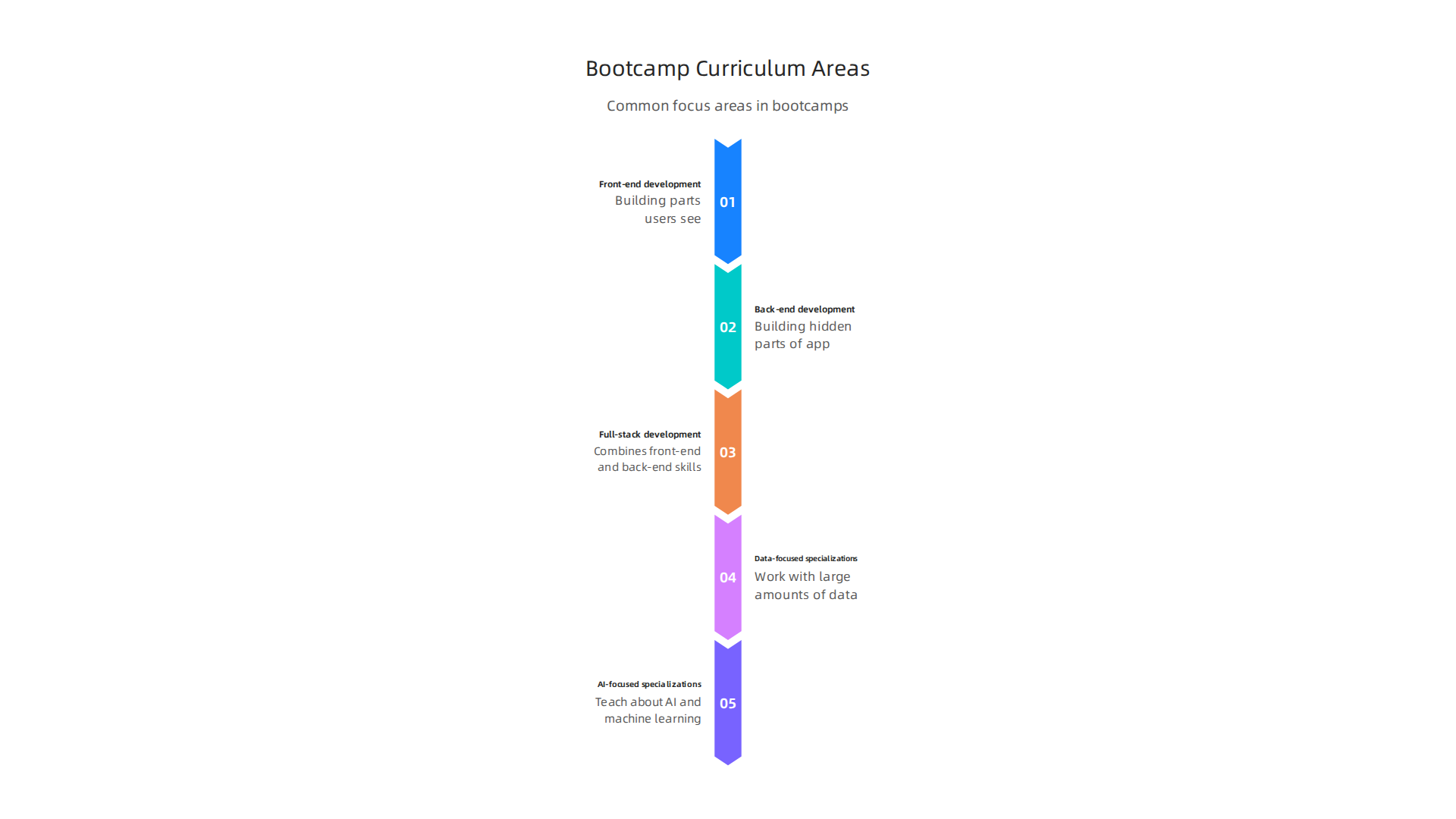
- Front-end development: This is about building the parts of a website or app that users see and interact with. You’ll learn languages like HTML, CSS, and JavaScript. You might also work with popular tools like React, which helps make websites dynamic and fun to use Full Stack Development Bootcamp Guide (2026) – course.careers.
- Back-end development: This involves building the hidden parts of a website or app, like servers and databases, that make everything work. You might learn languages like Node.js or Python, and how to set up databases to store information.
- Full-stack development: This combines both front-end and back-end skills, so you can build an entire website or application from start to finish. This is a very popular path for learning to build software engineering projects. If you are interested in becoming a full stack developer, you may want to know more about the software engineer vs full stack developer in 2026.
- Data-focused specializations: Some bootcamps teach you how to work with large amounts of data, helping businesses make smart decisions. You might learn about data science or how to analyze information.
- AI-focused specializations: With artificial intelligence (AI) growing so fast, many bootcamps now teach about AI and machine learning. This includes learning how to build AI tools and use AI to help with coding Coding Bootcamps in 2026: Best Programs, Costs & Jobs. Learning about AI coding tools is a very important skill in 2026, and you can learn about AI coding advancements to improve your work.
These specialized programs offer an introduction to software engineering in very practical ways, making sure graduates have the skills that companies actually need today.## What is a software bootcamp? Types, formats, and common curricula
A software bootcamp is a fast and focused training program. It helps people learn important skills to become software developers very quickly, often in just a few months. Think of it like a very intense school where you learn practical skills for a new job. Instead of long years in college, a bootcamp packs a lot of learning into a shorter time, getting you ready for work in 2026. These programs are known for being very hands-on, meaning you learn by doing a lot of projects.
There are different ways a software bootcamp can be set up:
- In-person: You go to a classroom every day, just like traditional school. You learn with other students and can ask teachers questions right away. This can be good for people who like a structured schedule and being around others.
- Online synchronous: You learn from home, but you still follow a strict schedule with live classes online. You join video calls with your teachers and classmates at certain times. This offers the structure of in-person learning but with the comfort of being at home. Many online coding bootcamps fit this model 12+ Best Online Coding Bootcamps [2026].
- Hybrid models: These programs mix both in-person and online learning. You might go to a classroom sometimes and learn from home other times. This gives you some flexibility while still offering face-to-face interaction.
What you learn in a software bootcamp
The things you learn in a software bootcamp are usually very current and focused on what companies need right now. In 2026, a good bootcamp curriculum includes a lot of new topics. It’s not just about learning old coding rules. Today, it’s also about using smart tools that help you code faster and better What a Good Coding Bootcamp Curriculum Looks Like (2026).
Most software bootcamp programs focus on these main areas:
- Front-end development: This is about building the parts of a website or app that users see and interact with. You’ll learn languages like HTML, CSS, and JavaScript. You might also work with popular tools like React, which helps make websites dynamic and fun to use Full Stack Development Bootcamp Guide (2026) – course.careers.
- Back-end development: This involves building the hidden parts of a website or app, like servers and databases, that make everything work. You might learn languages like Node.js or Python, and how to set up databases to store information.
- Full-stack development: This combines both front-end and back-end skills, so you can build an entire website or application from start to finish. This is a very popular path for learning to build software engineering projects. If you are interested in becoming a full stack developer, you may want to know more about the software engineer vs full stack developer in 2026.
- Data-focused specializations: Some bootcamps teach you how to work with large amounts of data, helping businesses make smart decisions. You might learn about data science or how to analyze information.
- AI-focused specializations: With artificial intelligence (AI) growing so fast, many bootcamps now teach about AI and machine learning. This includes learning how to build AI tools and use AI to help with coding Coding Bootcamps in 2026: Best Programs, Costs & Jobs. Learning about AI coding tools is a very important skill in 2026, and you can learn about AI coding advancements to improve your work.
These specialized programs offer an introduction to software engineering in very practical ways, making sure graduates have the skills that companies actually need today.
Bootcamps vs computer science degrees: strengths, trade-offs, and employer signals
After understanding what a software bootcamp teaches, it’s helpful to see how it compares to a traditional four-year computer science degree. Both paths can lead to a career in software development, but they are very different journeys.

Think of a computer science degree like building a very strong, deep foundation for a house. You learn all the basic science and math behind how computers work. This includes big ideas about how to solve problems, how data is stored, and the theories that make all technology possible. It’s a broad education that takes many years. You might study topics like algorithms, data structures, and the history of computing. This deep understanding can be very helpful for complex research jobs or creating entirely new technologies.
A software bootcamp, on the other hand, is like learning to build a specific, functional room in that house, like a modern kitchen, very quickly. You get hands-on experience with the tools and skills that companies need right now, in 2026. Bootcamps are focused on practical projects and getting you job-ready in a shorter time, usually a few months. You learn to code by building things, which helps you create a portfolio of work to show to employers.
What employers look for
For employers, the choice between a degree and a bootcamp graduate often depends on the job.
- Computer Science Degree: Some larger, older companies, or those in specialized fields like research and development, might prefer candidates with a computer science degree. They value the deep theoretical knowledge and broad understanding that comes from years of study. This can be important for roles that involve designing very complex systems or working on advanced computer science problems.
- Software Bootcamp: Many tech companies today, especially startups and those looking for developers to build web applications or mobile apps, value practical skills and a strong project portfolio above all else. They want to see what you can actually build. The demand for software developers is growing, and many jobs do not require a four-year degree, making bootcamps a great option for people who want to learn software engineering quickly and enter the job market in 2026 Best Online Coding Bootcamps and Courses 2026. A good software bootcamp helps you develop the specific Software Developer Skills 2026 that are in demand.
In the end, both paths have their strengths. What’s right for you depends on your learning style, how much time you have, and the kind of job you hope to get. In today’s Developer Job Market 2026, practical experience often speaks volumes.
The world of technology keeps changing quickly, and software bootcamps are changing with it. To make sure their students are ready for the jobs of 2026, many bootcamps are now teaching new and exciting topics. These new areas are very important for anyone who wants to learn software engineering today.
AI and Machine Learning Skills
One of the biggest changes is the focus on Artificial Intelligence (AI) and Machine Learning (ML). These are about teaching computers to learn from data and make smart decisions, almost like how people learn. Today’s software bootcamp programs often include:
- Generative AI: This helps create new content, like text or images, using AI.
- Data Science: Learning how to work with large amounts of data to find patterns and insights.
- MLOps: This mixes machine learning with DevOps (which we’ll talk about next) to help deploy and manage AI systems smoothly.
For example, many programs, like the LSU Online AI & Machine Learning Bootcamp or the UT Dallas AI & Machine Learning Bootcamp, teach these kinds of skills. Even organizations like Code Platoon are updating their programs to include AI and Cloud DevOps engineering to meet the needs of the job market Code Platoon Launches New AI & Cloud DevOps Program. If you are interested in these fields, getting daily updates can be very helpful. The AI Newsletter Worth Reading can help you get clear daily AI updates from The Deep View Newsletter.
DevOps and Cloud-Native Skills
Another big trend is learning about DevOps and cloud-native skills.
- DevOps is a way of working that helps teams build, test, and release software faster and more reliably. It’s about bringing developers and operations teams closer together. Bootcamps now teach students how to use DevOps ideas in their projects, including tools for making things automatic and managing code. Some programs even offer a DevOps Bootcamp Curriculum that focuses on cloud engineering training.
- Cloud-Native Skills mean learning how to build and run software right on cloud platforms like Amazon Web Services (AWS), Google Cloud, or Microsoft Azure. This includes understanding things like Kubernetes, which helps manage software parts, and Terraform, which helps build cloud setups with code. Being good with cloud tools is a must-have skill for many software engineering jobs in 2026, as you’ll see in guides like the AI Roadmap 2026 for DevOps and Cloud Engineers.
What this means for you and your job
These new skills show that the tech world wants people who can not only write code but also understand how to build and manage modern software systems. For anyone thinking about a software bootcamp, choosing one that offers these updated skills is very important. It means you’ll be more ready for the jobs that companies are hiring for today.
It also means that learning does not stop after the bootcamp. The tech world moves fast. So, keeping up with new tools and ideas, maybe through online courses or specific training, is a big part of a successful career. For example, some people might choose online certifications for software engineering to stay ahead. Employers expect that you will keep learning and growing your skills. This includes understanding the latest in AI and how it works with cloud setups. Many also find helpful resources like AI Cloud Engineer Bootcamp for advanced training.
The tech world is always moving forward, and so are the ways people learn to become software engineers. Besides the usual software bootcamp, there are other paths that mix learning with real work. These options can be great for someone just starting out or for those looking to change their career.
Apprenticeships and Company Training
One smart way to learn is through an apprenticeship. Think of it like a hands-on job where you learn while you work and get paid. Companies often set up these programs to teach people exactly what skills they need. It’s a win-win: you get training and experience, and the company gets new team members ready to help.
Many companies offer their own special training programs. These might be called "corporate training" or "developer training." They teach specific skills that are important for their projects. For example, organizations like Code Platoon help veterans and military families learn important tech skills through programs such as their AI Cloud and DevOps Engineering Program. This kind of training is often very practical and gets you ready for a job quickly. Some government groups even offer guidelines for how these skills bootcamps should work, making sure the training is good and useful for jobs in 2026. The 2025-26 grant provider skills bootcamp guidance shows how serious these programs are.
Degree-Plus-Bootcamp and Upskilling Programs
For some people, a mix of learning methods works best. This could mean getting a college degree and then adding a software bootcamp to gain hands-on skills. This "degree-plus-bootcamp" model gives you a strong learning base from the degree and fast, practical skills from the bootcamp. It’s a great way to combine in-depth knowledge with the quick training a software bootcamp offers.
Also, many people already have jobs but want to learn new skills to get ahead. This is called upskilling. Maybe they want to learn about AI, or get better at cloud computing. Bootcamps are perfect for this, offering focused learning that fits around a busy life. If you’re looking for best computer courses in 2026, bootcamps can be a flexible choice. Many bootcamps also offer programs for those looking to shift careers entirely, providing a clear path to learn software engineering in a new field.
No matter which path you choose, it is good to know that these programs are becoming more trusted. There are even efforts to make sure that bootcamps and other training options have clear standards for how well their students do in finding jobs. This helps show that these alternative pathways are reliable ways to start or grow a career in tech. In 2026, understanding how accreditation works for micro-colleges and bootcamps helps show their value.
Cost, financing, and return on investment considerations for bootcamps
Once you know which path you want to take, the next step is often thinking about money. How much does a software bootcamp cost? How can you pay for it? And will it be worth the money in the long run?

These are all important questions when you decide to learn software engineering.
In 2026, the average cost for a bootcamp can be around $13,000, but it can range from $2,000 to $16,000, depending on the program and how long it lasts. Full-time programs are often more expensive than self-paced ones, for example.
There are different ways to pay for a software bootcamp:
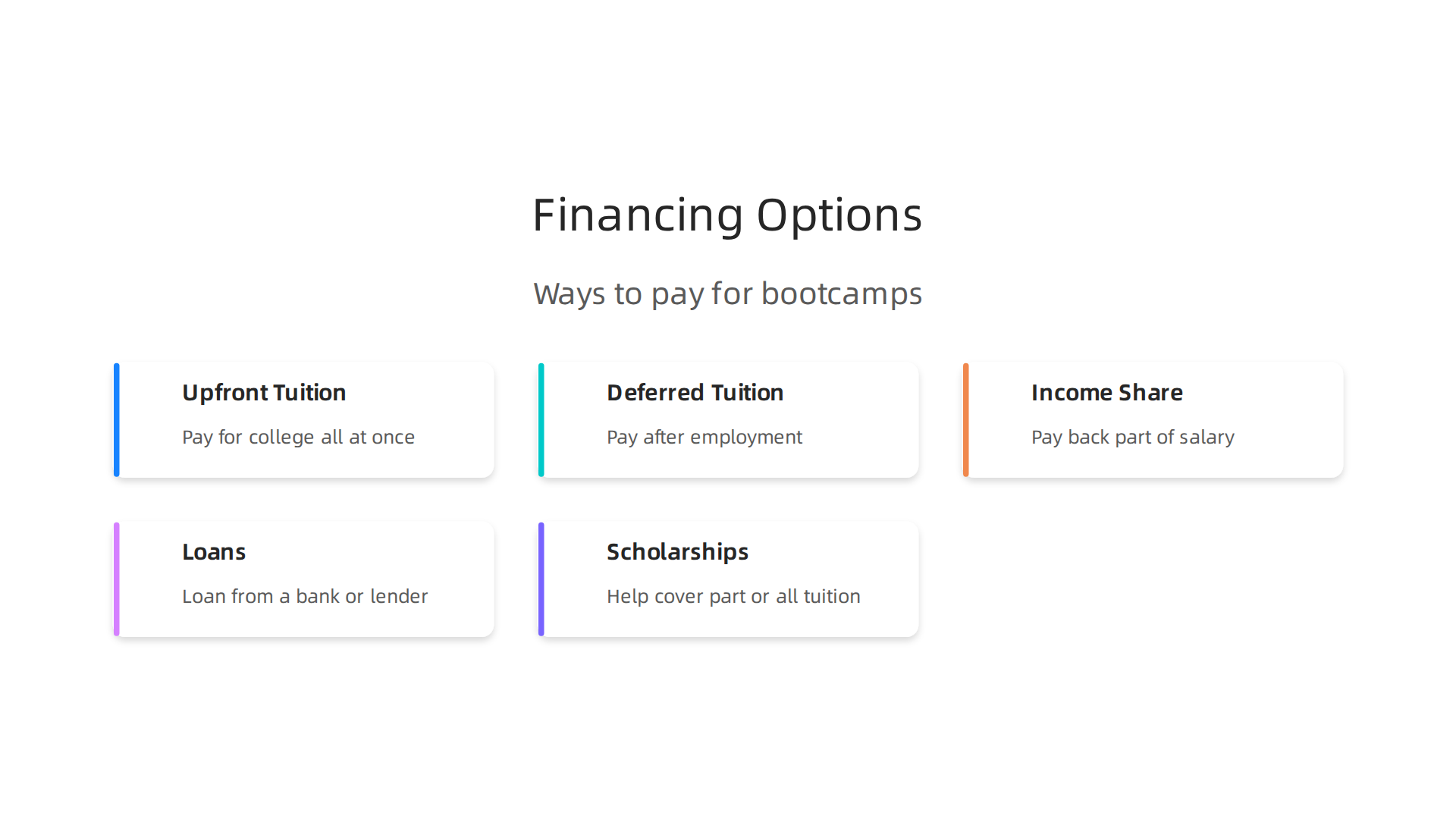
- Upfront Tuition: This is like paying for college all at once or in a few large payments. You pay the full amount before or during the program.
- Deferred Tuition: With this plan, you do not pay anything until you finish the bootcamp and find a job. Some bootcamps, like Springboard, offer this option, which can make starting easier if you do not have savings right away.
- Income Share Agreements (ISAs): An ISA means you agree to pay back a part of your future salary once you get a job after graduation. For example, you might pay 10% of your income for a few years. This helps if you are worried about finding work, because the bootcamp only gets paid if you do. In 2026, ISAs are seen as regulated consumer credit, meaning they have rules to protect you. Many types of programs offer ISAs, and they are still a popular way to fund your learning.
- Loans: You can get a loan from a bank or a special lender to cover the cost of the bootcamp. You pay this back over time, usually with interest.
- Scholarships: Some bootcamps and other groups offer scholarships that can help cover part or all of your tuition. These are like gifts you do not have to pay back. They often help people from different backgrounds get into tech.
You can learn more about these different ways to pay for a coding bootcamp, including loans and other financing, in guides like the Ultimate Guide to Paying for Coding Bootcamp.
What About the Money You Make Back?
Thinking about what you will earn after a software bootcamp is called looking at the "return on investment" or ROI. It means how much value you get for the money and time you put in.
A big part of ROI is how quickly you find a job and how much that job pays. Many people who finish a coding bootcamp find a job soon after. It takes an average of 14 to 18 months to earn back the money you spent on tuition, according to some reports from 2026. This means that a software bootcamp can be a fast way to get into a new career and start earning a good salary.
When you are looking at different bootcamps, it is smart to ask about their job placement rates and the typical starting salaries for their graduates. You can also check out current information about Tech Jobs 2026 to see what to expect in the industry. This will help you choose a program that sets you up for success.
After putting in the time and money for a software bootcamp, you will want to know what kind of job you can get and how your career might grow. This is where career outcomes come in. Bootcamps work hard to help you find a job because your success shows how good their program is.
What Jobs Can You Get After a Software Bootcamp?
People who finish a software bootcamp often start in exciting entry-level roles.

These are jobs where you keep learning a lot on the go. Some common jobs include:
- Junior Developer: This is often the first step to becoming a software engineer. You will work with a team to write and test code for websites, apps, or other software. You might work on small parts of bigger projects.
- Front-end Developer: This job focuses on the parts of a website or app that users see and interact with. You will make sure things look good and are easy to use.
- Quality Assurance (QA) Engineer: QA engineers test software to find bugs or problems. They make sure the software works as it should before people start using it.
- SRE Trainee (Site Reliability Engineer Trainee): This role is about making sure websites and systems stay online and run smoothly. It is a bit more about the "behind the scenes" work.
When you apply for these jobs, employers will often test your skills. They want to see how you solve problems, if you can write clear code, and how well you work with others. Most bootcamps offer "placement support" which means they help you with your resume, practice interviews, and connect you with companies looking to hire.
Growing Your Career Long-Term
Getting your first job after a software bootcamp is just the beginning. The tech world in 2026 changes fast, so continuous learning is super important. You will move from being a junior developer to more senior roles as you gain experience. You might even want to learn more about software developer skills 2026 what every developer must master to keep growing.
You can also choose to specialize in certain areas, like mobile app development, data science, or artificial intelligence. Some engineers even move into leadership roles, helping to manage teams and projects. Building a network of mentors and other developers can also help you grow and find new opportunities. Comparing different paths, like whether to be a software engineer or a full-stack developer, can also guide your choices. You can explore the differences in roles and responsibilities in our guide on software engineer vs full stack developer 2026 know your career path.
To stay on top of new trends, especially in areas like AI, keeping up with the latest information is a smart move.
Get clear daily AI updates from The AI Newsletter Worth Reading.
After exploring the many career possibilities that come with completing a software bootcamp, the next important step is picking the right path for your own career or for your team. It is like choosing the best tools for a big project; you need to think carefully to make sure you get the best outcome. This involves looking at a few key things before you jump in.
A Clear Way to Choose Your Training Path
When you want to learn software engineering, whether through a software bootcamp or other programs, it helps to have a simple plan. This plan should help you balance different important parts like how much time you have, what you can spend, and what jobs you want to get.
Here is a framework to guide your decision:
- Time Commitment: How much time can you or your team truly give to learning each day or week? Some programs are full-time and very fast, while others are part-time. Think about your current work or life plans.
- Budget Matters: How much money are you ready to invest? Bootcamps can cost a lot, but there are also more affordable options like Udemy online courses or free introductory classes.
Make sure the cost fits what you can afford.
- Job Role Goals: What kind of job do you want? Do you need an introduction to software engineering to start, or are you looking for more specific training like CNO developer training? Different programs focus on different skills. Knowing your goal helps you find a program that teaches you exactly what you need.
- Long-Term Skills Plan: How does this training fit into your future? The tech world changes fast, so pick a program that gives you skills that will last and can grow with you.
Thinking about these points will help you narrow down your choices and find a program that really fits. Programs that have strong quality frameworks often focus on getting good results for their students and the companies that hire them, which is a good sign to look for when choosing your path Strengthening the Apprenticeship Pipeline.
Your Checklist for Picking a Program
For both hiring managers looking to train their staff and individuals seeking to learn software engineering, a checklist can make the choice easier.
Here’s what to check:
- Program Success: Does the software bootcamp have good stories from past students? Check their job placement rates and see what companies hire their graduates.
- What You Will Learn: Look closely at the classes offered. Does the curriculum cover the skills needed for the jobs you want? For example, if you want to be a web developer, does it teach modern web tools? You can learn more about picking the right online class in our guide on how to choose the best web development class online in 2026.
- Who Teaches? Find out about the instructors. Do they have real-world experience in software engineering?
- Support for Jobs: What kind of help do they offer to find a job after the program? Things like resume help, practice interviews, and company connections are very useful. Employers value programs that offer good educational support and help with finding jobs Engaging Employers in Apprentice Training – PMC – NIH.
- Flexibility: Does the program offer different ways to learn, such as online or in-person, full-time or part-time? Pick what works best for your life.
- Reviews: Look for reviews from former students on independent websites. What did they like or dislike? This gives you an honest look at the program.
By using this framework and checklist, you can make a smart choice about your next steps in the fast-changing world of tech. And remember, staying updated with skills through things like online certifications for software engineering keep you ahead in 2026 is always a good idea.
Summary
This article explains how to choose the best way to learn software development in 2026, with a focus on modern software bootcamps and how they compare to degrees, apprenticeships, and self-study. It covers bootcamp types (in-person, online synchronous, hybrid), common curricula (front-end, back-end, full-stack, data, and AI), and why up-to-date skills like AI, DevOps, and cloud-native workflows matter to employers. The guide walks through costs and financing — average bootcamp prices, deferred tuition, ISAs, loans, and scholarships — and describes expected career outcomes and ROI, including typical entry roles and time to recoup tuition. It also compares employer preferences for degrees versus practical portfolios, outlines alternative pathways like apprenticeships and corporate training, and gives a practical checklist for evaluating programs. The piece emphasizes continuous learning and choosing a program that matches your time, budget, and long‑term career goals so you can be ready for the jobs of 2026.