
Introduction
Artificial intelligence is the defining technology of this decade, and the companies leading it are reshaping industries across the globe. From healthcare and finance to software development and education, AI is no longer a distant idea. It is the engine running behind some of the most powerful tools we use every day.
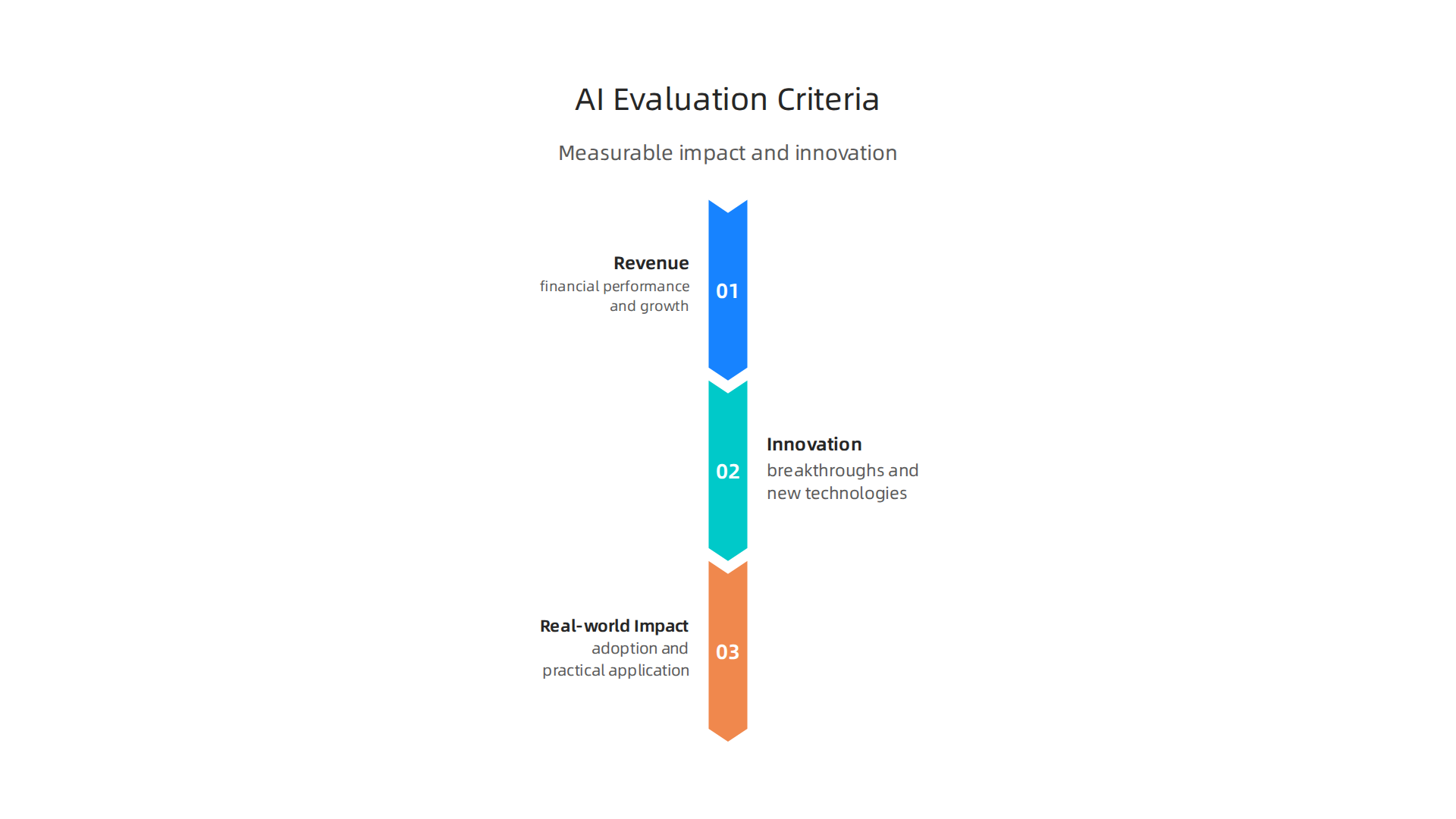
But with hundreds of AI firms competing for attention, how do you find the ones that really matter? Identifying the true top 10 AI companies requires more than just following the hype. It takes careful analysis of revenue, innovation, and real-world impact.
According to the 2026 AI Company Rankings landscape, companies like OpenAI, Anthropic, and Google DeepMind sit at the very top by valuation and growth.
This curated list helps software engineers, CTOs, and tech leaders cut through the noise. Instead of chasing every new startup, you can focus on the most influential players that are setting the direction for the entire industry.

Whether you are wondering about the future of your role or looking for the next ai-powered learning platform to adopt, knowing these companies is your first step.
The AI field moves fast. What was true last year might already be outdated. That is why staying informed matters. For daily, clear AI updates that help you keep up, The AI Newsletter Worth Reading delivers insights straight to your inbox.
We also understand that many developers ask will software engineers be replaced by ai. That question is not simple, but the companies on this list are the ones shaping the answer. To explore how AI is changing roles and skills, check out the developer job market 2026 analysis.
Let’s dive into the top 10 AI companies defining 2026.
OpenAI — The Generative AI Pioneer
OpenAI sits at the very top of the top 10 AI companies in 2026, and for good reason. You probably know it best for ChatGPT and the GPT series of models. But OpenAI is much more than a chatbot.
AI models like ChatGPT and DALL-E.](https://softwareengineeringnewstoday.com/wp-content/uploads/2026/07/weblish-inline-69937.png)
It also powers DALL·E for image generation and Whisper for speech recognition. The company’s tools are used by hundreds of millions of people every week.
The numbers back up the hype. According to the AI Company Rankings 2026 landscape, OpenAI holds a valuation near $850 billion. That makes it the most valuable private AI company in the world. Its revenue is growing fast too. The company targets $30 billion in full-year 2026 revenue, up from about $4 billion in 2025.
A big part of that growth comes from its deep partnership with Microsoft. Microsoft has invested billions into OpenAI and integrated its models into products like Azure, GitHub Copilot, and Microsoft 365. This relationship gives OpenAI both massive computing power and a huge distribution channel.
For software engineers, OpenAI’s work directly affects the tools you use every day. Code generation, documentation, debugging, all of these are changing fast. If you want to understand how these changes affect your career, check out this guide on how to land a web developer internship in 2026.
And to stay ahead of the curve, you need reliable daily updates. The AI Newsletter Worth Reading brings you clear, concise AI news every day so you never miss a shift in the landscape.
Next, we will look at Anthropic, the safety-focused rival that is pushing OpenAI hard.
Microsoft AI — The Enterprise AI Powerhouse
If OpenAI is the flashy pioneer, Microsoft is the steady giant making AI work for businesses. In 2026, the company has embedded artificial intelligence across its entire product lineup. That includes Azure, Office 365, Windows, and GitHub Copilot.
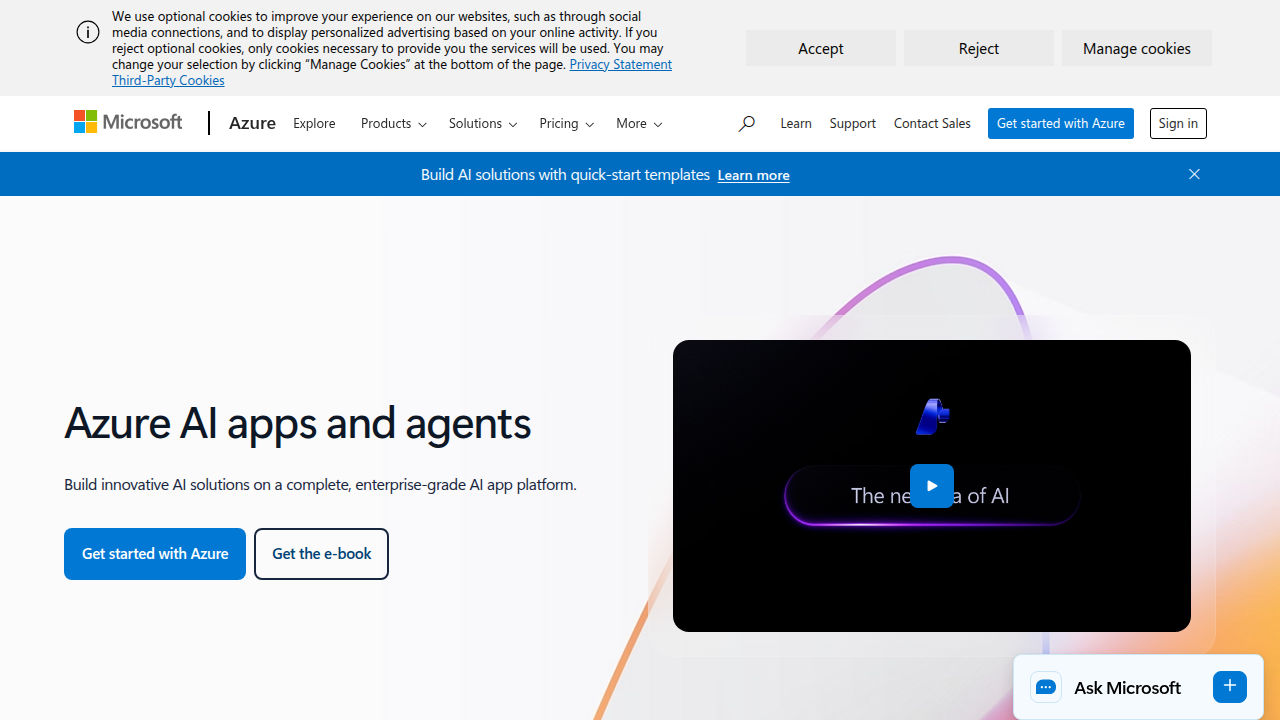
For companies adopting AI at scale, Microsoft is often the default starting point.

What sets Microsoft apart from the other top 10 AI companies is its dual strategy. On one side, its deep partnership with OpenAI gives it early access to GPT models and research talent. On the other, Microsoft builds its own smaller models like Phi-3, which are faster and cheaper for everyday business tasks. This dual approach means Microsoft can serve every need and budget.
The adoption numbers back up the strategy. Azure AI services are already used by over 60 percent of Fortune 500 companies. And according to the Forbes AI 50 list for 2026, nearly one-third of all tracked AI revenue flows through Microsoft’s partnership with OpenAI.
For software engineers, this directly affects your daily work. Copilot writes code alongside you. Azure AI handles deployment and scaling. The tools are evolving fast. To stay competitive, you need to keep learning. Start with this guide on software developer skills for 2026, which covers exactly what engineers need to master right now.
Next, we will look at Anthropic, the safety-focused rival pushing both OpenAI and Microsoft hard.
Google DeepMind — Research and Multimodal AI
Before we get to that safety-focused rival, let’s look at Google DeepMind. This is the research engine behind some of the biggest AI breakthroughs today. From AlphaFold solving protein folding to Gemini rewriting the rules for AI reasoning, DeepMind is where fundamental science meets practical product.
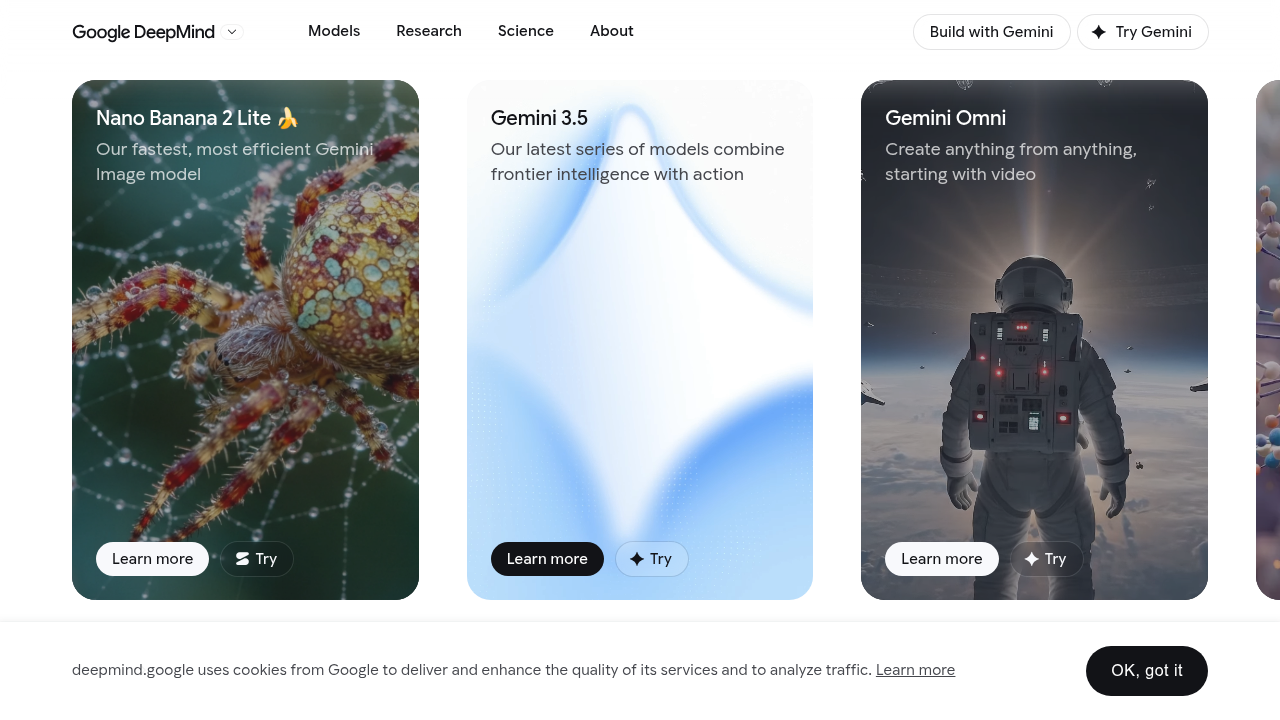
Google’s massive compute power and data advantages let its teams iterate faster than almost anyone else.
A key difference between DeepMind and other top 10 AI companies is its focus on unified models. The company has filed 1,093 patents since 2018, many centered on building one model that handles text, images, audio, and video without extra adapters — this is what researchers call Google DeepMind’s 1,093 patents on unified AI architectures. This multimodal approach powers products like Google Search, Assistant, and Cloud AI services that billions of people use every day.
For software engineers, DeepMind’s work directly shapes the AI tools you depend on. The same research behind Gemini’s reasoning capabilities also improves code generation and debugging in Google Cloud. Understanding these advances can help you make smarter choices about the AI you use in your daily workflow. If you are curious about how AI assistants are changing the way developers work, read our guide on personal AI assistants reshaping developer workflows in 2026.
Want daily insights into these rapid AI changes? Get clear daily AI updates from The AI Newsletter Worth Reading.
Now we are ready to move to Anthropic and its safety-first approach.
Anthropic — Safety-First Frontier Models
Anthropic has taken a very different path from DeepMind. While DeepMind pushes toward unified models that handle everything at once, Anthropic focuses on making AI safe and understandable.

Its Claude models are built around a concept called constitutional AI — a set of rules that guide the model’s behavior from the ground up.
This safety-first approach has not held Anthropic back. Claude’s performance on coding and analytical tasks now rivals OpenAI’s GPT-4, and major enterprise partnerships keep rolling in. The company has secured billions in funding, making it one of the most well-funded startups in the AI space.
For software engineers, this matters a lot. Claude’s ability to reason through complex code and explain its thinking makes it a powerful tool for debugging and pair programming. If you want to get better at working with AI in your daily workflow, check out this guide on how to bridge the AI to human gap in your code.
Anthropic proves that you do not need to be the biggest AI company to be one of the top 10 AI companies. A clear focus on safety and interpretability can be just as valuable as raw compute power. For developers who care about building responsible systems, Claude offers a compelling option.
Amazon Web Services AI — The Cloud AI Giant
While Anthropic focuses on building safe AI models, another company in the top 10 AI companies list takes a completely different approach. Amazon Web Services (AWS) provides the infrastructure that powers AI for millions of developers worldwide. In fact, AWS remains the global cloud leader with roughly 29% market share as of early 2026, according to the latest data on top cloud providers and trends in 2026.
What makes AWS such a massive AI player? It offers the broadest set of AI and machine learning services you will find anywhere. Tools like SageMaker let you build, train, and deploy models without managing servers. Bedrock gives you easy access to powerful foundation models from multiple providers. And custom chips called Trainium and Inferentia keep training and inference costs low.
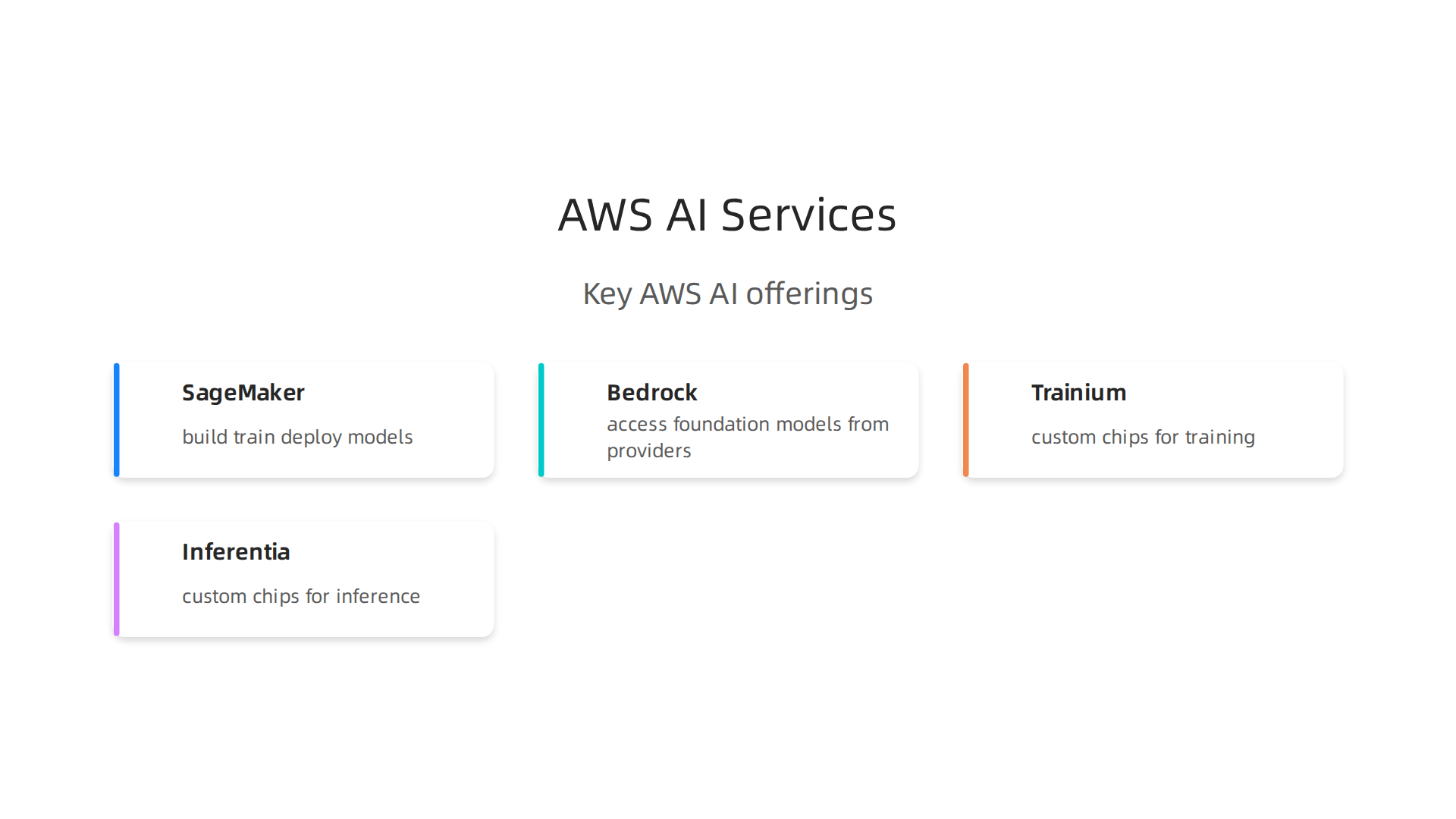
If you want to get hands-on with these tools, check out this practical guide to AWS SageMaker in 2026.
AWS also wins because of its massive enterprise customer base. Companies already running their workloads on AWS can add AI capabilities without moving data or rearchitecting their systems. With data centers all over the globe, AWS makes AI accessible at any scale. That combination of services, chips, and global reach is why AWS stays near the top of every top 10 AI companies ranking.
Want to stay ahead of the latest AI developments from AWS and every other major player? The AI Newsletter Worth Reading delivers clear daily updates straight to your inbox.
IBM Watson — The Resurgent Enterprise AI
You probably remember IBM Watson from its 2011 Jeopardy! win. But the Watson of 2026 looks completely different. IBM reinvented its AI platform from the ground up. Instead of chasing every possible use case, it now focuses on solving real problems in specific industries.
That shift matters. In healthcare, Watson helps doctors analyze medical images and parse patient records faster. In finance, it spots fraud and manages risk. In supply chains, it predicts disruptions before they happen. This industry-first approach is a big reason IBM still earns a spot in any honest top 10 AI companies list.
The engine behind this is watsonx, IBM’s open AI platform. By embracing open-source models and partnering with Red Hat, IBM gives developers real flexibility. You can train models on your own data, keep control of your intellectual property, and deploy wherever you want — on-premises or in the cloud. That freedom attracts engineering teams who worry about vendor lock-in.
IBM also brings something few AI companies can match: decades of trust in regulated industries. Banks, hospitals, and government agencies know IBM understands compliance, privacy, and security. For organizations asking will software engineers be replaced by AI, IBM offers a more practical answer — AI that augments human experts rather than replacing them. That trusted reputation gives Watson a real edge in the enterprise AI space.
If you want to explore how enterprise AI is reshaping development workflows, check out this practical guide on how to bridge the AI to human gap in your code.
NVIDIA AI — The Hardware Engine Powering AI
If you have trained a large AI model in the past few years, there is a good chance you used an NVIDIA GPU.
The company holds roughly 80% of the AI accelerator market by revenue, and that dominance has made it an easy addition to any list of top 10 AI companies.
What makes NVIDIA hard to replace? Start with CUDA, the software platform that developers have relied on for over a decade. Most AI frameworks are built on CUDA, which means switching to another chip vendor takes serious time and money. NVIDIA also offers tools like TensorRT for optimizing inference and NeMo for building custom language models.
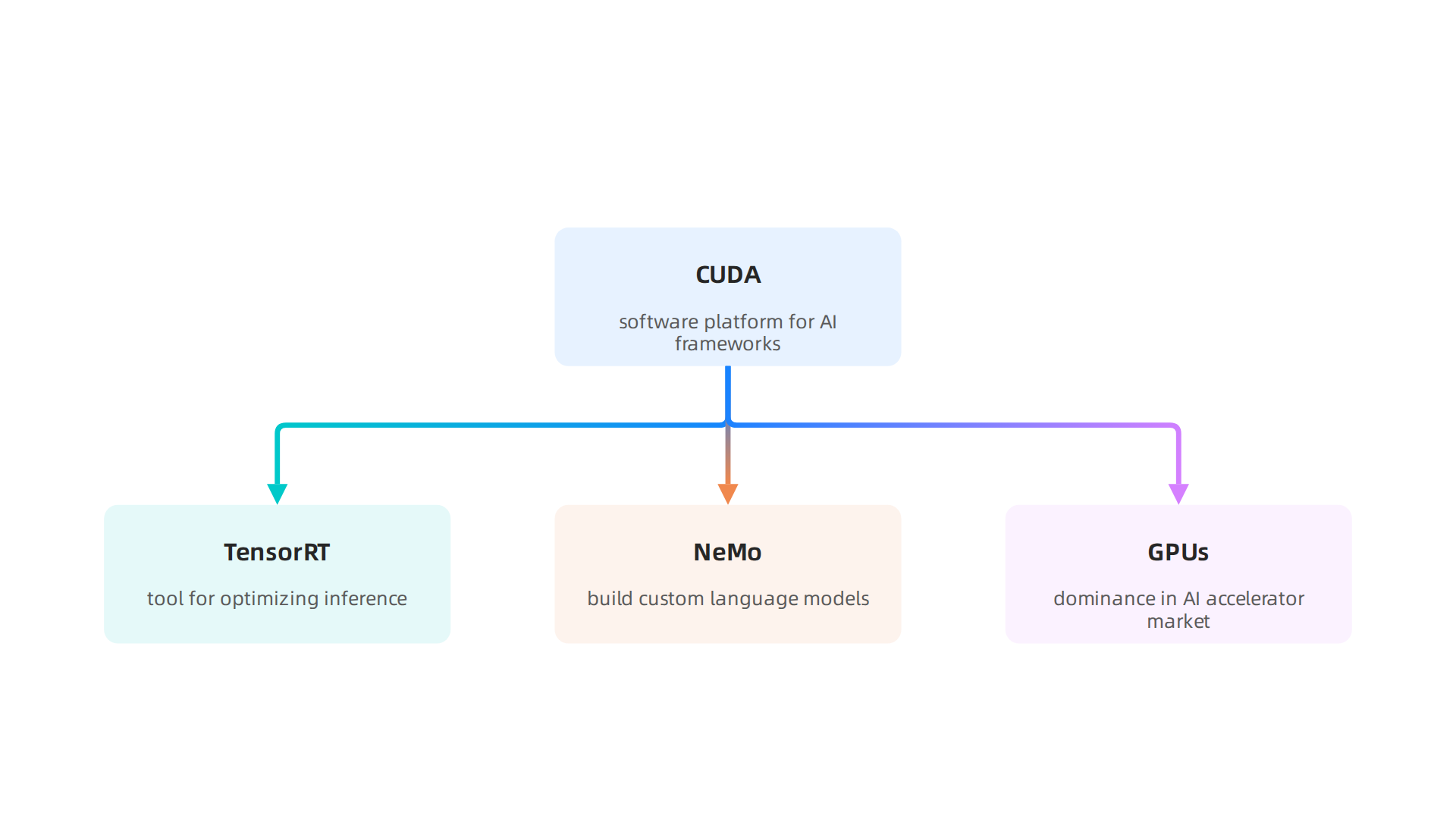
That full software stack locks in developers in a way that raw hardware specs cannot.
The numbers back this up. According to the latest data on NVIDIA AI GPU market share in 2026, the company still commands between 75% and 80% of the enterprise AI accelerator market. Its data center segment alone now generates over $100 billion annually. And the new Blackwell architecture is already sold out for the year, with the next-generation Vera Rubin platform on the horizon.
Custom chips from Amazon, Google, and Microsoft are growing fast. But for training large models, NVIDIA remains the clear winner. If you want to stay ahead of how hardware trends are shaping software roles, check out this overview of engineering technology trends in 2026.
Want to keep up with the fast pace of AI hardware and software news without drowning in noise? The AI Newsletter Worth Reading delivers clear daily updates straight to your inbox.
Meta AI — Open Research and Large-Scale Models
No list of the top 10 AI companies in 2026 would be complete without Meta AI. While NVIDIA owns the hardware layer, Meta AI leads when it comes to open research and building powerful models that anyone can use. Meta’s LLaMA model family has become a favorite for developers and researchers worldwide. By releasing versions like LLaMA 2, LLaMA 3, and the latest openly, Meta has helped democratize access to advanced AI. This approach stands apart from the closed models of some competitors.
Behind these models sits massive compute infrastructure. Meta operates one of the largest AI supercomputers, the AI Research SuperCluster, which uses tens of thousands of NVIDIA GPUs to train models at enormous scale. Meta is also among the hyperscalers investing in custom silicon for inference. According to recent data on custom AI chip development by cloud providers, companies like Meta are building their own ASICs to handle predictable workloads more efficiently.
On the product side, Meta uses AI heavily across Facebook, Instagram, WhatsApp, and the Quest VR platform. Its recommendation systems drive billions of hours of watch time daily. The company also pushes into generative AI for content creation and augmented reality with products like the Ray-Ban Meta smart glasses, which now include real-time AI vision features.

For developers and engineers, understanding models like LLaMA is becoming a core skill. If you are looking to stay sharp, checking out this list of AI tools for developers can help you work faster and smarter with open-source AI.
Apple AI — On-Device Intelligence and Privacy
Apple takes a very different path compared to other names on this list of top 10 AI companies. While most focus on massive cloud data centers, Apple puts AI power directly in your pocket. Its custom Neural Engine runs machine learning tasks right on your iPhone, iPad, and Mac. This keeps your personal data private and makes features work fast without needing an internet connection. Privacy is a core selling point, not an afterthought.
In 2026, Apple is doubling down with Apple Intelligence. This platform brings generative AI features like image creation, text rewriting, and smart summaries into iOS 27, iPadOS 27, and macOS 27. The centerpiece is a completely revamped Siri. According to one report, Apple’s AI strategy could pay off in 2026 as the new Siri becomes more conversational and handles multi-step tasks that span different apps.
For developers, this shift creates fresh opportunities. Building apps that tap into on-device processing means thinking differently about AI integration and user privacy. To see where this is heading, read this breakdown of personal AI assistants reshaping developer workflows in 2026.
If you want to follow how these big tech moves affect your work, get clear daily AI updates from The Deep View Newsletter by subscribing to the AI Newsletter Worth Reading.
Tesla AI — Autonomous Driving and Robotics
Tesla earns its spot among the top 10 AI companies by putting artificial intelligence directly into cars and robots. Unlike companies that mainly build software tools, Tesla trains its AI on real world data from millions of vehicles driving roads every single day. This gives the company a massive advantage. Every mile driven helps Tesla’s Full Self-Driving (FSD) system learn and improve.
Tesla’s work goes well beyond cars. The company is developing Optimus, a humanoid robot designed to handle repetitive tasks in factories and homes. This project requires massive AI training in perception, movement, and decision making. If you are curious about how AI tools are changing the way engineers build and test complex systems like these, check out this overview of AI tools reshaping development workflows in 2026.
Regulatory hurdles remain a real challenge. FSD is not fully approved everywhere yet. Safety questions still come up. But Tesla keeps pushing forward anyway. The same real world driving data that trains FSD also helps Optimus learn how to navigate physical spaces. This crossover between vehicles and robots makes Tesla one of the most ambitious names in the space.
The big question many people ask is will software engineers be replaced by AI systems like these. The answer is not simple. AI might take over certain driving and factory tasks. But building, improving, and supervising these systems still needs human engineers. That is why understanding how top companies like Tesla use AI matters so much for your career.
Summary
This article profiles the top 10 AI companies shaping 2026 — from OpenAI and Anthropic to Google DeepMind, Microsoft, AWS, NVIDIA, Meta, IBM, Apple, and Tesla — and explains why they matter for engineers and tech leaders. It covers how companies were evaluated (valuation, revenue, innovation, partnerships, patents, and real-world impact) and highlights each firm’s strategic focus: generative models, safety, cloud infrastructure, hardware, on-device privacy, research, and autonomous systems. The piece explains concrete implications for software developers, including which tools and platforms matter for productivity, code generation, deployment, and industry compliance. It also points to practical resources for hands-on learning, such as SageMaker guides, developer tool roundups, and workflow articles. Readers will finish with a clear map of who’s leading AI, how their choices affect products and careers, and where to go next to learn and adopt these technologies.