

Finding the right software jobs in 2026 can feel like searching for a needle in a haystack, especially when you’re looking for something specific.

This is true for people wanting to find work and for companies trying to hire the best talent. For niche programming languages like Scala, the challenge is even bigger.
You see, roles for specialized languages have their own unique patterns. Sometimes it looks like there aren’t many Scala jobs around. For example, some reports show a drop in active Scala job postings this year, with a decrease of 34.8% from 2025 to 2026, totaling 64 active postings from one source. But then other reports show a lot of activity, with Scala appearing in almost 10,000 unique job postings over just 90 days. This means that while some data might make it seem like opportunities are shrinking, there’s still a strong demand for skilled Scala professionals. It’s easy to miss these special signals in the noisy world of software jobs.
Whether you are a programming engineer looking for your next big role or a hiring leader trying to find top talent for your team, knowing how to read these signs is key. This guide is here to help you cut through all the confusion. We will give you a clear, evidence-based plan to understand the Scala talent market. You’ll learn how to find, evaluate, and successfully hire for Scala roles, making sure you don’t miss out on great opportunities. It’s all about making smarter choices in the world of coding jobs.
To stay on top of all the fast changes in the tech world, which can affect where the best coding jobs are, it helps to have good information. Find out how to get daily insights on AI and broader tech developments by signing up for [The AI Newsletter Worth Reading](https://subscribe.thedeepview.com/subscribe?utm_term=softwareengineeringnewstoday.com).
## 1) Market size & demand signals for Scala engineers
It’s true that looking only at the number of job postings can be confusing for special coding languages like Scala. One report might show fewer active Scala jobs, while another shows lots of openings. For example, some data points show Scala appearing in nearly 10,000 unique job postings over 90 days in 2026, which is a lot of activity [Scala Hiring Trends 2026 | Get U Hired](https://getuhired.co/insights/tech/scala/). This means we need to look deeper than just simple job counts to really understand the market for Scala programming engineer roles.

A smart programming engineer or hiring leader looks at other clues to find Scala jobs. These clues are like secret signals. One big signal is what kind of tech companies use in their main systems. Scala is often a key part of complex data systems and streaming platforms. Many companies that handle huge amounts of real-time data use Scala with tools like Apache Spark, Apache Kafka, or Apache Flink. These tools help them process information very fast. If a company uses these kinds of data tools, it’s a good sign they likely need Scala experts. Knowing these [strategic choices for developer tools and cloud platforms in 2026](https://softwareengineeringnewstoday.com/strategic-choices-for-developer-tools-and-cloud-platforms-in-2026) can help you spot opportunities.
Another way to see demand is by looking at where Scala is used most. Certain places and types of businesses really love Scala. For example, countries like the UK show a steady need for Scala professionals in permanent jobs, even with changes year to year [Scala Job Trends, Salaries & Related Skills | IT Jobs Watch](https://www.itjobswatch.co.uk/jobs/uk/scala.do). London is often a hotspot for these roles. Also, industries like finance, large data platforms, and companies that build streaming services often use Scala as a main skill. These businesses need Scala to handle their very important and often high-speed software jobs. For instance, in India, there’s high demand for Scala, with more jobs than people who have the skill [Scala in India: Supply vs Demand Analysis](https://bebee.com/in/skills/scala).
When companies look for Scala developers, they often ask for other skills too. These usually include working with cloud services like AWS or Azure, database knowledge, and experience with tools that move data, like ETL. So, if you’re a programming engineer looking for a Scala job, knowing these related skills will make you stand out. This also applies to what kind of [software developer skills 2026 what every developer must master](https://softwareengineeringnewstoday.com/software-developer-skills-2026-what-every-developer-must-master) is key for success. Understanding these deeper demand signals helps you find the true picture of the Scala talent market, beyond just the surface numbers. It helps both job seekers and companies looking to hire for critical coding jobs.
When you look for Scala jobs, knowing the general demand is just the first step. The real trick is to know exactly what skills employers want for these important coding jobs. It’s like having a secret map to the treasure.
### Core Scala Skills
First off, companies hiring for Scala roles often want you to be good at what’s called “functional programming.”
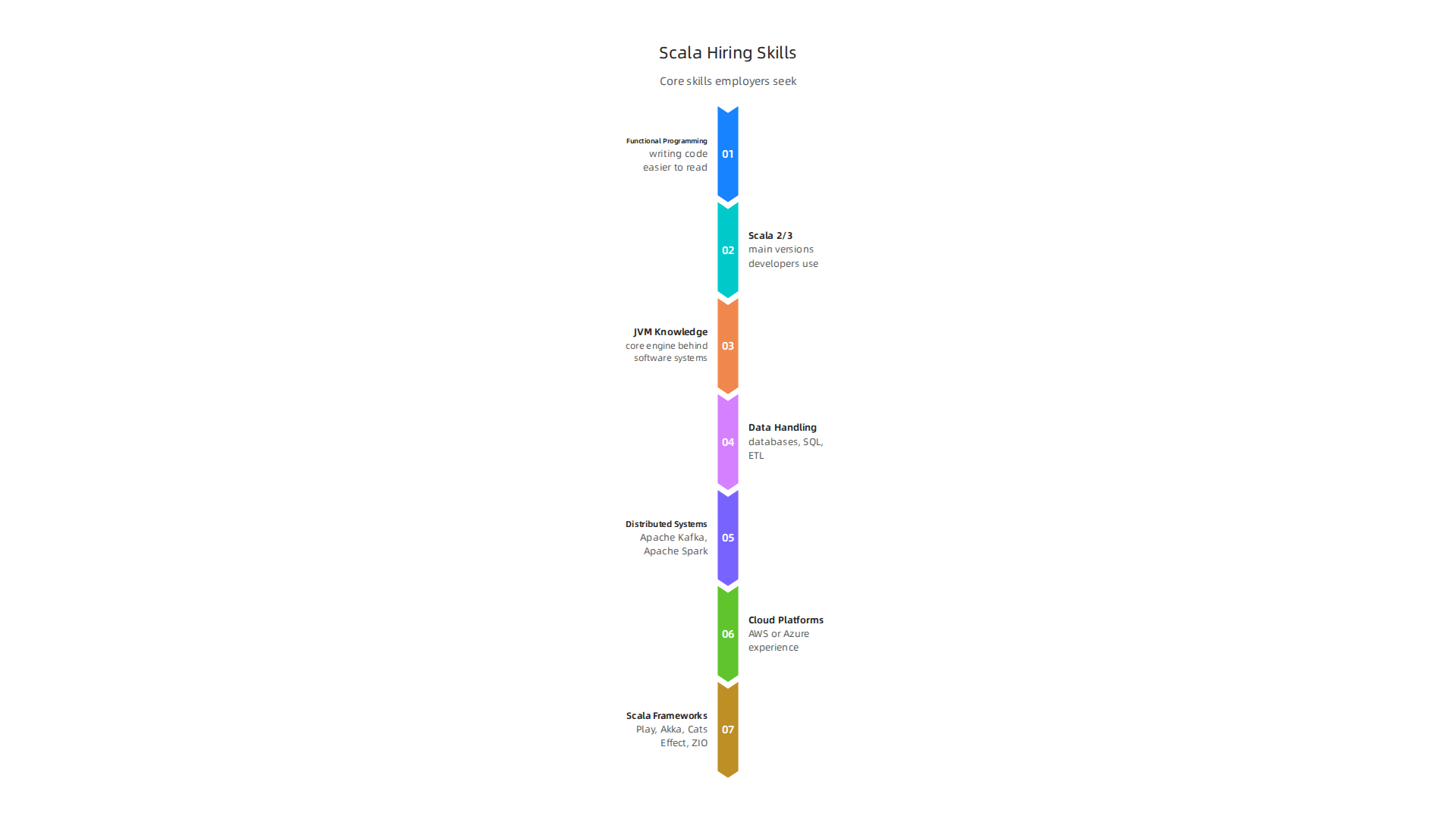
This is a way of writing code that makes it easier to read and less likely to have mistakes [How to write a Scala developer job description](https://www.testgorilla.com/blog/scala-developer-job-description/). It means understanding how to use pure functions and avoid unexpected changes in your code.
Next, you’ll need to know Scala itself. There are two main versions that developers use: Scala 2 and Scala 3. Employers will often say which version they prefer in their job listings. Many job descriptions also ask for experience with the Java Virtual Machine, or JVM, which is where Scala code usually runs. Knowledge of the JVM means you understand the core engine behind a lot of big software systems. Companies also expect strong hands-on experience with Scala features like collections, handling errors, and pattern matching [Senior Software Developer – Scala at Hackajob Ltd – Haystack](https://haystackapp.io/jobs/4a24f031-1f72-42b8-b42d-633ba77d343e).
### Important Extra Skills and Frameworks
Beyond the core Scala language, many software jobs need extra skills. These can really make you stand out when applying for Scala jobs.
* **Data Handling:** Many Scala roles are about handling lots of data. This means knowing about databases and how to use SQL, which is a language for talking to databases [Scala Developer Job Description (September 2026)](https://lemon.io/job-description/scala-developer/). You might also need to understand “ETL,” which is about taking data from one place, changing it, and putting it in another.
* **Distributed Systems and Streaming:** Because Scala is often used for big data, knowing about distributed systems is key. This means understanding how software works across many computers at once. Tools like Apache Kafka for data streaming and Apache Spark for big data processing are often mentioned [Middle Scala Developer Resume Samples for 2026](https://www.jobswithscala.com/blog/middle-scala-developer-resume-samples-that-recruiters-notice/). In 2026, these skills are more vital than ever for programming engineer roles dealing with real-time data.
* **Cloud Platforms:** Experience with cloud services like AWS or Azure is almost always a must. These are where modern applications live, and Scala developers often work with them to build and run their software. Knowing Python is also often a plus, as it works well with Scala in data engineering setups [Is Scala Worth Learning in 2026? | Market Demand Analysis](https://skilture.com/skill/scala).
Many employers also look for experience with specific Scala frameworks. These are like toolkits that help build common types of applications faster. Some popular ones include Play Framework, Akka, Cats Effect, or ZIO [Scala Developer Job Description Template – Expertia AI](https://www.expertia.ai/blogs/jd/scala-developer-job-description-57508f). Having projects or past work that show you’ve used these frameworks makes you a more attractive candidate for important software jobs.
To keep up with these fast-changing needs, continuous learning is super important for a programming engineer. If you want to dive deeper into improving your skills and staying current, consider looking into how to [optimize software development training for tech team success in 2026](https://softwareengineeringnewstoday.com/optimize-software-development-training-for-tech-team-success-in-2026). This can give you a real edge.
As the tech world keeps moving fast, especially with AI, staying informed is critical. Get clear daily AI updates to help you navigate these changes.
#### The AI Newsletter Worth Reading
Get clear daily AI updates from [The AI Newsletter Worth Reading](https://subscribe.thedeepview.com/subscribe?utm_term=softwareengineeringnewstoday.com).
After you have a good handle on the skills employers want, the next natural question is about money and your career path. Knowing the typical pay and how your career can grow in Scala helps you aim for the best [scala jobs](https://softwareengineeringnewstoday.com/tech-jobs-2026-your-blueprint-for-skills-salaries-and-growth).
### How compensation and career progression look for Scala roles
The pay for Scala professionals can be quite good, and it changes based on your experience and where you work. In 2026, many places see a high demand for skilled Scala developers.
#### What Scala Engineers Can Earn
Let’s look at what you might expect to earn. For a junior Scala developer in the US, salaries often start around $90,000 to $144,000 per year.
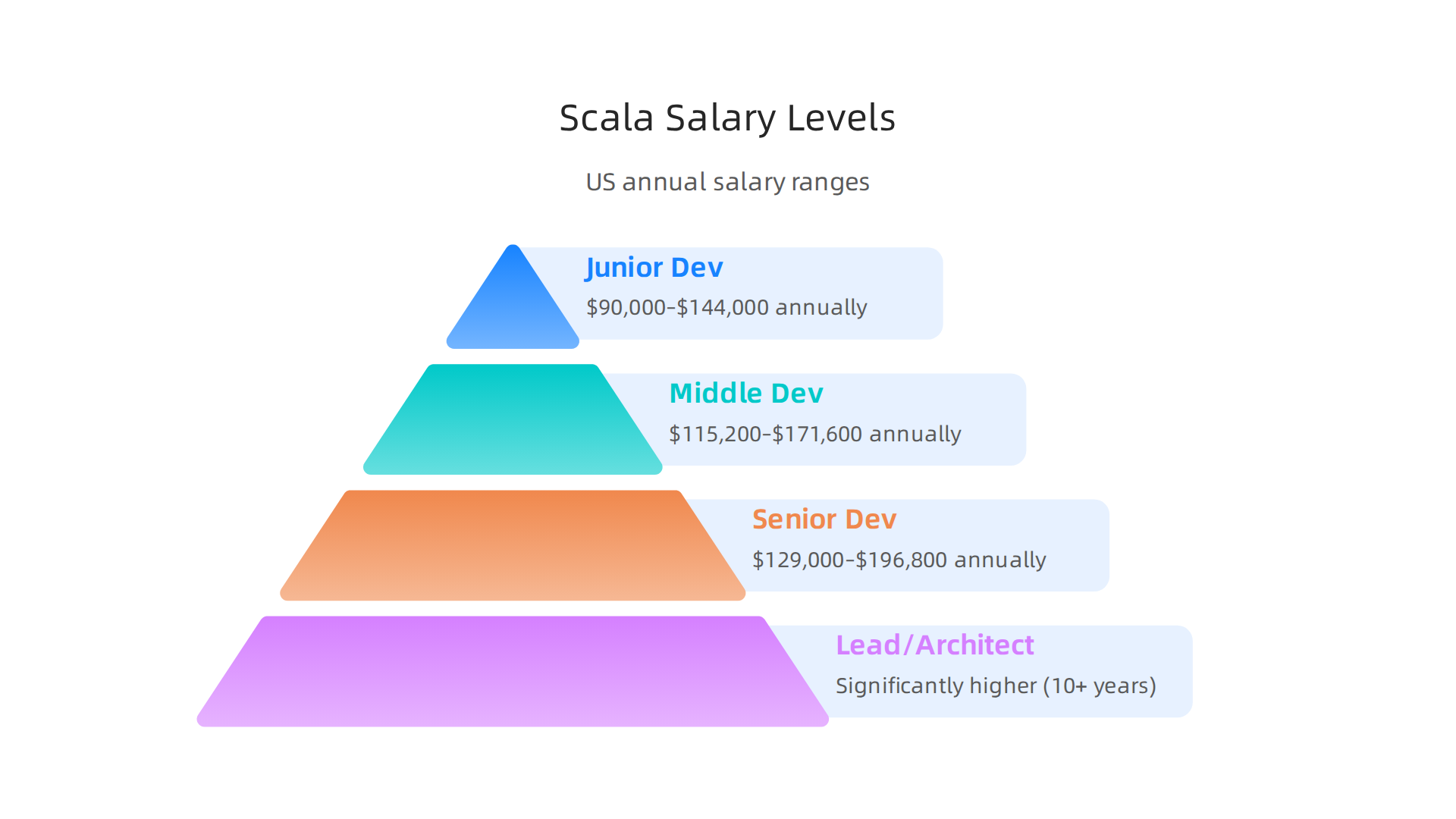
Middle-level developers can see salaries from about $115,200 to $171,600, while senior Scala developers might earn $129,000 to $196,800 annually [Scala Developer Salary by Location: US, Europe, Canada 2026](https://www.jobswithscala.com/blog/scala-developer-salary-comparison-by-location-us-europe-and-canada/).
Of course, these numbers can go up in big cities or for very specialized roles. For example, a senior Scala developer in San Francisco might earn even more, sometimes reaching over $320,000 for top positions [What Does a Senior Scala Developer Cost in the US in 2026?](https://www.scalateams.com/blog/senior-scala-developer-cost-2026). If you become a lead or architect, with more than 10 years of experience, your earnings could be significantly higher [Scala Developer Salary Guide (2026) — Offshore Rates by …](https://offshore1st.com/salary-guide/scala). The pay also changes a lot based on the country, with North America generally offering higher salaries than some other regions [Scala Developer Salary Guide 2026 | Global & Remote …](https://scalajobs.com/salary-guide).
It’s helpful to remember that these are just averages. Your actual pay will depend on your exact skills, how many years you’ve worked, and the company’s size and location. You can also check a [2026 Salary Guide](https://www.roberthalf.com/us/en/insights/salary-guide) for more local information.
#### Growing Your Career in Scala
Working with Scala offers clear paths for career growth.

You can become an individual contributor, meaning you focus on writing code and solving tough technical problems. As you get better, you move from a junior role to a mid-level, then a senior developer.
Beyond that, you might become a principal engineer, focusing on big picture system design for complex [software jobs](https://softwareengineeringnewstoday.com/software-engineer-vs-full-stack-developer-2026-know-your-career-path). Or, you could move into leadership, becoming an engineering manager who leads teams of [programming engineer](https://softwareengineeringnewstoday.com/mastering-the-product-engineer-role-for-2026-tech-success) experts. Companies, whether they are small startups or big enterprises, usually have these different levels to help you see where your career can go.
#### How Niche Skills Boost Your Pay and Path
Having special skills makes a big difference in both your pay and how fast you move up. If you are good at things like stream processing (handling data as it comes in quickly) or building distributed data systems (software that works across many computers), you become very valuable. These skills are often needed for the most complex [coding jobs](https://softwareengineeringnewstoday.com/developer-job-market-2026-the-transformation-of-skills-and-roles) and command higher salaries.
When you can show you have these unique abilities, companies are often willing to pay more because you can solve their hardest problems. This also opens up more senior and leadership positions, giving you better choices for where you want your career to go. Investing in these specialized areas is a smart move for any Scala professional looking to get ahead in 2026.
To find the best Scala jobs, you need to know where to look.
After understanding how much you can earn and how your career can grow, the next big step is finding those open positions. Luckily, there are many good places to discover high-quality Scala roles and get noticed by companies.
### Where to find high-quality Scala job leads and hiring channels
Finding your next great Scala role means knowing the right spots. It’s not just about general job websites. For specialized jobs like these, you’ll want to use more targeted approaches in 2026.
#### Best Channels for Discovering Targeted Scala Roles
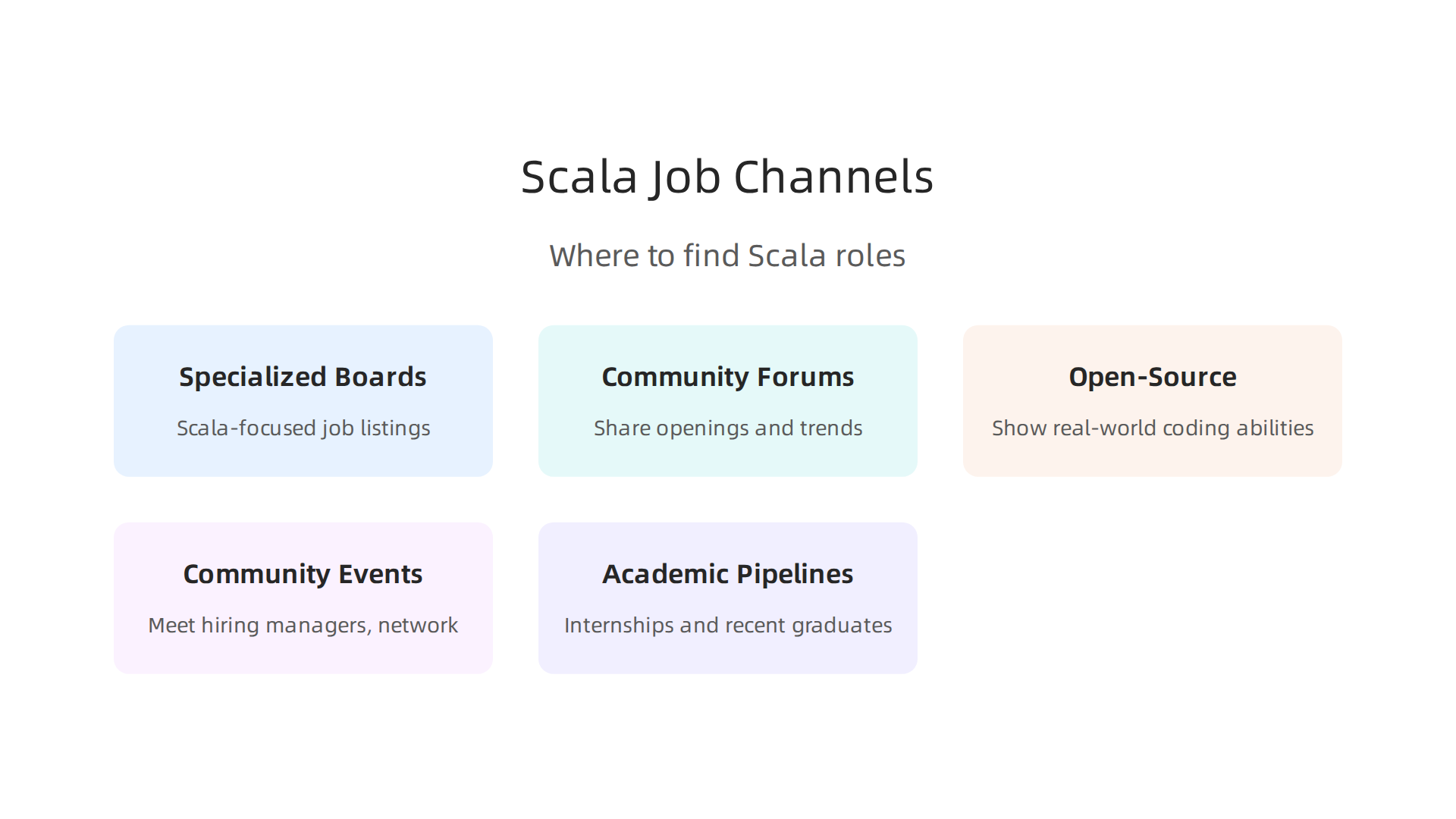
**Specialized Job Boards:** The internet has many job boards just for Scala developers. These sites list jobs where Scala is the main focus, making your search much easier. Instead of sifting through thousands of general software jobs, you can find exactly what you are looking for. Many of these jobs might even be for [remote computer science jobs](https://softwareengineeringnewstoday.com/remote-computer-science-jobs-2026-unlock-your-high-paying-career), giving you more flexibility.
**Community Forums and Online Groups:** Scala has a strong community. Websites like Reddit have Scala sections where people share job openings and talk about the latest trends. Joining these groups helps you see new opportunities that might not be advertised everywhere else. You can also learn about different career paths and even how to prepare for interviews by looking at a [Scala roadmap](https://roadmap.sh/scala).
**Open-Source Project Contributions:** One of the best ways to show your Scala skills is by working on open-source projects. When you help build or improve open-source software, companies can see your real-world coding abilities. This is like a live resume. Many companies watch these projects to find talented [programming engineer](https://softwareengineeringnewstoday.com/mastering-the-product-engineer-role-for-2026-tech-success) candidates, especially for complex [coding jobs](https://softwareengineeringnewstoday.com/developer-job-market-2026-the-transformation-of-skills-and-roles).
#### How Companies Discover Scala Talent
It’s not just about you finding jobs; companies are also actively looking for skilled Scala developers.
**Community Events and Conferences:** Companies often send recruiters to Scala-specific meetups, workshops, and big conferences. These events are great places for you to meet hiring managers and show what you know. It’s a chance to network and learn about new technologies in the field, helping you keep your [online certifications for software engineering](https://softwareengineeringnewstoday.com/online-certifications-for-software-engineering-keep-you-ahead-in-2026) up to date.
**Academic Pipelines:** Some companies build relationships with universities and colleges that teach Scala or related computer science topics. They might offer internships or look for recent graduates who have a strong background in Scala. This is often how they find new talent for entry-level Scala jobs.
By using these channels, you can increase your chances of finding the right Scala role. Staying visible within the Scala community and showing off your skills are key steps in landing your dream job in 2026.
Staying informed about broader tech changes, like those in AI, can also make a big difference in your career path. Get clear daily AI updates from [The AI Newsletter Worth Reading](https://subscribe.thedeepview.com/subscribe?utm_term=softwareengineeringnewstoday.com).
Now, let’s switch gears and look at hiring Scala engineers from a manager’s viewpoint. Finding skilled Scala talent is key for building strong software teams in 2026. This means having clear strategies for interviewing and looking for new team members.
### Hiring and interviewing strategies for managers hiring Scala engineers
When you’re trying to hire for Scala jobs, it’s about more than just finding someone who knows the language. It’s about finding people who can think in the Scala way and solve real problems for your company.
#### Designing Effective Scala Interviews
Interviews for Scala roles need to test specific skills.
You want to see how well candidates can handle Scala’s unique features, especially how they use functional programming.
**Evaluating Functional Programming Fluency:**
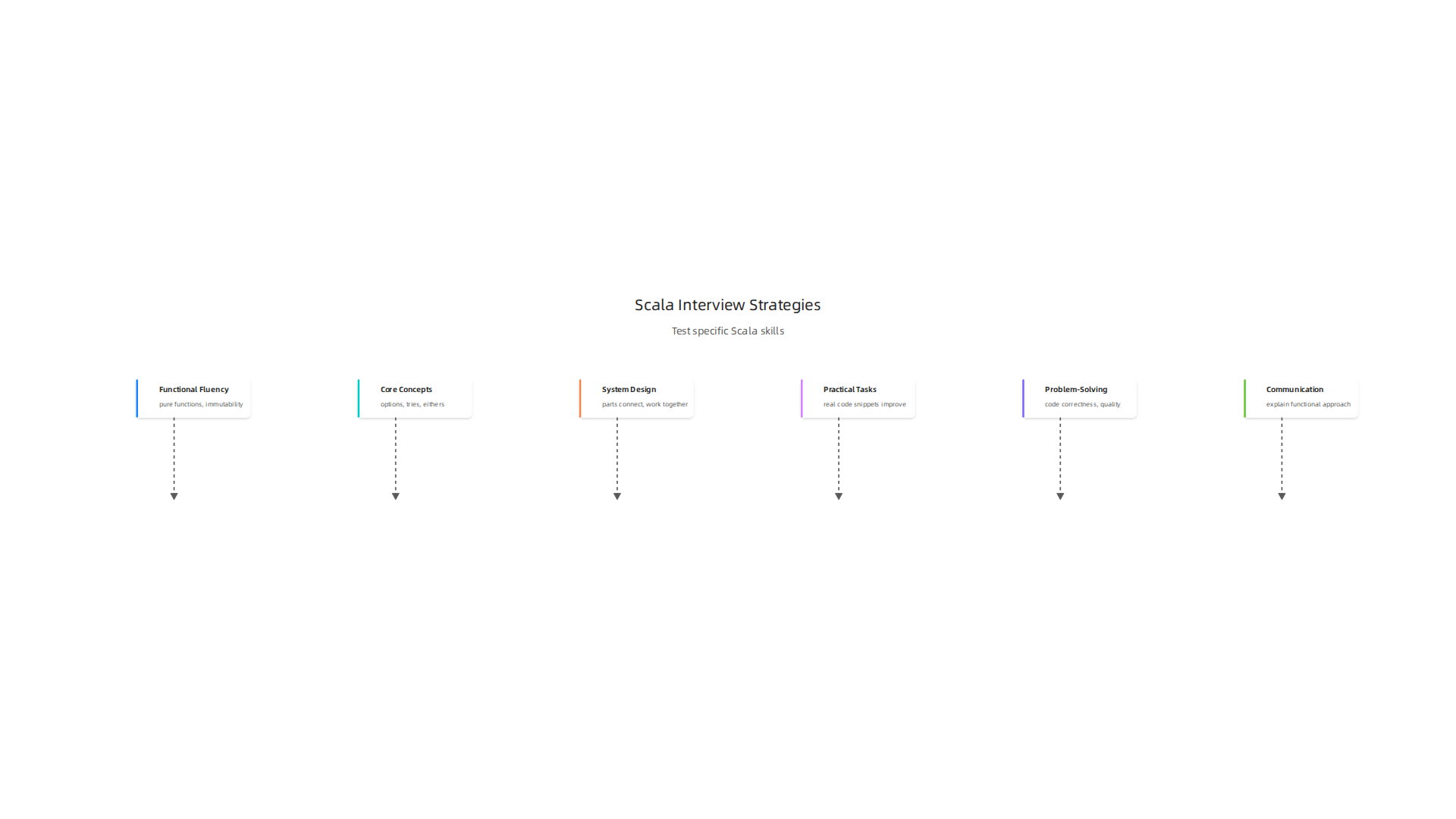
Scala relies heavily on functional programming. This means developers should understand ideas like pure functions, which are functions that always give the same output for the same input and don’t change anything outside of themselves. They should also know about immutability, which means data doesn’t change after it’s created. When interviewing, ask questions that check their understanding of these core ideas, not just if they can write some Scala code. For example, you might ask them to change a simple Java loop into a Scala map or flatMap call to see if they understand functional patterns. Interviewers should look for a deep grasp of principles like pure functions, immutability, and higher-order abstractions to truly evaluate a candidate’s skill in this area [8 Tricky Scala Developer Interview Questions](https://www.testgorilla.com/blog/scala-developer-interview-questions/).
Many companies don’t always check for very advanced functional programming concepts in early interviews, even for purely functional codebases [How are Scala interviews typically structured at top …](https://www.reddit.com/r/scala/comments/1gk2oqj/how_are_scala_interviews_typically_structured_at/). Still, a good candidate for Scala programming jobs should be familiar with basics like options, tries, eithers, and pattern matching [Scala coding interviews](https://www.reddit.com/r/scala/comments/15rtkym/scala_coding_interviews/). It’s also helpful to discuss how they think about problems using functional ideas, explaining “why” their approach is functional, not just “what” they wrote [Scala Interview Patterns: UK & EU Teams’ Expectations](https://www.linkedin.com/posts/jobswithscala-com-scala-jobs_if-youre-preparing-for-scala-interviews-activity-7414281397936226304-3Fv_).
**Assessing System Design for Scala-Backed Services:**
Beyond coding, Scala engineers often work on complex systems. So, your interview should include questions about how they would design a system that uses Scala. This could involve talking about how different parts of a software system connect and work together, especially when dealing with many tasks at once (concurrency). You can share real code snippets from your own company and ask them to find ways to make it better. This shows you how they think about practical problems and their judgment in writing production-ready code [How Can You Build A Talent…](https://www.signifytechnology.com/news/effective-scala-recruitment-strategies/). Focus on practical programming tasks rather than multiple-choice questions [Hire scala developer – skills screening and interview …](https://devskiller.com/blog/screen-scala-developer-skills/).
When evaluating candidates, remember to look at things like problem-solving skills, how correct their code is, the quality of their implementation, how they test, their system judgment, and how well they communicate [Technical Interview Rubric: How Companies Score Coding, Design …](https://prachub.com/resources/technical-interview-rubric-how-companies-score-coding-design-and-communication/). Creating a cooperative environment where candidates feel comfortable asking questions can also lead to better insights into their thinking [Scala Interview Questions for Developers](https://coderpad.io/interview-questions/scala-interview-questions/).
#### Expanding Your Scala Talent Search
Sometimes, finding the perfect Scala programming engineer directly can be tough. This is where widening your search pool helps.
**Cross-training and Reskilling JVM Developers:**
Many developers already know Java, which runs on the Java Virtual Machine (JVM), just like Scala. These developers often have strong software jobs experience. With some training, they can learn Scala quickly. Investing in reskilling JVM developers can be a smart way to grow your team and fill Scala jobs from within or from a wider pool of general software talent. This approach can also help in designing high-impact [software developer training programs](https://softwareengineeringnewstoday.com/design-high-impact-software-developer-training-programs).
**Assessing Transferable Skills:**
Don’t just look for “Scala” on a resume. Think about other coding jobs or experiences that show a candidate can learn new languages and solve problems. Maybe they have strong skills in other functional programming languages, or they’ve worked on similar types of complex systems. Their ability to learn and adapt can be more important than knowing every single Scala trick from day one. Look for candidates who understand Scala basics and functional programming principles, and who can tackle technical assessments step by step [Scala Technical Interview Techniques: A Complete Guide](https://www.signifytechnology.com/news/scala-technical-interview-techniques-a-complete-guide/).
By focusing on these strategies, managers can build robust interview processes and find excellent Scala developers, ensuring their teams are well-equipped for 2026 and beyond.
As managers look to build strong Scala teams, individual engineers also seek ways to enter this exciting field. Upskilling is key, whether you are an experienced developer looking for new software jobs or a team leader aiming to grow your current staff.

Making a move into Scala-focused work requires practical learning and smart career planning.
### Practical Learning Paths for Engineers
For anyone hoping to land a Scala programming engineer role, the best way to learn is by doing. This means getting hands-on with real projects. Just reading about Scala isn’t enough; you need to build things with it.
**Project-Based Learning:**
Working on projects helps you understand Scala’s unique ways of thinking, especially functional programming. You could try building a small project that takes in data, checks it, changes it, and then saves it. A good example might be a program that reads data in a format like JSON, checks if it’s correct, makes some changes to the records, and then writes out the new information. Breaking the project on purpose and then fixing it can also be a great way to learn [100 Scala Interview Questions and Answers in 2026](https://www.jobswithscala.com/blog/100-scala-interview-questions-and-answers-for-technical-and-functional-roles/). There are even immersion bootcamps that focus on building distributed data engineering applications using Scala and its tools [Building Distributed Data Engineering Applications (Scala Edition)](https://github.com/colaberry/data-engg-immersion-scala). This type of practical, task-based training is known to be very effective for learning new tech skills [What Works for AI Upskilling in the UK: Insight briefing](https://assets.publishing.service.gov.uk/media/6a27ec68f553ec11122217b4/insight_briefing_based_on_research.pdf).
There are many roadmaps and online courses available in 2026 to guide your learning journey, helping you choose your path and grow in your career [Scala roadmap](https://roadmap.sh/scala). You can also find many resources to help you prepare for common Scala interview questions, which can deepen your understanding of the language [How to Best Prepare for a Scala Job Interview](https://scalajobs.com/blog/how-to-prepare-for-scala-job-interview). Focusing on project-based learning and practicing with real coding challenges helps you get ready for actual scala jobs.
### Planning for Scala Roles: Managers and Individual Contributors
Both managers and individual developers have a part to play in creating these career transitions.
**For Managers:**
Managers can help their teams by setting up “stretch assignments.” These are tasks that challenge developers to use new skills, like Scala, on real company projects. This lets them learn on the job and apply their knowledge right away. Investing in how you [optimize software development training for tech team success in 2026](https://softwareengineeringnewstoday.com/optimize-software-development-training-for-tech-team-success-in-2026) can make a big difference. Offering internal mobility programs, where developers can move to teams using Scala, is another excellent way to build Scala talent from within.
**For Individual Contributors:**
If you’re an individual developer wanting to move into Scala, show initiative! Look for chances to take on small Scala tasks. Build side projects to create a portfolio that shows your skills. Practicing interview questions, reviewing Scala theory, and doing mock interviews with more experienced developers are also helpful steps. Consider enrolling in [Software bootcamps 2026: Your guide to costs, curriculum, and jobs](https://softwareengineeringnewstoday.com/software-bootcamps-2026-your-guide-to-costs-curriculum-and-jobs) if you need a structured learning environment. By combining self-study with practical experience, you can show you’re ready for new coding jobs and become a valuable Scala programming engineer.
Staying updated with the fast-moving tech world is vital for all software professionals.
Get clear daily AI updates from [The AI Newsletter Worth Reading](https://subscribe.thedeepview.com/subscribe?utm_term=softwareengineeringnewstoday.com) to enhance your overall industry knowledge.
Summary
This article explains how to navigate the 2026 Scala job market for both engineers and hiring leaders by looking beyond headline job counts to practical demand signals. It shows where Scala is most commonly used—data platforms, streaming, finance—and which related technologies (Spark, Kafka, cloud platforms) indicate real hiring needs. The guide breaks down core Scala and functional programming skills, useful frameworks (Play, Akka, ZIO), and complementary abilities like cloud, ETL, and SQL that boost employability. You’ll also find current compensation ranges, typical career paths from junior to principal or manager, and targeted channels to discover roles including specialist job boards, community forums, and open-source contributions. For hiring managers, it outlines interview design, system-design evaluation, and strategies to broaden talent pools through reskilling JVM developers. Finally, it recommends project-based learning and internal training tactics to build Scala capability and stay competitive as the tech landscape evolves.