

Why choosing the right developer tools and cloud platforms matters now
In 2026, the world of building software is changing super fast. There are so many tools and platforms out there, it can feel like trying to pick one tiny candy from a huge store. For teams that build software, this big choice isn’t just about what’s cool. It’s about getting work done, working well together, and making smart plans for the future.

Actually, almost all developers today use some kind of smart AI tool to help them code. A survey from January 2026 found that 90% of developers use at least one AI tool at work to help them write code. This shows just how much things have changed!
This quick growth in tools and how we build things can cause problems. Imagine if everyone on your team used a different hammer for the same job. Things would be slow, messy, and hard to put together. This is the problem many software teams face with too many different tools and cloud platforms. Some tools are simple, like using a godaddy website builder for a basic site. Others are much more complex, like managing big services in cloud systems. For example, using the google cloud cli to control cloud settings or setting up aws sns for messages. Or maybe they need firebase cloud messaging to send notes to app users.
When there are too many tools and they don’t talk to each other well, it can slow down work. It can also make it harder for teams to know if they are building the right things or spending money wisely. This mix of tools creates risks for how fast teams can work and what big plans they can make for their company.
This guide will help you understand all the different kinds of tools and platforms out there. We will look at how to pick the best ones and think about what you might have to give up to make a choice. Our goal is to help leaders who work with technology make these big choices faster and with more confidence. You can also read more about the newest ideas in software on our blog to keep up with the changing times, especially the latest engineering technology trends in 2026.
Staying on top of what’s new in AI and technology is key. The AI Newsletter Worth Reading can help you get clear daily AI updates.
Choosing the right tools is like building a strong foundation for a house. If you use the wrong bricks or build on shaky ground, your house won’t stand strong. The same is true for software teams. To help you make smart choices, let’s look at the main types of tools every software team should think about in 2026.
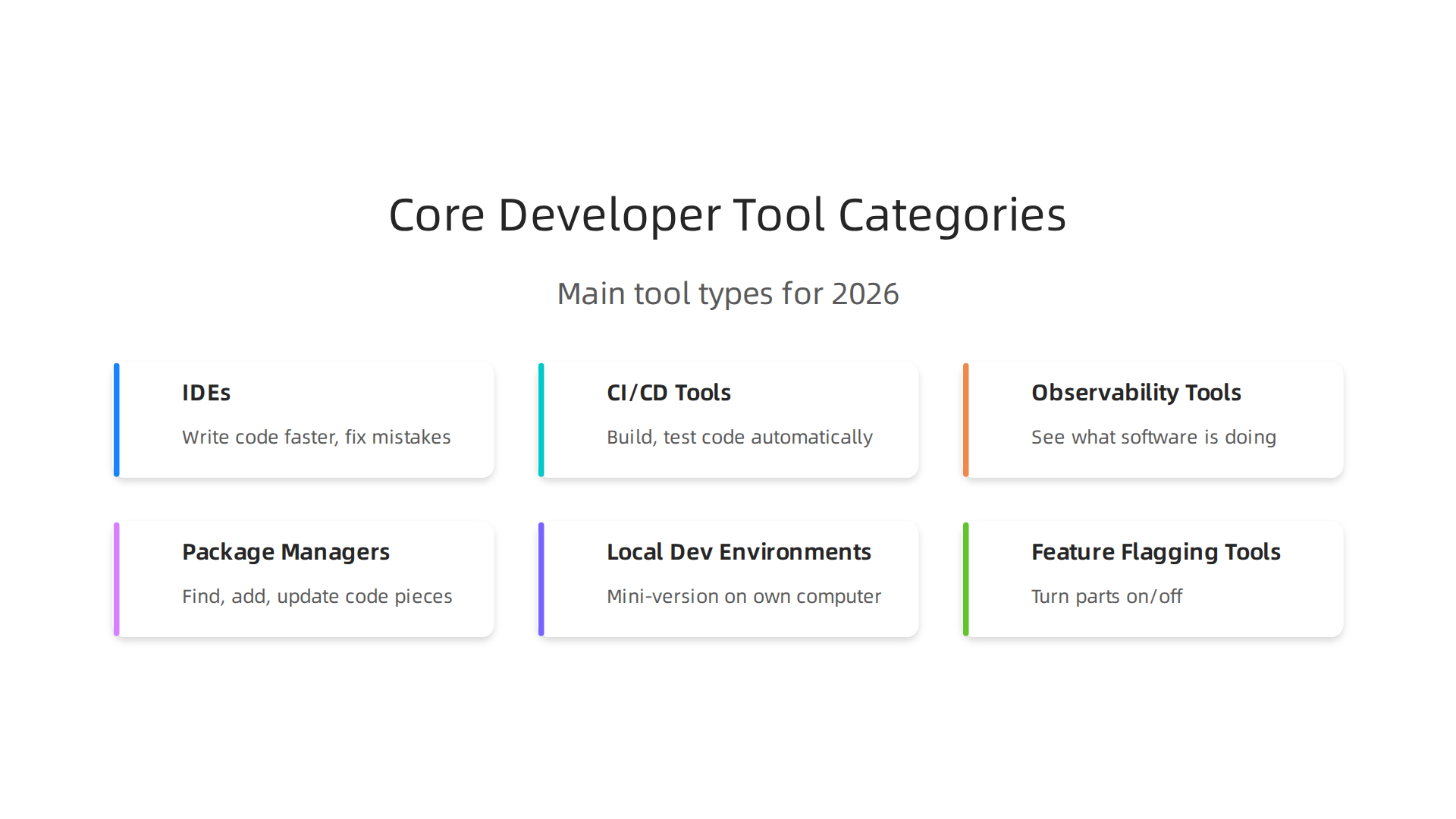
Core categories: developer tooling every team should evaluate
There are many kinds of developer tools, but they generally fall into a few important groups. Understanding these groups helps teams pick tools that work well together and support their goals.
- IDEs/Code Editors: These are the programs where developers write their code. Think of them as a special notebook with extra smart features. They help with writing code faster, fixing small mistakes, and understanding big projects. A good IDE makes it easier for new team members to start, boosting how quickly they can help build things (onboarding) and making sure less errors get made (reliability). Many of these now have built-in AI helpers that save even more time.
- CI/CD (Continuous Integration/Continuous Delivery) Tools: This group of tools helps teams build and test their code automatically. After a developer writes new code, CI/CD tools can quickly check if it works with everyone else’s code and then get it ready to be used. This makes work much faster (developer velocity) because bugs are found early. It also makes the software more trustworthy (reliability) and helps everyone on the team follow the same steps to get things done. In fact, most professional software teams use these pipelines to ensure smooth operations Developer Tools Market Statistics 2026. You can find out more about the best CI/CD tools for 2026 to help your team.
- Observability Tools: Once software is running, you need to know if it’s working properly. Observability tools are like powerful eyeglasses that let you see exactly what your software is doing, if it’s slow, or if something is broken. This helps teams quickly find and fix problems, making the software more reliable. It also gives them clues on how to make it even better, improving developer velocity.
- Package Managers: Software projects often use many smaller pieces of code that others have already built. Package managers help teams find, add, and update these pieces easily. They make sure everyone is using the correct versions of these "packages," which is key for reliability. They also simplify setting up a new project for developers, speeding up onboarding.
- Local Development Environments: This is where developers set up a mini-version of their project on their own computer. It lets them write and test code without affecting the live software or other team members. Having a simple and consistent local setup improves developer velocity because everyone can work on new features without waiting. It also makes it easier for new people to get started quickly.
- Feature Flagging Tools: These tools allow teams to turn parts of their software on or off without changing the code itself. Imagine a light switch for new features. This helps teams test new ideas with a small group of users before rolling them out to everyone. This lowers risks and improves reliability, while also giving developers the freedom to experiment faster (developer velocity).
Picking the right tools across these core categories is really important for how fast a team can work, how easy it is for new people to join, and how reliable the software is. Teams need to think about how these tools fit together to create a good developer experience. The goal is to make it easy for developers to build great software without getting stuck. This helps them move quickly, even when working with complex systems in cloud setups or using advanced AI tools. Actually, many companies are looking at how to evaluate and integrate generative AI platforms into these tools to further boost productivity. Finding ways to augment AI development can make a big difference in 2026.
When you pick tools for your software team, you also need to think about where your software will live. Imagine you have all the best tools to build a car, but you don’t have a garage or a workshop. Cloud platforms are like those workshops. They give your software a home and the services it needs to run well. In 2026, there are three main types of cloud homes: managed Platform as a Service (PaaS), basic Infrastructure as a Service (IaaS), and specialized hosting.
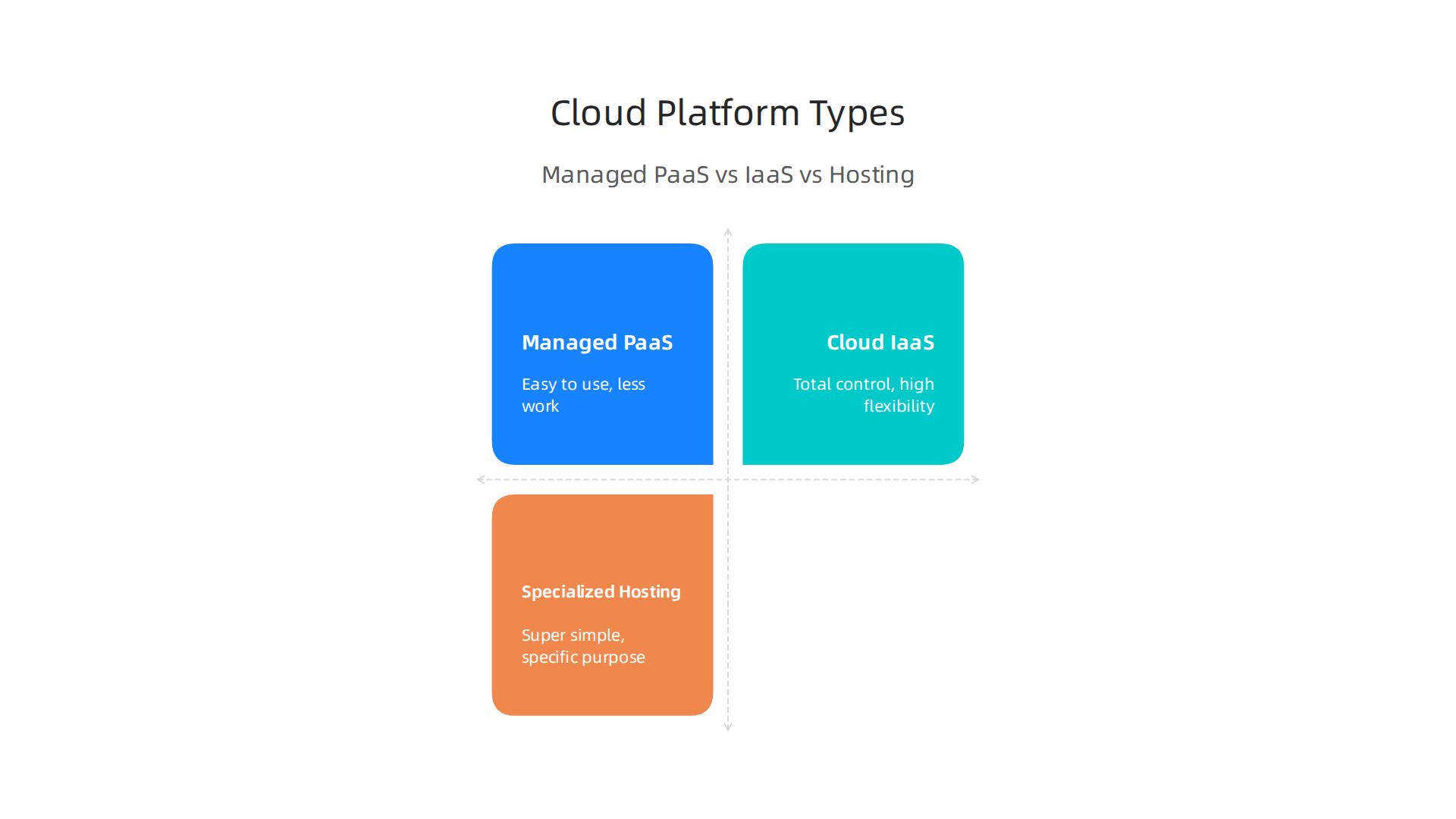
Each one has its own good and bad points, especially when we think about costs, how much work your team has to do, how much your software can grow, and how easy it is for developers to get things done.
Comparing cloud platforms: managed PaaS, cloud IaaS, and specialized hosting
Choosing the right place to host your software is a big decision for any team. Let’s look at the options.
Managed PaaS (Platform as a Service)
Managed PaaS gives you a ready-to-use platform where you can just put your code and run it. The cloud provider takes care of all the hard stuff like servers, operating systems, and databases. This means your team spends less time fixing server problems and more time writing new features. It’s great for building without code or for projects where you need to move very quickly.
- Pros: It’s super easy to use, speeds up how fast developers can work, and is good for getting new team members started. You don’t have to worry about the underlying technical parts. Many teams find that PaaS is the best choice in 2026, even if IaaS looks cheaper at first glance.
- Cons: You have less control over the tiny details of your setup. Sometimes, it can be more expensive in the long run if your app grows very big or needs special setups. Costs for PaaS might include runtime, platform usage, and integrated services like databases and CI/CD tools, which are usually a medium cost over time with low upfront costs.
Cloud IaaS (Infrastructure as a Service)
IaaS gives you the basic building blocks in cloud, like virtual computers, storage, and networks. You get a lot of control because you build everything yourself. Think of it like renting an empty lot and building your own house from scratch. This is where tools like the google cloud cli come in handy, letting you control everything with commands. Services like aws sns (for messages) or firebase cloud messaging (for app notifications) are also often used when you manage your own infrastructure.
- Pros: You get total control, which means great flexibility. It can be cheaper for just the raw computing power. You can customize everything exactly how you want it. This is why many larger companies choose to build on IaaS. For example, AWS EC2 instances are often cheaper for compute and monitoring tools than PaaS options.
- Cons: Your team has to do a lot more work to set up and manage everything. This means more time spent on servers and less on new features. It needs more skilled people to handle all the moving parts. Managing cloud operations can be complex, and you might need more than just your AWS Console for Cloud Operations in 2026. Costs for IaaS are usually flexible, based on what you use, and can be low upfront but medium to high over time.
Specialized Hosting
This type of hosting is made for very specific needs, like websites or small applications. It often comes with tools that are easy to use for a particular task. A great example is a godaddy website builder. These tools are designed to help you get a website online fast, without needing to know a lot about code or servers.
- Pros: It’s super simple for its specific purpose. Building a website with a specialized builder is often much cheaper than hiring developers, with plans starting around $12 per month in 2026, including everything you need to build and maintain your site. DIY website builders can cost between $15 to $50 per month for a standard site, or more for an e-commerce store.
- Cons: These platforms are not flexible if you need to build complex software. If your project grows beyond a simple website, you might find yourself limited and unable to easily move to another setup. The overall cost of building a website can vary widely, but builders make it very accessible.
The choice among PaaS, IaaS, and specialized hosting depends on your project’s size, your team’s skills, and how much control you need. There’s no single "best" option; it’s about finding the right fit for your goals and how much work you want to handle yourself.
Want to stay on top of all the fast-changing tech trends that impact these decisions?
The AI Newsletter Worth Reading will give you clear daily AI updates to help you make smart choices.
Choosing the right place for your software means thinking about how much work you want to do yourself. The last section talked about three main types of cloud homes. Now, let’s look closer at one type of "specialized hosting" like the godaddy website builder and how it is different from building with code on cloud platforms.
Website builders vs. developer-first workflows: where GoDaddy Website Builder fits
Imagine you want to build a small treehouse quickly for fun. You could buy a ready-made kit with all the pieces cut and instructions given. That’s like using a website builder. A godaddy website builder, for example, is designed for people who want to create a website without needing to know a lot about coding. You can drag and drop pictures and text, and your site goes live fast. This is great for a small business, a personal blog, or a simple online store. It’s easy, and you don’t need special skills to get started.
On the other hand, if you want to build a big, custom house with many rooms, special features, and hidden passages, you wouldn’t use a treehouse kit. You’d hire architects and builders who know how to work with raw materials and blueprints. This is like a "developer-first workflow" using cloud platforms.
When you build complex software, like a new social media app or a special tool for a big company, your team needs full control. They will use tools to write code from scratch. Instead of dragging and dropping, they might use the google cloud cli to manage parts of their system, or aws sns to send messages, or firebase cloud messaging for app notifications. These tools help developers build exactly what they need, piece by piece, giving them a lot of power over how their software works in cloud.
When to pick a website builder
- Simple Needs: If you only need a basic website, a blog, or a small online shop, a
godaddy website builderor similar tool is perfect. - Speed: You can get your site up and running in a few hours or days.
- Low Cost: For simple sites, it’s often cheaper than hiring developers or setting up complex cloud services.
- No Coding Skills: You don’t need to learn programming languages or how servers work.
Website builders simplify many steps. They handle things like making sure your site looks good on phones, has a secure connection, and is always online. For those who want to quickly launch a basic web presence, they are a fantastic choice in 2026.
When to invest in developer-first workflows
- Complex Software: If your project needs special features that a builder cannot offer, like custom calculations, advanced user interactions, or connecting to many other systems, you need a developer-first approach.
- Full Control: When your team needs to control every tiny detail of how the software runs, performs, and handles security, cloud platforms like IaaS or PaaS are the way to go.
- Growth and Scalability: If your software is expected to grow very large or serve many users, developers can build it to handle that growth from the start.
- Specific Security Requirements: For applications dealing with sensitive information, developers can implement very specific security measures. Building a strong security foundation is key for any application, and involves things like good access controls and regular checks against security rules. For startups building in cloud environments, it is important to have a cloud security baseline checklist to follow.
- Developer Skills: This path needs a team with skills in coding, cloud setup, and managing servers. If you’re looking to gain these kinds of skills, many online options can help you learn to build complex web applications, such as finding a web development class online in 2026.
So, the big difference is about how much control you need and how much work you are willing to do.

A godaddy website builder is like a ready-to-use car, while developer-first workflows let you design and build a custom vehicle from the ground up. Both have their place depending on what you want to achieve.
When you choose how to build your software, the decision affects many things, especially security, following rules (compliance), and how ready your system is to run every day. This is a big deal for engineering leaders. The kind of platform you pick changes who is responsible for different parts of keeping your software safe and running smoothly.
Think about it this way: there’s a "shared responsibility" model. This means that while cloud companies work hard to keep their systems safe, you also have a part to play.
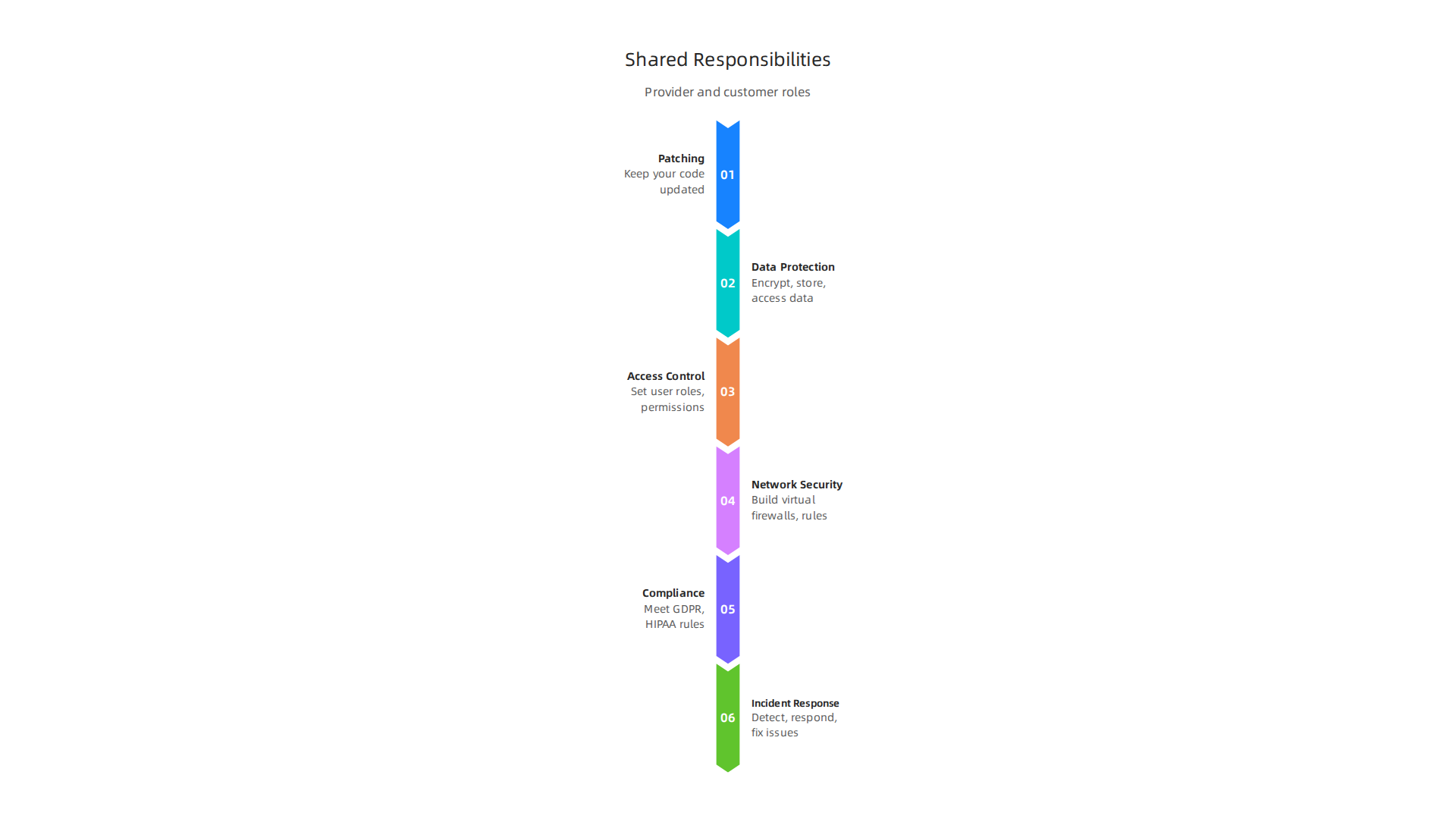
How much of that part you play depends on your choice between a godaddy website builder and a developer-first approach.
Security and Compliance with Website Builders
If you use a website builder, like a godaddy website builder, a lot of the heavy lifting for security is done for you. The company takes care of many tasks, like:
- Patching: They make sure the servers and software underneath your website are updated to fix security holes. You don’t have to worry about this.
- Backups: Often, they provide ways to back up your website automatically.
- Data Residency: Your data usually stays in their data centers, and they handle the rules for where that data can be stored.
- Basic Infrastructure Security: They build firewalls and other protections around their whole system.
Your main job with a website builder is to use strong passwords, make sure any content you add is safe, and understand their terms for data use. For simple sites, this is a great way to stay secure without needing a lot of technical skill.
Security and Compliance with Developer-First Cloud Platforms
When you choose a developer-first path, using powerful cloud tools, you get a lot more control. But with that control comes more responsibility for security and compliance in cloud. Cloud providers like AWS, Google Cloud, and Microsoft Azure secure the cloud itself. This means they protect the hardware, networks, and facilities. However, you are responsible for security in the cloud, which includes:
- Patching Your Code and Systems: Your team must make sure your applications and any operating systems you manage are kept up-to-date.
- Data Protection: You choose how your data is encrypted, where it’s stored, and who can access it. Engineering leaders must establish a security baseline aligned with company and industry needs.
- Access Control: You decide who can use your software and systems, setting up rules for user identities. For instance, teams use tools like the
google cloud clito set up specific user roles and permissions. - Network Security: You build virtual firewalls and network rules to protect your applications.
- Compliance and Data Residency: If your business needs to follow rules like GDPR or HIPAA, your team is responsible for setting up the cloud environment to meet those rules. This often involves choosing data centers in specific countries, as outlined in strategies for cloud migration and data residency.
- Incident Response: If something goes wrong, like a security breach, your team is the first line of defense to detect, respond to, and fix the issue. This might involve using services like
aws snsfor notifications or setting upfirebase cloud messagingfor security alerts in mobile apps.
Engineering leaders evaluating cloud platforms should require clear checks on identity and access, how systems are set up, and data protection. Major cloud providers offer guidance, like the AWS Startup Security Baseline or the Google Cloud recommended security checklist, to help teams build securely from the start.
To stay on top of the rapidly changing world of technology and security, including AI’s impact, make sure to get up-to-date information.
The AI Newsletter Worth Reading
Moving from understanding security duties, let’s talk about how to know if your choices are really working for your business. For engineering leaders, measuring the success of your software projects and tools is key. This means looking at real numbers to see the value you get back, or your Return on Investment (ROI).
Important Metrics for Engineering Teams
To measure how well your team delivers software, you should look at some key numbers. These help you see how fast you can make changes, how quickly you fix problems, and how often you get new features out to users.
Here are some important metrics:
- Lead Time for Changes: This measures how long it takes for a new idea or change in your code to go from being written to being live for users. A shorter time means your team is fast and smooth. Teams that perform very well can have this time under an hour in 2026.
- Mean Time to Recovery (MTTR): If something breaks, how long does it take your team to fix it and get things working again? This is MTTR. A low MTTR shows your team can quickly bounce back from problems. Top teams can recover from failed deployments in under an hour.
- Deployment Frequency: How often does your team put new code or updates into the live system? More frequent deployments often mean smaller, safer changes and faster delivery of value. Elite teams deploy more than 30 times a week, according to 2024 benchmarks.
- Cost per Feature: This metric looks at how much money it costs to create and deliver one new feature. It helps you compare different ways of building software. For instance, using a simple website builder might have a different cost per feature than building complex solutions in cloud environments.
These metrics, especially the first three, are part of what experts call the DORA metrics. They help track how well software is delivered and how stable your systems are. Learning about these helps you understand your team’s performance. You can find out more about these important software development KPIs and practical strategies to use them effectively when you look into Software Development KPIs: Top Metrics & Practical Strategies.
Running Tests and Picking Vendors
It is easy for software companies to make big claims about their products. As an engineering leader, you need to check if those claims are true for your specific needs. This means running small tests or projects, often called "proof-of-concepts" (PoCs) or evaluation projects.
For example, if you are thinking about moving your systems to a new cloud platform, don’t just jump in. Test a small part of your application first. See how it works, how much it costs, and if it truly makes things easier for your team. This is especially true for complex services offered in cloud. You might even compare how much it costs to run a simple website with a godaddy website builder versus building a custom solution on a cloud platform where you handle everything, from running servers to using specific tools like google cloud cli for managing resources. Building a basic website using a simple builder could cost as little as $85 per year, while a more involved project could be much higher, depending on features and complexity in 2026. This careful testing helps you truly understand the cost. Many small business websites can cost $15 to $50 per month using a DIY website builder, or $30 to $300 per month for an e-commerce store in 2026.
By doing these checks, you can make sure that the vendor or platform you pick will actually help your team and your business grow. This smart way of checking things helps you make sure you get the most value for your money. To dive deeper into choosing the right partners, explore guides like how to pick the right software development company in 2026.
Picking the right tools and partners is a big step, but it is just the start. After that, you need a smart plan for how to bring these new tools into your daily work. This includes how your team learns them, how you move your existing systems, and how you keep everything running well for a long time.
Practical adoption patterns: onboarding, migration, and long-term governance
When bringing in new technology, it is often best to move step by step, not all at once. This is especially true for complex setups that live in cloud. Experts often talk about different ways to move things to the cloud, sometimes called the "Rs" framework: Rehost, Replatform, Refactor, Repurchase, Retire, Retain, and sometimes Relocate. This helps you decide if you should simply move an application as is, change it a little, or even get rid of it completely.
Starting with smaller, less important parts of your system helps your team learn the new process without big risks. For example, businesses that move their systems in phases often find that things settle down and run smoothly about 30% faster in 2026, and they also have 20% less unplanned downtime compared to trying to move everything at once 10 Best Cloud Migration Strategies for Enterprises 2026. This careful approach helps you test your process before expanding to more important parts of your business. Looking at resources like The 7 Rs of cloud migration in 2026 can offer a broader view on these strategies.
It is also very smart to plan your systems so they are not stuck with just one company’s products. This is called avoiding "vendor lock-in." It means choosing tools that work well with many different systems. For example, if you use special commands like google cloud cli to manage your resources, make sure your plans can be changed if you ever need to use another cloud service. The same goes for messaging services like aws sns or firebase cloud messaging. Think about how easy it would be to switch if needed. This focus on flexibility is key for success down the road.
Once you have adopted new tools or moved your systems, you need clear rules to keep everything running smoothly. This is called long-term governance.
- Tool Sprawl: It is easy for teams to start using too many different tools, which can make things messy and hard to manage. Good governance means having clear choices for tools and making sure they fit together well. It helps stop too many tools from being used without a plan.
- Cost Control: Cloud services can cost a lot if you do not watch them carefully. You need to put plans in place to keep an eye on spending and make sure you are always getting good value. This practice is often called FinOps. It is wise to set up these cost controls before you even start moving your first workload Cloud Migration Strategy for Enterprises: A Practical 2026 ….
- Developer Experience: How easy and pleasant is it for your team to use these new tools and systems? A good developer experience means your team can work faster and be happier. If a tool is too hard to use, even if it is powerful, it might not be the best choice. Think about how simple it is to set up a basic website using a godaddy website builder for a small project compared to the complex setup for a full solution in cloud. The goal is to make it easy for your engineers to build and deploy.
Understanding these patterns and keeping an eye on governance helps your team make the most of new technology without getting bogged down by problems.

Staying current on all these tech shifts can be a challenge, but there are ways to simplify it.
Get clear daily AI updates from The AI Newsletter Worth Reading.
Summary
This article explains why selecting the right developer tools and cloud platforms is a strategic decision for engineering teams in 2026. It walks through the main categories of developer tooling (IDEs, CI/CD, observability, package managers, local environments, feature flags), compares managed PaaS, cloud IaaS, and specialized hosting, and maps when to pick a no-code website builder versus a developer-first workflow. The guide covers security and shared responsibility differences between builders and full cloud stacks, concrete metrics (DORA metrics, cost per feature) to track success, and practical vendor evaluation tips like running small PoCs. Finally, it outlines phased adoption patterns, governance practices to prevent tool sprawl, and cost controls so leaders can choose tools that speed delivery, reduce risk, and scale with the business.