

In 2026, the world of technology changes incredibly fast. New tools and ways of building software pop up all the time. This quick pace means that software developers and the teams they work with often struggle to keep up.

It’s hard to learn new skills when things are always shifting. Think about how much AI has grown; the market for AI coding tools alone is expected to hit $12.8 billion this year, showing just how fast things are moving along Best AI Coding Tools 2026: 7 Tested [Ranked].
This speed creates two big problems: a gap in skills and too much information. Engineering teams can get bogged down trying to sort through everything new. That’s why having good, organized software developer training is more important than ever. It’s not just about learning "how to become a software developer" anymore; it’s about continuously growing and mastering new tools and methods. Many look for things like a software engineer apprenticeship or online courses with certificates to help. To really thrive, teams need clear learning paths. If you want to dive deeper into all the new AI trends affecting development, you might find The AI Newsletter Worth Reading very helpful.
This guide will give you a clear, proven way to plan, carry out, and improve your developer training programs. We’ll show you how to close skill gaps and make sure your team stays ahead in this fast-changing tech landscape. To find other useful learning paths, check out some of the best computer courses 2026 for software engineers at every career level.
Designing role-based learning paths for engineers
To really help your team grow, it’s not enough to just offer general training. You need a clear map for each person’s journey. This means creating special learning paths that fit different jobs on your engineering team.
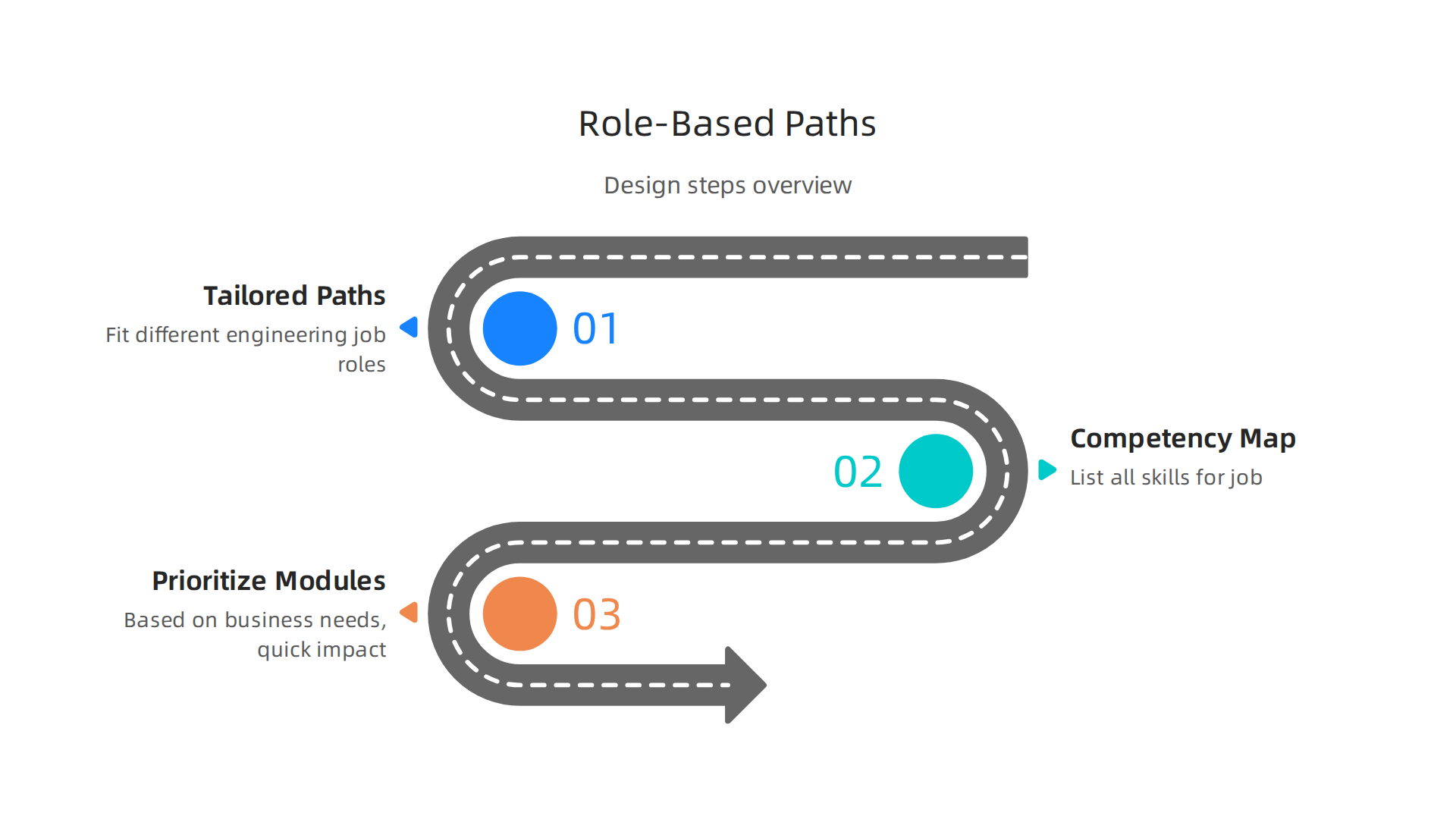
For example, what an individual contributor (IC) needs to learn is different from a tech lead, or an engineering manager.
First, you should make a "competency map" for each main job role. Think of this as a list of all the skills someone needs to be good at that job. This includes technical skills, like knowing a certain coding language, and soft skills, like being good at teamwork. These maps help make it clear what skills are needed for different levels and types of work. For instance, a detailed Competency Model for Software Engineer/Developer can help guide this process.
By laying out these expectations, you take away any guesswork. People know exactly what skills they need to learn if they want to move up or switch roles.

This clarity is key when someone asks "how to become a software developer" or wants to advance their career. It can guide them towards useful online certifications for software engineering or even help them find a software engineer apprenticeship that matches their goals. Knowing what skills are most important for Software Developer Skills 2026 also becomes much easier.
After you define these skills, the next step is to figure out which learning topics should come first. You want to prioritize learning modules based on what will help your business most and what can be learned quickly. This is often called a skills-mapping approach. It means looking at your company’s goals and picking the training that will make the biggest positive impact in the shortest amount of time. For example, training should be directly connected to what the business needs, as highlighted in guidelines for Cybersecurity Curriculum Development.
This smart way of planning your software developer training makes sure that every hour spent learning brings real value. It helps your team members grow in ways that directly support the company’s success. It also means your team stays up-to-date with new technologies and methods without wasting time on things that don’t matter as much.
Do you want to stay ahead of the curve with all the latest in AI and technology?
Get clear daily AI updates from The AI Newsletter Worth Reading.
Curriculum design: balancing fundamentals, frameworks, and emerging tech
After knowing what skills each engineer needs, the next big step in effective software developer training is building the learning plan itself. This means putting together a curriculum that teaches the right things in the right order.
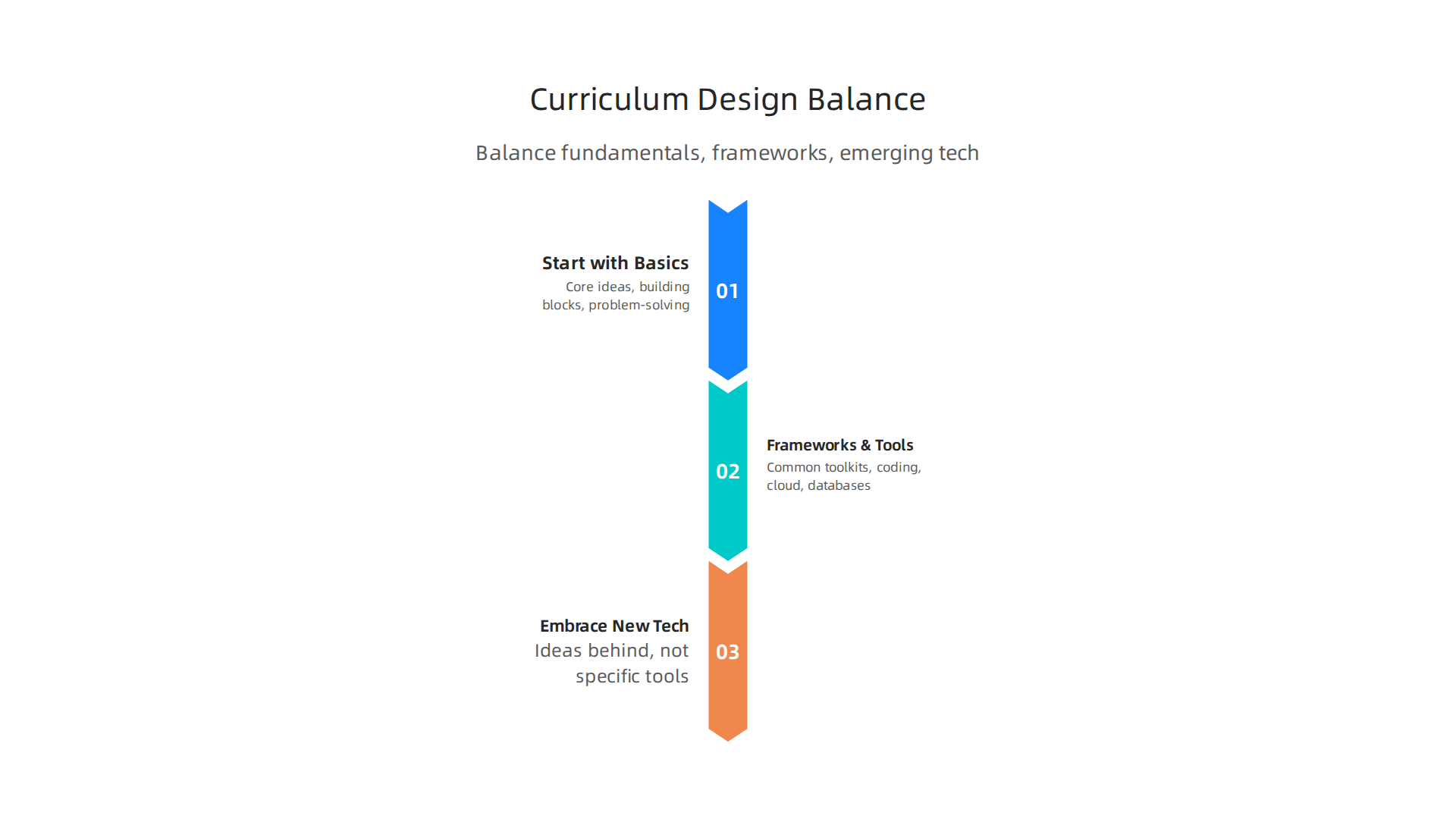
You want to make sure your team learns skills that last, but also stays sharp with new tools and ideas. It’s like building a house: you start with a strong base, then add the rooms, and finally decorate with the latest styles.
Start with the basics
Good software developer training always begins with the core ideas. These are the building blocks of how software works. Think about things like basic coding rules, how computers think, and how to solve problems with logic. These foundational skills are super important because they don’t change much, even as new technologies pop up. They help engineers understand why things work the way they do, not just how to use a specific tool. For example, knowing how to build good code blocks is a key foundational skill for software professionals today, as highlighted in a study on Foundational Competencies and Responsibilities. Building a solid foundation helps engineers grasp more complex topics later on.
Move to frameworks and tools
Once the basics are clear, engineers can learn about common tools and methods. These are called "frameworks" or "domain-specific tooling." They are like special toolkits that help speed up building software. This includes things like:
- Coding frameworks: These give engineers ready-made structures for creating apps.
- Cloud tools: Knowing how to use cloud services is a must in 2026, as many companies run their software there. Our guide on cloud adoption strategy 2026 can offer more details on this.
- Database skills: Learning how to store and get information is also very important.
These skills are practical and help engineers get work done quickly. They build upon the strong foundation engineers have already learned.
Embrace new technologies without constant changes
The tech world moves fast. In 2026, new things like AI-assisted coding and cloud-native patterns are changing how we build software. It’s important for software developer training to include these new topics. For instance, many courses now teach about Coding with AI to help developers use these powerful new tools.
However, you don’t want to change your training plan every week. The trick is to teach the ideas behind new tech, not just how to use one specific program that might be old next year. Focus on the principles of AI, not just one AI tool. This helps engineers adapt to any new tool that comes along. Learning how to apply AI in software development 2026 is a good example of this balanced approach.
Learning by doing: project-based training
The best way to learn these skills, both old and new, is often through projects. Instead of just listening to talks or reading books, engineers learn by actually building things. This is called project-based learning. It helps them put all their knowledge together, from basic code to new AI tools, into real-world work. Many studies show that Project-Based Learning in Engineering Education helps people learn better. Whether someone is trying to figure out how to become a software developer or wants to get an edge with advanced online courses with certificates, hands-on projects make the learning stick. It also prepares them well for a software engineer apprenticeship.
Effective delivery methods: live, asynchronous, mentorship and hands-on labs
Once you have a great plan for what to teach, the next step in software developer training is figuring out the best way to teach it.
Just like there are many ways to build software, there are many ways to help engineers learn new skills. The goal is to make sure the training sticks and can be used on real projects.
Learning together: synchronous training
One way to learn is through "synchronous" training. This means everyone learns at the same time, often in live workshops or classes. Think of it like a real-time classroom, whether it’s in person or online.
- Live classes and workshops: These are great for new or hard topics. Engineers can ask questions right away and get answers. They can also work together on problems, which helps them learn from each other. This is especially good for hands-on activities where a teacher can guide everyone.
- Benefits: This method builds a sense of team and allows for immediate feedback. It’s often used when an engineering team needs to learn a new tool or method quickly.
Learning at your own pace: asynchronous training
"Asynchronous" training lets engineers learn on their own schedule. This usually involves self-paced online courses, videos, or written guides.
- Self-paced online courses: Engineers can go through materials when it works best for them, perhaps after finishing their main work tasks. This is helpful for covering foundational topics or for people who are trying to figure out how to become a software developer while still working. Many of these resources offer online certifications for software engineering that can boost a career.
- Benefits: It’s flexible, which is great for busy schedules. It also allows people to review tough topics as many times as they need. This method can be a good way to cover skills needed for a software engineer apprenticeship, letting learners get ready before they start.
- Blended learning: Often, the best approach is a mix. This means using both live sessions for deep dives and self-paced materials for background learning or review. This "blended" way gets the best of both worlds.
The power of guidance: mentorship and code reviews
No matter how training is delivered, some things make the learning much stronger.
- Mentorship: Having an experienced engineer guide a newer one is super helpful.

Mentors can share real-world advice and help mentees navigate challenges. This kind of one-on-one help can make a big difference, with studies showing how beneficial multi-level mentorship can be in research groups and labs Enhancing Lab Learning and Graduate Aspirations with Multi-Level Mentorship and Vertically Integrated Projects in Research Groups: A Case Study. Peer mentorship, where more senior students help newer ones, also works well, especially in project-based learning settings Peer-Mentoring in Design Projects in Project-Based Learning (PBL) at First-Year Engineering Course.
- Code reviews: When engineers write code, others look at it to offer suggestions and spot mistakes. This is a powerful learning tool. It teaches best practices, improves code quality, and helps everyone understand how different parts of a project fit together.
Learning by doing: hands-on labs and projects
The best way to truly understand software development is to get your hands dirty.
- Project-based labs: These are practical exercises where engineers actually build things. Instead of just reading about a topic, they apply their knowledge to solve real problems. This deepens their understanding and builds confidence. Using project-based learning in engineering education, especially in lab courses, is a key shift that helps students learn better Project-based learning as a pedagogical shift in lab- …. These labs can also involve industry experts who propose and guide projects, making the learning even more real-world WIP: Transforming Engineering Labs through AI-Powered Project ….
- Real-world application: This hands-on experience is vital for software developer training because it bridges the gap between theory and practice. It shows engineers how everything they’ve learned, from basic coding rules to complex frameworks, works together in a functional piece of software. It’s often how people prepare for high-level jobs or complete demanding software bootcamps 2026.
To keep up with the latest developments in AI and broader technology, which constantly influence software development training, consider subscribing to The AI Newsletter Worth Reading. You’ll get clear daily AI updates from The Deep View Newsletter.
After putting so much effort into planning and delivering good software developer training, the next big question is: how do we know if it actually works? It’s not enough to just complete a training program. We need to measure if engineers are truly learning, improving, and applying their new skills to real projects.
Defining Key Performance Indicators (KPIs) for Training
To know if training is making a difference, we need to set clear goals and ways to measure them. These are called Key Performance Indicators, or KPIs. Think of them as important scores that show progress. For software developer training, helpful KPIs often include:
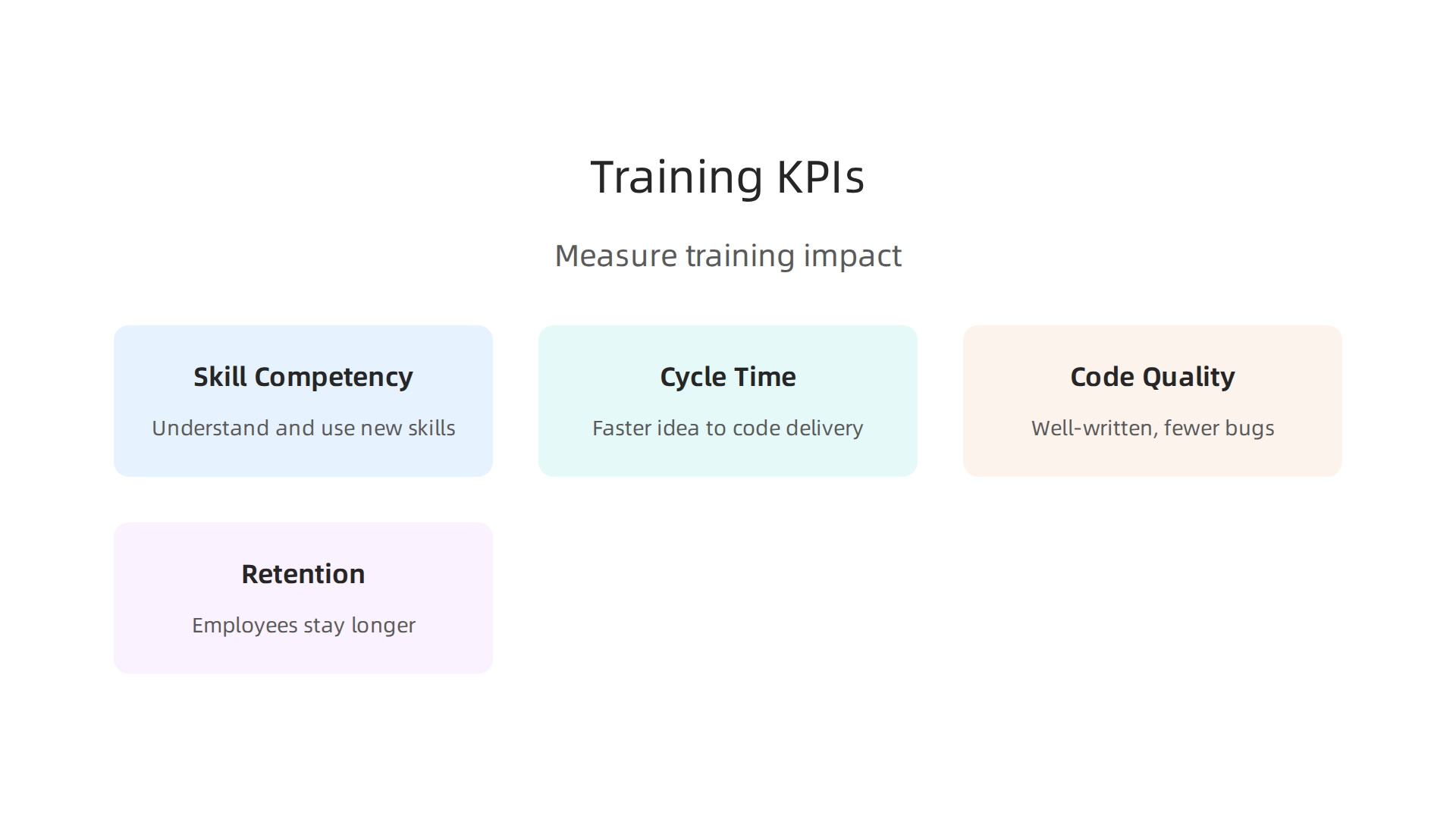
- Skill competency: This measures if engineers really understand and can use the new skills. Instead of just passing a test, it’s about showing they can perform tasks on the job.
- Cycle time improvements: This looks at how fast an engineering team can go from having an idea to putting new code out for users. Better training should make this faster and smoother. Companies that invest in training can see a big boost in productivity, with some reporting a 17% increase after comprehensive programs 35+ L&D statistics every leader should know in 2026.
- Code quality: This checks if the code is well-written, easy to understand, and has fewer bugs. High-quality code saves time and problems later on.
- Retention: This measures how long engineers stay with the company. Good training can make employees feel more valued and engaged, which helps them stay longer Training helps developer.
By tracking these KPIs, you can see if your software developer training is truly helping your team and the company. In 2026, many companies are making productivity a top goal for their workforce training efforts Workforce and Learning Trends 2026.
Designing Assessments that Matter
It’s easy to give a test at the end of a course, but does that really tell you if the engineer can use what they learned? Effective assessments go beyond simple quizzes. They should measure how well the new skills transfer from the training room to actual production work.
For example, instead of just asking about a coding language, an assessment might involve:
- A mini-project: Have the engineer build a small piece of a real application using the new techniques.
- A code review exercise: Ask them to review a piece of code and point out improvements, just like they would on a team.
- A problem-solving scenario: Give them a common issue faced in your daily work and see how they solve it using their new knowledge.
The goal is to see real-world application, not just memorization. This helps ensure that the training is preparing them for what they’ll actually do as a software engineer apprenticeship or a full-time developer.
Longitudinal Tracking for Lasting Impact
Measuring training impact shouldn’t stop right after the program ends. "Longitudinal tracking" means looking at these KPIs over a longer period of time. This could mean checking in at 30, 60, or 90 days after training, and even much longer. This helps you understand the true, lasting benefits.
For example, you might see that an engineer’s task completion efficiency improved by 24.8% after training, and their job satisfaction went up too Evaluating the effect of employee training programs on perfo. This kind of ongoing check helps you refine your training programs. Some ways to do this include:
- Follow-up surveys: Ask engineers and their managers about improvements in performance and confidence.
- Performance reviews: Look for mentions of new skills being used or improvements in project work.
- Code metrics: Keep an eye on code quality and delivery speed for individuals and teams over time.
By tracking progress over time, you can truly understand if your software developer training is creating lasting value. If you’re looking for ways to boost your team’s efficiency, exploring methods to accelerate developer productivity with Slack AI for engineering teams can provide valuable insights. This kind of thoughtful measurement helps ensure that the skills learned through online courses with certificates or intensive programs truly help someone figure out how to become a software developer and succeed in their role for years to come.
After understanding how to measure the success of your software developer training programs, the next step is to figure out how to share that success with more people. It’s one thing to have a great training for one team, but what if you need to teach engineers across many teams or even in different parts of the world?

This is where scaling programs becomes important.
Scaling Programs Across Teams and Geographies
When you want to spread good software developer training widely, the goal is to make sure everyone gets the same high-quality learning experience. This can be tricky because different teams might have different needs, and people in various places speak different languages. In 2026, many companies are looking for smart ways to make their training reach more people without losing its effectiveness.
Decentralizing Training with Consistent Quality
To scale training, you often need to let local teams handle some of the teaching. This is called decentralizing. Here are some ways to do it while keeping quality high:
- Train-the-Trainer Programs: Instead of sending the main trainers everywhere, you can teach a few key people from each team how to deliver the training themselves. These "local champions" can then guide their own team members. This method is often supported by strong mentorship programs, where experienced engineers help newer ones grow their skills Enhancing Lab Learning and Graduate Aspirations with Multi-Level Mentorship and Vertically Integrated Projects in Research Groups: A Case Study.
- Standardized Templates and Materials: Provide clear guides, lesson plans, and practice exercises that everyone uses. This ensures that the core knowledge being taught remains the same. Many state education departments create detailed curriculum frameworks for information technology and software development, which can serve as a good example for creating consistent training outlines Ohio Information Technology Content Standards Manual. Using these templates helps new instructors deliver the training correctly.
Governance, Content Versioning, and Localization
For global teams, scaling software developer training adds a few more layers of complexity:
- Governance: This means setting rules for how training materials are created, updated, and used. Who gets to make changes? How are new topics added? Having clear rules helps keep all training aligned with company goals and current industry standards. Some organizations offer frameworks for software engineering education that emphasize recurring components like software quality and ethics Guidelines for Software Engineering Education Version 1.0.
- Content Versioning: Just like software, training content needs updates. New tools and techniques for software developer training appear all the time. Content versioning makes sure everyone is using the latest and most accurate version of the materials. Think of it like making sure everyone’s using the same software update.
- Localization: If your teams are in different countries, you might need to translate training materials into local languages. It’s not just about words, but also about making sure examples and scenarios make sense for different cultures. This ensures that everyone, whether they’re looking for a software engineer apprenticeship or trying to figure out how to become a software developer, can fully understand the material.
By thinking about these points, you can create a software developer training program that reaches many people and helps them grow, no matter where they are. Using online courses with certificates can also make scaling easier, as these programs are often designed to be accessed from anywhere. To make sure your training programs are always top-notch, it’s wise to constantly look for ways to improve them. You can find more insights on how to foster strong engineering teams by exploring ways to achieve exponential team growth.
Leveraging technology and AI to accelerate developer learning
Thinking about how to make your software developer training even better, especially when many people need to learn, brings us to the exciting world of technology and AI. In 2026, these tools are changing how people learn and grow their skills. They make learning faster and more personal for everyone, whether you’re starting a software engineer apprenticeship or looking for how to become a software developer.
Smart Ways AI and Tech Help You Learn
AI and new technologies can make software developer training much more effective. They do this by making learning paths special for each person, like a personal tutor.
-
AI-Assisted Coding Tools: Imagine having a helpful friend right inside your coding program. That’s what AI coding tools do! They can suggest code, fix mistakes, and even write parts of programs for you. Tools like GitHub Copilot and Claude Code are very popular in 2026 for helping developers work and learn faster. These tools aren’t just for experts; they can also help someone who is still figuring out how to become a software developer learn by example and get instant feedback. The market for these tools has grown a lot, showing how important they are for speeding up development and learning today Best AI Coding Tools 2026: 7 Tested [Ranked]. Using clever AI engineering tools can really maximize a developer’s productivity. You can learn more about these tools in our article on clever AI engineering tools maximize developer productivity in 2026.
-
Adaptive Learning Platforms: These are like smart online courses with certificates that change based on how you learn. If you’re really good at one topic, the platform might give you harder problems. If you’re struggling, it might offer more help or different ways to explain things. This means everyone gets the right challenge, not too easy and not too hard. These platforms often use AI to understand your learning style and progress, giving you a custom path that helps you master new skills quicker. This is a great way to accelerate engineering team learning. For more on this, check out our guide on how to accelerate engineering team learning with AI-powered study tools.
-
Observability of Practice: This is a fancy way of saying we can see how developers are doing their work and learning. By looking at how they use tools, solve problems, and get help from AI assistants, we can figure out what’s working well and what needs improvement in their software developer training. This helps trainers give better advice and change programs to fit real-world needs.
Using the Right Tools for Real-World Learning
For any software developer training to be truly useful, it needs to be practical. This means using tools that developers will actually use on the job.
- Integrate with Developer Workflows: The best learning happens when it’s part of the daily work. So, training programs should use the same coding environments and tools that engineers use for their projects. If developers are learning how to build, test, and deploy software using their familiar setup, the skills they gain are immediately useful. This helps them understand how to apply what they’ve learned in a real work setting. Making sure tools fit into existing workflows is key for practical learning. This approach helps engineers apply AI in their daily tasks. Discover more strategies on how to apply AI in software development 2026 strategies for engineering teams.
By making learning personal, adaptive, and tied to actual work, technology and AI are changing the game for software developer training in 2026. This helps create strong, skilled teams ready for anything.
Keep up with the latest in AI and technology by getting daily updates.
Get clear daily AI updates from The AI Newsletter Worth Reading.
It’s great to see how much technology and AI can help with software developer training. But for any company, especially those looking to train many people, it’s also very important to know about the money side of things. We need to understand how to budget for training, what costs are involved, and how to measure if that training actually helps the business. This is about making a strong case that investing in learning is worth it.
What Does Software Developer Training Really Cost?
When you plan for software developer training, you need to think about more than just the price tag of an online course or a trainer. There are several kinds of costs that add up:
- Making the Learning Content: This includes all the work to design lessons, create videos, write guides, or license existing learning materials. If you are building a special program, like for a new software engineer apprenticeship or for someone figuring out how to become a software developer, this can be a big cost. You might pay experts to create content or use tools for development, as outlined in a Training ROI Template: A Simple Model for Learning Teams.
- Paying the Teachers and Helpers: This covers the salaries or fees for people who teach the courses, guide discussions, or act as mentors. Even if you use online courses with certificates, there might still be someone guiding the learners.
- Tools and Technology: Think about the software licenses, access to special coding environments, and platform fees for things like adaptive learning systems or AI coding assistants. These are direct costs that help make the training happen. Understanding all these parts is key to Measuring Training ROI with Total Cost of Learning.
- Time Away from Work: This is often called "opportunity cost." When developers are learning, they are not working on projects. Their time is valuable, and this "lost productivity" needs to be thought of as a cost, even if no money changes hands directly. It is about how much they could have earned or produced during that training time. This is a crucial part of knowing How to Measure ROI of Workforce Upskilling.
A good budget plan will cover all these parts. Knowing all the costs helps you decide the best way to train your team, whether it is through intensive bootcamps or flexible online programs.
Showing the Value: Return on Investment (ROI)
It’s not enough to just spend money on software developer training; you also need to show that it brings good results back to the company. This is called Return on Investment (ROI). It means proving that the benefits from training are bigger than the costs.
How to Link Training to Company Goals:
To measure ROI, you need to connect your training efforts to things you can actually count or see in the business:
- Better Productivity: Did the training make developers faster at their tasks? Companies that invest in training often see a big jump in how much work their teams can do. In fact, training is a top driver for workforce development efforts in 2026, as noted in 35+ L&D statistics every leader should know in 2026.
- Fewer Mistakes: Does the code have fewer bugs after training? Better-trained developers write higher quality code, reducing time spent on fixing errors.
- Happier Employees: Does training make employees more engaged and less likely to leave? People who feel like they are growing often stay with a company longer. Almost 67% of developers say Training helps developer feel more engaged and fulfilled in their work.
- Faster Project Completion: Can your team finish projects more quickly and meet deadlines better?
- New Skills Applied: Are developers actually using the new skills they learned to build better products or solve tough problems?
Calculating ROI:
A simple way to think about ROI for training is:
ROI (%) = ((Benefits from Training – Total Training Cost) / Total Training Cost) x 100
You need to put a dollar value on the benefits. For example, if faster work saves the company $10,000 and the training cost $2,000, then the ROI is ($8,000 / $2,000) * 100 = 400%. That is a great return! By carefully tracking these numbers, businesses can Prove and Scale Training ROI: Practical Steps & Examples and show that investing in their people is one of the best ways to grow and succeed.
Summary
This article explains a practical, end-to-end approach to planning, delivering, and improving software developer training in a fast-changing 2026 tech landscape. It shows why role-based learning paths and competency maps are essential, how to structure a curriculum that balances fundamentals, frameworks and emerging AI, and which delivery methods—live workshops, self-paced courses, mentorship and labs—work best. You’ll learn how to measure success with meaningful KPIs, design real-world assessments, and track impact over time to prove ROI. The guide also covers scaling training across teams and geographies, using content versioning and localization, and how AI and adaptive platforms can personalize learning. After reading, you’ll be able to map skills to business needs, run project-based training, pick delivery formats, and build metrics to demonstrate value.