
Why custom web development still matters — and when to choose it
In 2026, many engineering teams face a big question: should we use ready-made software or build something completely new? While easy-to-use tools for things like "design a website software" and "homepage design software" can get you started quickly, they often don’t fit the special needs of a growing business. This is where custom web development shines, giving you exactly what you need to solve unique problems and stand out.
Custom web development is all about making a digital solution that perfectly matches your business goals. For B2B engineering teams, this often means building powerful tools that can do very specific jobs, integrate with existing systems, or offer special features that no off-the-shelf product provides. It gives you full control over how your product looks, works, and grows. It also ensures you can meet important requirements, like making sure your website is easy for everyone to use, as noted in the Digital Accessibility Procurement Guide.
When thinking about custom web development, engineering managers and CTOs need to make several key choices.

First, you’ll need to pick the right technology stack, which is like choosing the building blocks for your project. Then, you’ll decide on your team model: will you build it with your own people, or work with expert groups, like specialized "software development companies houston" or other trusted partners? Learning how engineering teams evaluate technology services to prevent failures can guide this important choice.
Other important decisions include how you’ll manage the building process, how much it will cost, and how you’ll keep it updated and running smoothly for a long time. These early choices are super important for making sure your custom project is a success and continues to help your business grow.
Staying up-to-date with all the new tech is key for any engineering team. If you want to keep learning about AI and other big tech changes, you might find something helpful here:
The AI Newsletter Worth Reading
Get clear daily AI updates from The Deep View Newsletter.
When you choose custom web development, it is very important to know what "success" truly means for your business. It is not just about building something new. It’s about making sure that new thing helps your company grow and reach its goals. For engineering teams, this means connecting everyday tasks to bigger business numbers.
Think about what makes your business better. Is it more money coming in (revenue)? More people signing up or buying things (conversion)? People staying with your product for a long time (retention)? Or your team building new features faster (developer productivity)? These are called Key Performance Indicators, or KPIs.
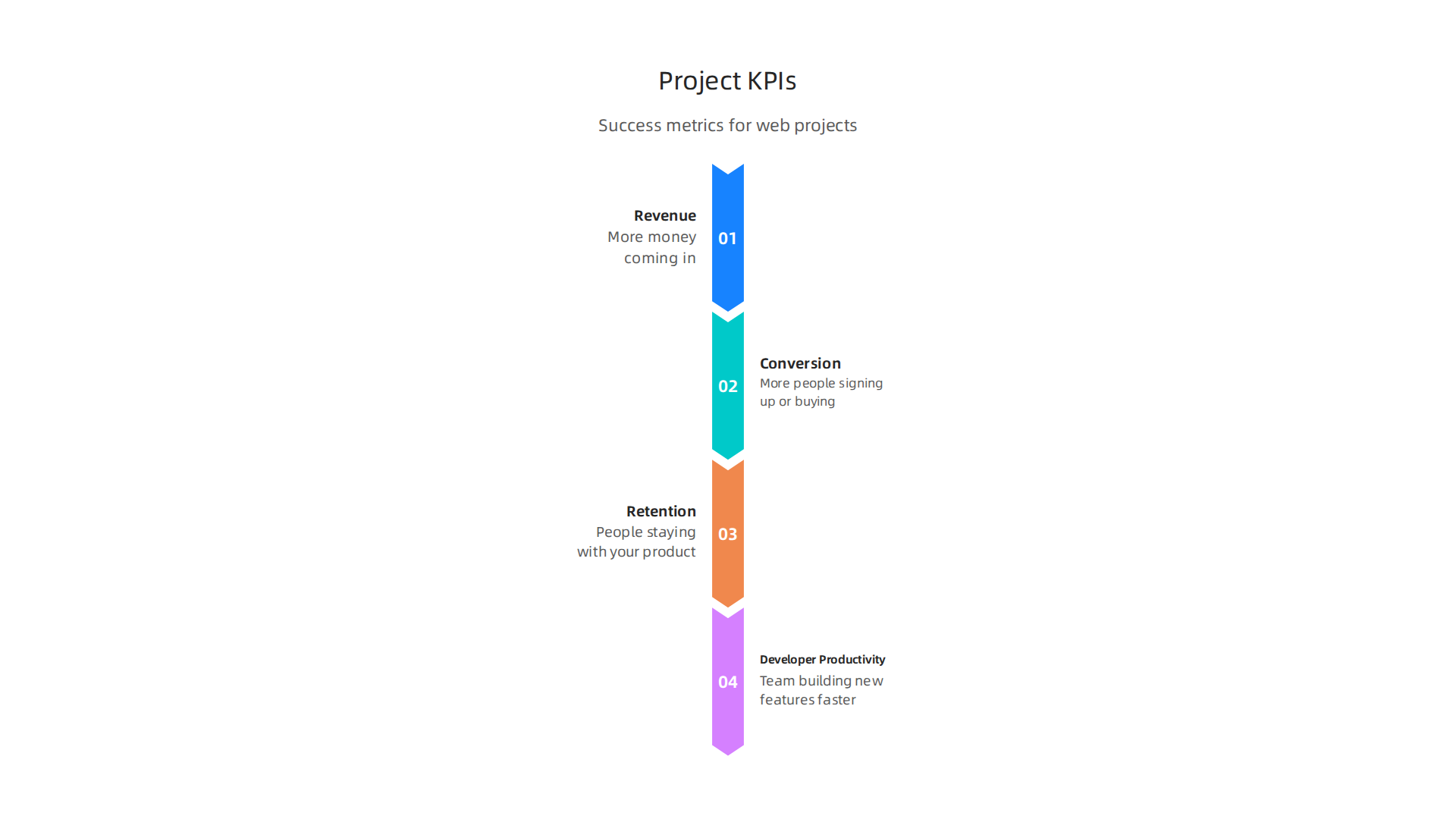
When you define success for your custom web project, you need to turn these big business goals into clear tasks for your engineering team. This way, everyone knows exactly what they are building and why.
For example, if a business wants to boost customer retention, the engineering team might focus on building a special feature that makes users happy and keeps them coming back. If the goal is to speed up internal work, the custom web development might create a unique tool that no regular "design a website software" or "homepage design software" could offer. This is where custom work truly shines. It helps you build special tools that give you a competitive edge. You’re not just using the same platforms as everyone else; you’re creating something unique that fits your exact needs.
Sometimes, a custom project might aim to make a system safer. In 2026, with many new threats, keeping your web applications secure is a big deal. For instance, a recent report in Security Magazine found that problems in design and how business logic works were a big reason for security issues in web applications this year, with a notable increase in findings over the last year. Creating custom solutions can help you build security right into your product from the start, following the best safety rules. This level of detail is hard to get with standard tools.
By tying your engineering efforts directly to these business outcomes, you make sure that every part of your custom web development project works towards a clear, valuable goal. It helps teams, including specialized ones like those at software development companies houston, to focus on what truly matters. This strategic approach to design and development ensures that your investment in custom solutions delivers real, measurable success. Understanding this connection is a key part of navigating the Modern Web Development Ecosystem 2026: Navigating the Future of Digital Building.
Now, let’s talk about the exciting new trends that are shaping custom web development in 2026. These new ways of building things help engineering teams work smarter and create even better products. We are seeing big changes with AI, special ways to handle content, and clear rules for design.
AI is Helping Developers Build Better and Faster
One of the biggest changes we see this year is how much Artificial Intelligence (AI) helps with web development. AI tools are not just for smart robots anymore; they are part of how we build websites and apps. Imagine AI helping developers write code, test things, or even find mistakes faster. This means teams can focus more on new ideas and less on tiny, repetitive tasks.

Reports show that by 2026, AI modules are becoming a regular part of how Content Management Systems (CMS) work, especially to make things automatic and easier for everyone to use. This kind of help with AI makes custom web development projects more efficient.
AI is also changing how content is made and handled. It helps create text, images, and other content for websites. This makes getting a new website ready much quicker. For companies that need a lot of fresh content, AI-powered tools are a game-changer. If you want to stay updated on these changes, especially how AI affects daily workflows, you might find The AI Newsletter Worth Reading helpful.
Headless Architectures and Jamstack Are Everywhere
Another big trend in 2026 is "headless" architecture. Think of it like this: a normal website builder mixes the content (like words and pictures) with how it looks on the screen. A "headless" system separates these two parts. The "head" (what you see) is separate from the "body" (the content storage). This means developers can use one content source to feed many different things, like a website, a mobile app, or even smart screens. It gives a lot more freedom to design exactly what you need without being stuck in old templates, as highlighted in "12 Defining Web Development Trends for 2026" from Figma.
Headless CMS is becoming very popular for big companies, known as enterprise builds, because it offers more flexibility and better performance. This allows for what experts call a composable architecture. The market for headless CMS is growing quickly, with predictions showing it will reach USD 569 million by 2032, driven by businesses wanting to transform digitally. Headless CMS also works well with something called Jamstack. Jamstack is a way to build websites that makes them very fast and secure. While the term "Jamstack" might not be used as much as before, its ideas about fast, secure sites are still very important for modern custom web development. For example, Contentful is a top headless CMS, often recommended for big businesses and e-commerce. You can learn more about how these modern approaches work in the Headless CMS Trends in 2026 report.
Design Systems Make Things Look Consistent
Lastly, design systems are a crucial part of building great custom web applications today. A design system is like a detailed rulebook that says exactly how every button, color, and text style should look and work. It is a shared guide for everyone on the team, from designers to developers. For big projects, this means that every part of the website or app will look and feel the same, no matter who built it. This consistency makes the user experience much better and also helps teams work faster because they do not have to invent new designs every time. Creating clear strategic website software design for engineering teams helps make sure these systems are used well. These trends together make custom web development in 2026 more powerful and efficient than ever before.
After seeing how new trends like AI and headless architecture are making custom web development better, the next big step is to pick the right tools to bring these ideas to life. This is called choosing your "stack" and it includes everything from how your website looks and feels to how its content is managed and built. Making smart choices here is key for good performance, happy developers, and easy upkeep.
Choosing the right design and development stack (UI frameworks, headless CMS, and build tooling)
Picking the right tools for your project is like choosing the best ingredients for a special meal. In custom web development, these tools help shape how your website works and how fast it runs. This choice affects how easy it is for your team to build and maintain the project too. There is no single "best" choice for everyone in 2026; it really depends on what your project needs, as experts point out when comparing modern frontend options Modern Frontend Development in 2026: Tools, Frameworks & Best Practices.
Front-End Frameworks and How They Build Websites
Front-end frameworks are like blueprints for the parts of a website that users see and interact with. Popular choices in 2026 include React, Angular, Vue, and Svelte. Each has its own strengths. For example, React is a top choice for making large apps with many small, reusable parts, and it’s used by almost half of all professional developers Best Frontend Frameworks 2026: A Practical Guide – Coderio. Angular is often picked for very big, complex business applications. Svelte is known for making very fast websites because it does a lot of work before the code even gets to the browser.
When choosing a framework, it’s important to think about:
- Performance: How fast your website loads for users. Some frameworks use special ways to build pages, like Server-Side Rendering (SSR) or Static Site Generation (SSG). This means the website is mostly ready when the browser gets it, making it much quicker.
- Developer Productivity: How quickly and easily your team can build new features and fix problems. Some frameworks make common tasks simpler, speeding up the overall custom web development process.
- Maintainability: How easy it is to update and keep the website running smoothly over time. A well-chosen framework with clear rules helps avoid future headaches.
Frameworks like Next.js, which is built on React, are very popular for marketing websites and SaaS tools because they offer good performance and help with search engine rankings. For content-heavy sites, Astro is gaining a lot of attention because it helps create very fast pages Front end technologies 2026: Choosing your stack. Knowing about the Modern Web Development Ecosystem 2026 Navigating the Future of Digital Building can help clarify these choices.
Connecting Design with Development
The journey from a creative idea to a working website also depends on how well design and development teams work together. This is where design software and pipelines come in. Tools like Figma allow designers to create every visual part of a website, from buttons to entire page layouts.
A "design system" provides a set of reusable parts and rules, ensuring everything looks consistent. When designers finish their work in tools like Figma, modern workflows use "design-to-code pipelines." These smart systems can actually turn design files into basic code, making the handover to developers much smoother and quicker. Reports in 2026 show that using AI in these pipelines can speed up creating a basic version of a product by 3 to 4 times The AI Design-to-Code Pipeline: How Agencies Are Shipping in Days, Not Months. This integration means that when you design a website software, the plans can quickly become real, reducing friction and helping teams build efficient, high-quality custom web development projects.

To learn more about how designers and developers can work together more closely, explore resources on how to Master Design and No-Code Tools for Engineering Teams.
Building on the choice of tools for your custom web development project, the next important step is to have a clear plan for how to use them. This plan guides your team from the very first idea to a live website. A good process makes sure everyone works well together, keeping the project on track and ensuring the final product is exactly what’s needed.
From Ideas to Real Websites: The Development Process
A strong process helps turn big ideas into a working website. Here’s how it usually works:
- Discovery and Planning: This is where you figure out what the website needs to do. You talk to people, gather ideas, and research what your users want. For example, if you want to design a website software for a special purpose, this stage helps decide what features are most important. It’s like drawing up blueprints before building a house. For many software development companies in Houston, this initial phase is critical for understanding specific business goals.
- Sprinting and Building: After planning, teams work in short, focused bursts, often called "sprints." In each sprint, they build a small part of the website, like a working homepage design software element or a new feature. This step-by-step approach helps move the custom web development forward steadily.
- Quality Checks and User Feedback: As parts of the website are built, they need to be checked. This means testing for mistakes (Quality Assurance, or QA) and making sure users find the website easy and pleasant to use (User Experience, or UX validation). Getting feedback early helps fix problems before they become big issues.
- Handoff and Launch: Once the website is fully built and tested, it’s prepared to go live. This involves making sure everything is ready for users to see and use. The handoff to the client or internal teams needs to be smooth, ensuring they know how to manage and update the new website. Good communication here helps avoid issues, especially when moving between design and development teams The honest 2026 frontend stack: every tool I ship with.
Rules for the Road: Governance in Custom Web Development
Beyond the daily steps, you also need clear rules for how decisions are made and how the project is managed over time. This is called governance.
- Who’s in Charge? Clearly knowing who owns different parts of the project and who makes big decisions helps prevent confusion.
- Decision Gates: These are specific points in the project where everyone agrees to move forward or make changes. This makes sure important choices are thought through.
- Change Control: Websites often need updates. Having a way to handle new ideas or changes ensures they are added in a smart and organized way, without breaking what’s already working.
- Technical Debt Management: Sometimes, during development, shortcuts might be taken to finish quickly. These shortcuts can build up "technical debt," like needing to fix an old plumbing problem later. Good governance means having a plan to deal with this debt so your website stays strong and easy to update in the future.
By having a clear process and good governance, any custom web development project can be more successful and create a better final product. To learn more about how different stages of development fit together, explore software development life cycles.
After setting up a clear plan and rules for your project, the next big question is: who will actually build your custom web development? This choice is very important because it affects how fast you get things done, how much it costs, and how much control you have. Let’s look at the main ways to get your team together.
5) Team models and hiring: In-house, agency, or freelance?
When you’re ready to build your custom web development project, you usually pick from three main team types: an in-house team, a design agency, or a freelance developer.
Each has its own good and bad points, especially when you think about how long the project will last, who owns the special ideas (intellectual property or IP), and how quickly you need your website or software ready for people to use.
In-House Team: Your Own Builders
An in-house team means you hire people to work for your company full-time. They become a part of your daily operations.
- Good parts: You have full control over the team and their work. They learn a lot about your company over time. All the special ideas and code stay completely with you. This works best for big, long-term projects where you need constant updates and control, like building complex internal business tools or a unique design a website software.
- Bad parts: Hiring full-time staff can be very expensive. In 2026, a single in-house developer can cost between $175,000 and $285,000 each year, when you add up salary, benefits, and other costs In-House vs Agency vs Freelance Web Dev | 2026 Guide. It also takes a long time to find and train new people.
- Best for: Companies with ongoing development needs, high IP sensitivity, and a long-term vision for their project.
Agency: A Ready-Made Team
An agency is a company you hire that has its own team of experts. They work on your project from start to finish. You might find many great software development companies in Houston that specialize in this.
- Good parts: Agencies come with a full team of designers, developers, and testers already working together. They can start faster than building an in-house team and bring lots of experience from other projects. They’re great for when you need a well-rounded team quickly to create a new homepage design software or a complete custom web development.
- Bad parts: Agencies can be more costly than freelancers, and you might have less day-to-day control than with an in-house team.
- Best for: Medium to large projects, quick speed-to-market, or when you need a variety of skills but don’t want to manage individual hires.
Freelancer: One Expert for Specific Tasks
A freelancer is a self-employed person who works on projects for different clients.
- Good parts: Freelancers are often the cheapest option and can start working very quickly. They are good for small, clear tasks, like fixing a specific part of a website or building a simple prototype.
- Bad parts: Quality can vary a lot, and if that one person gets sick or busy, your project might stop. They usually work best for smaller parts of a custom web development, not the whole thing.
- Best for: Small, well-defined projects, quick fixes, or when you need a very specific skill for a short time.
How to Pick the Right Team
To choose, think about your project.
- Project Horizon: Is it a quick, one-time build, or will you need constant changes for years? Long-term means in-house might be better, while short-term fits freelancers or agencies.
- IP Needs: How important is it that you own every single line of code and idea? In-house gives most control over intellectual property.
- Speed-to-Market: Do you need your website live in a few weeks, or do you have months to build it? Agencies and freelancers can often deliver faster for urgent needs.
When you’re looking for an agency or freelancer, always check their past work, talk about how they approach projects, and ask for references. This helps you find the right fit for your custom web development needs. If you’re considering hiring an agency, it helps to understand what to look for when making your choice. Learn more about how engineering teams choose a web design agency.
To stay updated on the fast-changing world of tech, including new tools and strategies that impact custom web development, you’ll find a lot of value in staying informed.
Get clear daily AI updates from The AI Newsletter Worth Reading.
After you pick the right team to build your custom web development, the next big steps are about money: how much it will cost, what the rules of payment are, and how you know you’re getting a good return for your spending.
6) Budgets, contracts, and measuring ROI for custom web work
Understanding how companies charge for custom web development is key. There are a few main ways they set prices. Knowing these can help you manage your budget better, whether you’re creating a new homepage design software or a complex system.
Common Pricing Models
- Fixed Price: This is like buying something with a clear price tag. You agree on a set amount for the whole project before it starts. This works best when you know exactly what you want your website or software to do, with no big changes expected. The good part is that you know the total cost upfront. The bad part is that if you want to add new things later, it might cost extra or slow things down. Small projects often use this model, sometimes costing under $15,000 in 2026 Website Development Cost in 2026: Complete Pricing Guide.
- Time & Materials: With this model, you pay for the hours people work and any special items they use. This is good for custom web development projects where things might change a lot, or where you’re not sure about all the details from the start. It gives you more freedom to change your mind, but the final cost can be a surprise if the project takes longer than planned. Many software development companies in Houston might offer this for bigger, more flexible projects.
- Outcome-Based (or Value-Based): This model is less common but focuses on the results you get. You pay based on how well the custom web development helps your business, like getting more customers or making tasks faster. This can be great if the team truly understands your business goals, but it can be tricky to measure the "outcome" clearly.
No matter the pricing model, a clear contract is a must. It should spell out what work will be done, how much it will cost, how long it will take, and what happens if things change. This protects both you and the team you hire.
Measuring How Much Good Your Project Does (ROI)
ROI stands for Return on Investment. It’s about seeing if the money you spent on your custom web development project brings back more value than it cost. For example, if you spend $50,000 on a new design a website software, you want it to help you earn more than $50,000, or save you more than $50,000 in costs.
You can measure ROI in different ways:
- More Customers or Sales: Did your new website or feature lead to more people buying your products or signing up for your service? You can track how many visitors turn into customers.
- Better User Experience: Is your website easier to use now? If people spend more time on your site or find what they need faster, it’s a good sign. Happy users are more likely to come back.
- Saved Time or Money: Did the custom software help your team work faster or cut down on costs? Maybe it automated a task that used to take many hours.
- Stronger Brand: Does your new online presence make your company look more professional and trustworthy? This can be harder to put a number on, but it still adds value.
To truly see if your custom web development is worth it, you need to track these things over time. Set clear goals at the start, like "get 10% more online sales" or "reduce customer support calls by 15%." Then, regularly check if you’re reaching those goals after your project is live. Thinking about these strategic points helps when you’re working on strategic website software design for engineering teams.
After figuring out how to budget for your custom web development and make sure it brings good value, the next big step is making sure your new website or software works great for everyone. This means it needs to be fast, able to handle many users, and safe from bad guys.
7) Scaling, performance, and security best practices for production sites
When your custom web development project goes live, it’s like opening a new store. You want it to be welcoming, fast, and safe for all your visitors.

Let’s talk about how to make sure that happens.
Make Your Site Fast and Smooth (Performance)
A slow website can make people leave before they even see what you offer. Think about making your website quick and smooth, like a fast car.
- Speed it up with Caching: Imagine your website remembers things it showed before. Caching is like having a copy of a webpage ready to go, so the server doesn’t have to build it from scratch every time someone visits. This makes things much faster.
- Keep an Eye on Things (Observability): You need to know if your website is working well. This means watching its health, like checking a car’s oil and tire pressure. Tools help you see if pages are loading slowly or if anything is broken. This way, you can fix small problems before they become big ones.
- Plan for Problems (Incident Response): Sometimes things go wrong, even with the best plans. Having a clear plan for what to do when your website has issues helps you fix them quickly. It’s like having a roadside assistance plan for your digital home.
- Optimize Everything: From the pictures on your homepage design software to how your code is written, there are many ways to make your site snappier. A quick website makes users happy and even helps your site show up higher in search results. You can learn more about how web performance boosts website traffic and SEO rankings.
Growing Your Site (Scaling)
Scaling means your website or custom software can handle more and more visitors without breaking down. If your business grows, your website should grow with it. Good custom web development is built to be flexible and expand, whether you’re a small startup or one of the big software development companies in Houston. This way, if a lot of people suddenly want to use your design a website software, it won’t crash.
Keep Your Site Safe (Security)
Keeping your website secure is super important. There are many risks online, and you want to protect your users’ information and your business.
- Strong Defenses (Security Hygiene): This means having good basic habits, like updating your software often and using strong passwords. It also means making sure your custom web development is built with security in mind from the very start.
- Follow the Rules (Compliance): Depending on your business, you might need to follow special rules about how you handle data and protect privacy. Making sure your site follows these rules helps you avoid trouble and builds trust with your users. In 2026, web application security risks continue to be a major concern, as highlighted by reports like the OWASP Top 10, which lists critical security risks
Entwicklung eines Systems auf Basis von Retrieval-Augmented …. Companies must always be alert to new threats. - Regular Checks: Just like a house needs regular maintenance, your website needs security checks to find and fix weak spots. Thinking about all these points helps you to build a web portal a guide to design security and scalability.
Staying on top of these things means your custom web development investment will keep working well and safely for a long time.
Want to understand how AI is changing how we build and secure digital platforms in 2026?
Get clear daily AI updates from The AI Newsletter Worth Reading.
Summary
This article explains why custom web development still matters in 2026 and when engineering teams should pick it over ready-made tools. It walks through the core benefits of tailored solutions—control, integration, security, and business-aligned KPIs—and surveys the major technical trends shaping custom builds today, including AI-assisted workflows, headless architectures, Jamstack ideas, and design systems. The piece also covers practical decisions you’ll face: choosing a front-end stack and headless CMS, planning the development process and governance, selecting an in-house team versus an agency or freelancer, and common pricing models with tips for measuring ROI. Finally, it outlines production concerns—performance, observability, incident response, scaling, and security—so you can turn a custom project into a reliable business asset.