
When engineering teams need new software or technology services, how they choose matters a lot. Picking the right tools and partners, like eci software solutions or custom software development companies in usa, is not just about getting the job done. It’s about protecting the business from big problems.
There are many risks involved. What if the new software does not work with older systems? What if it costs more than expected to set up or maintain? These are business and technical risks that can waste a lot of money and time. For example, in 2026, many AI vendor selections fail because companies look at fancy demos instead of checking how the software works with their own data. Reports show that companies without a clear plan are three times more likely to replace their AI vendor shortly after choosing them AI Vendor Selection Framework: Evaluate, Score & Choose.
When teams choose software or services without a proper plan, it is called an "ad-hoc evaluation." This approach can cause big headaches. It often leads to problems like getting stuck with one provider, which is called vendor lock-in.

This means it becomes very hard to switch to a different company later, even if the service is not good. Also, hidden costs often pop up, making the project much more expensive than planned. And sometimes, the new software simply does not work well with other systems, leading to integration failures.
Many ERP projects, for instance, face issues with data moving over or with linking to older systems, with studies in 2026 showing that data migration errors happen in 68% of projects and legacy system integration failures in 52% ERP Implementation Failure Statistics 2026.
These kinds of problems can stop projects completely or make them very costly. This is why having a clear, repeatable way to evaluate technology services and software is so important for engineering teams. It helps them make smart choices and avoid common pitfalls. Learning how to pick the best tools can save your team a lot of trouble. To learn more about making smart choices, check out our guide on how to pick the right software development company in 2026.
Staying informed about new tech, including tools found on the aws marketplace, helps make these important decisions easier. Get clear daily AI updates from The AI Newsletter Worth Reading.
When your team is ready to pick new software or technology services, the very first step is to know exactly what you want to achieve and how the new tools need to work. This means clarifying your business goals and the technical details required. Without this clear understanding, even great tools like certain eci software solutions or services from custom software development companies in USA can miss the mark.
Set Clear Business Goals
Think about what your company hopes to gain. Are you trying to save money, make things faster, or improve how customers feel? These are your business outcomes. It is super important to make these goals measurable. For example, instead of saying "we want to be faster," say "we want to reduce the time it takes to get products to market by 20%." Or, "we want to save $50,000 a year in operating costs."
Having clear, measurable goals helps everyone on the team know what success looks like. It also helps you choose technology services that truly help your business. A study in 2026 found that many big software projects, like those for Enterprise Resource Planning (ERP), often fail because companies do not have clear plans or goals at the start. Issues such as unclear process ownership and a lack of strategic alignment are frequently cited as reasons for these problems, leading to poor user adoption and delayed benefits 2026 ERP Report Panorama Consulting Group.
This shows how important it is to define your business outcomes clearly from the get-go.
Define Technical Needs
After you know your business goals, you need to figure out the technical side. These are the rules for how the new software or service must work. Imagine you are building a new house: the business outcome is having a comfortable home, and the technical requirements are things like how strong the walls need to be or how big the kitchen should be.
For software, technical requirements can include:
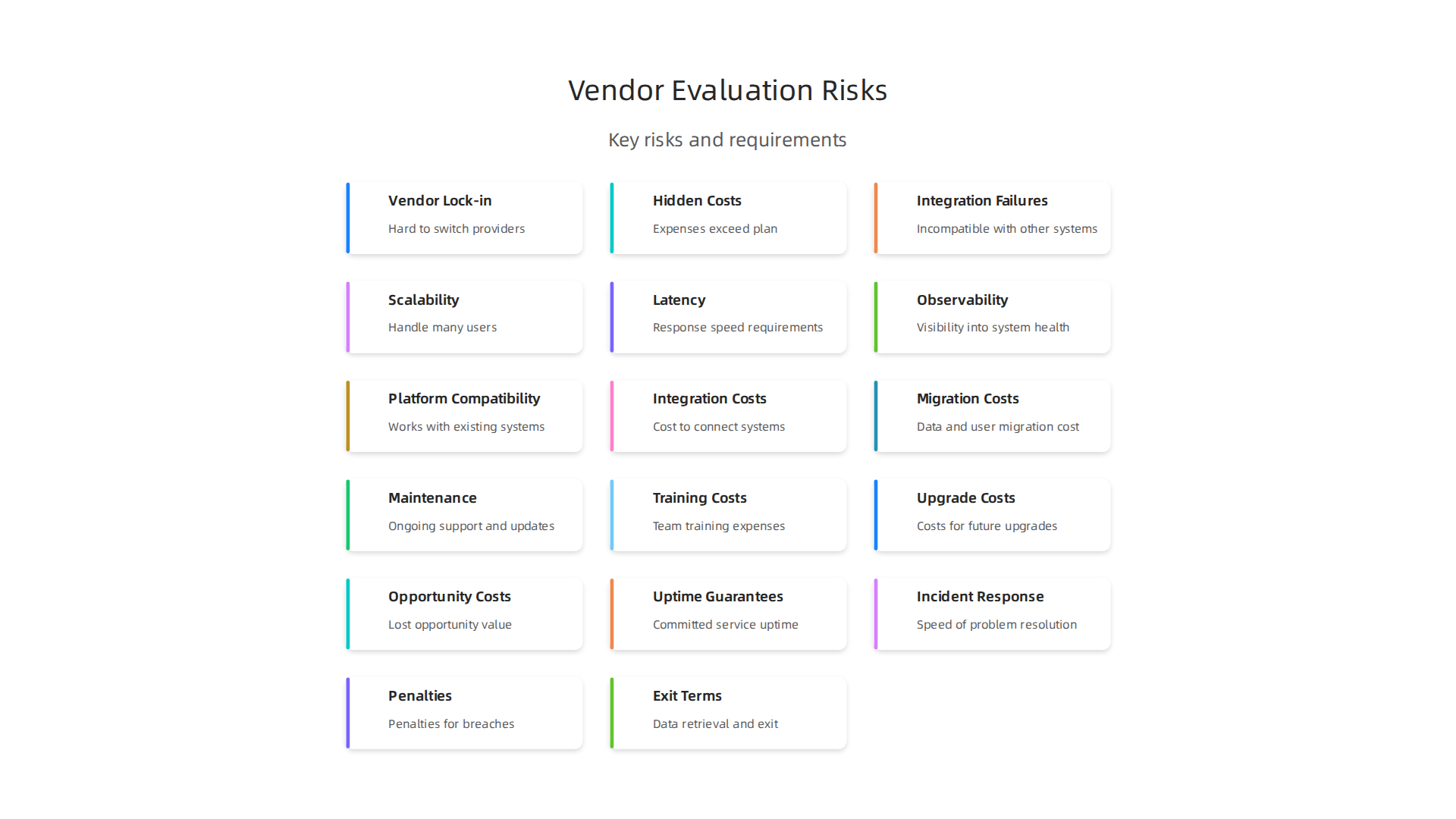
- Scalability: Can the software handle many users at once? What if your company grows?
- Latency: How fast does it need to respond? For some tools, even a tiny delay can be a big problem.
- Observability: Can your team easily check if the software is working correctly? Can you see what is happening inside it?
- Platform Compatibility: Will it work well with your existing systems?
For example, if you use a lot of tools from the AWS marketplace, the new software needs to play nicely with them. This is especially true when you are working with AI tools; understanding how new AI platforms will fit into your current setup is key to smooth operations. You can learn more about this in our guide on how to evaluate and integrate Generative AI platforms for developer teams.
By clearly listing these technical requirements, you avoid surprises later on. It helps you talk to potential providers, whether they offer eci software solutions or more comprehensive IT services for engineering leaders in 2026, and ensures they understand your needs fully. This step is crucial for making sure the technology you choose will truly support your business goals without causing new problems.
Now that you know exactly what your business needs and how the new tools must work, the next step is to find the right partners. This means building a smart plan to look for vendors and their products.

It is not enough to just pick the first company you see. You need to do your homework to make sure they can truly help your business.
Create Shortlists Based on Verified Capabilities
Start by making a short list of possible vendors. Think of this like picking players for a team; you want the best fit for your specific game. Look for companies that have shown they can do what you need. This is true whether you are looking for specific eci software solutions or trying to find custom software development companies in USA to build something unique for you.
When evaluating vendors in 2026, it is important to include different kinds of checks: how they run things, how stable they are financially, if they follow the rules, and if they fit with your long-term plans. You should define clear rules for how you will score each vendor Evaluating Vendors in 2026: Tools, Criteria & Common ….
For example, if you are looking for new AI tools, you will want to choose a vendor based on many things like how well their technology works and if they can integrate with your current systems How to Select an AI Vendor: Enterprise Evaluation Framework.
Dig Deeper: Customer References and Product Roadmaps
Do not just take a vendor’s word for it. It is very important to verify what they claim. Ask for customer references and actually talk to them. You should aim to speak with at least three past customers who had projects similar to yours Vendor Reference Check | Questions to Ask & Tactics …. This helps you understand how the vendor works in real life. One expert suggests a good rule: "Don’t trust, verify" when it comes to checking vendors Vendor Due Diligence Don’t Trust — Verify.
You also need to understand the vendor’s product roadmap. This is their plan for future updates and changes. Does their vision for their software match your long-term goals? A great vendor will have a clear plan that shows they are thinking ahead and growing. You can learn more about picking the right partners in our guide on how to pick the right software development company in 2026.
Structure Your Research to Reduce Noise
To make your research effective, you need a clear plan. This means setting up:
- Filtering Criteria: What are the absolute must-haves for your new technology services? If a vendor does not meet these basic rules, they are out.
- Red Flags: What are the warning signs that tell you a vendor might not be a good fit? This could be bad reviews, unclear pricing, or a lack of good customer support. Knowing these helps you avoid problems later on.
- Decision Gates: These are specific points in your research where you make choices. For example, after the first round of talks, you might decide to narrow your list from ten vendors to three.
Having a formal way to choose vendors helps a lot. Studies show that companies without a clear plan for choosing their technology partners are much more likely to have to replace their chosen vendor later on AI Vendor Selection Framework: Evaluate, Score & Choose. This is especially true for complex systems like AI. A detailed risk assessment can help you uncover potential issues early AI Vendor Risk Assessment: 50-Point Template for 2026. It’s crucial to look beyond just the flashy demos and focus on how a tool performs with your own data.
Staying informed about the latest tech updates and vendor changes can be hard. If you want clear, daily updates on AI and other tech developments, consider subscribing to a specialized newsletter.
The Deep View Newsletter provides daily, in-depth insights into AI and broader technology developments.
The AI Newsletter Worth Reading
To truly pick the best technology partners, you need to look very closely at their actual technology. This is like checking under the hood of a car to see if it is really well-built. This deep dive is called technical due diligence. It means looking at the vendor’s code, how their systems are put together (architecture), and how well they will work with your business every day (operational fit).
Look at Architectural Fit
First, you need to understand how a vendor’s software is designed. Will it fit neatly into your existing systems? Think about these key parts:
- APIs: These are like special plugs that let different software talk to each other. Do the vendor’s APIs make it easy for your current tools to connect with their new software? This is very important for smooth operation.
- Extensibility: Can the software be changed or added to as your business grows? You do not want a solution that is stuck in time. You need something that can change with your needs.
- Multi-tenancy: If the software is used by many customers at once, how does the vendor keep everyone’s information separate and safe? This is especially key for cloud-based technology services.
- Data Ownership: Who truly owns the data that goes into the new system? It is super important to know that your data is yours and that it is protected. Knowing the technical depth and how data is handled is a big part of choosing a vendor in 2026, especially for complex systems like AI solutions where intellectual property and data terms are critical AI Vendor Selection: CTO Guide 2026 – FutureProofing.
When you look at these things, you are making sure the software’s basic structure fits your company’s needs. This applies whether you are searching for specific eci software solutions or looking for custom software development companies in USA to build something from scratch. Testing how well a solution connects to your actual data is a key step in checking a vendor’s claims How to Run an AI Vendor Proof of Concept: A 5-Criterion Scorecard ….
Check Operational Readiness
Next, you need to see how the vendor actually runs their software day-to-day. This is called operational readiness. It tells you if they can keep things running smoothly and fix problems quickly.
- Deployment Model: How will the software be put in place and updated? Will it be in the cloud, on your own computers, or a mix? For example, some companies use the AWS CDK 2026 guide for building cloud infrastructure with code to manage their cloud setups. You should understand if they use modern methods like DevOps, which focuses on speed and quality. Understanding how to augment AI development with MLOps can also show a vendor’s strength in this area.
- SRE Practices: SRE stands for Site Reliability Engineering. It means the vendor has special engineers who make sure the software is always working well and can handle many users. They are focused on making the system reliable.
- Observability: Can you see what is happening inside the software at all times? Good observability means you can quickly find out if something is wrong.
- Runbooks: These are like instruction manuals for fixing common problems. A good vendor will have clear runbooks for their support teams.
Checking a vendor’s operational maturity means looking at things like documented processes, how much they automate, and if they use measurements to get better all the time How to use the operational maturity model: assessing your efficiency. These are all important signs of a reliable partner.
Finding a reliable vendor is just one part of the puzzle. Next, you need to understand the true cost of working with them. This means looking beyond the simple price tag, often called the "sticker price." You need to figure out the Total Cost of Ownership (TCO), which includes all the money you will spend over time, not just at the beginning. This is super important whether you are looking for specific eci software solutions or broad technology services.
Many costs are often hidden at first glance. Think of them like invisible expenses that add up over months and years.
- Integration Costs: How much will it cost to connect the new software with your old systems? If the vendor’s software does not "talk" easily with your current tools, you might need to spend extra money on making them work together. This is a big one, especially if you have complex setups.
- Migration Costs: Moving your existing data and users to a new system can take a lot of time and effort. This means money spent on people working on the move, and possibly special tools. Understanding these costs helps you compare different software options. You can find detailed breakdowns of these costs in a Total Cost of Ownership (TCO) Analysis Guide.
- Maintenance and Support: What happens after you buy the software? You will likely need ongoing support and updates. These are often yearly fees that you must plan for.
- Training Costs: Your team will need to learn how to use the new software. Training can cost money and take time away from their usual work.
- Upgrade Costs: Software often gets better over time. New versions or features might come with extra costs.
- Opportunity Costs: This is a trickier one. It is about what you might lose by choosing one solution over another. For example, if a cheaper software is harder to use, it might slow down your team, costing you more in lost work over time. Or if an eci software solution is not quite right, you might miss out on benefits a better, slightly more expensive one could offer.
When thinking about these costs, it is smart to calculate TCO for enterprise software using different ideas of what might happen. You should look at:
- Best-case scenario: What if everything goes perfectly?
- Likely-case scenario: What is the most probable outcome?
- Worst-case scenario: What if things go wrong or cost more than expected?
You also need to think about how costs might change as your business grows. Will the software become more expensive if more people use it, or if you store more data? This is called "sensitivity to usage growth." For example, if you are working with custom software development companies in USA, their cost models should clearly show how growth affects your bottom line. Companies might offer solutions through platforms like the aws marketplace, and you need to compare how their pricing scales.
Understanding all these financial details is key to picking the right technology partner. It helps you see the real value you will get for your money. To dive deeper into making smart tech choices for your business, consider checking out this guide on how to pick the right software development company in 2026. For a broader view on managing your tech investments, exploring comprehensive IT services for engineering leaders in 2026 can also be helpful. For ongoing insights into the fast-changing world of technology, Get clear daily AI updates from The Deep View Newsletter.
After understanding all the costs, the next big step is to try out the new software or service in a small way. This is often called a "pilot program" or "Proof of Concept" (POC). It is like testing a small piece of a cake before making a whole big one. The goal is to see if the technology works as expected and if it truly solves your business problems.

Design pilots, POCs, and acceptance metrics
When you set up a pilot or POC, it is super important to have clear rules about how you will decide if it is successful. Think of it like setting goals for a game. You need to know exactly what "winning" looks like.
Here are some key things to include:
- Time Limit: A pilot or POC should not go on forever. Give it a clear start and end date. This keeps everyone focused and stops the test from costing too much time and money.
- Clear Goals: What do you want to achieve with this pilot? Do you want to speed up a certain task, save money, or make customers happier? These goals must be very specific. For example, if you are testing eci software solutions, a goal might be to "reduce data entry errors by 20% in the finance department."
- Success Metrics: How will you measure if you hit your goals? These are your "acceptance criteria." They should be numbers you can track. For example, if your goal is to reduce errors, your metric is the actual percentage of errors before and after the pilot.
- Real Data: Use real business data for your test. This helps you see how the solution will work in the real world, not just with fake data. An expert guide on how to run an AI vendor Proof of Concept says that problem specificity matters, and the vendor should be able to use your actual production data within the POC environment to connect, clean, and use it effectively How to Run an AI Vendor Proof of Concept: A 5-Criterion Scorecard.
- Feedback from Users: Get feedback from the people who will actually use the new software. Their opinions are very important. This is part of user acceptance. A good POC plan will verify requirements, gather user feedback, and test how well the new solution works with other systems you use Definitive POC Planning Guide For Shyft Vendor Evaluation.
What if it does not work out?
It is also smart to have a "Plan B" or "rollback" plan. This means knowing what you will do if the pilot fails to meet your goals. How will you go back to the old way of doing things without causing problems for your business? This helps lower the risk if the new solution, like certain eci software solutions or technology services, is not a good fit.
You also need a "cutover path." This is your plan for how you will fully switch to the new system if the pilot is a success. Having these plans ready makes sure that moving to a new system is smooth and causes as little trouble as possible. Thinking about these details helps you choose the right tools and partners, whether you are working with custom software development companies in USA or looking at options on the aws marketplace. For more on making sure new technologies fit your team, you might explore how to evaluate and integrate generative AI platforms for developer teams.
Staying informed about the latest advancements in AI and technology can also help you design more effective pilots and make better decisions.
Get clear daily AI updates from The AI Newsletter Worth Reading.
After figuring out if a new software or service works well in a small test, you need to think about bigger things before using it fully. This means looking at how the new system will fit with your old systems, how safe your information will be, if it follows all the rules, and what promises the company makes about how well their service will work. This is true whether you are looking at specific eci software solutions, general technology services, or custom software development companies in USA.
Integration, Security, Compliance, and SLAs
When you decide to move forward with a new software, you must check many important things. Think of it like making sure all the puzzle pieces fit perfectly and that the puzzle itself is strong and safe.
How Things Fit Together and Stay Safe
- Data Flows: You need to make sure that information can move easily between your old systems and the new one. Where does data go? Does it get there correctly? This is called verifying data flows.
- Encryption: This is like putting your data in a secret code so only the right people can read it. It is very important for keeping your information safe. You must check that the new software uses strong encryption.
- Access Controls: Who can see and use your data? Access controls are rules that make sure only people who need to see certain information can. This helps stop wrong people from getting to your important business details.
Following the Rules (Compliance)
Your business must follow certain laws and rules. This is called regulatory compliance. You need to check if the new software or service helps you follow these rules. For example, some companies must meet specific standards for keeping customer data private. When checking a new vendor, you should review their security and privacy controls to make sure they match what you need, looking at things like data processing rules and breach notices. You can find more helpful steps in a Vendor Management Compliance Checklist (Updated 2026).
You also need to verify vendor claims about their systems. A Third-Party Vendor Security Assessment Checklist can help you check if a vendor has the right security setups, like strong passwords and ways to stop hackers. Asking for proof of things like SOC 2 Type II or ISO 27001 certifications is a smart move. These show that the company has been checked by experts and meets high security standards.
Service Promises (SLAs)
Before you sign any papers, you need to talk about Service Level Agreements (SLAs). These are like promises from the software company about how well their service will work.
- Uptime Guarantees: This means how much time the service will be working and available. You want it to be working almost all the time, maybe 99.9% of the time, so your business does not stop.
- Incident Response: What happens if something goes wrong? How fast will the company fix problems? An SLA should say how quickly they will respond and fix things.
- Penalties: If the service does not meet its promises, what happens? There should be a plan for what the company will do, like giving you money back, if they do not meet the agreed-upon standards.
- Exit Terms: What if you want to stop using their service later? You need to know how you can get your data back and move to a different service without a lot of trouble. This is very important when working with any outside company, even those on the aws marketplace or independent custom software development companies in USA.
Making sure you check all these points will help you choose the best technology services for your business and keep everything running smoothly and safely. For general advice on managing IT vendors and services, consider learning about comprehensive IT services for engineering leaders in 2026.
Summary
This article explains a repeatable, risk-focused approach engineering teams should use when choosing software or technology services. It outlines the common failures—like vendor lock-in, hidden costs, and integration breakdowns—and shows why clear business outcomes and detailed technical requirements matter. You will learn how to create shortlists, verify vendor claims with references and roadmaps, and run meaningful technical due diligence on architecture, APIs and operational readiness. The guide also covers how to estimate true total cost of ownership, design time‑boxed pilots or POCs with measurable acceptance criteria, and check security, compliance and SLA terms. Following these steps helps teams pick tools and partners that actually meet business goals, reduce surprises, and make future changes easier.