
Why software teams need to understand no-code and low-code in 2026
In 2026, the world of building computer software applications is changing fast. Software teams today face a big challenge: they need to create new tools and apps quicker than ever before.

This is where no-code and low-code platforms come in. These platforms are special tools that let people build apps with very little or no actual coding. Think of it like building with LEGOs instead of cutting and shaping wood from scratch.
These new ways of building apps are really important for making work happen faster and for helping businesses change quickly. By 2026, a lot of new business applications are expected to be built using no-code or low-code tools, showing how quickly they are becoming a common way to work [1]. In fact, reports show that the low-code development platform market is growing very quickly, expected to reach about $48.91 billion in 2026 [2]. This huge growth means many more companies are using these powerful tools.
Many businesses are finding that these no-code app development platforms help them do more with less. They make it easier for people who aren’t trained as programmers to create useful computer software applications. These "citizen developers," as they are sometimes called, can help solve problems and build tools specific to their needs without waiting for professional developers. This boosts productivity across the whole company.
However, using no-code and low-code tools also means thinking about what you gain and what you might give up. You get great speed when you use these tools, which is fantastic for business agility. But sometimes, you might have a bit less control over every tiny detail compared to writing every line of code yourself. It’s a balance between building something super fast and having full power over its design and how it works. Understanding this balance is key for any software team looking to use cross-platform development services effectively in today’s tech world.
To learn more about how building without code is changing things for engineers, check out our guide on how building without code is transforming software development in 2026.
Want to stay informed about all the latest changes in tech and AI?
Get clear daily AI updates from The AI Newsletter Worth Reading.
What exactly are no-code and low-code platforms? Taxonomy and capabilities
Building on our talk about why these tools are important, let’s dive deeper into what no-code and low-code platforms actually are. Imagine you want to build a house. Traditional coding is like having to make every brick, cut every piece of wood, and mix all the cement yourself. It takes a lot of special skills and time.
No-code and low-code tools change this. They are like having a big box of pre-made parts and simple instructions.
No-Code Platforms
No-code platforms let anyone build useful computer software applications without writing any computer code. It’s all about dragging and dropping visual blocks, like building with digital LEGOs. You see exactly what you’re making as you go. These platforms are perfect for people who know what they want an app to do but don’t know how to write the code. They help everyone from small businesses to large companies make their own tools [1]. For instance, a small team might use a no code application development platform to quickly create an app for managing customer orders.
Low-Code Platforms
Low-code platforms are a bit different. They also use visual tools and ready-made parts to speed things up. But they let you add your own code too, if you need to. Think of it as having the LEGO blocks, but also the option to carve a special piece of wood yourself if a block doesn’t quite fit your vision. This means that professional developers can use low-code tools to build things much faster, and people with some technical skill can also create more complex computer software applications. They offer a good middle ground, providing speed without giving up all control.
How They Work: Key Features
Both no-code and low-code tools share some common ideas:
- Visual Builders: They use a "what you see is what you get" way of building. You drag elements like buttons, text boxes, and images onto a screen.
- Ready-Made Parts: These platforms come with many pre-built components and templates. This means you don’t start from an empty page.
- Workflow Automation: You can set up automatic steps for your app. For example, when someone fills out a form, the platform can automatically send an email or update a spreadsheet.
- Integration Layers: This is a fancy way of saying they can connect to other popular tools and services. So, your new app can talk to your email program, payment system, or customer database. This helps create comprehensive cross-platform development services that work smoothly together.
Different Ways You Get These Tools
How you use these no-code app development platforms depends on their delivery model.
- Software as a Service (SaaS): Most of these platforms are SaaS. This means you use them over the internet, like using online email or a streaming service. You don’t install anything on your computer. The company that makes the platform handles all the hard technical parts, like keeping it updated and secure. This is the most common way to get started with no-code and low-code.
- Embedded Solutions: Sometimes, these tools are built right into another software program you already use. They might be part of a larger business system, letting you create small custom tools without leaving that system.
Understanding these basics helps software teams pick the right tools for their needs. To explore this topic further, especially for teams evaluating options, check out our No-Code Development Platform Strategic Guide for Engineering Teams 2026.
Now that we know what no-code and low-code tools are, let’s look at who actually uses them.
You might be surprised to learn that it’s not just tech experts. These tools are changing how many different people and teams create computer software applications. In fact, more and more, building without code is transforming how software is made in 2026, helping all kinds of teams.
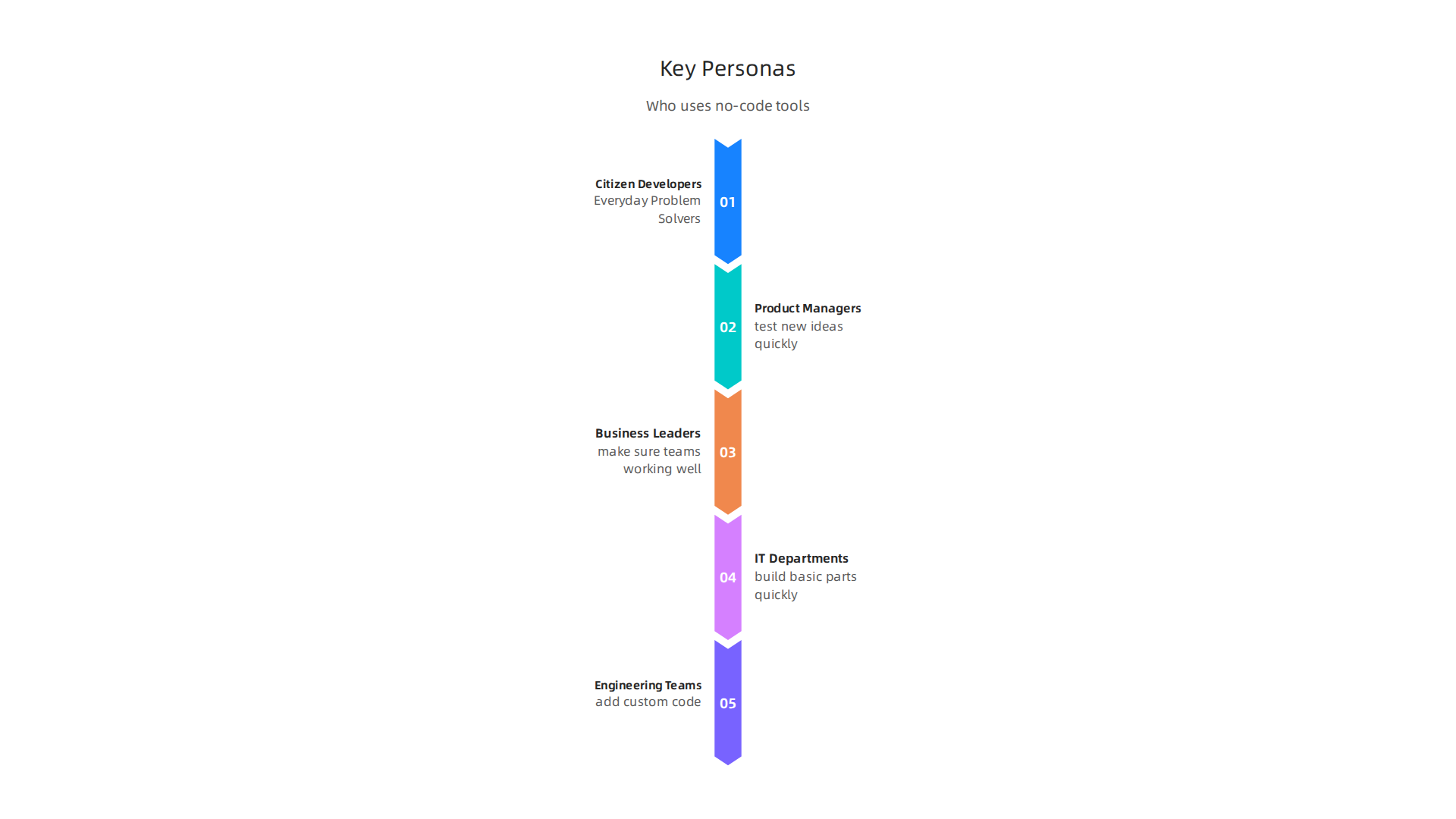
Citizen Developers: Everyday Problem Solvers
One of the biggest groups to use no-code tools are "citizen developers." These are people who work in different parts of a company, like sales, marketing, or operations. They understand a business problem very well but don’t know how to write computer code. With no-code app development platforms, they can build their own solutions quickly.
For example, a marketing person might create an app to collect customer feedback. Or a sales team might build a tool to track their daily tasks. These tools let them solve their own problems without waiting for the IT department. Many experts expect that by the end of 2026, about 70% of new business apps will be made using no-code or low-code methods [1].
Product Managers and Business Leaders
Product managers are always looking for ways to test new ideas quickly. They can use no-code app development platforms to build simple versions of new products or features, called prototypes. This helps them see if an idea works before spending a lot of time and money on full coding. Business leaders also use these tools to make sure their teams are working well. They can create dashboards or simple apps to keep an eye on important business numbers.
IT Departments and Engineering Teams
Even though IT professionals and engineering teams know how to code, they still use low-code tools a lot. Why? Because it helps them work faster! They can use low-code to build the basic parts of an app very quickly, and then add custom code for the harder, more special parts. This means they can create many more computer software applications without getting stuck on small, repeated tasks.
More than 72% of companies around the world have already started using at least one low-code tool to make their own internal apps [2]. It’s important to know that while these tools make things simpler, they don’t replace skilled professional developers for really complex parts, like making sure everything connects well or fixing big technical challenges [3].
How Teams Share the Work
What’s really cool is how no-code and low-code let different teams work together.
- Sharing Ideas: Citizen developers can show their app ideas to IT, who can then help make them even better or more secure.
- Faster Solutions: When a business team needs something fast, a no code application development platform lets them build it. If it gets bigger or needs to connect to many other systems, IT can step in and add more advanced features using low-code.
- Better Together: This way, everyone plays a part in building useful tools. It’s all about making sure that more people can create the digital tools they need to do their jobs well, leading to better cross-platform development services that fit the whole company’s needs.
Staying on top of these trends and how different tools fit into the bigger picture of technology is key for anyone in software engineering.
You can get clear daily AI updates from The AI Newsletter Worth Reading.
Staying on top of these trends and how different tools fit into the bigger picture of technology is key for anyone in software engineering. Once you understand who uses no-code and low-code tools, the next important step is picking the right platform for your needs. With so many options out there, it can be tricky. This part will give you a simple checklist to help you evaluate different no-code app development platforms and make a good choice.
How to Evaluate Platforms: Feature Checklist and Vendor Comparison Framework
Choosing the best no code application development platform means looking closely at what each one offers. You need to make sure the platform can do what you need today and grow with you tomorrow. Here’s a simple checklist to guide you:
Key Features to Look For
Think about these features when you are comparing different no-code app development platforms:
- How it Connects with Other Tools (Integration APIs)
Can the platform talk to other systems you use, like your customer list or accounting software? Good integration APIs are super important for building useful computer software applications that fit into your existing business. - How Flexible Is Your Data (Data Model Flexibility)
Your data is important. Can the platform easily handle different types of information and organize it the way you want? Some platforms have built-in ways to manage your data, which can be a big plus for your business solutions. - Can You Add Custom Code (Extensibility)
Even with no-code tools, sometimes you might need a special feature that requires a bit of custom code. A good low-code platform will let you add your own code when needed, giving you more power. - Who Can Do What (User Roles)
You want to control who can build, change, or just use the apps. Look for platforms that let you set different "user roles" and permissions. This helps keep your projects organized and safe. - Making Sure It Works Right (Testing and CI/CD Hooks)
Just like with regular coding, you need to test your no-code apps to make sure they work without problems. Look for platforms that have tools to help with testing and make it easy to update your apps over time.
For a deeper dive into platform selection, consider reviewing a no-code platform evaluation checklist to cover all bases.
Important Things to Weigh
Beyond the features, there are bigger ideas to consider when you choose a no-code platform:
- Keeping Your Stuff Safe (Security)
This is a huge one, especially if your app handles sensitive information. Check if the platform has strong security features. Does it have important certifications like SOC 2 or GDPR compliance? Can you control who accesses your data? Always look for platforms that publish details about their security reviews and practices to ensure your cross-platform development services are safe. Some expert guides suggest looking for SOC 2, ISO 27001, single sign-on (SSO), and multi-factor authentication (MFA) as basic security features [1]. - Growing with Your Needs (Scalability)
Will the platform work just as well if your app is used by 10 people or 10,000 people? Good scalability means your app won’t slow down or break as more people use it or as your business grows. Platforms that can handle high-traffic web apps are often good choices for growth [2]. - How Easy It Is to Use (Developer Experience)
Even though it’s "no-code," the platform should still be easy for your team to understand and build with. A good "developer experience" means people can quickly learn to use the tools, find help when they need it, and create apps without frustration. This helps everyone, from citizen developers to professional engineers, work faster and happier. For more on improving workflows, explore the concept of developer experience 2026.
Choosing the right no-code app development platform is a big decision that impacts how quickly and effectively your team can create new digital tools.

By using a thoughtful approach and this checklist, you can find a platform that truly empowers your organization. For a complete look at picking the right tools, check out our no-code development platform strategic guide.
Cited Sources:
- No Code for Enterprise: Strategic Guide and Checklist (2026)
- Best No-Code App Builders in 2026: field test and reviews
When you pick a no-code app development platform, you make a big choice for how your team creates new digital tools. But beyond just features, engineering leaders must control a very important area: security, how things are run (governance), and following all the rules (compliance).
Keeping Your Apps Safe and Sound
Using no-code tools lets many people quickly build computer software applications. This speed is great, but it can also bring risks if not handled right. Here’s what engineering leaders need to think about:
-
How Data Is Handled (Data Governance)
You need to make sure that all sensitive information is managed correctly. This means knowing where data is stored, who can see it, and how it’s used. This is extra important for cross-platform development services, which might connect to many different company systems. If your platform doesn’t handle data safely, it could lead to big problems. -
Who Can Do What (Access Controls)
It’s vital to control who can build an app, who can change it, and who can look at the data inside it. Strong access controls mean you can set clear rules. If rules are unclear, sensitive information could be exposed or changed by the wrong person. A study from 2026 showed that without good governance, companies using low-code platforms often take on more risks instead of growing faster Low-Code Security 2026: Enterprise Governance Best Practices. Make sure your platform has solid ways to manage who has access. Thinking about how you manage secrets can also improve your overall security posture. Consider implementing AWS Secrets Manager best practices for cloud security. -
Tracking All Changes (Audit Trails)
Imagine a detailed logbook that records every action taken within an app or on the platform. That’s an audit trail. If something goes wrong, these logs help you figure out what happened, when, and who did it. When checking out different no code application development platforms, look for those that offer clear audit logs. Some experts say that a platform without good audit logs is a "red flag" How to Evaluate No-Code Platforms: A 6-Criteria Framework for …. -
Trusting Your Platform Provider (Vendor Risk)
When you choose a no-code app development platform, you’re also picking a partner. You need to trust that the company offering the platform takes security seriously. Look for platforms that have important security approvals like SOC 2 or ISO 27001. These show they follow strict rules to keep your information safe. They should also be open about how they handle data privacy, especially with laws like GDPR. Platforms that let you "self-host" your apps can give you more control over your data and security, which is often needed for larger businesses 11 Best No-Code App Builders in 2026 (Ranked & Compared).
A Smart Way to Balance Speed and Safety
How can you let people build apps quickly with no-code tools but still keep everything safe and under control? Here’s a simple plan for engineering leaders:
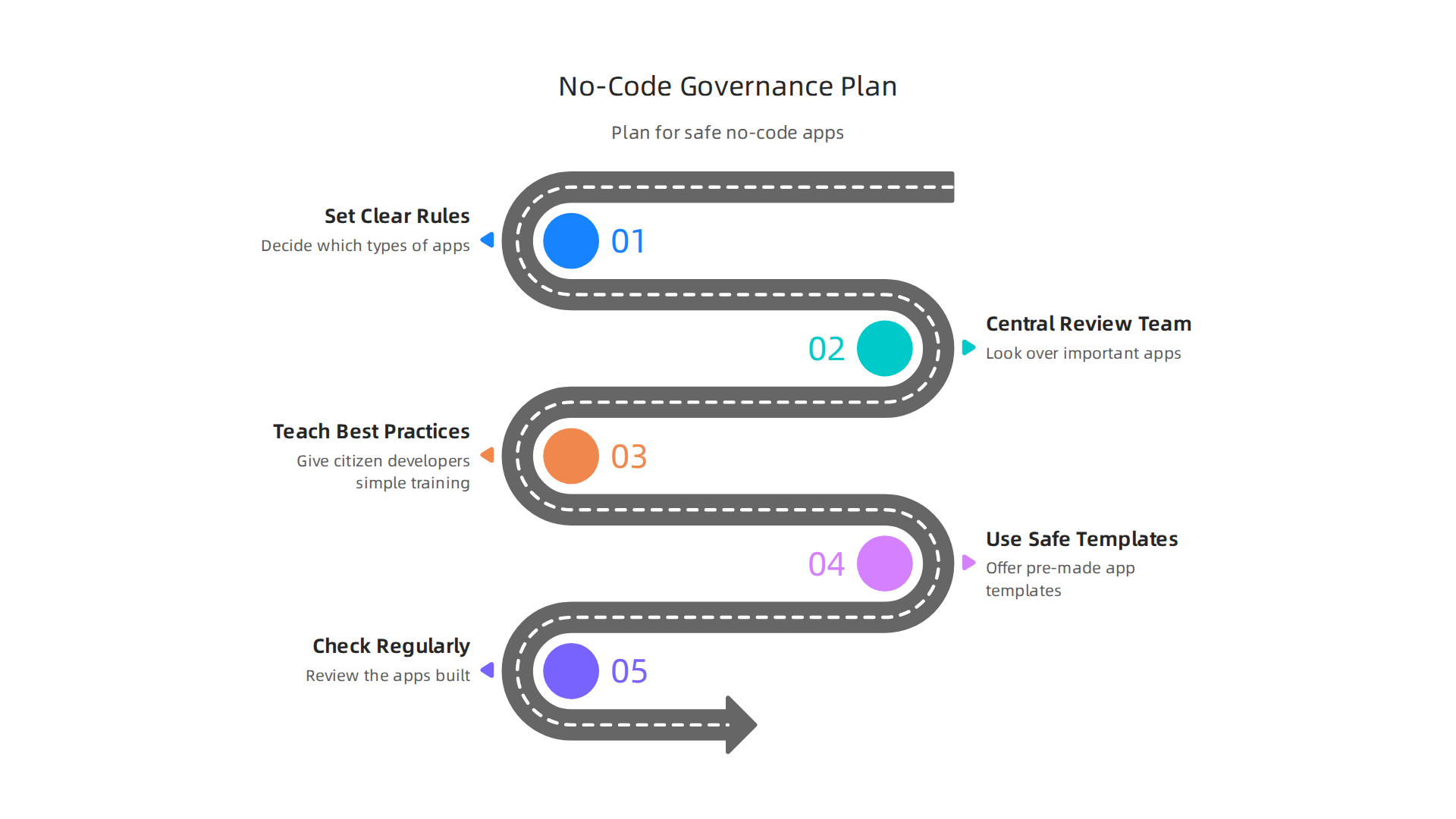
- Set Clear Rules: Decide which types of apps your citizen developers can build freely and which ones need more review from the IT or engineering team. For example, apps that handle very sensitive data, like health records or financial details, should always have a strong check before going live Low-Code Security and Compliance Best Practices in 2026.
- Have a Central Review Team: Create a small team to look over important apps before they are used. This team can check for security issues, make sure data is handled correctly, and confirm the app meets company rules.
- Teach Best Practices: Give citizen developers simple training on basic security and how to handle data. A little bit of knowledge can prevent many big problems.
- Use Safe Templates: Offer pre-made app templates or building blocks that are already secure. This helps people build safely without needing to be security experts themselves.
- Check Regularly: Have a plan to regularly review the apps built on your no-code platform. This helps make sure they stay secure and follow all company policies over time.
By following these steps, you can get the best of both worlds: quick app creation using no-code app development platforms, and strong security for your business.
Want to stay on top of all the latest tech and AI trends that impact software engineering decisions like these?
Get clear daily AI updates from The AI Newsletter Worth Reading.
Now that we know how to keep our no-code computer software applications safe, it’s time to talk about how to know if these tools are really helping our business. We need to measure if they save time and money and make our teams more productive. This is called figuring out the Return on Investment (ROI).
Measuring ROI and Productivity: Metrics, Benchmarks & Practical Case Studies
For engineering leaders, simply using a new tool isn’t enough. You need to see clear proof that it works. When you bring in no-code app development platforms, you can measure success in a few simple ways.
Key Ways to Measure Success
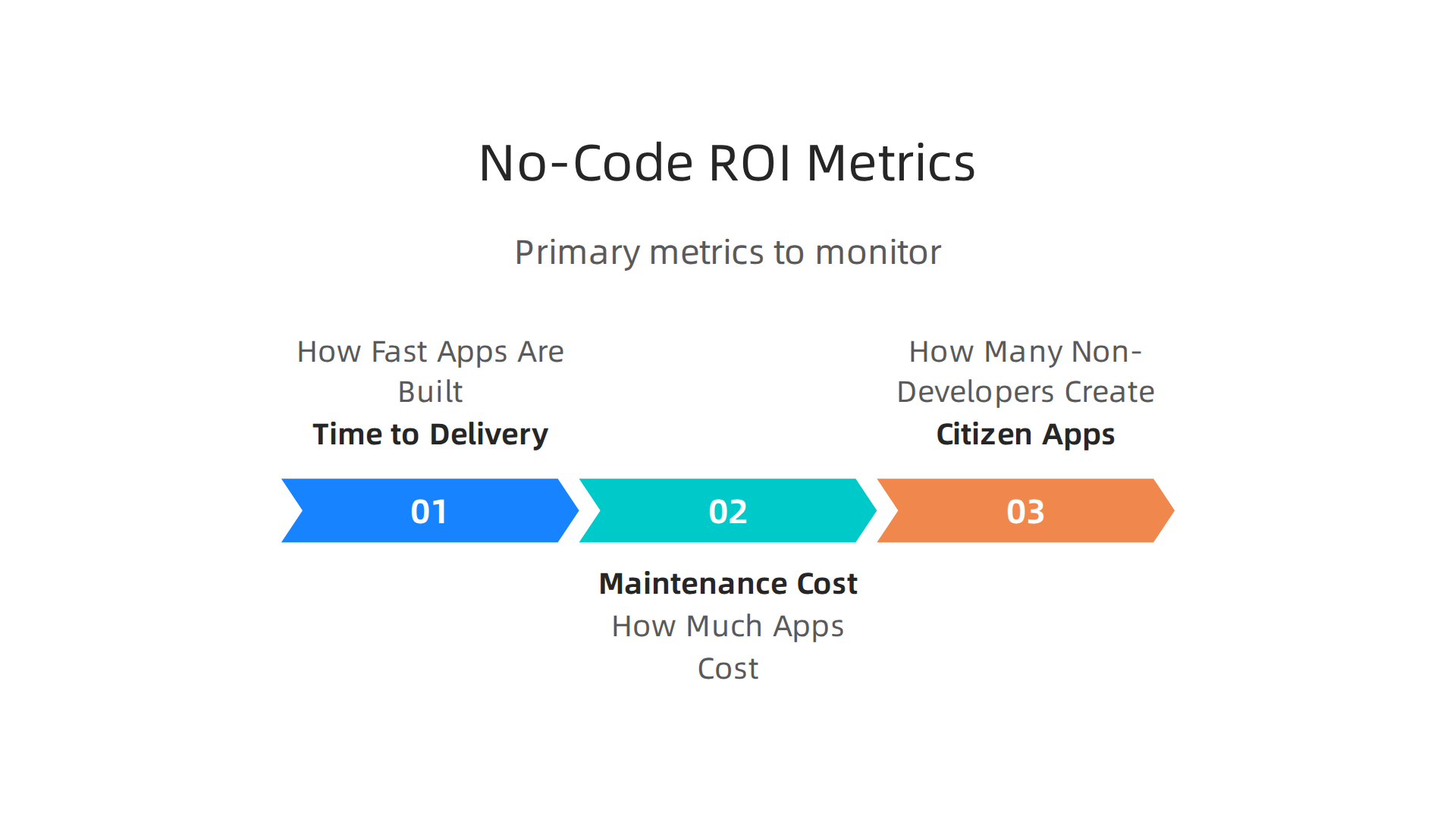
Here are some important things to watch:
-
How Fast Apps Are Built (Time-to-Delivery)
This metric looks at how long it takes to go from an idea for a new app to actually using it. No-code tools are known for being fast. For example, many companies see a 50% to 80% drop in how long it takes to build apps with these platforms No-Code Automation Trends 2026-2027: Enterprise …. This speed helps your team get solutions out much quicker. -
How Much Apps Cost to Keep Running (Maintenance Cost)
After an app is built, it needs care. No-code applications often cost less to maintain than apps built with traditional code. Some reports show that maintenance costs can be 40% lower for no-code applications, saving businesses a lot of money each year No-Code & Low-Code Statistics 2026 | 50+ Data Points & Insights. This is a big win for your budget. -
How Many Apps Non-Developers Create (Number of Citizen Apps Supported)
One of the best parts of no-code is letting people who aren’t trained developers build useful tools. We call these "citizen developers." Counting how many apps they create shows how much more work your whole company can do. When more people can build their own solutions, your engineering team can focus on bigger, more complex projects. To dive deeper into how this changes things, you might read about how building without code is transforming software development in 2026.
How to Measure These Things
Measuring these points is easier than you think:
- For Time-to-Delivery: Keep a simple log of when an app idea starts and when the finished app is ready for use. Compare this to how long similar projects took before no-code.
- For Maintenance Cost: Track the hours your IT or engineering team spends fixing or updating no-code apps versus coded ones. Also, look at software license costs related to each.
- For Citizen Apps: Simply count the number of new, useful applications that business users create on the no code application development platform each month or quarter.
A Simple Plan to See Your ROI
Want to know for sure if no-code is worth it for your company? Try this short plan:
- Pick a Pilot Project: Start small. Choose one department or a simple task that takes a lot of time now. For example, a form to collect internal feedback or a simple request system.
- Set Clear Goals: Before you start, decide what success looks like. Do you want to cut the time for a task in half? Reduce errors? Make 10 new internal tools?
- Track Everything: During the pilot, keep careful notes. Record how much time it took to build the app, who built it, and how much time it saves once it’s used.
- Compare Results: After a set time, look at your notes. Did you meet your goals? Is the new no-code app faster or cheaper than the old way? Studies show that companies often see a positive ROI from no-code tools in less than a year, with some getting returns in just weeks or months No-Code ROI Calculator: Calculate Year-1 Savings (2026).
- Talk to Users: Ask the people using the new app what they think. Is it easier? Does it solve their problem? Their feedback is very important.
By following this plan, you can clearly see the value that no-code app development platforms bring. This helps you decide where to use them next and how they can best help your business grow. If you’re looking for a more in-depth strategy, consider exploring this No-Code Development Platform Strategic Guide for Engineering Teams 2026.
After seeing how much no-code app development platforms can help your business today, it’s exciting to think about what comes next. The future of these computer software applications is changing fast, especially with new smart computer programs called AI.
Future trends: AI-assisted no-code, citizen developers, and where engineering fits in
In 2026, no-code is not just about building apps easily. It’s also about how AI makes these platforms even smarter and more powerful.
AI Makes No-Code Even Better
Think of AI as a helper that makes building apps without code even simpler. Generative AI is a special kind of AI that can create things, like text or images, just from simple instructions. Now, it’s being used to help build apps.
- Building Apps with Words: You might soon tell a no-code app development platform what you want in plain words, and the AI will start building it for you. This means apps could be made even faster than before. Experts say that by mid-2026, many no-code platforms already use AI features No-Code Tools in 2026: AI, Growth, & Citizen Developers – BuildEZ.ai.
- Smart Automation: AI also helps with automation. It can learn your tasks and suggest ways to make your no-code apps work even more smoothly. This mix of AI and no-code is changing how we build software, making it quicker and easier for everyone AI No-Code Automation Trends 2026: What Enterprises … – Kissflow.
More Citizen Developers, More Questions
We already talked about "citizen developers" who build apps without knowing how to code. With AI helping out, even more people will be able to create useful tools. This is great because it means more ideas can become reality. Gartner, a big research company, thinks that by the end of 2026, most new company apps will be built using no-code or low-code tools No-Code Transformations Usage Trends — 45 Statistics Every ….
But with more people building apps, new questions pop up:
- Who owns the app?
- Is the data safe?
- Does the app follow all the company rules?
These are "governance" questions. They are about making sure all the computer software applications built are secure, work well, and follow company guidelines. This is where engineering teams become very important. You can explore how AI is impacting software development in general by reading about the state of Generative AI in software development.
How Engineering Teams Fit In and Stay Ready
Even with no-code and AI, engineers are still super important. Their job changes, but it doesn’t go away.

Instead of writing every line of code, engineers can:
- Set the Rules: Engineers can create the safety rails and guidelines for using no-code app development platforms. They make sure the platforms are secure and that any apps built with them are safe.
- Build Strong Connections: Many no-code apps need to talk to other company systems. Engineers are needed to build these strong connections and integrations.
- Learn New Skills: Engineering teams need to learn how to work with AI-assisted no-code tools. This means understanding how AI works and how to manage the new kind of apps citizen developers create. It’s about leading the way in these new trends and helping the whole company use these tools safely and effectively. To stay ahead, engineers need to keep learning. You can learn more about applying AI in software development strategies for engineering teams.
The trend for 2026 is clear: AI makes governed no-code even faster The State of No-Code in 2026: Market Trends and What’s Next. This means that while no-code makes building apps easier for everyone, expert engineers are still key to making sure everything works safely and correctly for the whole business. They help strike a balance between making apps quickly and keeping everything secure and in order.
To keep up with all the big changes AI is bringing to software and technology, you might find a daily update helpful.
Get clear daily AI updates from The Deep View Newsletter.
Summary
This article explains why software teams must understand no-code and low-code platforms in 2026, when faster delivery and broader business participation are reshaping how apps get built. It defines no-code and low-code, compares their capabilities, and shows who actually uses them—from citizen developers and product managers to engineering teams—and how these groups collaborate. The piece gives a practical feature checklist and vendor framework for evaluating platforms, highlights critical security and governance requirements like access controls and audit trails, and outlines a governance model that balances speed with safety. It also shows how to measure ROI with simple metrics (time-to-delivery, maintenance cost, number of citizen apps) and recommends a pilot approach to prove value. Finally, the article looks ahead at AI-assisted no-code, governance questions that arise with more citizen developers, and how engineers should change roles to set rules, build integrations, and ensure safety.