

Why software teams should care about Chinese AI companies in 2026
Artificial intelligence, or AI, is changing how we do everything. It moves very fast. For software teams all over the world, it is super important to know about all the big players.

This includes understanding what is happening with chinese ai companies.
Actually, China’s AI market is growing very fast. Reports show that the market for large AI models in China was already quite big in 2025. By 2026, it is getting even bigger, especially with new AI tools that can do tasks, not just answer questions. Experts also predict that the bigger China artificial intelligence market will keep growing a lot, from around $14.57 billion in 2025 to much, much more by 2035 China Artificial Intelligence (AI) Market Size, Global Analysis. This huge growth means that software teams everywhere need to pay attention.
Chinese AI companies are not just staying in their own country. They are becoming very important on the global stage. Many of these hot ai developers are pushing the boundaries of what AI can do. For any engineering team wanting to stay ahead, knowing about these companies is a must. If you want to see a bigger picture, check out our guide on the top 10 AI companies defining 2026.
In this article, we will look closely at the world of chinese ai companies. You will learn about the main players in this field, like some of the biggest names in China that are making waves. We will also talk about how their technology might be different from what you see in other parts of the world. Understanding these differences, market changes, and even the possible risks is key. We will guide you on how to evaluate these companies and their tools, giving you a clear ai roadmap for using this knowledge.
To get daily, clear updates on AI and other tech news, make sure you don’t miss out.
The AI Newsletter Worth Reading
Now, let’s dive into some of the most important chinese ai companies that software teams should keep an eye on. These companies are making big moves and changing what AI can do. They are not just following others; they are creating new and exciting technology.
Top Chinese AI companies to watch (profiles and product focus)
In 2026, many hot ai companies from China are standing out. These firms focus on different areas of AI, from making smart chatbots to helping computers "see" and understand the world. Here’s a quick look at some key players and what they do:
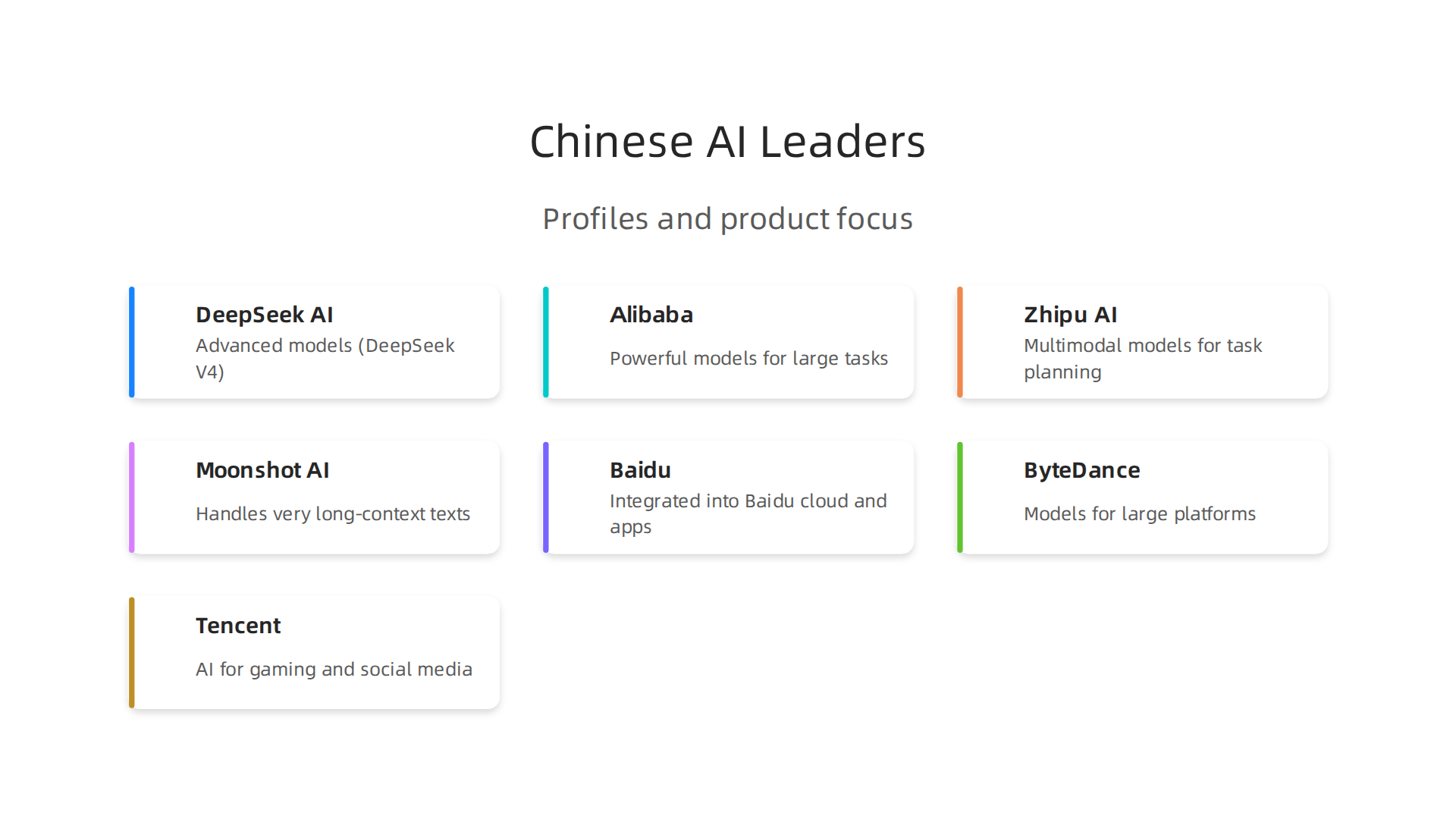
- DeepSeek AI: This company has made waves with its advanced AI models. For example, DeepSeek V4, released in April 2026, is a very powerful model that can handle a lot of information. These models are great for many tasks and show how Chinese companies are pushing the limits of AI capabilities Chinese AI Models 2026: The Agentic Revolution.
- Alibaba (Qwen series): Alibaba is a giant in tech, and its AI arm is no different. They have released powerful models like Qwen 3.8 and Qwen 3. These models are built for different needs, some for huge tasks and others for more regular uses Free Chinese AI Models: 2026 Guide & Global Impact.
- Zhipu AI (GLM series): Zhipu AI is known for its GLM models, like GLM 5.2. These models are often used for multimodal tasks, meaning they can work with different types of information like text and images. They are also known for being "agentic," which means they can plan and carry out tasks on their own.
- Moonshot AI (Kimi series): Moonshot AI, with models like Kimi K3, has quickly become a top player. Their Kimi models are known for being able to understand very long texts, which is a big help for many complex AI jobs Chinese AI has leveled up, and brought renewed focus on the open weight model shift. They are even challenging some of the biggest AI systems from other countries.
- Baidu (ERNIE series): Baidu is like Google in China, and its ERNIE AI models are very important. They are often built directly into Baidu’s own cloud services and apps, reaching many users.
- ByteDance (Doubao) and Tencent (Hunyuan): These are other big tech companies in China that have their own strong AI models. ByteDance, known for TikTok, and Tencent, a gaming and social media giant, use their AI to power their huge platforms.
What makes these ai development company firms different from Western ones? Often, Chinese AI companies focus on:
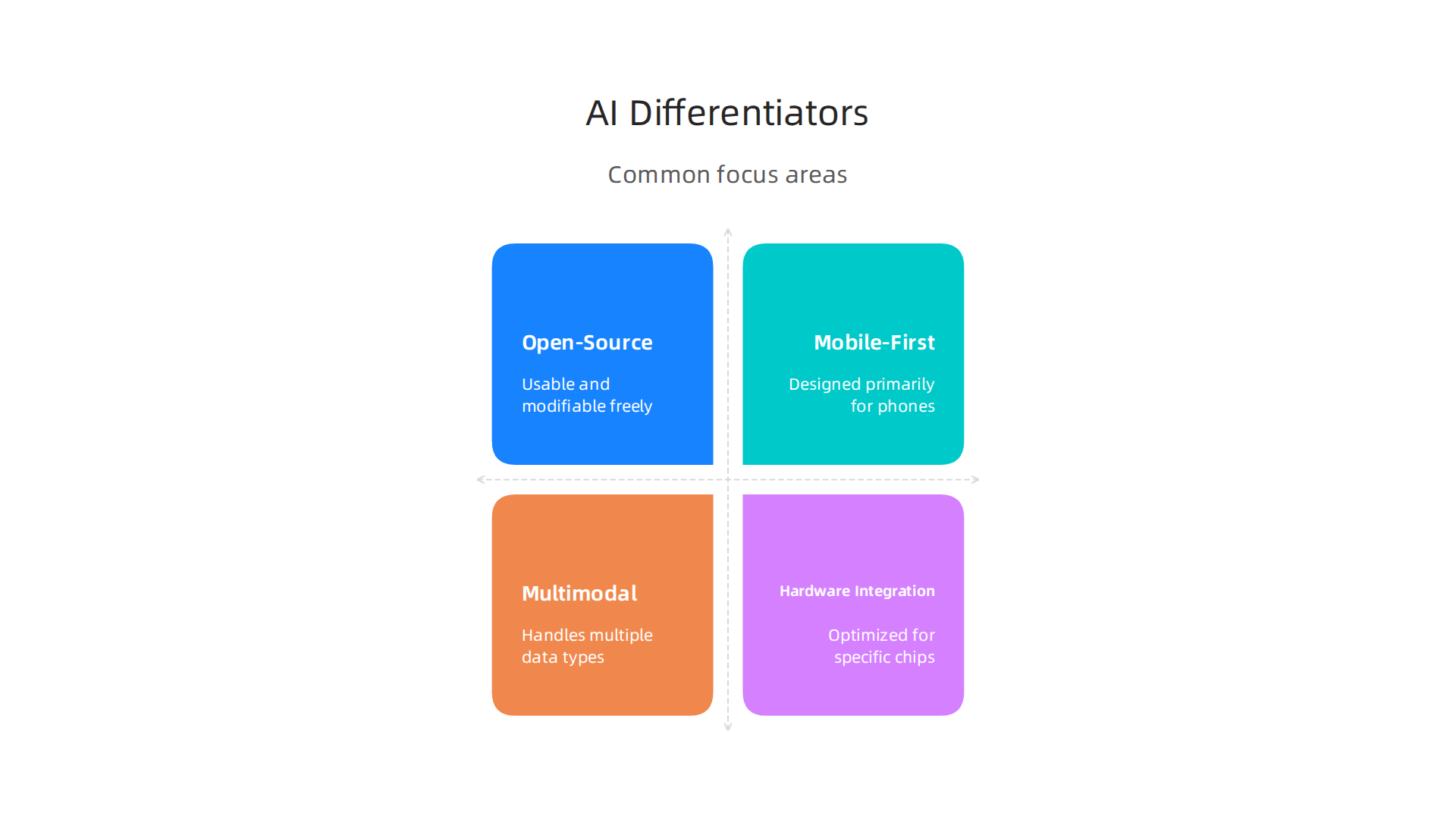
- Open-Source Models: Many Chinese companies, like DeepSeek, Alibaba, Zhipu AI, and Moonshot AI, offer their core models as open-source. This means other developers can use and change them freely, which helps spread their technology faster China’s Open AI Models Are Challenging Silicon Valley’s ….
- Mobile-First Design: China is a very mobile-focused country. So, many AI tools are built to work perfectly on phones and other mobile devices first.
- Multimodal Capabilities: These models are often good at understanding different kinds of data at the same time, like text, pictures, and sounds. This makes them very useful for complex real-world uses.
- Hardware Integration: Chinese firms often work closely on making sure their AI works well with specific computer chips and hardware, creating a complete system.
Understanding the strategies and strengths of these list of ai companies can help your team make smarter choices about developer tools and cloud platforms. For more insights on picking the right tech, check out our guide on Strategic Choices for Developer Tools and Cloud Platforms in 2026.
After looking at how Chinese AI companies are different from others, let’s see how big their market is and where they are growing around the world.
Market size, segments, and global reach: Where Chinese AI firms compete
In 2026, the artificial intelligence market in China is quite large, valued at about $1.78 billion and is expected to grow quickly to over $11 billion by 2031 [CHINA Artificial Intelligence (AI) Market (2026-2031)]. This growth is driven by things like new AI agents and more people using AI tools [China AI Large Language Models and Applications (Foundation …)]. Looking at the bigger picture, the entire AI market in China could reach a huge $327 billion by 2033 [China Artificial Intelligence Market Size & Outlook, 2033]. This shows a strong ai roadmap for the country.
Key Market Segments for Chinese AI
When we look at how this market is split, software is a big part, making up almost 45% of the AI market in 2026 [Artificial Intelligence (AI) Market | Global Report 2034]. Many AI services are offered through the cloud, which is also a main way AI is used today. This includes different areas like smart assistants, AI tools for businesses, and AI apps for everyday people [The 2026 China AI Landscape From Chat to Act, How AI Agents Will Change Everything!].
Another important area is AI chips. These are the special computer parts that make AI work. Chinese AI companies are making big steps here, with some like Huawei taking a large share of the market for high-end cloud AI chips in 2026 [China high-end AI accelerator market 2026: Localization trends, competitive landscape, and supply chain constraints]. This shows a clear focus on building strong infrastructure from the ground up.
Chinese AI Firms Expanding Globally
Chinese AI companies are not just focusing on their home market. They are looking to expand globally.

Many new Chinese AI startups aim for international markets from the very beginning. For example, a company called Tripo AI has almost all its users outside of China [CNBC’s China Connection newsletter: New AI players think global from day one]. Big companies like Huawei, Tencent, and Alibaba are also expanding their cloud services and AI technology to other countries [A Short Summary of Chinese AI Global Expansion].
You can see this global push in different areas. For instance, Chinese robotics firms are growing in places like Europe, the US, and Japan [Chinese robotics firms push for overseas growth through …]. Also, a company called CiDi is focusing on mining markets in Australia, Brazil, and Indonesia [Chinese AI companies expand service network at home …]. These moves show that many the top 10 AI companies defining 2026 are making their mark far beyond China. They often do this by partnering with local companies in different regions, using places like Singapore as key starting points for their global plans [WAIC fosters partnership for a better future]. This shows the strong ambition of these chinese ai companies to compete on a worldwide stage.
To stay on top of these fast-moving trends and learn more about artificial intelligence, consider checking out The AI Newsletter Worth Reading for daily updates.
Chinese AI companies are not just expanding globally; they are also building their own strong technologies to compete. This means looking at how their AI models are made, how they gather and use data, and the powerful computer systems they rely on. These technical choices are key to their success.
How Chinese AI Firms Build Their Models
Many Chinese AI companies are making a big mark with their AI models. For example, some of the top ones in 2026 include DeepSeek, Alibaba’s Qwen, Zhipu AI’s GLM, and Moonshot AI’s Kimi [Chinese AI models 2026: DeepSeek, Qwen, GLM and the rest of the top ones]. These models are getting very good at understanding language, working with different types of information like images and text (multimodal), and even writing code [Top Chinese AI Models in 2026: Capabilities, Use Cases, and …].
Actually, many Chinese AI labs have been releasing powerful open-source models. This means they share their models so others can use and improve them, which is a different way of doing things compared to some Western companies [China’s Open AI Models Are Challenging Silicon Valley’s …]. Companies like Alibaba, Baidu, Tencent, and ByteDance have already put these advanced models into their cloud services and apps that millions of people use every day [2026 Guide to Chinese AI Models – AI Search & SEO Specialist]. This makes them a hot AI development company in the global market.
Strong Infrastructure for AI Growth
For these powerful AI models to work, you need strong computer systems. Chinese AI firms are also focused on this. They design their own special chips that help AI run faster, as we mentioned earlier. This builds a strong base for their AI development with Lightning AI MLOps and ethical best practices.
They also work on big data centers and cloud services that can handle a lot of information and computing power. This whole setup, including the chips, data centers, and cloud platforms, helps these chinese ai companies grow and makes sure their AI roadmap stays on track for bigger and better things. Understanding these technical differences helps us see why they are becoming such important players in the AI world.
Chinese AI companies don’t just build amazing technology; they also have smart ways to make money and get funds. This helps them plan their future, or their AI roadmap, and decide how to offer their products to people.
How Chinese AI Companies Make Their Money
These companies earn money in a few key ways. One big way is through cloud services. They let other businesses use their powerful AI models and computer systems over the internet. This is a lot like how you might use online storage for your photos. In fact, services are a huge part of the overall AI market in China, which is expected to grow very big by 2033, reaching over 327 billion US dollars [China Artificial Intelligence Market Size & Outlook, 2033]. Many large Chinese tech companies offer these services, and the cloud is where most AI business happens in 2026 [Artificial Intelligence (AI) Market | Global Report 2034]. You can learn more about these kinds of services by checking out some cloud services examples compute storage and databases explained.
Another way they make money is by licensing their AI tools to other companies. This means businesses pay to use special AI software to help with their own tasks, like making customer service better or improving how they design things. It’s like working with a software services company for business growth. Some chinese ai companies also make money directly from consumers through apps that use AI, or by selling hardware like smart devices that have AI built-in.
Where Chinese AI Firms Get Their Funding
Getting money from investors is super important for these AI development company efforts. In the first three months of 2026, Chinese AI startups raised a lot of money, about $16.2 billion. This was a big jump from the year before [China AI Funding Triples to $16.2B in Q1 2026]. This funding helps them research new ideas and build even better AI.
Interestingly, this money comes from different places. While some investment comes from private companies, a lot also comes from government-backed funds. This mix of money sources helps guide what kinds of AI projects these companies work on, shaping their ai roadmap for years to come [China venture capital funding set to hit record in Q1 on state-led tech push]. This support helps many chinese ai companies become a truly hot AI player in the global market.
After gaining strong footing and support at home, many Chinese AI companies are now looking to grow their reach beyond China. They want to become global leaders in AI. This means they need smart plans for expanding into new countries, working with other businesses, and sometimes even buying other companies.
How Chinese AI Companies Expand Globally
Chinese AI companies use a few main ways to grow outside their home country. These include making alliances with other businesses, changing their products to fit local tastes, and sometimes buying other companies. Many of these AI development companies are thinking about international markets from the very start of their journey in 2026. For example, some AI startups in China see that most of their users are actually outside China and are already making plans to work with global partners [New AI players think global from day one]. This shows they have a truly global ai roadmap.
Partnerships Are Key
Working with local partners is a very common way for Chinese AI companies to enter new markets. It helps them understand what people in other countries need and how to best offer their products. These partnerships can be with many different kinds of businesses:
- Cloud providers: Teaming up with big cloud companies helps Chinese AI firms offer their powerful AI tools and services in more places. For instance, Tencent Cloud has partnered with airlines to help them use AI in their operations [A Short Summary of Chinese AI Global Expansion].
- Telecom companies: These partnerships help AI services reach many users through existing phone and internet networks.
- Local integrators: These are companies that help put different tech systems together. Working with them ensures the AI solutions fit well with what local businesses already use.
By making these strategic alliances, Chinese AI companies can share their cutting-edge technology and also learn from local experts. For example, a major AI conference in China is fostering international partnerships to build a better future with AI [WAIC fosters partnership for a better future]. In another instance, a mainland robotics firm is building an ecosystem in Hong Kong to forge hundreds of local partnerships, using the city as a starting point for global expansion [Mainland robotics firm to expand AI partnerships in HK]. This shows how important working together is for these companies.
Actually, winning in the global market depends a lot on building these kinds of partnerships in different places [China’s 2026 playbook]. Chinese robotics firms are also looking to grow overseas by using affordable technology and local partnerships to help bridge automation gaps in places like Europe, the US, and Japan [Chinese robotics firms push for overseas growth through local].
Localized Products and Acquisitions
Beyond partnerships, Chinese AI companies also work to make their products fit the needs of local customers. This might mean changing the language, cultural references, or even how the AI system solves problems specific to that region. They also look at ways to work with companies that already have specific AI models for certain industries [China’s AI race enters a new phase].
While buying other companies, known as mergers and acquisitions (M&A), is another way to grow, partnerships often come first. The main goal for many of these companies is to extend their AI products and services worldwide, tailoring advanced AI technologies for international use [The Best China AI Global Market Expansion Company of 2026].
Staying updated on the fast-changing world of AI is crucial, especially with so many hot AI players from China making big moves. Get clear daily AI updates and dive deeper into the latest developments by reading The AI Newsletter Worth Reading. You can also learn more about how engineering teams can evaluate technology services for growth by checking out this guide on how tech professionals evaluate for growth.
Expanding into new countries can be exciting, but it also brings many challenges.

For Chinese AI companies looking to grow globally, there are important rules, supply chain issues, and world politics that can make things tricky. These are big risks that can change how these companies operate and how other businesses view them.
Regulatory, supply chain, and geopolitical risks to consider
One of the biggest hurdles for Chinese AI companies is dealing with different country rules, especially about what technology can be shared or sold. These rules are called export controls. For example, in 2026, the United States has rules about sending advanced AI chips to China. This means that important parts needed to make powerful AI systems might be hard to get for some companies US says ban on AI chip shipments applies to Chinese firms …. There are ongoing discussions and changes to these policies, which can make it hard for businesses to plan ahead The New AI Chip Export Policy to China.
It’s not just the US with these rules. China is also thinking about putting its own export controls on its best AI models China Considers AI Model Export Controls. This means that even if a Chinese AI development company wants to share its amazing AI, it might not be able to easily do so in certain countries. These rules can really affect the global ai roadmap for many hot AI players. You can learn more about how tech professionals evaluate new services by reading about how engineering teams evaluate technology services to prevent failures.
Next, there are data governance rules. Every country has different laws about how companies should handle people’s personal information. This is very important for AI, as AI systems often use a lot of data. A Chinese AI company needs to make sure it follows all these different rules when operating in other countries, or it could face big problems. This makes it harder to create one AI product that works everywhere without changes. For cloud-based AI, ensuring cloud native SIEM elevates AI powered cloud security 2026 is vital for data safety.
Supply chain problems are also a big deal. Many Chinese AI companies rely on specific parts or technologies from other countries to build their AI systems. If these parts become hard to get because of trade disagreements or other issues, it can slow down or even stop their work. This makes it risky for other businesses to fully rely on a single ai development company if its supply chain isn’t stable.
Finally, geopolitics, which means how countries interact, plays a huge part. When big countries have disagreements, it can make businesses less likely to partner with companies from certain regions. This affects how Chinese AI companies find partners, buy needed tools, and how long-term customers trust them. Customers and partners want to know that the products they use will be available and supported for many years, no matter what happens between governments.
Practical guide: How engineering teams should evaluate Chinese AI offerings
Even with all the challenges we just talked about, Chinese AI companies are still making big strides in the world of AI. Many of them are releasing powerful new models in 2026 that truly challenge traditional leaders China’s Open AI Models Are Challenging Silicon Valley’s …. This means engineering teams need a clear way to look at these offerings.

It’s not just about finding a hot AI solution; it’s about choosing wisely for the long run. So, how should your team approach evaluating these options from a Chinese AI development company?
When thinking about bringing in services from any new provider, especially a Chinese AI development company, engineering teams should look at a few key things. This helps make sure you get a good tool and avoid problems later.
Key Evaluation Criteria
First, consider the technical side. Are the AI models truly strong? In 2026, Chinese AI models have shown they are top competitors, not just cheaper options Top Chinese AI Models in 2026: Capabilities, Use Cases, and …. Companies like Alibaba with Qwen, Zhipu AI with GLM, and Moonshot AI with Kimi K3 are some of the names on the list of AI companies making waves Chinese AI Labs in 2026 — A Deep Dive into DeepSeek, Qwen …. You should check their benchmarks, how well they understand language, and if they can do different tasks like coding or making images. Many of these companies even offer open-source models, which can be a big plus for flexibility.
Next, don’t forget the legal and compliance parts we talked about before. Does the company respect data rules in your country? Are their export policies clear? Operationally, think about how easy it is to use their AI tools, how good their support is, and if their documents are easy to understand. Also, compare costs carefully. Sometimes, a lower price might come with hidden challenges related to rules or support. You can also read more about how to pick the right software development company in 2026.
Finally, check how stable the AI development company is. Do they have a clear AI roadmap for their products? Are they likely to be around for years? Many Chinese AI companies have integrated their models into large cloud platforms and enterprise tools 2026 Guide to Chinese AI Models.
To make a good choice, here is a simple checklist:
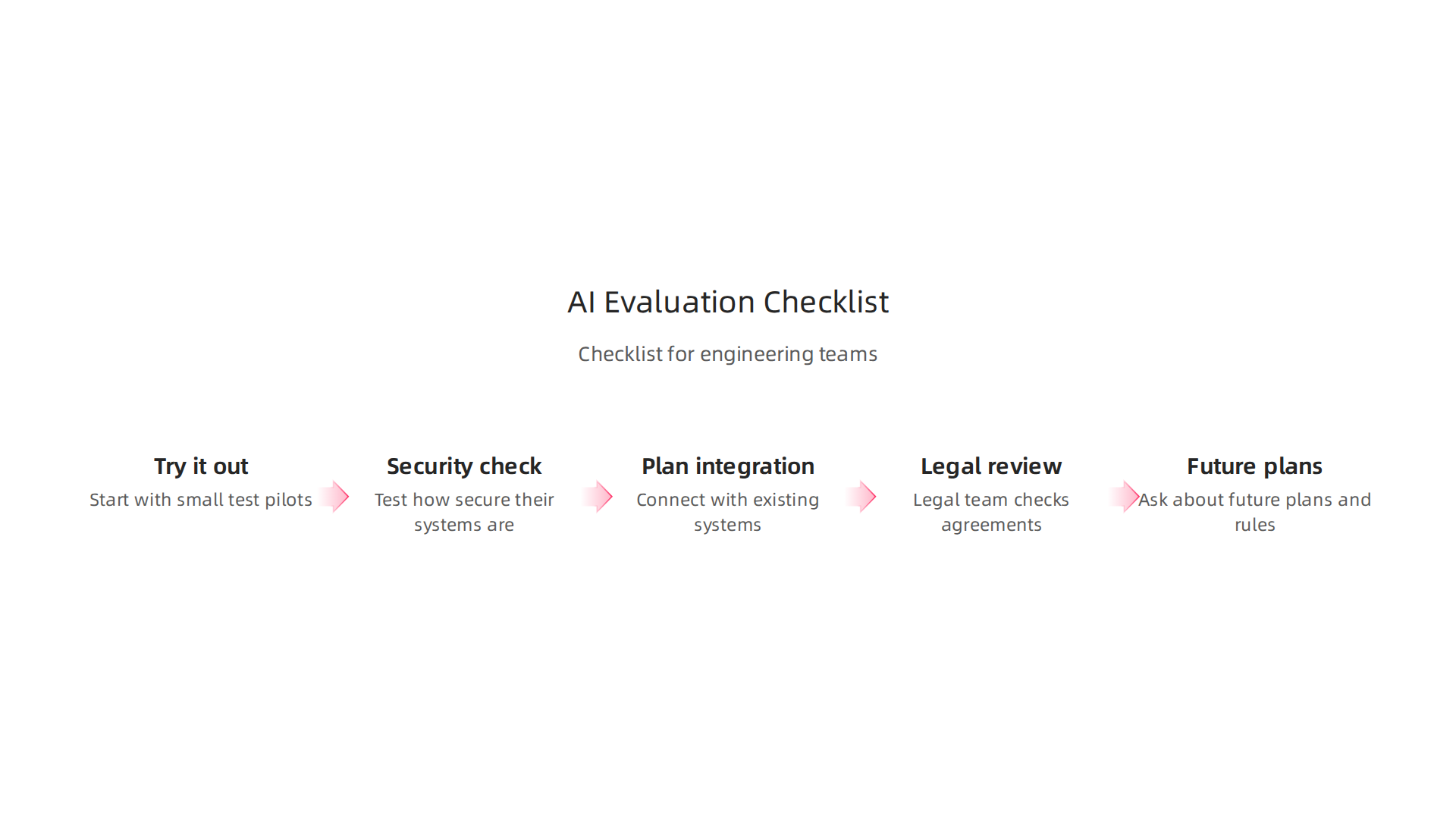
- Try it out: Start with small test projects or pilots. This helps you understand how to evaluate and integrate generative AI platforms for developer teams into your work.
- Security check: Test how secure their systems are, especially with your data.
- Plan for integration: Figure out how their AI will connect with your existing systems and workflows.
- Legal review: Have your legal team check all agreements and rules that apply to their technology in your region.
- Future plans: Ask about their future plans and how they deal with new rules or changes in the global tech landscape.
Staying on top of these fast-changing AI trends is key for any engineering professional. Get daily updates and deeper insights into AI and broader technology developments. The AI Newsletter Worth Reading
Summary
This article explains why software teams need to follow Chinese AI companies in 2026 and how those firms are reshaping the global AI landscape. It profiles leading players (DeepSeek, Alibaba Qwen, Zhipu GLM, Moonshot Kimi, Baidu, ByteDance, Tencent), highlights how Chinese models often emphasize open-source releases, mobile-first design, multimodal capabilities, and tight hardware integration, and summarizes market size and growth forecasts. The piece walks through business models, funding trends, and how many Chinese startups are already global or global-minded, then outlines the regulatory, supply-chain, and geopolitical risks that can affect adoption. Most practically, it gives engineering teams a clear evaluation framework—technical benchmarks, pilots, security testing, legal review, integration planning, and questions about vendor stability—to decide when and how to adopt Chinese AI offerings. After reading, teams will be able to identify key vendors, weigh risks versus rewards, run safe pilots, and choose the right cloud and developer-tool strategies for long-term use.