
Why foundational engineering principles matter now — and what "compound engineering" could mean for your team
In 2026, it feels like new technology pops up every day. There’s so much information to keep track of, from new AI tools to different ways of building software. It can be really hard for engineers, managers, and leaders to know what truly matters and what will last.

This rush of new ideas can make things feel messy and complicated for teams.
But here’s the thing: when technology changes fast, the basic rules of how we build things become even more important. These core ideas help us make smart choices and build strong systems that won’t break easily.
This is where a new way of thinking called compound engineering comes in handy. Think of it like this: every piece of work you do, every solution you find, should make the next piece of work easier and faster. It’s about building knowledge and tools that grow over time, making your team more productive with each task finished. One expert describes compound engineering as a way where each completed task acts like an investment, speeding up future tasks by 300-700%
Compound Engineering – The Complete Guide to 300-700 …. Another view is that it’s a way to make sure each unit of work helps make future work easier, creating a system of knowledge that builds up over time Compound Engineering Philosophy. This focus on building for the future adds a lot of value to every project.
This approach isn’t just about coding; it’s about how entire teams learn and grow. It helps create a system where skills and solutions layer on top of each other. This guide will show engineers, managers, and leaders practical, evidence-backed ways to use these important ideas.

You’ll learn how to get more done and build stronger systems for your team.
Staying on top of all the new tech, especially with AI, is a big job. To help your team handle the changing world of software, you might want to explore Clever AI Engineering Tools Maximize Developer Productivity in 2026.
To make sure you’re always getting the clearest updates on AI and other tech changes, consider signing up for a specialized newsletter.
Get clear daily AI updates from The Deep View Newsletter. The AI Newsletter Worth Reading
Core engineering principles that persist across eras
The idea of "compound engineering" helps teams build things that get better over time. But for this to work, we need to lean on old, strong ideas that don’t change much, even when technology does. These are called core engineering principles, and they are like the sturdy beams in a house. They make sure everything stays up, no matter how much you change the paint or furniture. In 2026, these basic rules are more important than ever because they help engineers, managers, and leaders make smart choices that last.
These foundational principles have been around for a long time and are mentioned in important guides like the "SoftwareEng Complete 2026" document SoftwareEng Complete 2026 | PDF and the "Software Engineering Body of Knowledge (SWEBOK)" Software Engineering Body of Knowledge (SWEBOK). Let’s look at a few key ones:
-
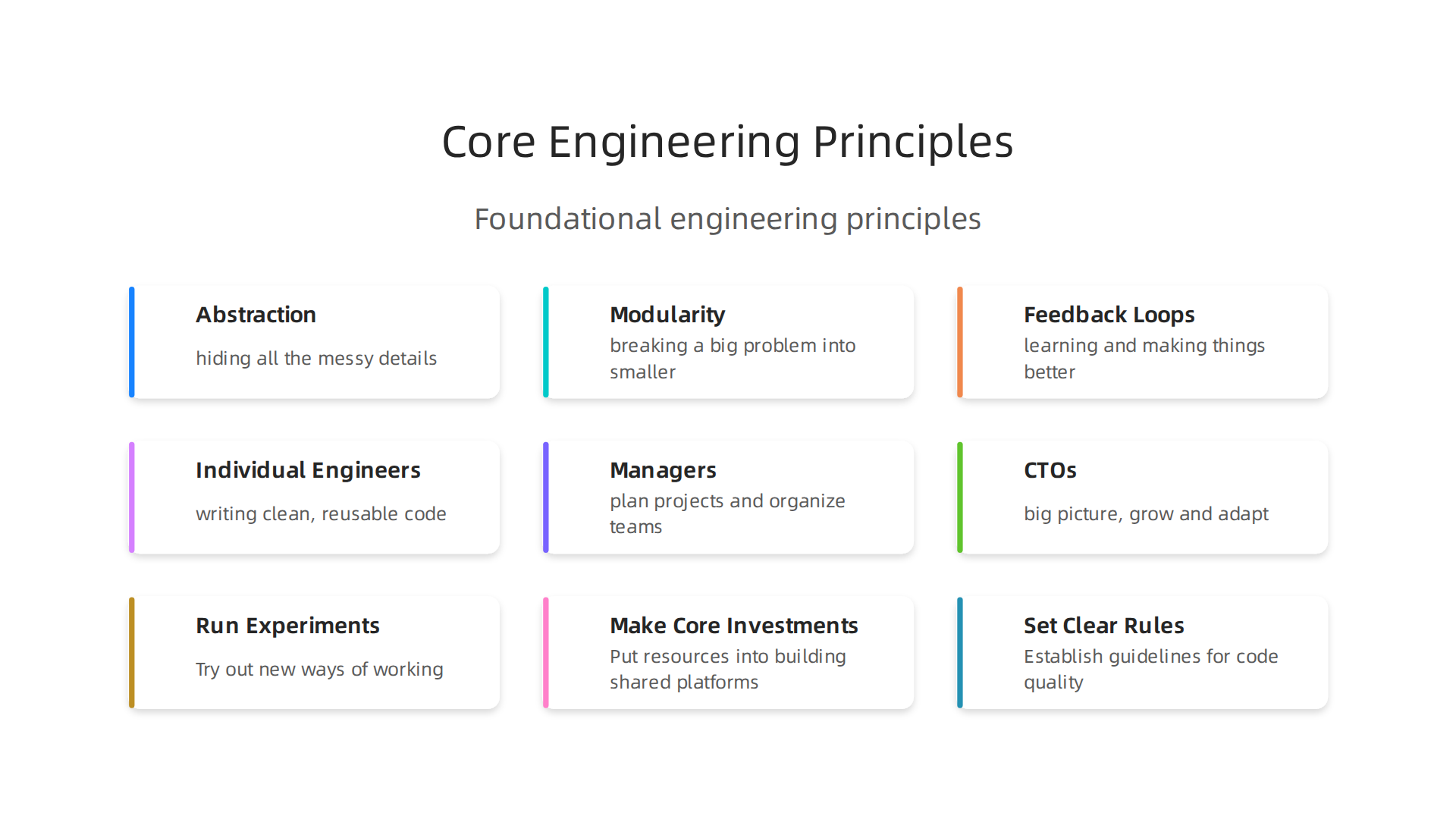
Abstraction: Imagine you use a remote control for your TV. You press "volume up," and the volume goes up. You don’t need to know exactly how the TV makes the sound louder inside. That’s abstraction! It means hiding all the messy details and only showing what you need to know to use something. This makes systems easier to understand and work with. Teams can build complex systems by focusing on what each part does instead of how it does it. This is a huge part of good software design.
-
Modularity: Think of building with LEGO blocks. Each block is a small, complete piece. You can take one block out and put a different one in, and the rest of your creation still works. Modularity means breaking a big problem into smaller, independent parts. Each part does one job really well. This makes it easier to fix problems, update parts, or even reuse parts in new projects without affecting the whole system. When you practice value engineering, making sure each piece adds worth, modularity helps a lot.
-
Feedback Loops: This is about learning and making things better as you go. Imagine you’re throwing a ball. You throw it, see where it lands, and then adjust your aim for the next throw. In engineering, it means constantly checking how well your system is working, getting information back, and then using that information to improve it. This could be through tests, user comments, or automatic reports. Strong feedback loops help teams quickly find and fix issues, making the system stronger over time.
These principles work together to build long-term leverage. When you use abstraction, modularity, and feedback loops, each new piece of work or improvement builds on the last, creating that powerful "compound engineering" effect. It’s like stacking strong building blocks; the more you stack, the higher and more stable your structure becomes.
These ideas are useful for everyone on an engineering team.
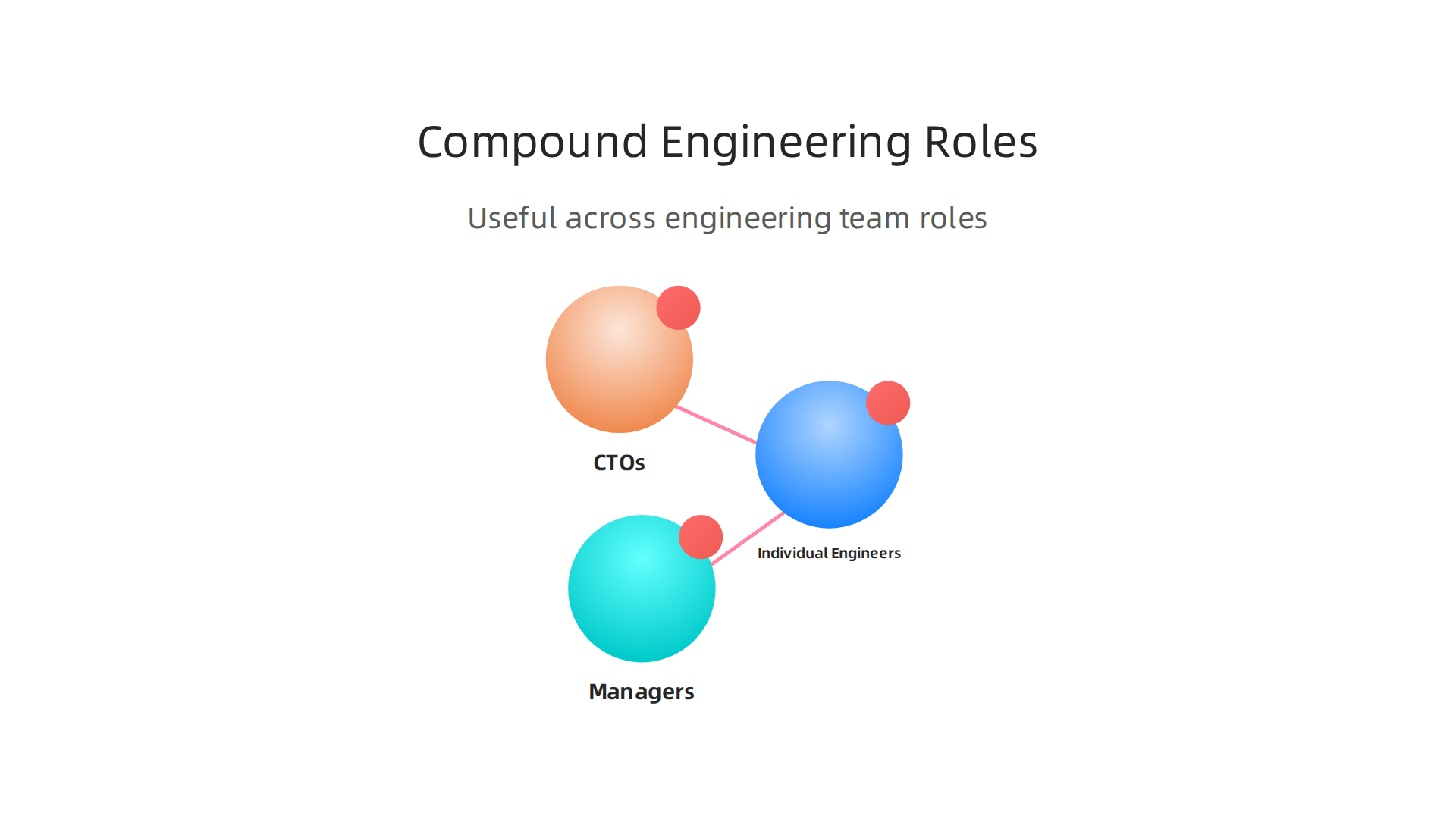
- Individual Engineers: An individual contributor (IC) uses these principles every day when writing code. They make sure their code is clean, reusable, and easy for others to understand. This helps create a smooth developer experience.
- Managers: Managers use these principles to plan projects and organize teams. They ensure that different parts of a big project can be worked on at the same time without stepping on each other’s toes. They also make sure there are ways to get feedback and improve.
- CTOs: Chief Technology Officers use these principles for the big picture. They think about how all the systems in a company fit together and how they can be set up to grow and adapt for years to come. These foundational ideas are taught in many ways, from those pursuing online certifications for software engineering to those preparing for modern best ICS courses.
By focusing on these core principles, teams can build robust systems that are easy to maintain and grow. This means less wasted effort and more time spent on creating new, exciting things, which is the heart of compound engineering.
Defining "compound engineering": a practical working model
Building on those strong principles, "compound engineering" is a smart way to work where every piece of effort you put in today makes your work easier tomorrow. Think of it like investing money: a little bit of growth now helps you grow even more later. In engineering, this means that finishing a task or solving a problem should not just get that one thing done. It should also create something valuable that helps with future tasks. This could be new knowledge, a reusable tool, or a better process that makes the next job faster and simpler.
The core idea is that each unit of engineering work should make the next one easier, not harder, creating a knowledge system that helps your team get better over time. This approach can even lead to huge boosts in how much work teams can get done, sometimes making future tasks much faster to build than past ones Compound Engineering Philosophy. It’s about building things so that skills, team processes, and the system itself all get better with each new effort.
It’s helpful to see how compound engineering is different from other important ideas:
- Systems Thinking: This is about seeing the whole picture and how everything connects. Compound engineering uses systems thinking to make sure that small changes today help the whole system grow stronger in the long run.
- Platform Engineering: This focuses on building special tools and services that other engineering teams can use. Compound engineering says that building these platforms in a smart way, so they constantly improve and make work easier for others, is key to its success.
- Site Reliability Engineering (SRE): SRE is all about making sure systems are reliable and stay working. Compound engineering helps SRE teams by making every fix or improvement create better ways to prevent problems later.
Let’s look at some examples of how this compounding effect works:
- In Your Codebase: Imagine you write a piece of code that does a common task, like saving information to a database. If you build this code well, making it easy to reuse, then every time someone needs to save data in the future, they don’t have to write it from scratch. They just use your existing code. This saves time and effort, making the codebase grow in a way that speeds up new work. It adds value, which is a great example of value engineering.
- In System Architecture: When engineers design how different parts of a system talk to each other, they can choose to use standard ways that are well-understood. For example, creating a clear "front door" for different services means that adding a new service is much simpler because everyone knows how to connect to it. This consistent design helps future growth.
- At the Team Level: When a team learns how to solve a tricky problem, they don’t just fix it. They also write down how they solved it, create a new checklist, or build a small tool to prevent it from happening again. This shared knowledge and these new tools, like clever AI engineering tools, make the team smarter and faster for the next challenge. Every step builds on the last, accelerating developer productivity.
In essence, compound engineering means always asking: "How can this work make the next work better?" It’s a continuous loop of learning, building, and improving that leads to faster progress and stronger results over time.
Learning and building in a smart way, where each effort helps the next, is not just good for a company’s projects. It’s also great for the people doing the work. This idea of compound engineering shapes how people grow in their careers and what skills are most important in today’s job market.

How Traditional Roles Change with Compound Engineering
When you bring the idea of compound engineering into different jobs, they take on new meaning and value.
- Individual Contributor (IC): If you are a software engineer who writes code, thinking with a compound mindset means you don’t just solve the problem at hand. You also think about how to make your solution reusable for future tasks. This could mean writing clear documentation, creating helpful templates, or building shared tools. This approach boosts your work and the team’s as well. In 2026, skills like AI, machine learning, and cloud computing are highly sought after, as shown in reports about Software Engineer Skills Companies Want in 2026.
- Site Reliability Engineer (SRE): SREs make sure systems run smoothly. With compound engineering, an SRE doesn’t just fix a problem. They learn from it and build tools or processes to stop similar problems from happening again. This makes the system stronger over time and reduces future headaches.
- Platform Engineer: These engineers build the tools and services that other engineering teams use. Their role is perfectly set up for compound engineering. By creating platforms that are easy to use and improve, they make every other team more productive. Studies show that by the end of 2026, 80% of large software organizations are expected to have dedicated platform engineering teams, highlighting its importance in the industry Platform Engineering Hits 80% Adoption in 2026.
- Engineering Manager: Managers play a big part by encouraging their teams to work in a compound way. This means celebrating shared learning, giving time for tool-building, and making sure knowledge is easily found. They help their teams focus on both getting work done and making future work better.
- CTO (Chief Technology Officer): At the top, a CTO sets the overall technical direction. They champion compound engineering by choosing technologies and strategies that allow for continuous growth and reuse. They ensure the company builds a strong technical base that keeps improving. In 2026, CTOs are increasingly focused on integrating AI into their core engineering strategies, seeing it as a key for future success The AI CTO’s Radar 2026.
New Skills and Career Paths
The focus on compound engineering is changing what skills are most valued. Engineers who can not only build but also create reusable solutions are highly prized. This includes strong problem-solving skills, good communication, and the ability to think ahead. Learning about software developer skills 2026 can help you see where to focus.
The idea of "value engineering" becomes very important here. It’s about getting the most value from every effort. Roles that focus on data, like certain informatics jobs, are also growing because they help teams understand how their past efforts are paying off and where to improve next. Keeping up with the latest trends and tools, especially in AI, is crucial for growth in these fields.
Want to stay ahead in the fast-moving world of tech?
The AI Newsletter Worth Reading
Hiring and Growing Talent for Compounding Skills
For companies looking to hire, it means looking beyond just technical skills. They also want to find people who naturally think about long-term value and reusability. When interviewing, questions might focus on how a candidate has made their past work easier for others or set up future success.
For existing employees, companies should offer ways to learn and grow. This could be through internal training, mentorship, or even supporting further education, like getting an online certifications for software engineering. Helping engineers build these compounding skills is an investment that pays off for both the individual and the company. The demand for tech talent remains high, with roles like software developers, data scientists, and cybersecurity analysts showing significant growth through 2034 Industry and occupational employment projections overview.
Embracing compound engineering helps individuals advance their careers by making them more valuable assets to any team. It encourages a proactive mindset where every task completed also strengthens the foundation for future work.
To truly embrace compound engineering and boost your career, you need to think carefully about how you learn and what skills you build. It’s not just about what you know right now, but what knowledge will help you grow over many years.
Prioritize Lasting Knowledge Over Quick Fixes
When learning, it’s smart to focus on foundational knowledge. Think of this as the strong roots of a tree. This includes things like how computers work, how to organize data, and how to design big systems. These basic ideas don’t change much, even as new tools come and go.
Then there are "transient" skills. These are like the leaves of a tree, which change with the seasons. This could be knowing a specific version of a coding tool or a trendy new software framework. While these are useful for getting work done today, they might not be as helpful in a few years. For long-term growth and true compound engineering, putting more effort into lasting knowledge gives you more "value engineering," meaning you get more out of every learning step. In fact, many tech jobs, including those for data scientists and software developers, are expected to keep growing strong, as highlighted in the State of the Tech Workforce 2026.
Build a Smart Learning Plan
For individual contributors (ICs), a good learning roadmap might include working on projects that let you create reusable pieces of code or tools. Seek out mentors who can share their deep knowledge and help you see the bigger picture. Moving between different teams or roles within your company can also help you learn new skills that build on each other.
Managers also need a plan. They should learn how to support their teams in building shared tools and processes, not just pushing for quick project finishes. Making time for team members to learn and share knowledge is key. Sometimes, formal education can also give you a strong base. For example, considering options like an electrical engineering degree online or exploring other best computer courses 2026 for software engineers can set you up for long-term success.
Using Modern Tools, Including AI, Wisely
Modern tools, especially those powered by AI, can definitely speed up certain tasks. They can help write code faster or automate simple jobs. However, it’s important to use them wisely. Studies in 2026 have shown that while many developers feel they are working faster with AI coding tools, their actual productivity for complex tasks may not always increase. One study even found that experienced developers using AI tools were 19% slower to reach a correct solution, despite thinking they were 20% faster AI Coding Tools: 19% Slower, Think 20% Faster (METR 2026).
This means we should use AI tools to help us learn and improve our core skills, not to replace them. For example, you can use AI to understand new code faster or to get ideas for solutions, then build on that understanding yourself. You can also explore 8 Notes AI Tools for Developers in 2026 to see how they can support your growth. The goal is to make AI a helper in your compound learning journey, not a shortcut that bypasses real understanding.
Ultimately, building compounding capabilities means you are always learning and making your work better for the future. Roles in areas like informatics jobs, which focus on understanding data to drive improvement, also show how valuable this mindset is in 2026. Keep learning those foundational skills, plan your growth, and use modern tools to truly amplify your efforts over time.
Just like individuals can make their knowledge grow over time, teams can also build systems and ways of working that get better and better.

This is the heart of team-level compound engineering. When a whole team thinks about how their work can create lasting value, it leads to big gains down the road.
Process Patterns That Build Up Over Time
One way to do this is by setting up smart processes. For example, using modular APIs means building software parts that can be used again and again. It’s like having a set of universal connectors that fit many different devices. This helps speed up new projects because you don’t have to build everything from scratch each time. Good software design is outlined in many guides, like the Software Engineering Body of Knowledge (SWEBOK), which helps teams build things right from the start. Also, creating feedback loops helps teams learn quickly. When teams regularly check how things are going and what can be improved, they naturally get better with each new task. This ongoing learning adds up over time.
Investing in automation is another key part of compound engineering. If a task takes a lot of time and happens often, making a computer do it instead of a person frees up that person to work on harder problems. This means every time you automate something, you save time in the future, allowing your team to focus on more complex tasks and innovation. These process patterns help teams pick the best way to build things, like choosing the right software development life cycles for their projects.
How Teams Are Set Up for Growth
Beyond just processes, how a team is set up also matters a lot. This involves organizational practices. Think about team topology. This is how teams are shaped and how they work together. Teams that have clear goals and work well together tend to be more productive. Giving teams clear ownership of their projects and code helps build a sense of responsibility and leads to better quality. When someone feels truly in charge, they are more likely to make things excellent and lasting.
Another big part is having clear career ladders. These show how people can grow in their jobs, learn new skills, and move up. When a company helps its engineers grow, those engineers bring more and more value back to the company over time. It’s a continuous circle of growth and return. Learning about engineering technology trends 2026 helps teams and individuals plan this growth effectively.
Measuring What Matters
To truly see if your compound engineering efforts are working, you need to measure them. It’s helpful to look at two types of measures: leading indicators and lagging metrics. Leading indicators are things you can track now that tell you if you’re on the right path. For example, how often code is reused, or how quickly new features are added without breaking old ones. Lagging metrics tell you what has already happened, like the total number of bugs found last month. Both are important, but leading indicators help you make changes sooner.
One big thing that can slow down compounding growth is technical debt. This is like putting off needed repairs on a house. If you don’t fix it, the problem gets bigger and harder to solve later. For software teams, technical debt means older code that is hard to change or understand. Keeping this debt low is super important for long-term productivity. In 2026, studies highlight that factors like code quality and technical debt are strongly linked to how productive developers are. For example, some studies point out that code quality is key to developer productivity, making it easier to maintain and build upon existing systems.
By focusing on these areas in team processes and architecture, organizations can create an environment where small improvements consistently add up to huge long-term success. It’s about building a system that keeps giving back, growing stronger with every good choice.
Looking ahead, companies need to think about big changes coming in 2026 to keep getting those compound gains. This means smart plans and thinking about what’s next for technology.
Strategy and future trends: preparing organizations for compound gains
In 2026, some big forces are changing how we get compound gains from our engineering work. These include new AI tools, the idea of "platform thinking," and money matters. Leaders like Chief Technology Officers (CTOs) and engineering managers must plan carefully to make sure their teams grow stronger over time.
How AI and New Thinking Change Everything
Artificial intelligence (AI) is a game-changer. Many teams are using AI tools to help write code. In 2026, many developers report using AI tools, but how much they help with speed is still being studied. Some reports show that while developers feel faster, their actual speed might only go up a little bit, around 10% AI Coding Tools and Developer Productivity: What the Data Says. Other studies even found that some experienced developers might be slower when using AI tools, taking about 19% longer on tasks AI Coding Tools: 19% Slower, Think 20% Faster (METR 2026). This means that just having AI tools isn’t enough; teams need a smart strategy to truly benefit and increase developer productivity. To learn more about how AI helps, check out clever AI engineering tools maximize developer productivity in 2026.
Another big idea is "platform thinking." This means building special internal systems and tools that all your other engineering teams can use. It’s like having a shared factory inside your company that makes it easier for everyone to build new things faster. This approach builds a lot of value because teams don’t have to rebuild common parts. Experts say that by the end of 2026, most large software companies, about 80%, will have dedicated platform engineering teams because it’s so important Platform Engineering Becomes Mandatory in 2026. These platforms are also key for using AI well; companies with more mature platforms are better at making AI successful Perforce’s 2026 Platform Engineering Report Finds Platform Maturity is Critical for AI Success. This shows how platform engineering supports compound engineering.
Economic pressures also make compound gains more important. When money is tight, companies need to make every effort count. Investing in things that keep giving back, like good platform tools, is a form of value engineering that helps companies do more with less.
Guidance for Leaders
For CTOs and engineering managers, planning for compound growth means focusing on a few key areas:
- Choose Wisely (Prioritization): Decide which projects will not just deliver a quick win but also make future work easier. Think about what will serve many teams or projects down the road.
- Spend Smart (Budgeting): Instead of only funding projects that finish fast, put money into foundational work. This means investing in tools, systems, and shared resources that build up value over time, even if the payoff isn’t immediate.
- Make Long-Term Tech Bets (Architectural Decisions): Choose technologies and system designs that can grow and change with your company. This prevents having to throw things out and start over later. Consider how different technologies fit into your overall plan. Many strategic choices for developer tools and cloud platforms in 2026 can help here.
- Grow Your People: Support your engineers in learning new skills, whether it’s understanding how to apply AI in software development or pursuing diverse career paths like informatics jobs.
A Quick Checklist for Growth
Here’s a simple checklist to help foster compounding effects in your organization:
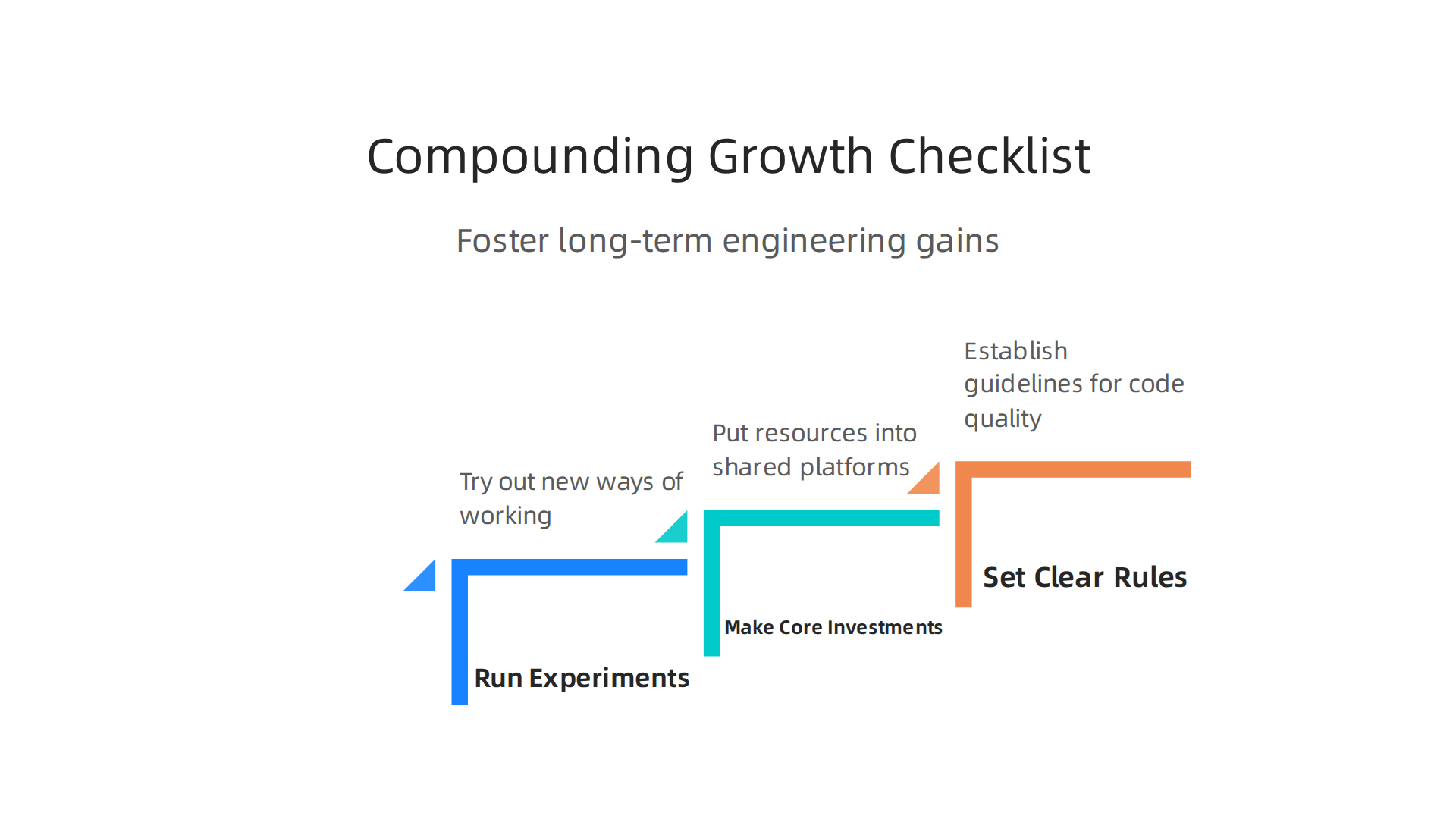
- Run Experiments: Try out new ways of working and new tools, especially AI tools. See what truly helps your team’s productivity before committing widely.
- Make Core Investments: Put resources into building and maintaining shared platforms and automated systems.
- Set Clear Rules (Governance): Establish guidelines for code quality, how to reuse existing parts, and how to keep technical debt low. This ensures that every new piece of work makes the system stronger, not weaker.
Staying informed about these fast-moving trends is essential for any engineering leader.
Get clear daily AI updates from The Deep View Newsletter.
The AI Newsletter Worth Reading
Summary
This article explains the idea of compound engineering: a working model where each piece of work deliberately makes future work faster and easier. It reviews timeless engineering principles—abstraction, modularity, and feedback loops—and shows how they create long-term leverage when combined with reuse, automation, and platform thinking. The guide covers how compound thinking changes traditional roles from individual contributors to CTOs, what skills and hiring practices to prioritize, and how teams should design processes and measures to sustain growth. It also discusses how to adopt modern tools, including AI, without losing foundational knowledge and warns about technical debt. Readers will learn practical steps to start building reusable assets, set team-level practices, measure progress, and make strategic investments that produce compounding returns over time.