Why "clever ai" matters for engineering teams now
In 2026, folks in engineering teams face a big problem. There’s a lot of new information coming out every single day. Technology also changes very, very fast. It can feel like trying to drink water from a fire hose. All this makes it tough for engineers to get their work done quickly and make the best choices. This often leads to things slowing down and projects taking longer.
That’s where "clever AI" comes in. Think of clever AI as smart helpers that are made just for people who build software and systems. These are special engineering tools and ways of working that use artificial intelligence. They are designed to make engineers much more productive and help them make smarter decisions.
Clever AI isn’t just about using any AI; it’s about using the right AI tools in the right way to fix real problems. It helps engineering teams by cutting down on repetitive tasks and giving them quick answers. This means engineers can focus on the more interesting engineering challenges, instead of getting stuck in daily chores. Getting these new AI tools into how teams work is key for companies today, as many guides on AI Change Management in 2026 explain. It helps them keep up with how fast the tech world is moving.
By using clever AI, teams can find the best new ways to work. This makes projects run smoother and helps everyone on the team do their best work. It’s truly about giving engineers super powers to build better things, faster.

Want to stay sharp on the latest in AI and tech? Get clear daily AI updates from The AI Newsletter Worth Reading.
Defining "Clever AI": What Distinguishes Productive AI for Developers
When we talk about clever AI for engineering teams, it’s important to know what makes it different from other kinds of AI. Many tools today say they use AI, but "clever AI" is special. It’s built to really help people who create software and systems every day. It’s not just about flashy new tech; it’s about smart tools that truly make an engineer’s work easier and faster.

Think of it this way: generic AI might help you write an email or plan a trip. But clever AI is like a co-pilot who understands all the tricky parts of coding and building. It knows about your specific project and helps you avoid mistakes. This type of AI is focused on making engineers more productive and helping them solve truly [interesting engineering] problems.
What makes an AI tool truly "clever" for developers? Here are the most important things:
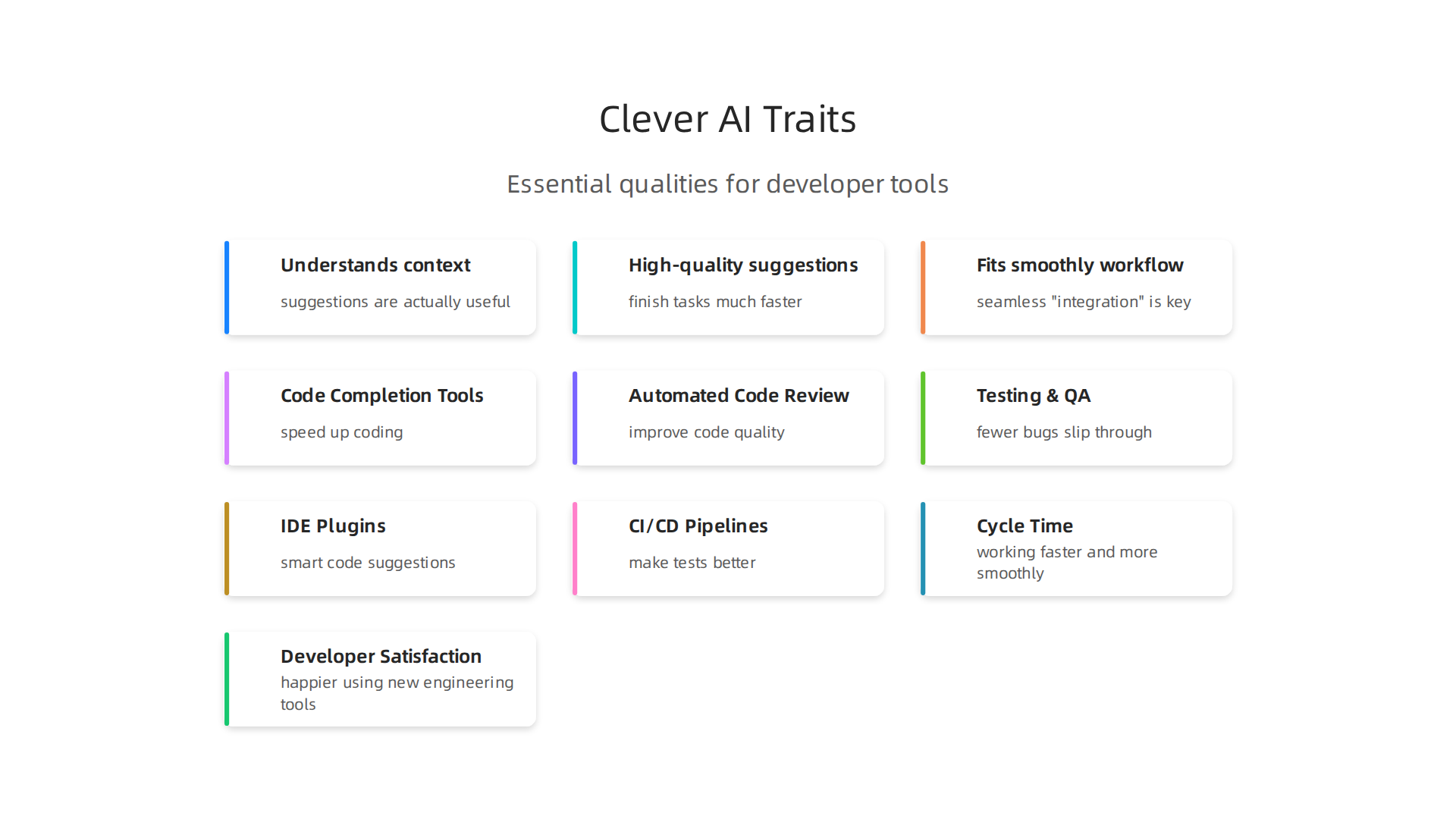
- It understands context. A clever AI tool doesn’t just give random answers. It knows what code you’re working on, what your project is about, and what you’re trying to achieve. This "contextual awareness" means its suggestions are actually useful. For example, if you’re working on a certain part of an app, the AI should suggest code that fits right into that specific area.
- It gives high-quality suggestions. Good AI for engineers provides code and ideas that are often correct and reliable. It doesn’t just guess. Studies show that when developers use AI coding helpers, they can finish tasks much faster. Some reports even say developers complete tasks 20% to 45% quicker than with old methods The Impact Of AI-Generated Code On Software Quality And …. This means less time fixing errors and more time building new things.
- It fits smoothly into your workflow. A truly clever AI tool doesn’t make you change how you work. It fits right into the [engineering tools] you already use, like your code editor or project management system. This seamless "integration" is key. If an AI tool is hard to use or doesn’t work with your other programs, it won’t be very helpful. Knowing the critical distinction between general AI and what engineers need helps teams apply AI in software development 2026 strategies for engineering teams.
Finding the right clever AI means looking for these features. It’s not about finding the "top 10 AI tools" mentioned everywhere, but rather the ones that truly empower your team.
We’ve talked about what makes an AI tool truly clever for developers. Now, let’s look at the main types of these smart [engineering tools] and how they help solve real problems every day. These aren’t just any [top 10 AI tools]; they are specific solutions designed to boost productivity.
Here are the top categories of clever AI developer tools:
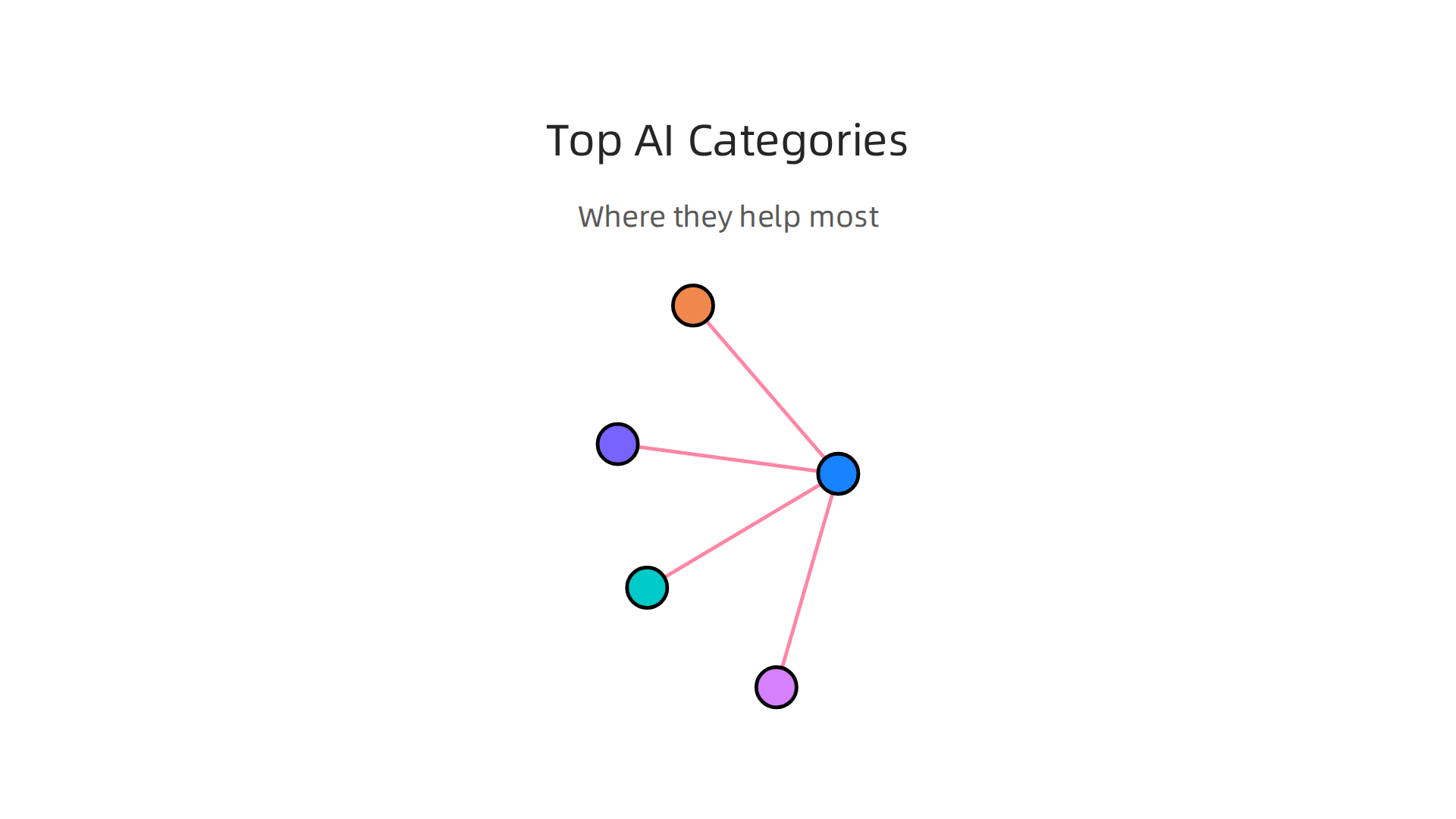
Code Completion Tools
These tools are like having a super-fast helper right inside your code editor. They suggest the next lines of code as you type. This means you spend less time remembering exact commands or looking up how to do something.
How they help most: They tackle repetitive tasks and speed up coding. Developers can finish projects much faster, sometimes even reducing task completion time by over 30% thanks to generative AI assistance Impact of Generative AI on Developer Productivity. This leaves more room for [interesting engineering] challenges.
Automated Code Review
After you write code, someone usually checks it for mistakes or ways to make it better. AI tools can do this automatically. They find bugs, point out areas for improvement, and make sure your code follows team rules.
How they help most: They catch errors early, improve code quality, and make the review process much quicker. Studies show that AI-driven tools can reduce review time by 40-50% and find more bugs than traditional checks The Impact of AI-Driven Code Review on Developer Productivity and …. This helps keep projects on track.
Testing & Quality Assurance (QA)
Testing is a big part of making sure software works correctly. AI tools can create tests, run them, and even find tricky bugs that humans might miss. They can watch how your software runs and report problems.
How they help most: They improve how well the software works and make sure fewer bugs slip through. This leads to better products and happier users.
Documentation Assistants
Good documentation tells others how your code works. It’s often hard to keep up-to-date. AI tools can help write descriptions, update guides, and explain complex parts of your code automatically.
How they help most: They simplify onboarding for new team members and ensure everyone understands the project. This makes sharing knowledge easier and saves time.
DevOps Automation
DevOps is all about making sure software is built, tested, and released smoothly and quickly. Clever AI helps here by automating many parts of this process, from setting up servers to deploying new code.
How they help most: They make the development and deployment process much faster and less prone to human error. This frees up engineers to focus on building new features instead of managing complex systems. If you’re looking to dive deeper into these automation trends, consider how to integrate top AI tools into cloud native applications for maximum effect.
These categories show how clever AI is changing the way developers work in 2026. They’re not just fancy gadgets; they’re essential partners that help teams build better software, faster. To stay on top of all the exciting changes in AI and technology, make sure you’re getting the latest information.
Get clear daily AI updates from The AI Newsletter Worth Reading.
To truly get the most out of these clever AI engineering tools, it’s important to know how to fit them into your daily work. Simply having the best tools isn’t enough; how you use them makes all the difference. In fact, by 2026, an impressive 90% of developers use at least one AI tool regularly at work, showing how deeply integrated these assistants have become.
How Clever AI Tools Fit into Developer Workflows
AI tools can be woven into different parts of the software development process. Here are some key places:
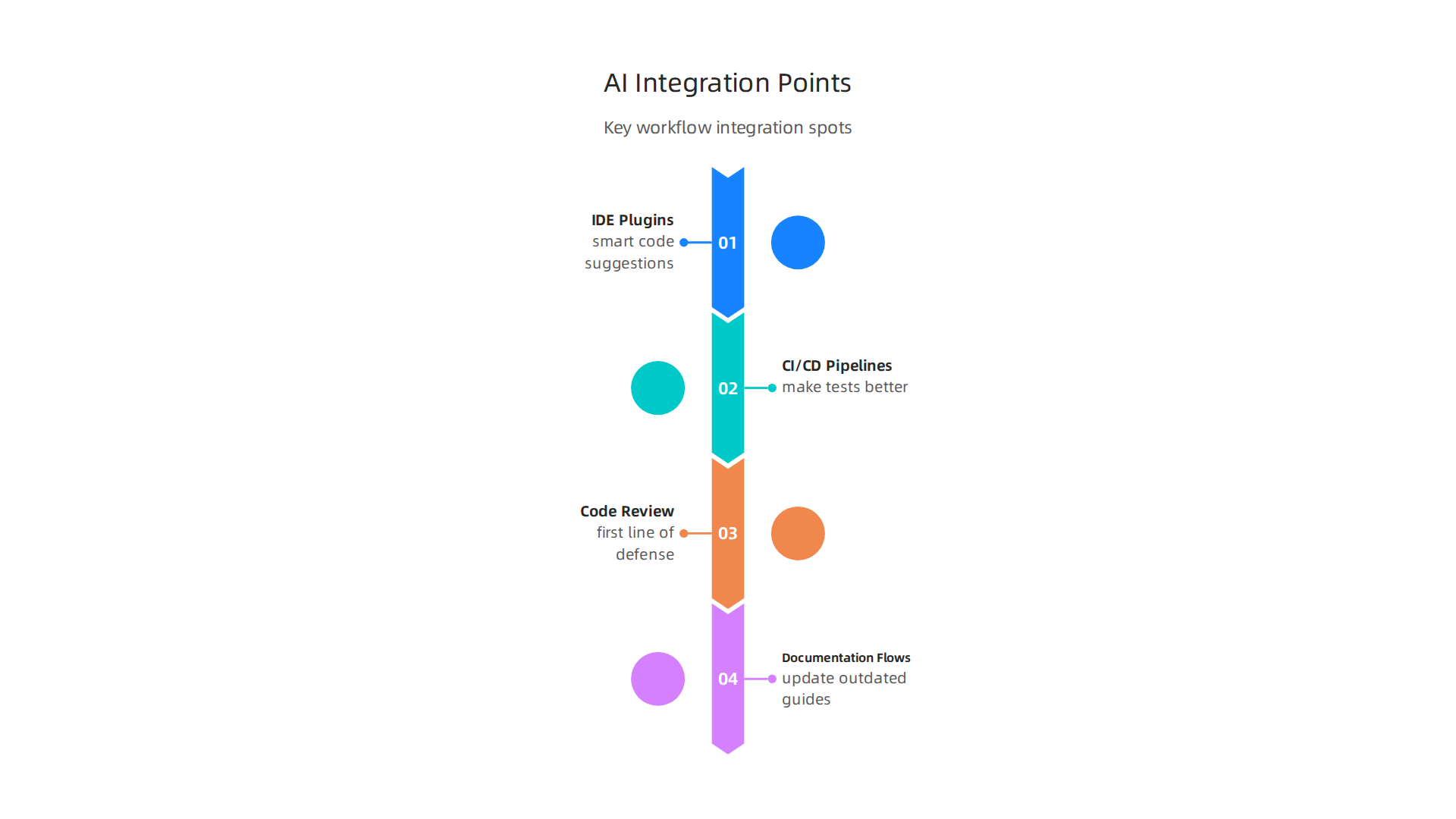
- IDE Plugins: Many AI tools show up as plugins right inside your code editor, also known as an Integrated Development Environment (IDE). This is where you write code. Tools here offer smart code suggestions, help fix errors, and can even rewrite code snippets on the fly. This makes writing code faster and helps avoid simple mistakes.
- CI/CD Pipelines: CI/CD stands for Continuous Integration and Continuous Delivery. It’s a system that helps build, test, and release software automatically. Clever AI can jump in here to make tests better, find security flaws, and even help decide if new code is ready to go live. For teams wanting to leverage these advances, understanding how to apply AI in software development strategies for engineering teams is crucial.
- Code Review Platforms: When developers check each other’s code, AI can be a first line of defense. It can scan for common issues, suggest improvements, and ensure code follows team standards. This frees up human reviewers to focus on more complex, interesting engineering challenges.
- Documentation Flows: Keeping documentation up-to-date is often a chore. AI can help by creating initial drafts of explanations, updating outdated guides, and making sure everyone understands the latest changes to the code.
Common Pitfalls to Watch Out For
While these engineering tools offer many benefits, there are also common problems to avoid:
- Context Loss: AI works best when it understands the whole picture. If a clever AI tool only sees a small piece of your code, it might give suggestions that don’t fit with the rest of your project. It’s like giving half of a puzzle to someone and asking them to complete it. They need all the pieces to see the full context.
- Hallucination Risks: Sometimes, AI can "hallucinate." This means it makes up answers or code suggestions that sound correct but are actually wrong. Relying too much on these incorrect outputs can lead to bugs and wasted time. It’s important to always double-check what the AI provides. Learning to design, measure, and operationalize explainable AI for trustworthy systems can help mitigate this risk.
- Workflow Friction: If AI tools aren’t well-integrated, they can become a hindrance rather than a help.

Switching between too many tools, or using ones that don’t play nicely together, can slow down developers. The goal is to make the AI a seamless part of the workflow, not an extra step.
By understanding where and how to integrate these top AI tools, and by being aware of their potential downsides, engineering teams can truly unlock the power of AI to build better software, faster, in 2026.
After understanding how clever AI tools fit into our daily work and the problems to avoid, the next big question is: are they actually helping? How can we tell if these interesting engineering tools are making a real difference? Measuring the impact of these tools is super important to know if they are worth the effort and money.

Measuring productivity: KPIs, experiments, and proving ROI for AI tooling
To truly see if clever AI tools are improving things, we need clear ways to measure success. These measurements are often called Key Performance Indicators, or KPIs. Think of them as scorecards that tell us if we’re winning.
Here are some important KPIs to look at:
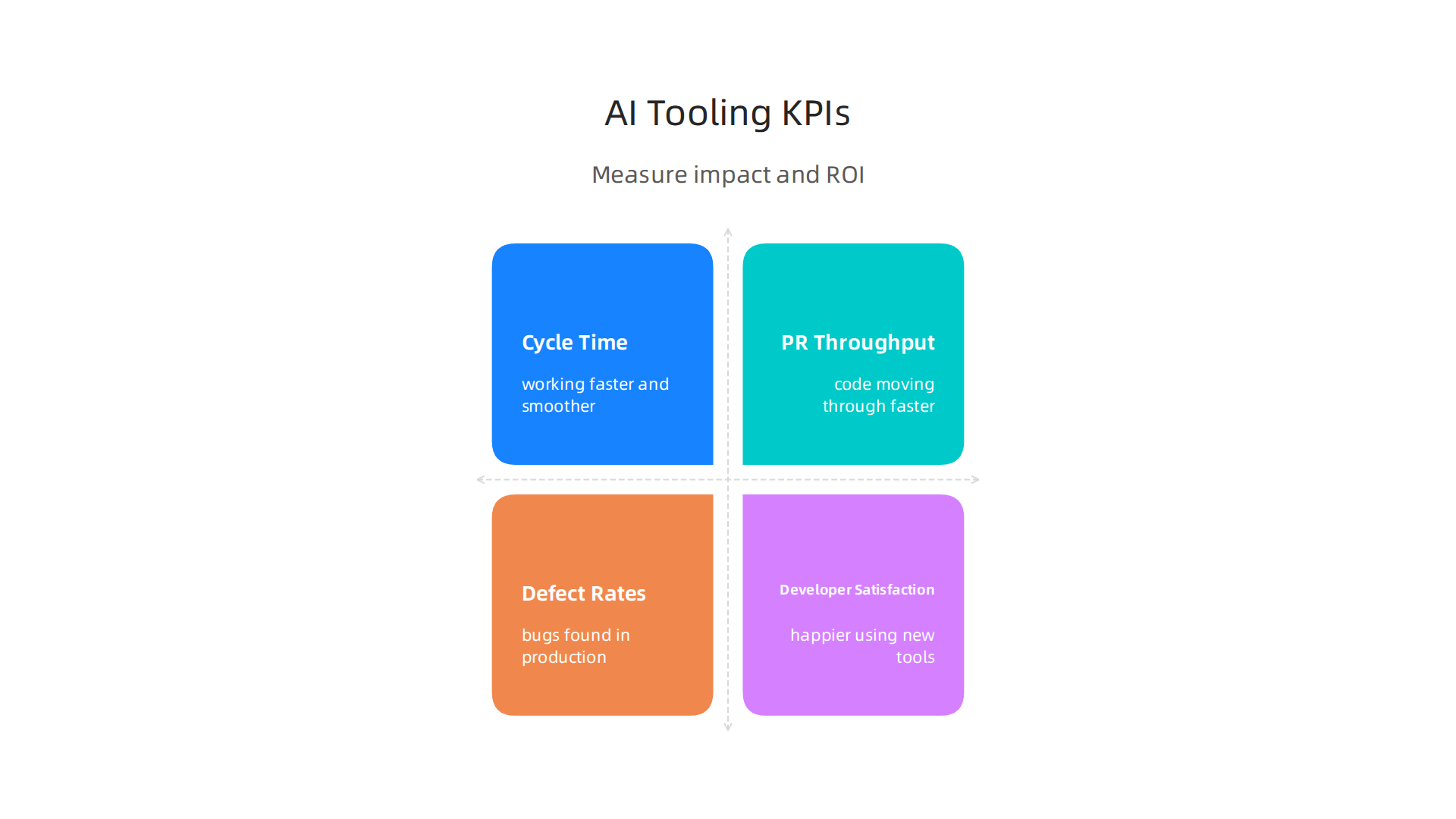
- Cycle Time: This measures how long it takes for a new idea or code change to go from starting to being ready for customers. Shorter cycle times usually mean a team is working faster and more smoothly. Clever AI can help here by speeding up coding tasks.
- Pull Request (PR) Throughput: A "pull request" is when a developer asks others to look at their code changes. Throughput tells us how many of these code changes are reviewed and approved in a certain time. More throughput can mean code is moving through the system faster.
- Defect Rates: This measures how many mistakes or bugs are found in the code. Ideally, we want this number to go down. AI tools can help catch errors early, which can lower defect rates.
- Developer Satisfaction: Are developers happier using these new engineering tools? Do they feel less tired or frustrated? Happy developers are often more productive. Surveys and feedback can help measure this.
For example, recent reports in 2026 show that clever AI coding tools can improve how fast developers work by up to 58%. This means teams can often see their money back, or a return on investment (ROI), in a short time, sometimes just 1 to 3 months, according to one benchmark report for 2026.
Smart Ways to Test AI Tools
But how do you know if an AI tool is truly making things faster and better, not just making you feel faster? This is where smart testing comes in. You can use different methods to check the real impact of these tools:
- A/B Tests: Imagine having two groups of developers. One group uses the new AI tool, and the other group does not. After a set time, you compare their KPIs, like cycle time or defect rates, to see which group performed better. This helps you understand if the AI tool truly made a difference.
- Pre-Post Analyses: With this method, you measure how well a team works before they start using a clever AI tool. Then, after they’ve been using it for a few months, you measure their performance again. Comparing the "before" and "after" numbers can show the tool’s impact.
- Pilot Study Frameworks: Sometimes, it’s best to try out new engineering tools with a small group first. This is called a pilot study. A few teams or developers use the AI tool and provide feedback. This helps find any issues early and shows if the tool is a good fit before rolling it out to everyone.
Using these ways to test and measure helps teams prove the value of their AI investments and ensures they are picking the best tools. For a deeper dive into choosing the right AI, learn more about how to evaluate and integrate generative AI platforms for developer teams.
Knowing how to measure and test is key to truly unlocking the benefits of clever AI tools. It helps teams make sure they are not just adopting new tech but are actually improving how they work.
Want to stay informed on the latest AI breakthroughs and their impact on engineering?
The AI Newsletter Worth Reading delivers clear daily AI updates right to your inbox.
Using clever AI tools can make work faster and better. But like any powerful tool, they also come with new worries. When we use AI to help write or check code, we must think about important things like security and making sure we follow the rules. This is called "governance," and it helps us use these engineering tools safely.
Big Worries with AI in Code
One big worry is that AI might create code with hidden problems or weaknesses. If we just trust the AI without checking, these problems could lead to security holes in our software. Think of it like getting help building a house: you still need to check that the helper used strong materials and built things correctly.
Another worry is keeping our secrets safe. Many clever AI tools work by sending our code to a powerful computer far away. What if that code has private company information, like special passwords or trade secrets? This is called "data leakage," and it means private data could get out. Experts in 2026 say we need to be very careful about what code we allow these tools to see and use, often blocking very sensitive parts from leaving our computers at all, as explained in guidance on A Reference Policy Structure.
Also, there are new rules and laws appearing, like the EU AI Act in 2026, which tell companies how they must use AI responsibly. We need to make sure our interesting engineering efforts with AI follow these laws.
How to Keep AI Code Safe
To use AI safely, companies need a good plan for "governance." This means setting clear rules and ways of working.
Here are some important parts of this plan:
- Company Policies: First, companies need clear rules about how developers can use AI tools. Which tools are allowed? What kinds of code can they send to an AI? What are the steps for checking AI-generated code? Treating AI coding tools as a new type of input that needs its own security steps is a key recommendation for security, according to the Cloud Security Alliance.
- Smart Code Reviews: Even if a clever AI writes code, humans still need to look at it closely. They should check for mistakes, security problems, and make sure it fits with the rest of the project. This is a very important step to bridge the AI to human gap in your code.
- Checking the Supply Chain: We need to know where our AI tools come from and what their own security rules are. Are they trustworthy? Do they keep our data safe?
- Audit Trails: It’s good to keep a record of when and how AI tools were used to create or change code. This way, if a problem comes up later, we can trace it back to see where it started. A guide from July 2026 suggests that a good plan for AI code security includes keeping track of all AI coding tools, checking AI-generated code before it’s used, and having clear records of what AI tool was used for what code piece, as highlighted in the AI-Generated Code Security: The CISO Guide.
By having these kinds of rules and checks, companies can use the benefits of AI to make better software without putting their projects or secrets at risk. It’s all about finding the right balance AI productivity with responsible AI practices for software teams.
Once a company has clear rules for using clever AI in engineering, the next big step is helping everyone learn how to use these new tools well. This is called "change management." It’s about teaching developers and setting up daily tasks so that AI tools become a helpful part of how work gets done, not just another complicated thing to deal with.
Training Developers for Clever AI
To make sure AI tools stick, companies need to teach their teams properly. It’s not enough to just give them a new tool and say "use it." Training needs to happen in a few ways:
- Learning the Basics: Everyone should understand what AI can do and what it cannot. They also need to know the company’s rules for using AI safely.
- Hands-On Practice: Developers need to get real experience with the AI tools. This means training with actual code examples and trying out the tools in their daily work. This hands-on learning helps them understand how to truly use AI in their engineering tasks, as suggested in a guide on 6 Change Management Strategies to Scale AI Adoption in Engineering Teams. Experts in 2026 recommend training at different levels, from general awareness to specific skills like prompt engineering, to help people use AI tools effectively, according to an Enterprise AI Adoption Framework: A Practical Roadmap for 2026.
- Learning Together: When teams learn about AI tools together, it often works better. Weekly team sessions can lead to more people actually using the tools, helping to accelerate engineering team learning. This idea is supported by research showing that team-based learning makes people more likely to finish their training, as noted in an AI Training Program Implementation: Enterprise Guide (2026).
Designing Workflows That Stick
It’s not just about training, but also about making AI tools fit smoothly into how people already work. This means thinking about company culture and how tasks flow.
Here are some ways to make sure clever AI tools are truly adopted:
- Build Trust and Address Fears: Some people might worry that AI will take their jobs or make their work harder. Company leaders need to talk about these worries openly. They should explain how AI is meant to help developers, not replace them. Building trust is a key step, as highlighted in a Change Management for AI Adoption: A 2026 Playbook.
- Create "AI Champions": Pick people in different teams who are excited about AI. These "champions" can help their teammates learn, share tips, and show how the tools can make interesting engineering work easier. A good plan includes role-specific training and using AI Champions to help teams use new engineering tools, according to an Enterprise AI Implementation Guide 2026: The 6-Phase ….
- Listen to Feedback: After developers start using the tools, it’s important to listen to what they like and what causes problems. This feedback helps improve the tools and how they are used.
- Show How It Helps: Companies should track how much time AI saves or how it makes code better. When people see real benefits, they are more likely to keep using the tools. It’s important to pick specific tasks where AI can help quickly and then measure the success of using it, as described in Change Management Case Studies 2026: ROI Metrics, Dashboards ….
By training teams well and creating an environment where AI feels like a helpful partner, companies can truly make these clever AI engineering tools a valuable part of their everyday work. This focus on the developer experience helps teams make the most of new technology.
If you want to stay updated on the latest AI trends and how they are shaping the world of software engineering, we highly recommend getting clear daily AI updates. You can sign up for The AI Newsletter Worth Reading.
Beyond just training people, companies also need a clear plan for what skills their teams need and how to hire new people. This roadmap helps engineering groups get ready for a future where clever AI tools are a big part of daily work. It’s about making sure your team stays sharp and ready for anything new that comes their way.
New Skills for the Clever AI Era
As clever AI tools become more common, developers need to learn some new tricks. It’s not just about writing code anymore. Here are some key skills for 2026:
- Prompt Engineering: This is about knowing how to talk to AI tools so they give you the best answers. Think of it like giving very clear instructions. Learning to ask the right questions helps developers get the most out of AI, whether for writing code, debugging, or brainstorming new ideas. This skill is so important that it’s often compared to other critical parts of building AI systems, as seen in discussions on Context Engineering vs Prompt Engineering Architecting Robust AI Systems.
- Observability and Validation: Even though AI helps create a lot of code, people still need to check it carefully. Developers must be good at seeing how AI code works and making sure it’s correct. In 2026, about 42% of code is made or helped by AI, and this is expected to grow, but many developers don’t fully trust AI-made code. This means checking AI’s work is a huge part of the job, as noted in the State of Code Developer Survey report. This focus on checking also includes understanding how to quickly fix problems in the cloud.
- AI-Driven Development Strategies: Teams also need to learn how to weave AI into their entire software development process, from planning to testing and release. This helps them apply AI in software development in smart ways for their engineering teams.
Hiring for the Future of Engineering
When hiring new team members, companies should look for people who are excited to use clever AI. It’s helpful to find developers who:
- Embrace New Tools: Look for people who are eager to learn and try out new engineering tools. This shows they are open to working with AI.
- Understand AI’s Role: New hires should grasp that AI is a helper, not a replacement. They should know how to use AI to make their own work better. The job market for developers in 2026 is changing, with new skills and roles emerging as AI grows, according to insights on the Developer Job Market 2026 The Transformation of Skills and Roles.
- Are Curious and Adaptable: The world of AI is always changing. People who like to learn and can adjust to new ideas will do best.
A Phased Roadmap for AI Adoption
Companies can roll out AI tools in steps to make it easier for everyone.
- Pilot Phase: Start small. Pick one team or a few projects to try out AI tools. This helps you learn what works and what doesn’t without big risks. The goal is to see quick wins where AI can speed up work, like reducing the time it takes to get code ready for review by up to 58%, as highlighted in the AI Coding Impact 2026 Benchmark Report.
- Scaling Phase: If the pilot goes well, bring the AI tools to more teams and more projects. Make sure there’s enough training and support. AI-augmented engineering teams have been found to ship 2.2 times more work, showing the big benefits of scaling, according to the AI Developer Productivity Report 2026 – DevnityX.
- Maintenance and Improvement: Keep watching how the tools are used. Collect feedback and make changes when needed. The world of interesting engineering changes fast, so regularly updating skills and tools is important.
By focusing on these new skills, smart hiring, and a clear roadmap, engineering organizations can confidently step into a future powered by clever AI, making sure their teams are productive and ready for anything.
Summary
This article explains why