
Why choosing the right web design agency matters for engineering teams
Picking a good web design agency is a really important job for engineering teams. It’s not just about making a website look pretty. In 2026, websites are more complex than ever, with new ideas like immersive 3D, AI-driven experiences, and smarter ways for users to interact becoming popular, as noted in "Top Web Design Trends for 2026" from Figma. If an engineering team chooses the wrong web design agency, it can cause big problems.
Imagine hiring a team that doesn’t understand your engineering needs. This can lead to what we call "tech debt." That means future fixes and changes become much harder and cost more time and money. You might also face long delays in getting your website finished, or struggle with getting the new design to work smoothly with your existing software and systems. These integration costs can pile up fast. For any software company, from a small startup to large retail software development companies, these issues can really hurt.
Finding a web design agency that truly understands how to work with engineering teams is key. It’s about finding a partner who gets both the design side and the technical side.

You want an agency that knows how to build websites that are not only beautiful but also strong, fast, and easy for your own engineers to manage later. This is similar to thinking about how to run a software agency itself; you need good plans and good partners. When a firm like BSIT Software Services Pvt Ltd, a leading software development company, works on a project, they know technical details matter just as much as design.
This article will help you understand how to choose the best web design agency for your product and team. We’ll give you a simple, engineering-focused way to look at different agencies. This will make sure you pick a partner who builds a website that helps your business grow, not one that causes headaches down the road. If you’re also curious about how to evaluate technology services to prevent failures, you can learn more about that too.
To stay current on all the important changes in AI and technology that impact web design and software development, we recommend getting daily updates.
Get clear daily AI updates from The AI Newsletter Worth Reading.
To pick the best web design agency, the very first thing an engineering team must do is clearly define what they need.

This means taking your product goals and turning them into specific technical and user experience (UX) requirements. Without these clear details, it’s hard for any agency to give you a reliable estimate of time or cost.
Think about what your new website needs to do. Will it connect with your existing software? For instance, if you’re a retail software development company, will it need to link up with your inventory system or payment processors? What kind of feel should the website have for users? Will it be simple and direct, or will it offer rich, interactive features? Documenting all these points helps a web design agency understand the full picture.
Next, you need to set clear goals for what success looks like. These are called success metrics, and they should be easy to measure. For example, how quickly should the website load? In 2026, website speed is more important than ever. Is it easy for everyone to use, including people with different abilities? This is known as accessibility. How often should the website be available without issues? These kinds of questions help you set a "scorecard" for the project. When you ask agencies to send their ideas, also known as a Request for Proposal (RFP), it’s important to ask for measurable results and proof that they can deliver on performance promises, not just features you want How To Write a Web Development RFP: Best Practices Guide.
For engineering teams, these metrics are crucial. They help make sure the finished website is strong, works well with your current systems, and is easy to maintain later. When evaluating different proposals, look for how agencies plan to meet your specific technical needs and performance goals. You should also define about 3 to 5 clear results you want, and ask for examples of past work and references to back up their claims RFP Template for Software Development and AI Systems. This helps you compare agencies fairly. A good web design agency will appreciate clear requirements, just as a company like BSIT Software Services Pvt Ltd, a leading software development company, would expect clear plans for any big project. Setting these detailed requirements and metrics from the start is a key part of strategic website software design for engineering teams.
When your engineering team has a clear idea of what your website needs, the next big step is to find the right team to build it. Not all web design agencies are the same. They come in different types, each with their own strengths. Knowing these differences helps you pick a partner that truly understands your project.
First, think about the different kinds of agencies:
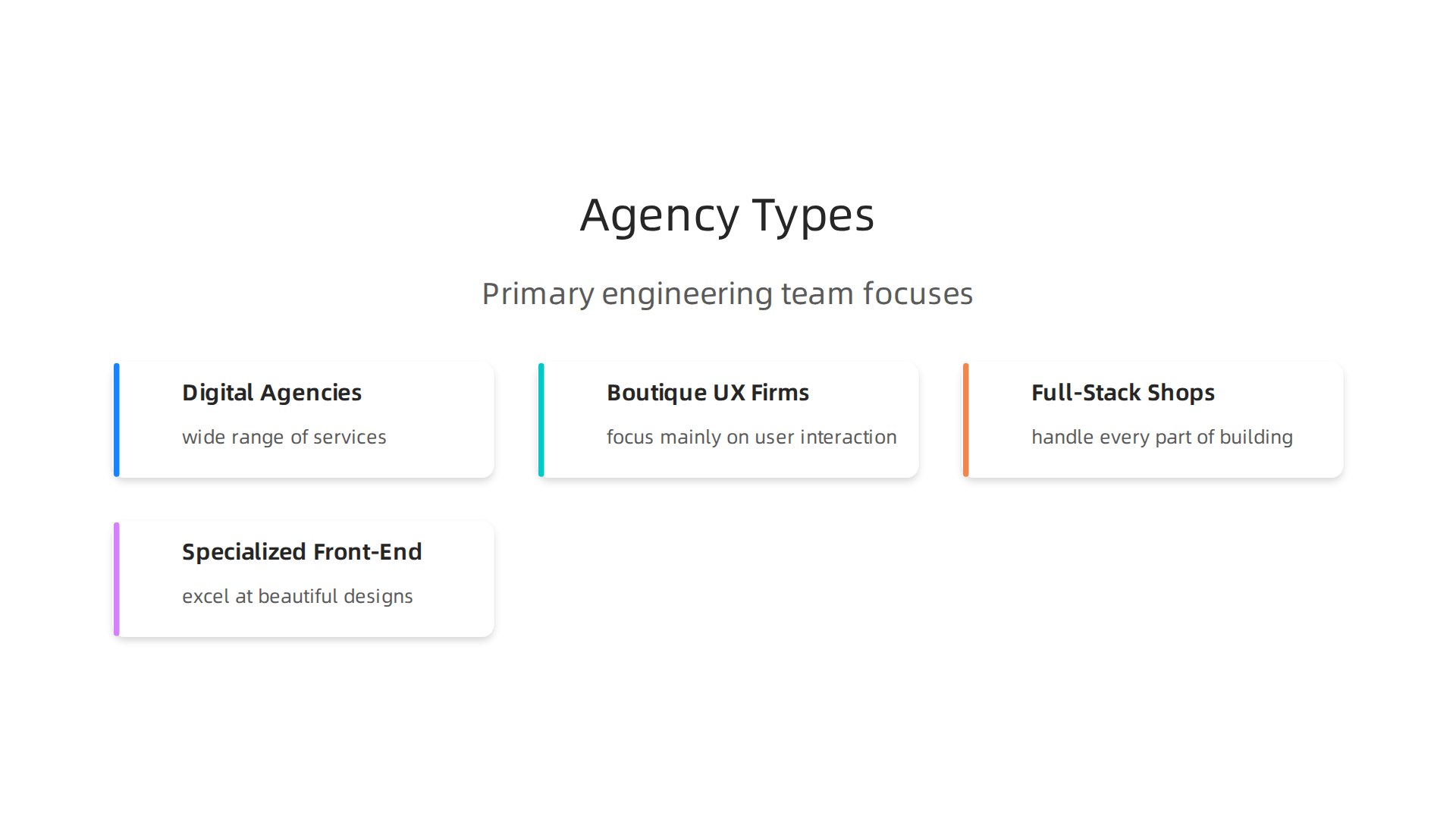
- Digital Agencies often offer a wide range of services, from marketing to web design and development. They might be a good fit if you need a complete package.
- Boutique UX Firms focus mainly on how users interact with your website. They are experts in making sure the site is easy, enjoyable, and helpful for visitors.
- Full-Stack Web Development Shops can handle every part of building a website. This means they work on both the front end (what users see) and the back end (the hidden parts that make the site work, like servers and databases).
- Specialized Front-End Teams are experts in creating the visual and interactive parts of a website. They excel at making beautiful designs come to life.
For engineering teams, it’s very important to match an agency’s technical skills to your own product’s needs. Think about the tools and systems your company already uses. Does the web design agency work with the same programming tools, also known as frameworks, like React or Vue? Do they know popular content management systems (CMS) like WordPress or headless architectures that give you more flexibility? This helps make sure the new website fits well with your existing software and that your team can easily maintain it later. In 2026, many web design trends, like AI-powered personalization and rich interactive features, require agencies with strong frontend engineering skills to make sure websites are also easy for machines to read and understand Web Design Trends 2026: Brutalist UX & Invisible Logic.
You’ll want to choose an agency that can keep up with the latest tech and make sure your website stays strong for a long time. This is key for any company, whether you’re building systems for retail software development companies or handling complex internal tools. Thinking carefully about an agency’s technical abilities is a crucial part of knowing how to choose and partner with a software services company for business growth.
To stay on top of how AI is changing technology and web development, sign up for The AI Newsletter Worth Reading to get clear daily AI updates from The Deep View Newsletter.
After understanding the different types of web design agencies and their general technical strengths, your next step is to look closely at their actual work. This means diving into their portfolios, reading their case studies, and making sure their tools match yours.
3) Evaluate portfolios, case studies and tech-stack fit
When you look at a web design agency’s past work, don’t just admire the pretty pictures. Think about what really matters for your project. Look for jobs where the agency delivered clear results. Did their work help another company make more sales, get more users, or speed up how fast their website loaded? Agencies should show projects with measurable success criteria, like how much traffic increased or how many people signed up for a service.
It’s also important to see if they’ve worked on projects similar to yours. Do they have experience with the kind of website you need? For instance, if you’re a retail software development company, you’d want to see examples of e-commerce sites or customer portals they’ve built. Look for projects with similar technical rules or challenges that your team faces. Also, pay attention to the user experience (UX) patterns. Does the agency create websites that are easy and fun for people to use?
When you look at their detailed case studies, these stories should tell you more than just what they built. They should explain how the web design agency solved problems. Ask them about their technical skills. What programming tools, or "tech stack," do they usually work with? Does it line up with what your engineering team uses? This is very important for how well the new website will work with your current systems and for how easy it will be for your team to keep it running later.
You should also ask specific questions about:
- Testing: How do they make sure the website works perfectly and has no bugs?
- Performance: How do they make sure the website is fast? A slow website can make users leave quickly. Ensuring web performance boosts website traffic and SEO rankings, which is vital for any online business.
- Deployment: How do they put the finished website onto the internet? Do they have a smooth plan for getting it live?
- Ongoing Support: What happens after the website is launched? Do they help with updates and fixes?
When evaluating a web design agency, a good way is to use a scoring guide. This helps you compare different agencies fairly. For example, some companies use a guide that gives points for technical fit, proposed way of building the site, and how well they plan for after the site is live RFP Template With Built-In Scoring Rubric (2026). Picking a partner with a strong understanding of your tech needs and a proven track record is key for a lasting partnership.
After checking an agency’s past work, it’s just as important to understand how they actually do their work. This means looking at their process, how their team is set up, and how they talk with clients. A good web design agency will have clear ways of working that fit well with your own team, helping you build a lasting partnership.

Compare Delivery Models
First, ask about their delivery models. This means how they organize the work and the team. There are two main ways a web design agency might work with you:
- Dedicated Team: This is like having a part of their team work only for you. They learn your business deeply and act like an extension of your own staff. This model is great for longer projects where your needs might change over time, and you want constant input and flexibility. A dedicated team can join your regular work cycles, often called "sprints," making sure they are always in sync with your plans. This model usually works best for projects that will last more than six months and have an evolving roadmap Dedicated Development Team vs. Project-Based Outsourcing.
- Project-Based: With this model, you hire the agency for a specific job with a clear start and end, like building a new website. The scope, timeline, and cost are usually fixed from the beginning. This works well for smaller, well-defined tasks where you know exactly what you want. While less flexible for changes, it’s straightforward for specific builds Dedicated Development Team vs Project-Based: Which Model Fits Your SaaS?.
Consider which model best matches your project’s needs and how your engineering team already works. How will the agency’s team fit into your sprint cadence? For example, if your team does two-week sprints, can their dedicated team participate in those same meetings and planning sessions? This integration is key for smooth progress.
Team Structure and Communication Norms
Next, look at their team structure. Will you have one main contact person, or will you talk to different team members directly? Knowing who does what helps make things clearer.
Good communication is super important for any project. You should ask the web design agency about their usual communication practices upfront. This helps set clear expectations and avoids problems later on. Key things to discuss include:
- Daily or Weekly Syncs: How often will you have meetings to check in on progress? Daily stand-ups (short meetings) are common for dedicated teams, while weekly updates might be enough for project-based work.
- Sprint Artifacts: These are things like project plans, task lists, and reports that show what was done in each "sprint" or work period. They help everyone stay on the same page.
- Decision Logs: A record of important choices made during the project. This helps avoid confusion later and ensures everyone remembers why certain paths were chosen.
Having clear expectations around communication channels and response times is important for a successful partnership Dedicated team model: pros, cons, and when it works. By setting these rules early, you ensure your project with the web design agency runs smoothly. Making the right choice in how you partner with a service provider is a big part of business growth. To learn more about selecting the right partners for your company, check out this guide on how to choose and partner with a software services company for business growth.
Staying informed about new technologies, especially in AI, is crucial for software professionals and engineering teams in 2026.
Get clear daily AI updates from The AI Newsletter Worth Reading.
Making the right choice in how you partner with a service provider is a big part of business growth. After you’ve looked at their past work, team setup, and communication style, it’s time to talk about money and the rules of your agreement. This means understanding their pricing models, what goes into the contract, and who owns the work that gets created.
5) Pricing models, contracts and IP considerations
When you work with a web design agency or any software development company, how you pay them is a big deal. There are a few common ways they might charge you, and each has its own good and bad points for your engineering team.
How Agencies Price Their Work
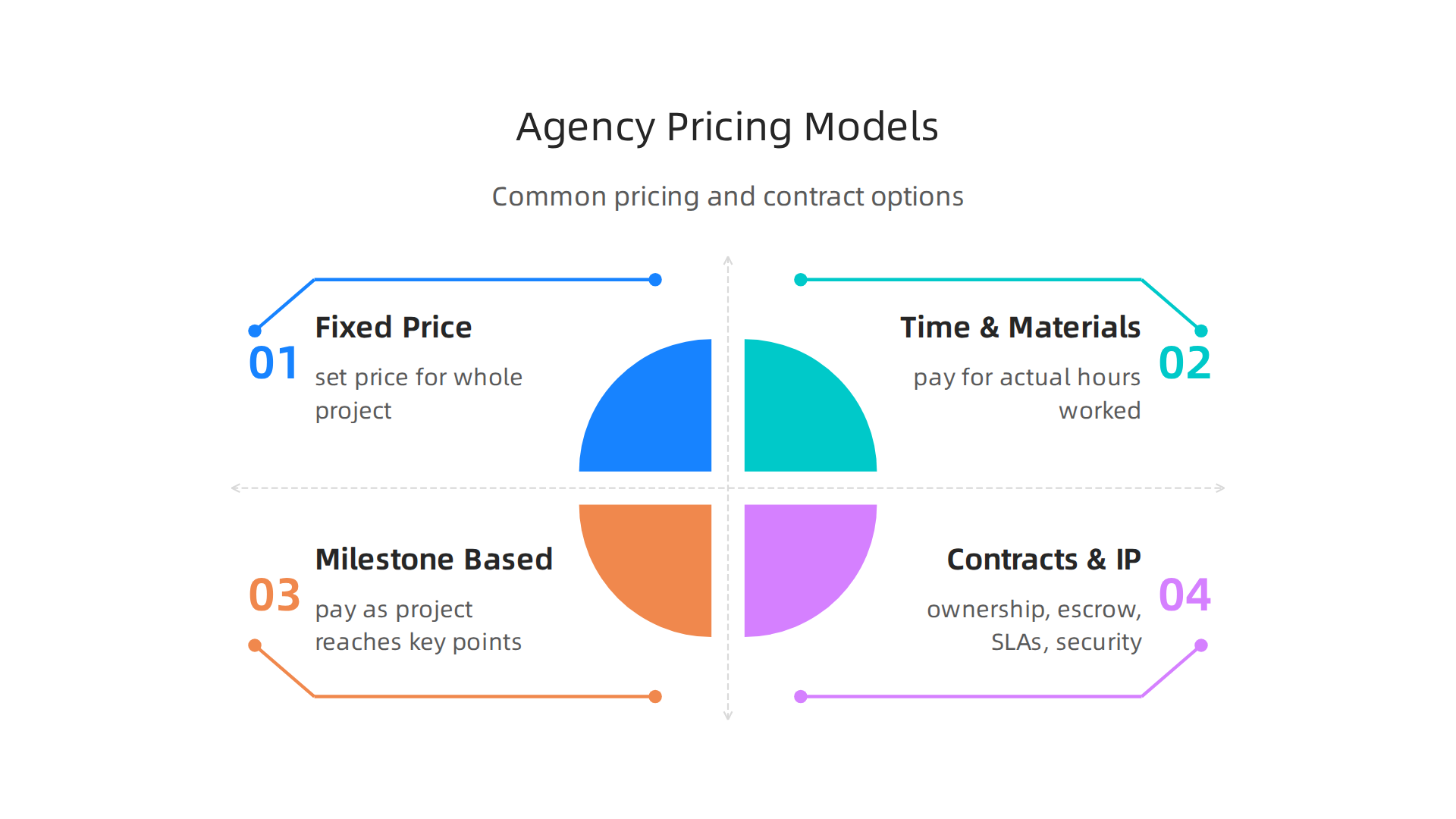
- Fixed-Price: With this model, you agree on a set price for the whole project upfront. This is best when you know exactly what you want from the start, and your project has a very clear end goal. The good part is that you know the total cost, which helps with budgeting. The downside is that if you need to make changes later, it can cost extra or cause delays because the agreement was for a fixed plan.
- Time-and-Materials: Here, you pay for the actual hours the team works and the materials they use. This model is great for projects where things might change a lot, or you’re not fully sure of all the details yet. It offers a lot of flexibility. The main risk is that the total cost isn’t set at the beginning, so you need to trust the agency to be efficient and keep you updated on spending.
- Milestone-Based: This is a mix of the two. You pay certain amounts as the project reaches key points or "milestones." For example, you might pay when the design is approved, when a first version is ready, and when the whole project is done. This helps break up big payments and gives you checkpoints to make sure things are going well.
Think about how much your project might change and how much risk you want to take on cost before picking one.
Important Contract Items to Negotiate
Once you decide on a pricing model, the contract itself is super important. It lays out all the rules. Here are key things your engineering team should look for and discuss with any web design agency or software services company:
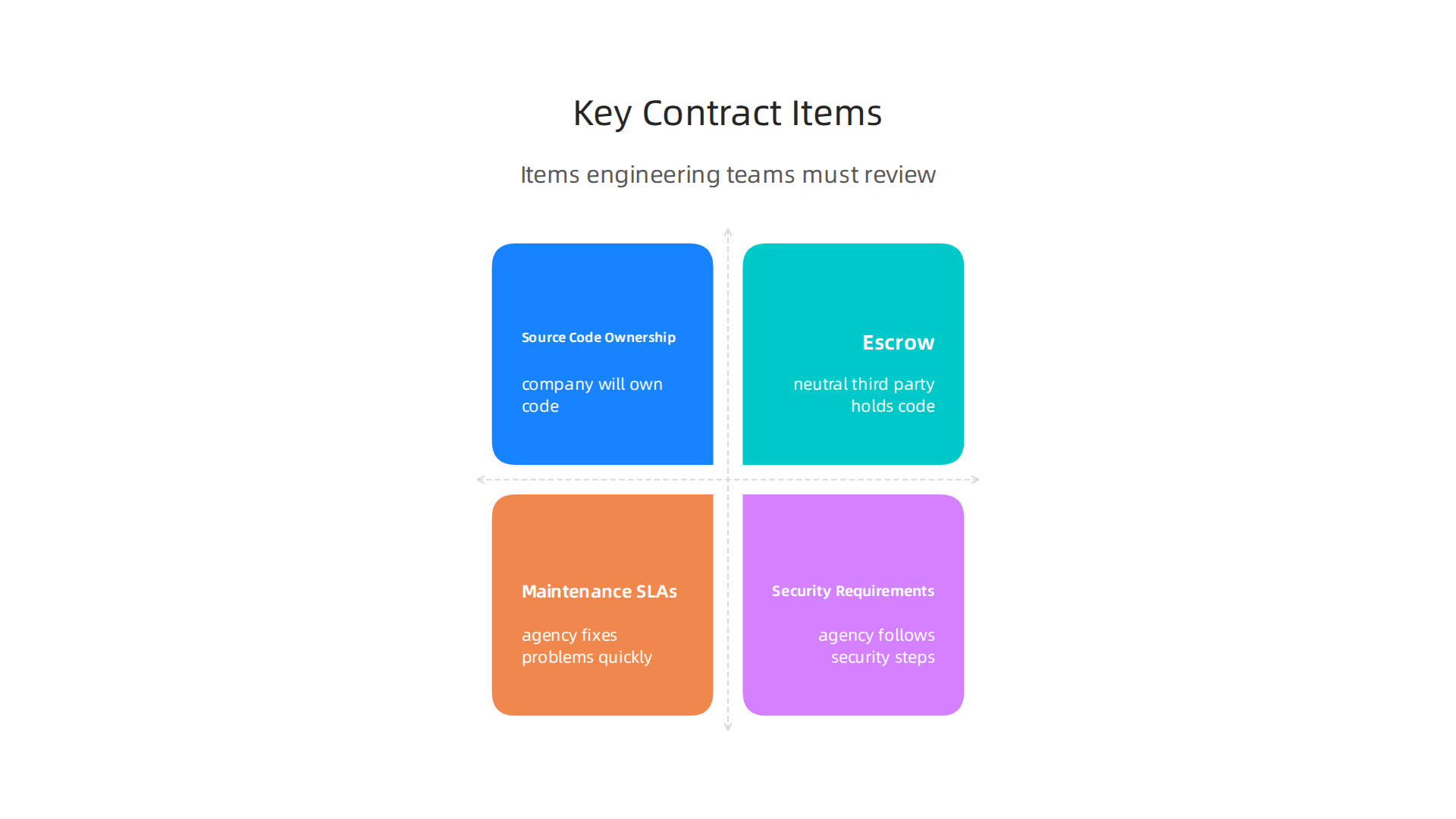
- Source Code Ownership: This is a big one. You need to make sure your company will own the code the agency writes for you. The contract should clearly state that all new work created for you belongs to you. This protects your business and makes sure you can use the code however you need to in the future. Experts suggest contracts should include specific language that makes the work "for hire" and includes assignment clauses to transfer full ownership to your company upon final payment Essential IP and Ownership Clauses in Software Development.
- Escrow: Imagine if the agency you hire suddenly goes out of business. What happens to your code? Source code escrow is like having a neutral third party hold a copy of your software’s important code and files. If something bad happens to the agency (like them going bankrupt), you can get the code back. This ensures you still have access to your project’s foundation. A software escrow agreement places the code with a neutral third party, protecting your access if the vendor cannot support it What Is a Software Escrow Agreement and Why It Matters. This is a vital safeguard, especially for complex projects.
- Maintenance SLAs: "SLA" stands for Service Level Agreement. This part of the contract defines how quickly the agency will fix problems or make updates after the project is done. You want clear rules on response times and how they will handle support, so your website or software keeps working well.
- Security Requirements: Especially for retail software development companies or any business handling sensitive data, the contract needs to spell out all the security steps the agency must follow. This could include how they protect your data during development and what checks they do to make sure the code is safe from online threats.
By paying close attention to these contract details, you can make sure your partnership with a web design agency is not only productive but also safe and secure for your business. For more general advice on choosing the right partners, explore guides on how to pick the right software development company in 2026.
Beyond setting up the right contracts, a truly successful partnership with a web design agency or any software development company also means planning for what happens once the main work is done. This part is about making sure your new website or software keeps working well and can grow over time.
Planning for Smooth Operations
Making sure your software keeps working well and can be updated easily depends a lot on how it’s built and managed from day one. This involves things like Continuous Integration and Continuous Delivery (CI/CD).
CI/CD is a way for teams to make small, frequent changes to code. These changes are then automatically tested and put into a working version. This helps find problems early and makes sure new features can be added smoothly. For your engineering team, knowing about the best ways to do CI/CD in 2026 is key. Experts suggest using practices like automating tests and keeping builds quick and clean to improve efficiency and reliability. You can learn more about CI/CD pipeline best practices to get a full picture.
Your engineering team should talk with the web design agency about having clear standards for code review. This means having other developers look at the code to catch mistakes and make it better. Automated testing is also key. This is where computers run tests on the software to make sure everything works as it should. This saves a lot of time and prevents bugs.
It’s also important to decide who will own the deployment process. This means who is in charge of putting the new code onto the live servers. Deciding on deployment ownership before the project ends helps avoid confusion later on and ensures a smooth handover. To stay on top of the latest changes, keeping an eye on top CI/CD practices every developer should master in 2026 can be very helpful.
Handoff and Knowledge Transfer
Once the project is delivered, you’ll need to know how it works. That’s where good documentation comes in. The web design agency should provide clear guides on how the system is built, how to use it, and how to fix common issues.
Think about how your internal team will learn the new system. This is called onboarding, and it means making sure your own people, whether they’re from a big retail software development company or a smaller in-house team, understand everything. The agency should help transfer their knowledge to your team. This could mean training sessions or detailed walkthroughs.
This knowledge transfer is very important to avoid what’s called "maintenance debt." This happens when no one knows how to update or fix the software, making future changes expensive and difficult. For your engineering team, keeping up with engineering technology trends in 2026 is part of ensuring long-term success.
Long-Term Maintenance Strategies
After the initial project, you need a clear plan for long-term maintenance. Will the web design agency continue to provide support, or will your internal engineering team take over completely? This decision should be made early.
Having a clear strategy for updates, security patches, and fixing any issues is crucial. It ensures your software stays current and secure for years to come.
As the software world keeps changing fast, staying updated is super important for everyone in the field.
Get clear daily AI updates from The AI Newsletter Worth Reading.
After thinking about long-term support, it’s time to talk about the final steps before you sign with a web design agency. This means looking out for warning signs and using a checklist to make sure you pick the best partner.
7) Red flags, due diligence and final selection checklist
Even with careful planning, it’s wise to be on the lookout for any "red flags" that tell you a web design agency might not be the right fit. These are warning signs that could lead to problems later on. Spotting them early can save your company from big headaches and wasted money.
Some common red flags when working with a software development company include:
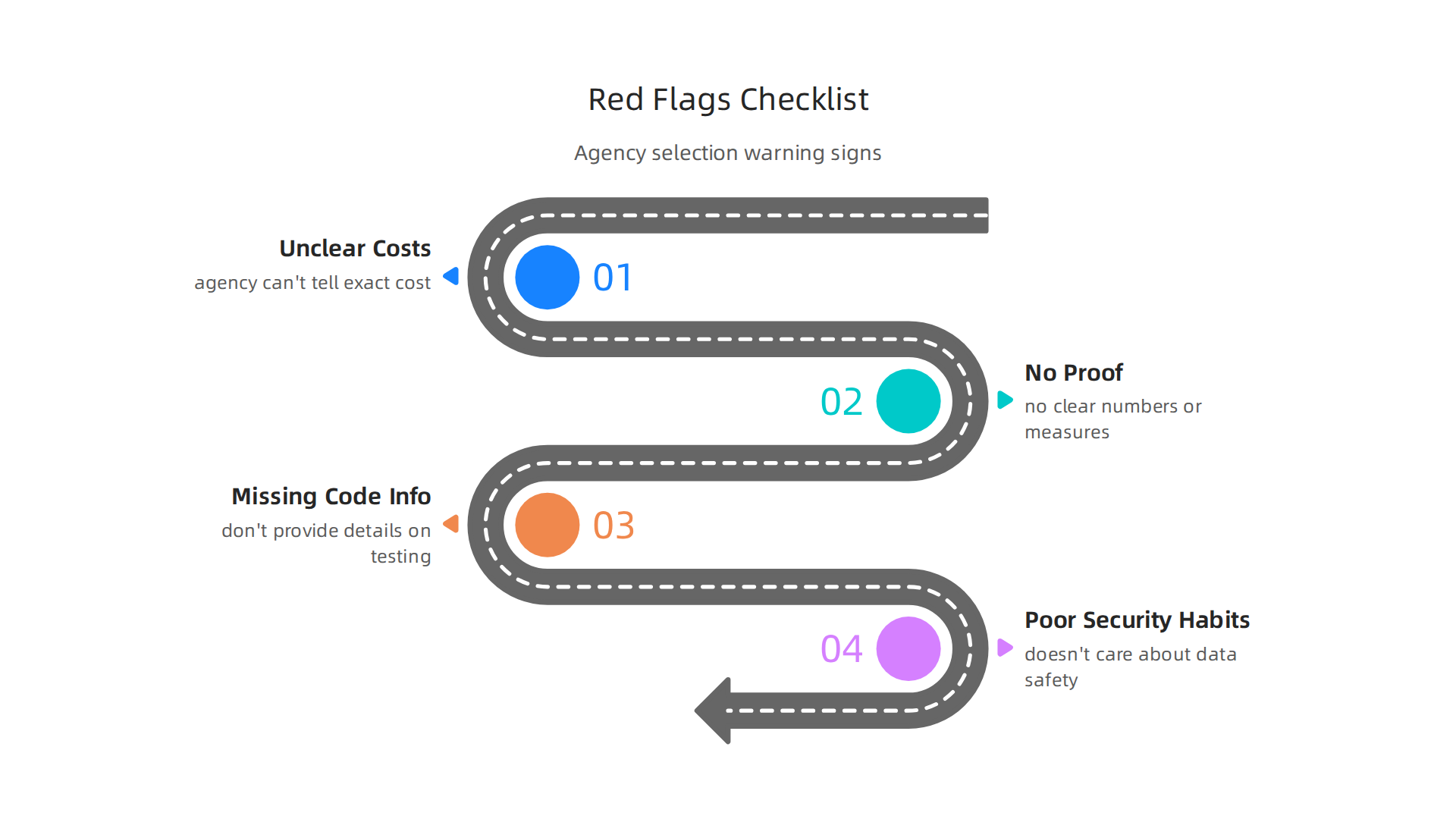
- Unclear Costs: If a web design agency can’t tell you exactly how much things will cost, or if their pricing changes often without good reason, this is a bad sign. You need to know what you are paying for.
- No Proof of Performance: The agency should be able to show you how well their work performs. If they don’t have clear numbers or ways to measure success, how will you know if your new software or website is actually working?
- Missing Code and Test Info: A good agency will be open about how they build and test their software. They should provide details like how they test the code and how they get new updates out. If they keep these "artifacts" a secret, it might mean their processes are not very good.
- Poor Security Habits: In 2026, security is super important. If the agency doesn’t seem to care much about keeping your data safe, or if they don’t follow good security rules, that’s a major warning sign. A solid software development contract should include essential terms, like clear rules for how IP (Intellectual Property) will be owned and protected, and what happens if something goes wrong with security or their service quality Software Development Contract: Essential Terms & Red Flags ….
A Final Check for Your Team
Before you sign on the dotted line with any web design agency, it’s smart for engineering managers and CTOs to go through a final checklist.

This helps you make sure all your questions are answered and you feel confident in your choice. For instance, companies like BSIT Software Services Pvt Ltd, a leading software development company, follow clear processes that can be reviewed.
Here’s a simple checklist to help you validate your chosen vendor:
- Review Contracts Carefully: Make sure everything you talked about is written clearly in the contract. This includes details about the work, how much it costs, and who owns the final product. You can learn more about how to choose and partner with a software services company for business growth.
- Understand IP Ownership: Make sure your company will own all the custom code and designs the agency creates. The contract should clearly state that the new work is "work for hire" and that ownership transfers to you upon final payment Essential IP and Ownership Clauses in Software Development ….
- Check for Source Code Escrow: For big projects, consider a source code escrow agreement. This means the agency puts the software’s important code with a neutral third party. If the agency ever can’t support the software, you can get the code to keep it running. This protects your business. A software escrow agreement keeps your source code safe with a neutral third party What Is a Software Escrow Agreement and Why It ….
- Look at Communication Plans: How will you talk to the agency during the project? Make sure there are clear ways to communicate and regular meetings.
- Ask About Past Work: Look at examples of other projects they’ve done, especially for retail software development companies, and talk to their past clients if you can.
- Exit Strategy: What if the partnership doesn’t work out? Make sure your contract has a clear plan for ending the agreement and getting all your software and data back easily. A good contract checklist will cover these points, including details on IP and exit rights Software Development Contract Checklist: Proven Risk Guide.
By taking these steps, your engineering team can better evaluate technology services to prevent failures and ensure you choose a reliable partner for your web design or software project.
Summary
This article explains why engineering teams must choose a web design agency that understands both design and engineering needs to avoid technical debt, delays, and costly integrations. It walks through a practical, engineering-focused selection process: defining clear technical and UX requirements, setting measurable success metrics, and issuing RFPs that demand proof of performance. The guide compares agency types, shows how to evaluate portfolios and tech-stack fit, and outlines delivery models, team structures, and communication norms that keep work aligned with your sprint cadence. It also covers pricing models, essential contract clauses (ownership, escrow, SLAs, security), and CI/CD, handoff, and maintenance best practices to prevent maintenance debt. Finally, the article lists common red flags and a final checklist so CTOs and engineering managers can confidently pick a partner who delivers scalable, maintainable websites that support long-term product goals.