

When computers make choices, it’s not always easy to see why they picked one thing over another. This is especially true for advanced computer programs called Artificial Intelligence, or AI. In 2026, AI is used in almost everything, from helping doctors to figuring out what movies you might like. But when AI makes big decisions, people need to understand how it got there. That’s where explainable AI comes in.

Explainable AI, often called XAI, helps us see inside these smart computer brains. It’s like asking a friend why they chose a certain answer and getting a clear reason, not just "because I said so." For many years, knowing how an AI worked was seen as a bonus, something nice to have. But not anymore. Now, it’s a must-have, especially for engineering teams that build these systems.
Imagine building a house without knowing why certain beams were used or how the plumbing works. That would be risky, right? The same is true for AI. Engineering teams today must make sure their AI systems are clear to understand, easy to check (auditable), and that we can act on what they tell us (actionable). If an AI decides someone shouldn’t get a loan, for example, we need to know the exact reasons why. This need for transparency is why many experts see explainable AI as a key part of building trustworthy systems [1].
This article will help you understand practical ways to design AI systems that people can truly understand. We’ll look at choices you can make when building these systems, how to measure if they are truly explainable, and how teams can work together to make explainable AI a natural part of their process. We’ll explore how simple, clear design principles, much like those used in object oriented analysis and design, can help make even complex AI systems understandable.
Staying up-to-date with the fast changes in AI is key for all software professionals. If you want to dive deeper into daily AI and tech news, consider subscribing.
The AI Newsletter Worth Reading
Why explainability matters for engineering teams: risk, debugging, and stakeholder trust
Making sure an AI system can explain itself is not just a nice idea; it’s a critical need for engineering teams in 2026. Think about it like this: if a machine makes a mistake, you need to know why so you can fix it. This is where explainable AI comes in handy. It helps teams deal with risks, fix problems quickly, and build trust with everyone involved.
One big reason explainable AI is so important is that it helps reduce risks. When an AI system can show its work, engineers can find problems much faster.
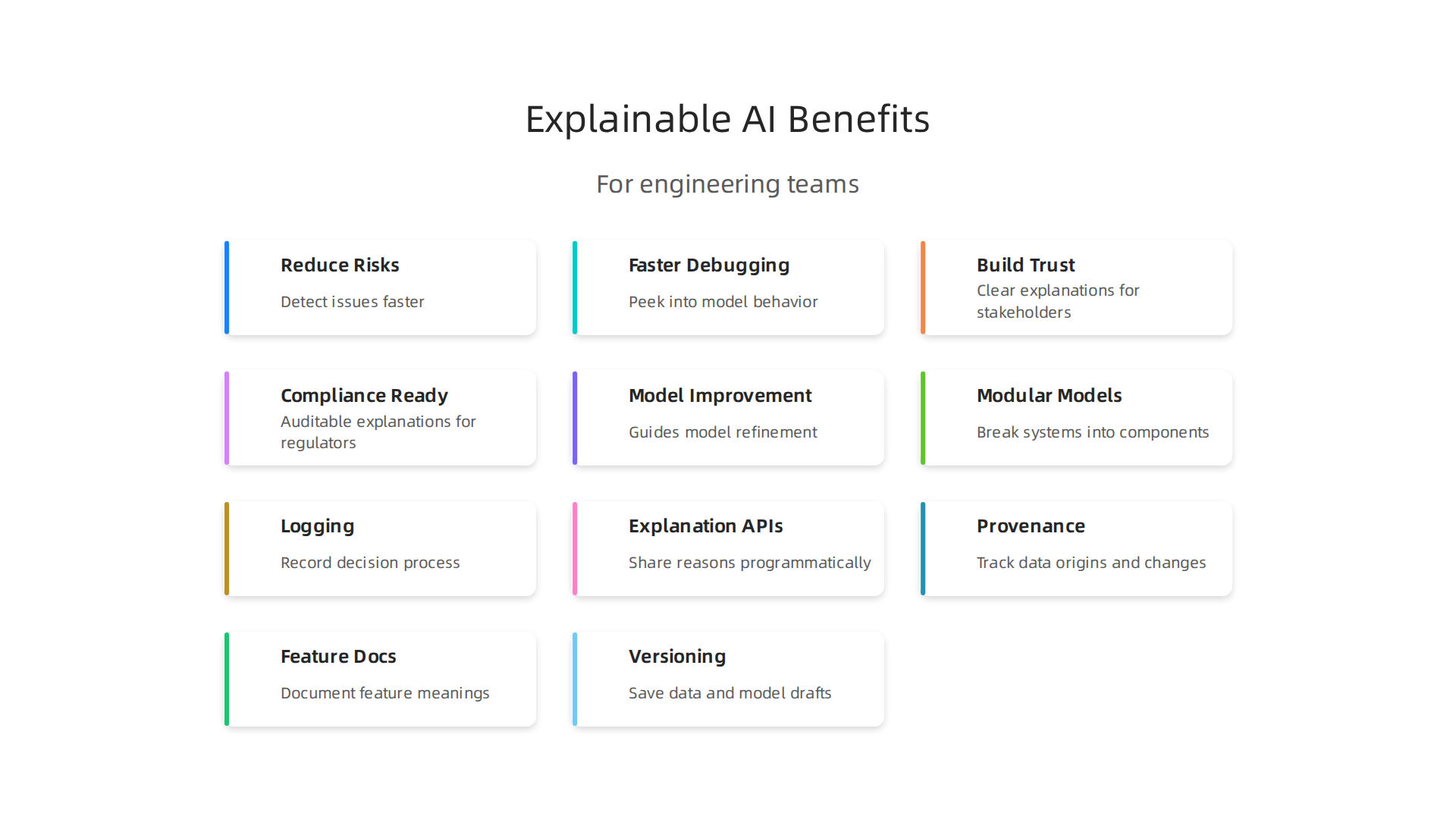
If an AI gives a strange answer or makes a bad choice, explainable AI lets the team peek inside its "brain" to see what went wrong. This helps them understand what caused the error, like finding a loose wire in a complex machine. Being able to understand these issues means teams can fix them before they cause bigger problems, which stops mistakes from happening again. It also helps prevent common traps that can make AI projects fail.
Also, different people involved with an AI system need different kinds of explanations. An engineer might need a very technical explanation to fix a bug, like detailed code steps or data patterns. But a product manager, who focuses on what users need, might just want to know why the AI chose one path over another in simple terms. And if someone is auditing the AI, they need to see clear proof that it’s fair and works as it should. Because of this, it’s really important to design explainable AI systems with all these different people, or "stakeholders," in mind. Making AI easy to understand for everyone helps build trust in these smart systems, which is vital for new technologies in 2026 [2].
Many experts agree that explainable AI is a key part of making responsible and reliable smart systems [3]. This means that when engineering teams build new AI, they must think about how to make it transparent from the very start. It’s not enough for an AI to just work; we need to know how it works.
Citations:
[2] On the Design and Evaluation of Human-centered Explainable AI …
[3] Explainability of artificial intelligence methods, applications …
For engineering teams in 2026, understanding how an AI works is just as important as knowing that it works. But how do we actually tell if an AI is truly explainable? This is where measuring explainability comes in. It’s not a simple task, as there are many ways to look at how well an AI can show its work.
When we talk about measuring explainability, we often use different kinds of tools, from computer tests to asking real people what they think. Some measures are like quick checks, using numbers to guess how clear an AI’s explanation might be. These are called "proxy statistical measures." They might look at how simple the explanation is or how much the explanation changes if the AI’s input changes just a little. These methods are fast and easy to repeat [4].
However, the best way to know if an explanation truly helps is to ask a human. This is why "human-subject evaluations" are so important.

They involve putting an AI’s explanation in front of people and seeing if they understand it, trust it, and can use it to make better choices. Actually, some studies have shown that even when developers say their AI explanations are easy to understand, they often haven’t actually tested them with real users [5]. This highlights a big need for more human-centered approaches to explainable AI [6].
Choosing the right way to measure explainability depends on what you need the explanation for.
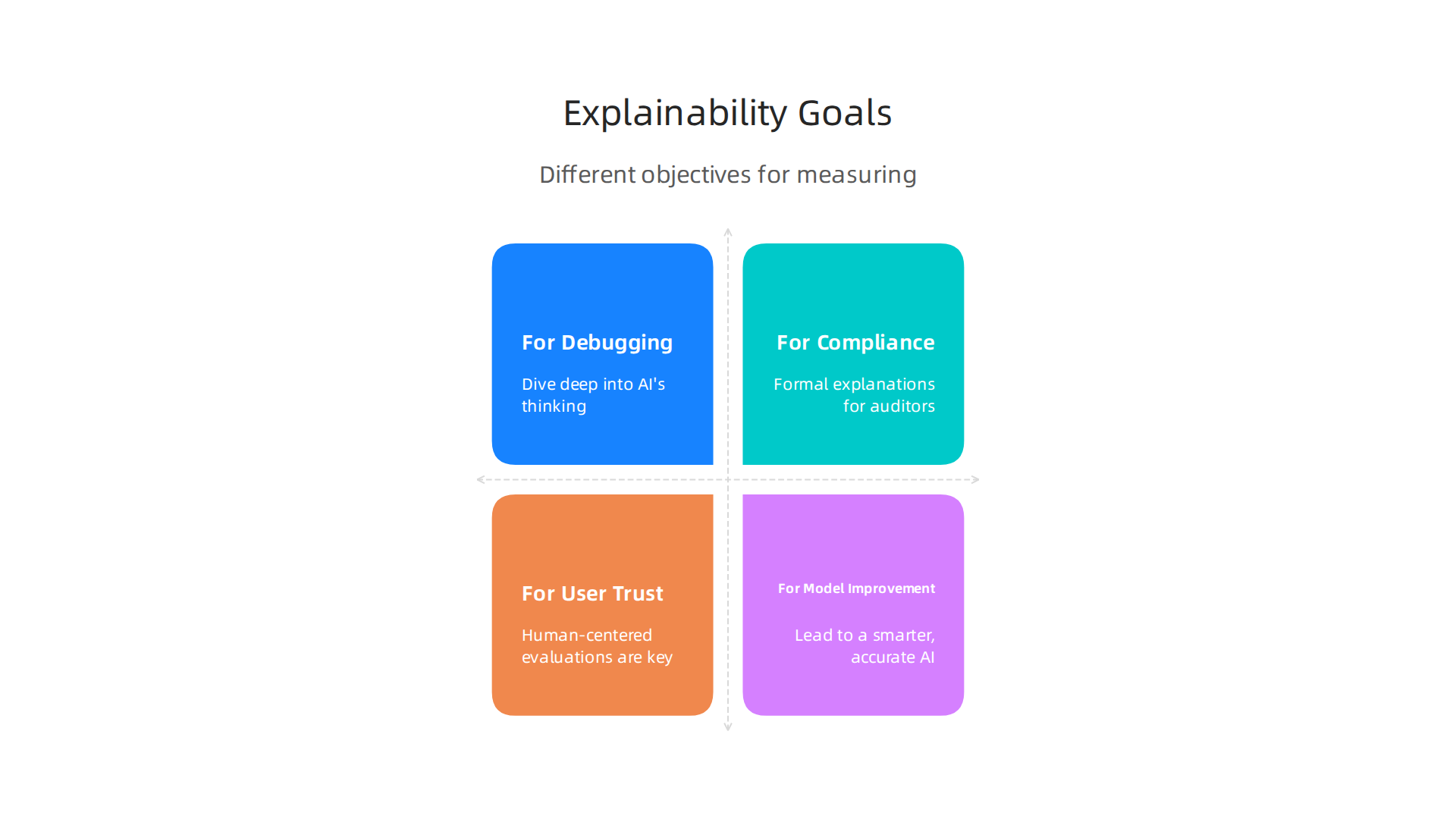
There’s no single "what is the best AI" explainability metric that works for every situation. You pick your tools based on your goal.
- For Debugging: If engineers need to fix problems, they might look at technical metrics. These help them dive deep into the AI’s "thinking" process to find out why it made a mistake.
- For Compliance: If you need to show that your AI follows rules or is fair, you might need formal explanations that can be checked by auditors.
- For User Trust: To make sure users trust and understand the AI, human-centered evaluations are key. You want to know if people actually grasp the explanation and feel good about the AI’s decisions.
- For Model Improvement: Sometimes, explanations help make the AI model itself better. Metrics here would show if the explanations lead to a smarter, more accurate AI over time.
Thinking about how to measure explainable AI helps teams make sure their smart systems are not only powerful but also clear and dependable. It’s all about making sure the explanation serves its purpose, whether it’s for an engineer, a manager, or a regular user. This approach ties into broader goals of responsible AI practices for software teams. By balancing how much an AI can do with how well it can explain itself, we can build better technology in 2026.
[4] Evaluation Metrics for XAI: A Review, Taxonomy, and Practical …
[5] Study finds that explainable AI often isn’t tested on humans
[6] On the Design and Evaluation of Human-centered Explainable AI …
Designing AI System Architectures that Enable Explanation: Patterns and Trade-offs
After understanding how to measure if an AI can explain itself, the next step is to build AI systems in a way that makes them explainable from the start. This is not just about adding an explanation at the end. It’s about how you design the whole system. When we talk about how an AI system is put together, we are looking at its architecture. Good architecture helps make explainable AI a real thing.
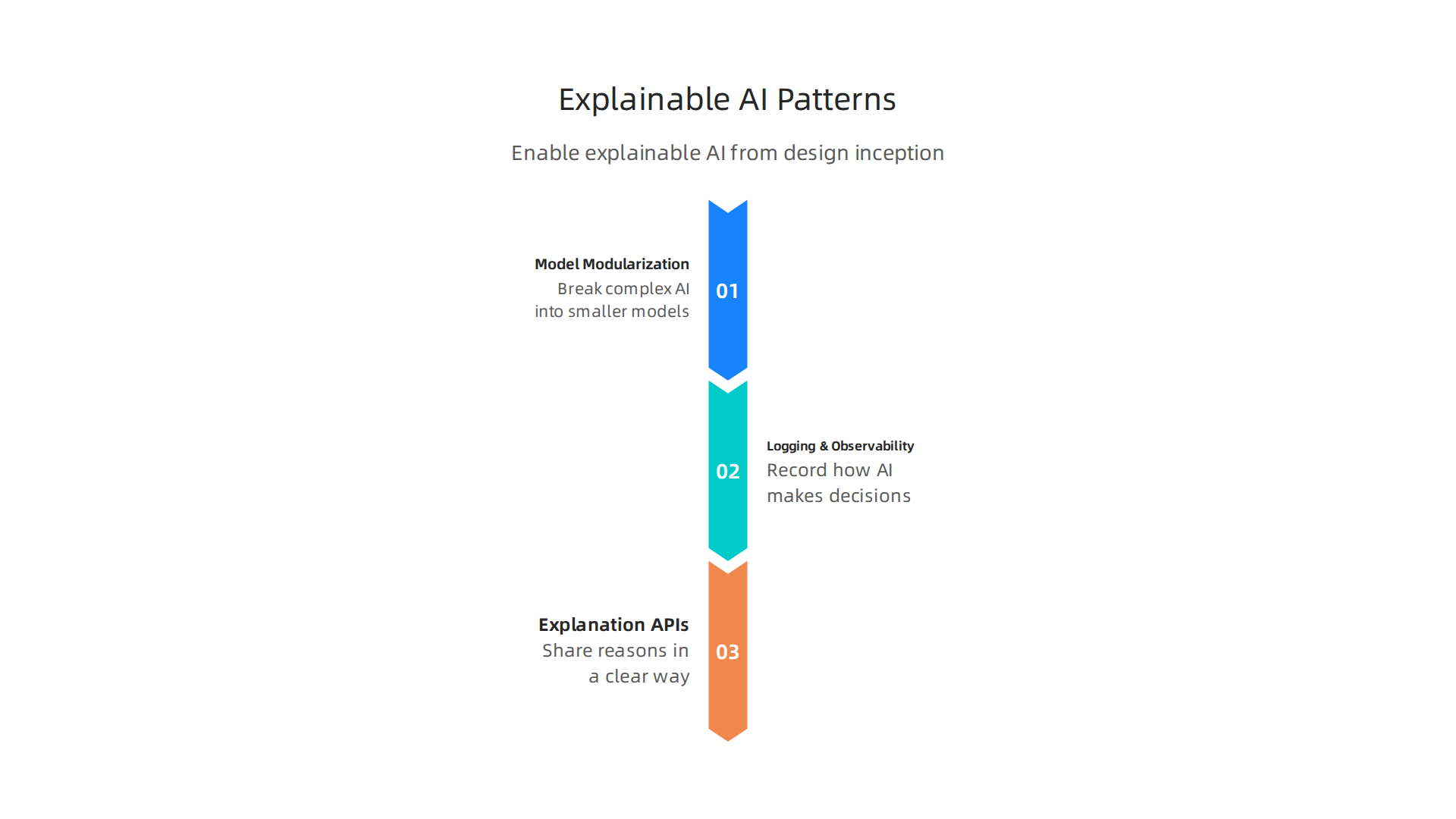
Think about common ways to build software. We use ideas like object oriented analysis and design to break down big problems into smaller, easier-to-manage parts. This same idea works for AI. If an AI system is built with clear, separate pieces, it’s easier to understand what each part does. This is called model modularization. It means breaking a complex AI model into smaller, simpler models. For example, one part might handle recognizing shapes, and another part might decide what those shapes mean. This layered and modular approach can help create explainable AI, especially for industries with strict rules [1].
Another important part of designing for explainability is making sure the system keeps good records. This is where logging and observability layers come in. They are like a digital diary for the AI. These layers record how the AI makes decisions, what data it uses, and what steps it takes. If you need to understand why an AI did something, you can look back at its "diary" to trace its steps. This helps engineers debug problems and helps others trust the AI’s choices.
Finally, to truly enable explainable AI, you need explanation APIs. An API is like a special messenger that lets different parts of a computer program talk to each other. An explanation API allows the AI system to share its reasons or explanations in a clear way that other programs, or even people, can understand. A good example of this is a reference architecture that breaks down how explanation services work alongside data and model services [2].
The Give and Take: Trade-offs in Explainable AI Architecture
Building explainability into an AI system from the ground up sounds great, but it does come with some challenges. These are what we call trade-offs.
- Latency Overhead: Sometimes, adding all these extra steps to explain how an AI works can make the system slower. This is called latency. The AI might take longer to give you an answer because it also has to prepare an explanation. This can be a big issue for AI systems that need to react very quickly [3].
- Data Storage Costs: Keeping a detailed "diary" of every AI decision means storing a lot of data. This extra data storage can cost money and use up more computing power.
- Potential Information Leakage: When an AI explains itself, it might accidentally reveal sensitive information. This means designers must be very careful about what details the AI shares in its explanations to protect privacy and important data.
By thinking about these architectural patterns and their trade-offs early on, engineers can build AI systems that are not only powerful but also transparent and trustworthy.

It’s about using principles from model based systems engineering to ensure that explainability is a core feature, not an afterthought. Making these choices helps us move closer to responsible AI practices in 2026.
To learn more about keeping your AI systems fair and clear, you might find our article on balance AI productivity with responsible AI practices for software teams helpful.
Want to stay ahead with AI and technology insights?
Stay informed daily with the latest breakthroughs and expert analysis. Sign up for The Deep View Newsletter today.
[1] XAI for Regulated Industries under the 2026 EU AI Act
[2] X-SYS: A Reference Architecture for Interactive Explanation Systems
[3] Scalable Explainability-as-a-Service (XaaS) for Edge AI Systems
After building AI systems with a clear structure, the next important step for truly explainable AI is how we manage the data and the models themselves. Even the best AI architecture can fall short if the data used is messy or misunderstood. Good practices in data and model management help us clearly understand why an AI makes certain decisions.
Keeping Track of Everything: Provenance, Features, and Versions
To make an AI’s behavior clear, we need to know the full story of its data. This means using careful provenance.
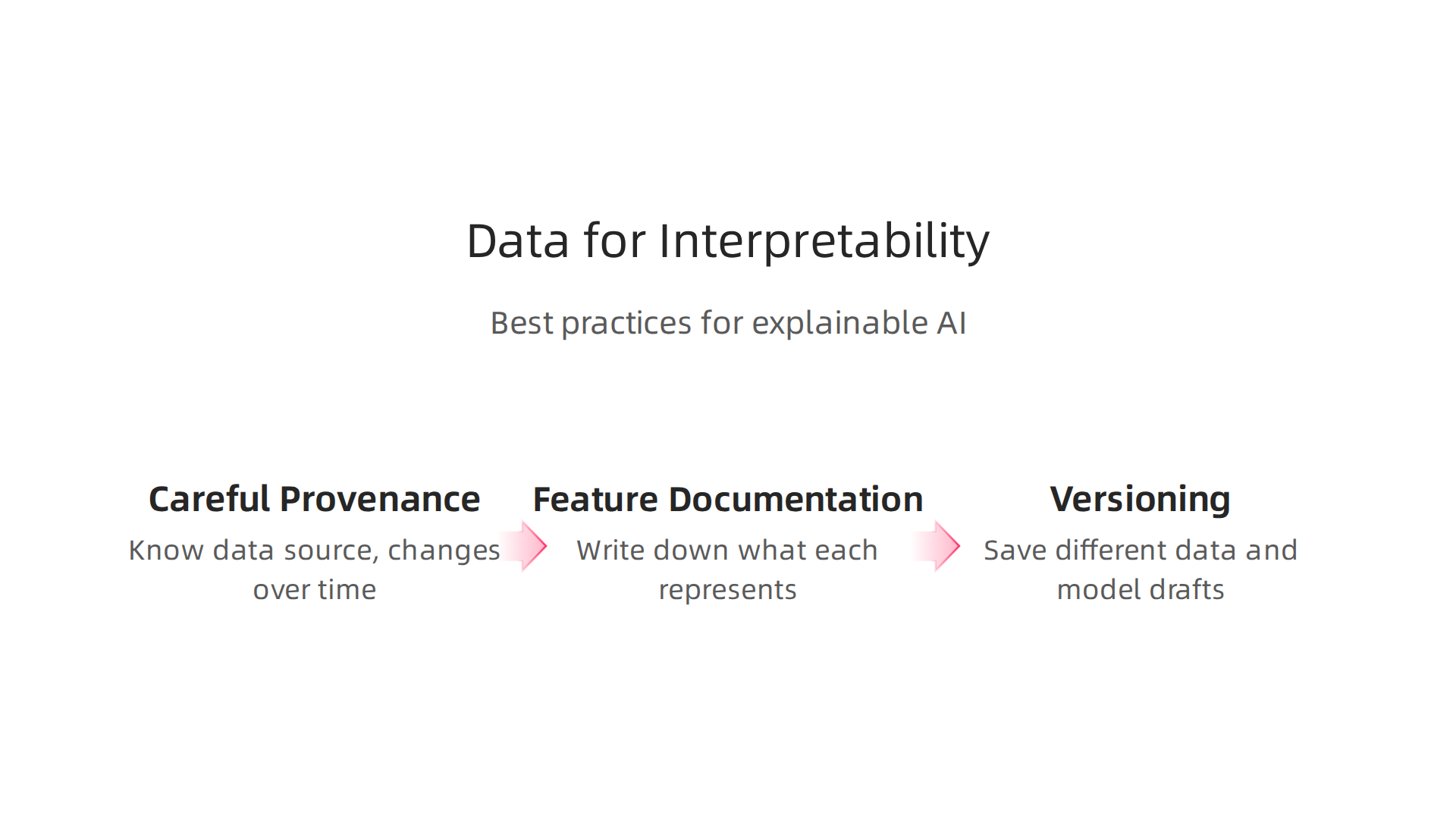
Provenance is simply knowing where your data came from, who touched it, and how it changed over time. Imagine if you were cooking and didn’t know where your ingredients came from or if they were fresh. An AI needs to know its data’s "history" too.
Along with provenance, feature documentation is key. Features are the specific pieces of information an AI looks at to make a decision. Documenting these features means writing down what each one represents, how it was created, and any special notes about it. This helps reduce confusion when trying to figure out what the AI focused on. For example, if an AI is predicting house prices, features might be the number of bedrooms, location, or size. Knowing exactly what each of these means helps us interpret the AI’s predictions.
Finally, versioning for both data and models is very important. Think of it like saving different drafts of a document. If you make a change to your data or update your AI model, you save a new version. This way, if something unexpected happens with a newer version, you can always go back to an older one to compare and understand what changed. Keeping clear versions helps us trace back problems and understand how changes affect the AI’s behavior. This kind of detailed record-keeping is vital for building trustworthy explainable AI, especially when looking at the tools, techniques, and frameworks used in 2026 AI Explainability in 2026: Tools, Techniques, and Frameworks.
Smart Data Choices: Sampling and Counterfactuals
The way data is collected and used also plays a big role in making AI explainable. Data-sampling strategies help here. Instead of using all data, which can be huge, sampling involves picking a smaller, but still representative, group of data. If the sample is chosen carefully, the AI’s explanations based on this sample can still be reliable and accurate.
Another powerful tool for improving interpretability is using counterfactual datasets. These are special datasets created to answer "what if" questions. For example, if an AI denied a loan, a counterfactual dataset might show what small changes to the applicant’s information would have led to approval. By looking at these "what if" scenarios, we can better understand the cause-and-effect relationships within the AI’s decision-making process. This helps to check the reliability of explanations and ensures we understand the causal reasons behind the AI’s output. These practices are essential for developing, training, and deploying machine learning models responsibly AWS Sagemaker in 2026: Build, Train, and Deploy Machine Learning Models.
By carefully managing data provenance, documenting features, keeping track of versions, and using smart data sampling and counterfactual examples, we build a stronger foundation for explainable AI. These best practices help us move closer to making sure we understand not just what an AI does, but why.
After setting up smart ways to handle data and models, we still need the right tools to really understand how an AI makes decisions. It’s like having all the right ingredients and a great recipe, but you also need good kitchen tools to cook well. For explainable AI, this means using special software and programs.
Practical Tools and Libraries for Explainability: What to Adopt and When
In 2026, there are many tools that help us see inside AI models. These tools come in a few main types:
- Explainability Libraries: These are like special code packages you can add to your AI projects. They help you get explanations directly from your models.
- Integrated Platforms: Some bigger software tools for building AI already have explainability features built-in.
- Monitoring Tools: These help you watch your AI models over time and can flag when explanations might be needed.
Let’s look at some of the most popular libraries.
Top Explainability Tools: SHAP, LIME, and More
When you want to understand an AI, two names come up often: SHAP and LIME. These are leading tools that help make AI behavior clear Explainable AI 2026: SHAP, LIME, and Python for Interpretability.
-
SHAP (SHapley Additive exPlanations): This tool is very strong because it can give you both "local" and "global" explanations. A local explanation tells you why the AI made one specific decision (like approving one person’s loan). A global explanation tells you what features are generally most important for the AI’s decisions overall. SHAP works very well with certain types of AI models, like tree-based models, and helps ensure explanations are consistent SHAP, LIME & Captum: AI Explainability Methods Compared (2026).
-
LIME (Local Interpretable Model-agnostic Explanations): LIME is great for quick "local" explanations. It’s like zooming in on one specific decision and understanding what influenced it nearby. LIME is "model-agnostic," which means it can work with almost any kind of AI model, no matter how it was built. This makes LIME useful for systems that are already running and need to explain single predictions quickly Best explainable AI tools for tracing LLM decisions in 2026.
Beyond SHAP and LIME, other tools like Captum and InterpretML are also very helpful. Captum is often used for deep learning models, especially those built with PyTorch, to understand how different parts of the model contribute to a decision ROI of AI Explainability Tools 2026: SHAP, LIME, Captum.
Choosing the Right Tool and How to Use It
Picking the best explainable AI tool depends on what you need. Do you need to understand one specific decision (local)? Or do you need to know how the AI works generally (global)? Is your AI model a simple one or a complex neural network? Some tools, like TreeSHAP, are fast for real-time explanations, which is key for production systems. For very deep neural networks, tools like Integrated Gradients or DeepSHAP are often used SHAP, LIME & Captum: AI Explainability Methods Compared (2026).
Integrating these tools into your existing AI systems can happen in a few ways:
- Wrap: You can "wrap" your AI model with an explainability tool, meaning the tool sits around your model and generates explanations without changing the model itself.
- Proxy: You can create a simpler "proxy" model that acts like your complex AI but is easier to explain.
- Native Integration: Some newer AI platforms have explainability built right in, making it easier to use from the start.
Choosing the right tools and knowing how to fit them into your work is a big part of making AI trustworthy and understandable. It helps you make Strategic choices for developer tools and cloud platforms in 2026. Keeping up with all these advancements in explainable AI can be a challenge. To stay informed and get the latest updates, consider signing up for insights delivered directly to your inbox.
Get clear daily AI updates from The AI Newsletter Worth Reading.
Choosing the right tools and knowing how to fit them into your work is a big part of making AI trustworthy and understandable. But after you’ve used tools like SHAP or LIME to get explanations, how do you know if those explanations are actually helpful? That’s where human-centered evaluation comes in. It means asking real people if the explanations help them understand and use AI better.
Human-centered evaluation: running studies that validate explanations
It’s not enough to just create explanations for your AI models. The big question is: do these explanations actually help people make better choices or spot mistakes? This is what "human-centered evaluation" aims to find out. In 2026, experts are stressing that we need to test explainable AI directly with the people who will use it. It turns out that many times, AI explanations are not tested on humans, which means we don’t truly know if they work as intended Study finds that explainable AI often isn’t tested on humans.
Think of it like this: you can build a fancy car, but you still need people to drive it to see if it’s comfortable, safe, and performs well. For explainable AI, this means running studies where people interact with the AI and its explanations. These studies help us see if the explanations lead to better decisions or help users catch errors more quickly. A key goal is to make sure the AI’s predictions are understood in terms that make sense to a human Towards Human-centered Explainable AI: A Survey of User ….
Designing Effective Experiments for Explanations
To truly validate whether an explanation is useful, you need to design your experiments carefully. Here’s how:
- Define Tasks: First, figure out what specific tasks users need to perform with the AI. For example, if the AI helps approve loans, the task might be to decide whether to trust the AI’s recommendation for a particular applicant.
- Set Baselines: Always compare explanations to something. This could be a "no explanation" scenario, where users only see the AI’s decision, or a comparison between different types of explanations (like feature importance versus counterfactual examples) Designing effective explainable AI: a human-centered evaluation of …. This helps you see if the explanations actually make a difference.
- Objective Success Criteria: What counts as "better"? You need clear ways to measure success. This might include:
- Did users make more accurate decisions with explanations?
- Did they find errors in the AI’s decisions faster?
- Did they feel more confident or trusting in the AI system?
- Was their mental workload reduced?
A good human-centered evaluation should involve different types of users to get a full picture. For example, a study might include people with various levels of tech knowledge to see how explanations work for everyone User-centric evaluation of explainability of AI with and for …. This helps in evaluating what is the best AI approach for different user groups.
Making these strategic choices for your systems is important. Learning how to properly evaluate and integrate Generative AI platforms and other AI systems with human-centered approaches can help avoid the common pitfalls that cause many AI projects to fail. By conducting thorough human evaluations, we can ensure that our efforts in building explainable AI truly lead to more trustworthy and useful AI systems in 2026. This is a critical part of developing a robust developer experience 2026 that includes AI tools.
Making sure explainable AI works for people is a big step. The next important part is how companies manage these AI explanations in their daily work. This means following rules, making sure everything is clear, and being ready for checks, or "audits."
Governance, compliance, and auditing: operationalizing explainability for stakeholders
In 2026, the world of AI is changing fast. Governments and different groups are setting new rules for how AI should work. These rules often focus on how AI makes decisions and how it can explain itself. So, what an AI explanation must include and how long it needs to be kept depends a lot on these rules and a company’s own internal ways of doing things. For example, laws like GDPR already expect AI systems to be auditable and explainable, especially when they handle personal information Focal Points for Auditable and Explainable AI.
For AI to be truly trustworthy, it needs to be "auditable." This means that outside experts or company leaders can look at the AI system and understand exactly why it made certain decisions. To do this well, companies need a clear way to create explanations that can be repeated the same way every time. This is called a "reproducible explanation pipeline." It also means keeping good records, or "proper logging," of all explanations. Plus, there must be "access controls" so that only the right people can see and check these important AI details. This makes sure that the explainable AI systems meet all the necessary standards and requirements guidance on the AI auditing framework.
Having a strong plan for AI helps to make sure that models are transparent and accountable. It involves recording where data comes from and all the steps taken to build and test the AI. This way, if someone needs to check an AI’s decision, they can trace it back clearly AI strategies and compliance plan. This kind of careful operationalizing of explainable AI helps organizations confidently answer questions about their AI systems. It’s all about making sure that while we gain productivity from AI, we also remember to balance AI productivity with responsible AI practices for software teams.
Understanding these rules and putting them into practice is key to building an AI system that everyone can trust, from the people using it every day to the regulators overseeing it.

Get clear daily AI updates from The AI Newsletter Worth Reading.
Summary
This article explains why explainable AI (XAI) is essential for engineering teams in 2026 and gives practical guidance for building systems people can understand, inspect, and trust. It covers how explainability reduces risk, aids debugging, and builds stakeholder trust, then shows how to measure explanations using proxy metrics and human-subject evaluations. You’ll learn architecture patterns—like modular models, logging/observability layers, and explanation APIs—that enable explanation and the trade-offs they bring (latency, cost, privacy). The piece also outlines data and model management practices such as provenance, feature documentation, versioning, sampling, and counterfactuals, and compares popular tools like SHAP, LIME, and Captum. Finally, it explains how to validate explanations with human-centered studies and operationalize explainability through reproducible pipelines, access controls, and audit-ready governance. After reading, engineering teams will have concrete options and evaluation methods to design, test, and deploy explainable AI responsibly.