

Why AI projects fail — and how to avoid the common traps
It’s a big problem: many AI projects don’t actually work out.

In fact, about 80% of AI projects fail in 2026.
This can feel confusing, especially when everyone talks about how amazing AI is. It’s easy to think that if an AI is bad, the technology itself is the problem. But often, the real reasons for these failures have little to do with the AI tools or the latest AI coding platforms.
Instead, many AI projects run into trouble because of common traps. These include not having a clear plan from the start, using data that isn’t ready for AI, or not having the right people with the right skills. Sometimes, teams also struggle with knowing the best AI to use or how to set up rules for managing AI work. It’s like trying to build a house without good drawings or the right tools.
This guide will give you a clear, easy-to-follow plan to help you avoid these common problems. We’ll share smart ways to make sure your AI systems work well and give you real value. Think of it as a helpful rulebook to prevent mistakes, from setting goals to using prompt engineering best practices.
This guide is for anyone who works in tech. That includes software engineers who write the code, managers who lead teams, CTOs who make big tech decisions, and DevOps teams who keep everything running smoothly. You’ll learn how to make better choices and build reliable AI products that truly help your company. Understanding how to avoid these failures is key to successful technology use. If you want to dive deeper into avoiding pitfalls, you might find this article helpful: how engineering teams evaluate technology services to prevent failures.
Want to stay on top of daily AI updates and critical tech trends?
The AI Newsletter Worth Reading
Define success: outcome-first scoping and measurable goals
To truly succeed with AI projects, the very first step is to clearly know what "success" means. It sounds simple, but many AI projects stumble right here. Studies in 2026 show that a big reason why AI projects do not work out is that there are no clear rules for what success looks like before they even start. For example, 73% of failed projects had no agreed success rules at the beginning, according to one report AI bubble 2026: why so many AI projects fail.
This means your team might build something that works well technically but does not actually help the business. Think of it like building a very fast car that can’t carry any passengers or goods. It’s fast, but it doesn’t solve the problem you needed it for. Many AI projects start without linking the AI tool to clear business goals, which leads to problems down the road 2026 AI reckoning: why 80% of projects fail, how to win.
Turn Business Goals into Numbers
For AI projects, "success" should be something you can measure. These are called Key Performance Indicators, or KPIs. They are like scores that tell you how well your AI is doing its job. Instead of saying "make things better," you should say "make things 10% faster" or "cut costs by $5,000 a month."
Here are some ways to measure if your AI is working:
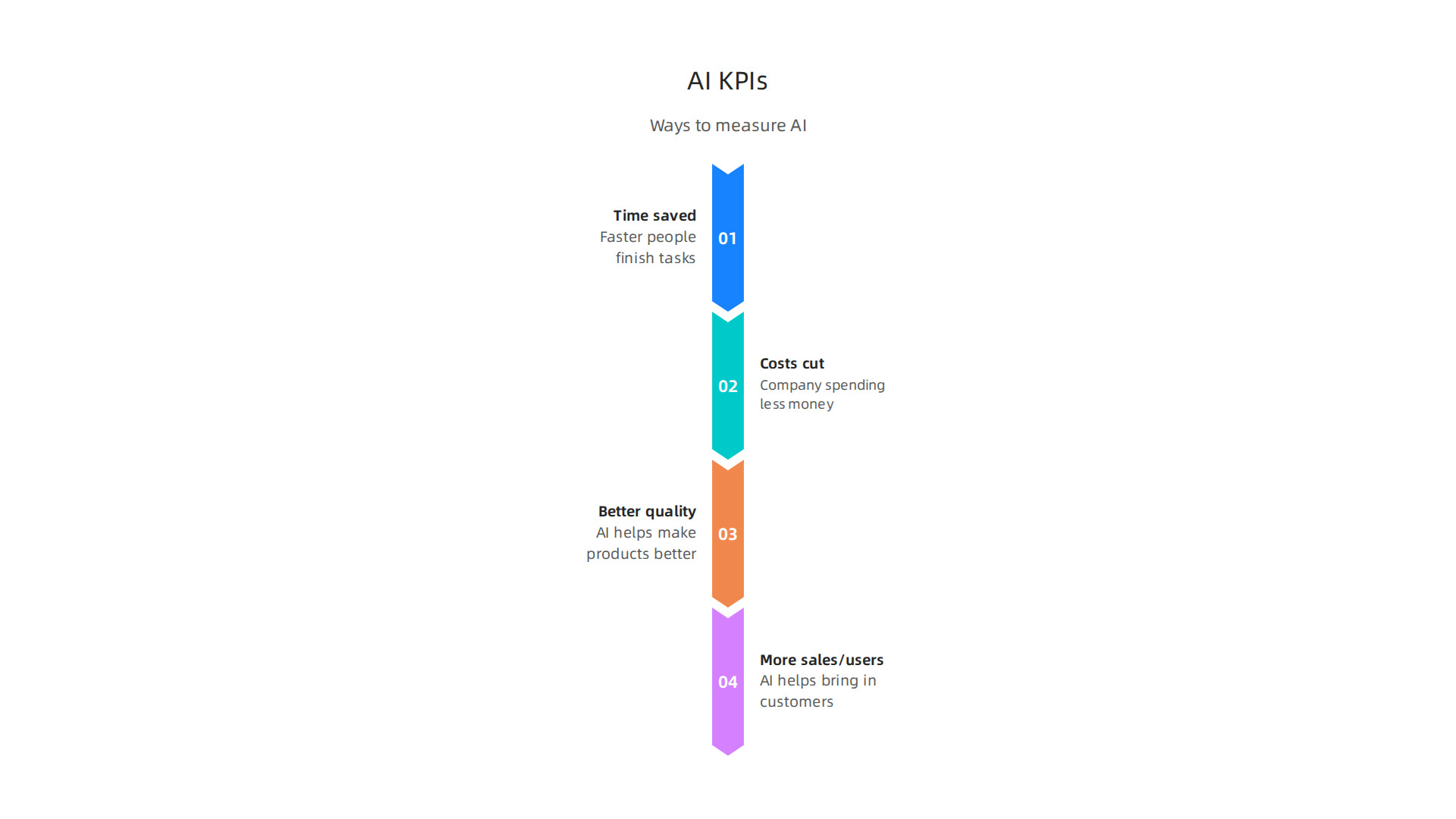
- Time saved: How much faster do people finish tasks when using the AI? For example, if an AI helps a customer service team answer questions, how much less time do they spend on each call?
- Costs cut: Is the company spending less money because of the AI? This could be fewer people needed for a task or lower costs for materials.
- Better quality: Does the AI help make products or services better? Maybe it finds mistakes more often or makes customer experiences smoother.
- More sales or users: Does the AI help bring in more customers or make more money?
Good AI leaders in 2026 are much more likely to keep track of how AI helps their business PwC AI performance study: Want ROI from AI? Go for growth.

It’s important to set clear numbers for how much time is saved or how much more accurate things become Measuring AI Adoption: Metrics for Business Impact in 2026. For example, you can track how many tasks are completed or how much money is gained because of the AI Proving the ROI of AI Adoption: Metrics and Dashboards.
Set Small, Clear Steps
It’s also important to set a realistic scope for your AI project. This means deciding exactly what the AI will do and what it will not do. Don’t try to solve all problems at once. Break down big goals into smaller, easier-to-reach milestones. This helps everyone know if the project is still a test or if it’s ready to become a real product.
For example, your first milestone might be to build an AI that can sort customer emails into three types. The next milestone might be to have the AI write a first draft of a reply for one type of email. This way, you can check progress often and fix things quickly if the AI is bad or going off track.
Get Everyone on the Same Page
For AI projects to truly succeed, everyone involved needs to agree on what "success" means. This includes engineers who build the AI, product managers who decide what to build, and other company leaders. You can use simple templates or documents to write down the success goals. This makes sure that engineering, product teams, and all other important people have the same clear understanding. This also includes setting guardrails to ensure your AI acts responsibly. Learning how to balance AI productivity with responsible AI practices for software teams is a key part of this process.
When everyone knows the exact numbers to aim for and how they will be measured, your AI projects have a much better chance of working well and giving real value to your company. Remember, success for an AI project is not just about having the best AI to use, it’s about making a real difference to your business.
Governance, ethics, and compliance from day one
While it’s important to know what success looks like for your AI projects, it’s just as important to think about how you get there. With AI, this means making sure everything is fair, safe, and follows the rules from the very start. Ignoring these steps can make even the best AI to use turn into a big problem later on. In fact, many AI projects fail because of issues like these, with some reports in 2026 saying that up to 87% of leaders claim to have AI governance frameworks, but fewer than 25% actually use them fully 95% of Enterprise AI Projects Fail. The 5% Do This..
You can think of it like building a house. You wouldn’t just focus on how pretty it looks. You’d also make sure the foundation is strong and that it follows all the building codes. AI projects need this same careful planning.
A Basic Rulebook for AI Projects
To keep your AI projects on the right track, you need a basic governance plan. This is like a simple checklist to make sure your AI behaves well and doesn’t cause harm.
Here are some key parts of this checklist:
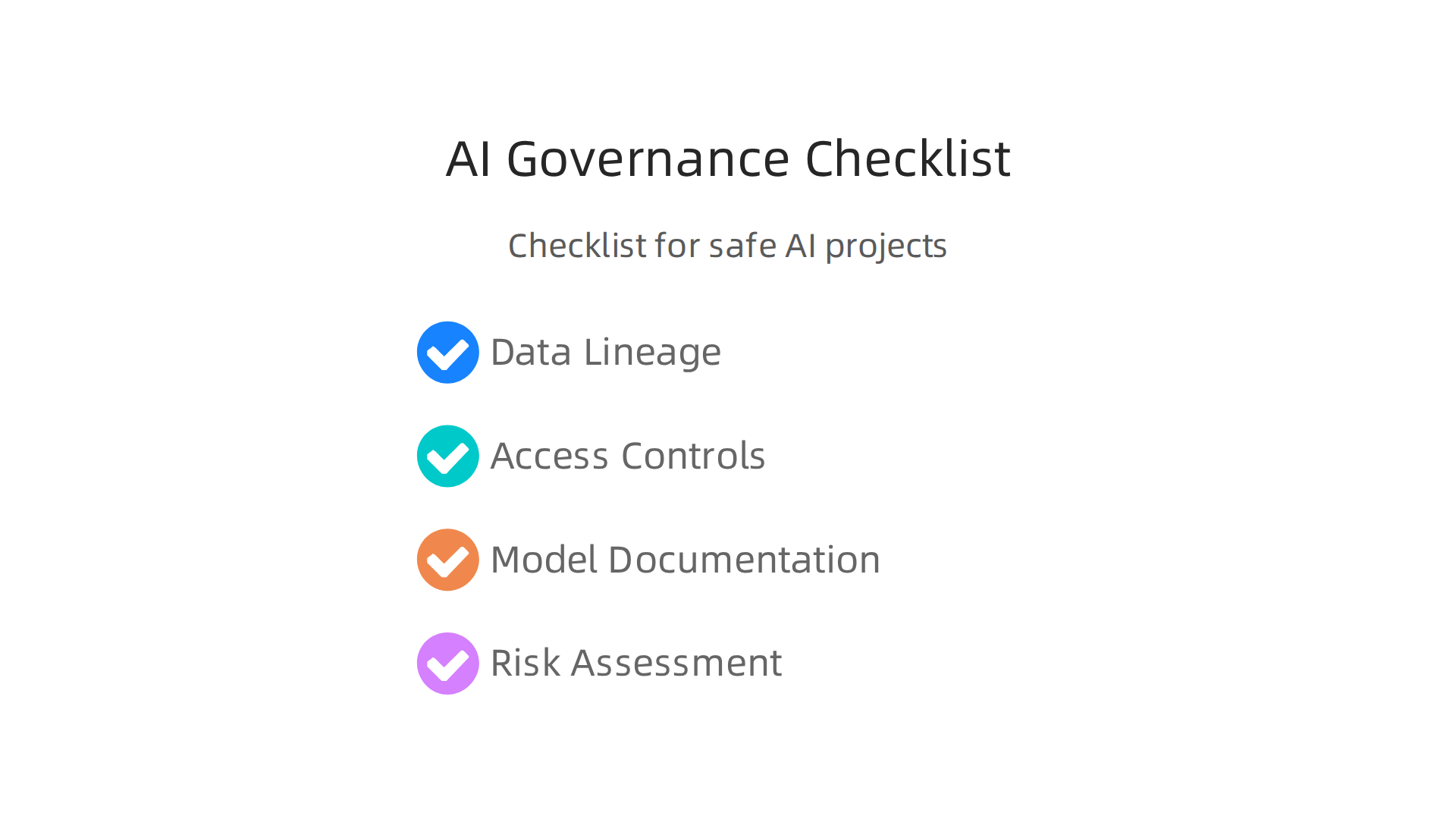
- Data Lineage: This means knowing exactly where all the data used by your AI comes from. Was it collected fairly? Is it correct? If your AI is bad because it learned from bad data, you need to know where that bad data came from.
- Access Controls: This is about deciding who can use your AI and who can see its data. Not everyone should have full access, especially if the data is private or sensitive. Strong controls help keep things secure.
- Model Documentation: This is like writing down a recipe for your AI. It explains how your AI works, why it makes certain decisions, and what kind of information it uses. Good documentation helps you understand and fix your AI if something goes wrong. It’s also helpful for future teams or for understanding if the AI is making fair choices.
- Risk Assessment: Before you even launch your AI, you need to think about what problems it could cause. Could it be unfair to some people? Could it make mistakes that cost money? This helps you find and fix risks early.
Build Ethics and Rules into Every Step
It’s not enough to just think about ethics and rules at the end of an AI project. You need to weave them into every part of the project’s journey. This means having open talks about fairness, privacy, and safety as you define your project goals, choose your data, and build your AI.
For example, when setting up prompt engineering best practices, consider how the AI will respond to different inputs and ensure it’s not biased. You should include steps in your project milestones to review these ethical points. This ensures your AI follows all company rules and laws, which is called compliance. Learning how to balance AI productivity with responsible AI practices for software teams is a key part of this process.
Who is in Charge? Roles and Ownership
For AI projects, it’s important to know who is responsible for what. This helps make sure problems are handled quickly and that the AI continues to work well.
- Model Risk: Who looks for dangers or unfairness in the AI? This person or team makes sure the AI doesn’t do anything harmful.
- Monitoring: After the AI is put to use, who watches it to make sure it’s still working correctly and fairly? This could involve looking at its performance every day or week.
- Escalation Paths: If the AI does something wrong, who do you tell? And who decides what steps to take to fix it? Having clear paths means problems don’t get ignored.
By setting these clear roles, you make sure that someone is always accountable for the AI’s behavior and performance. This helps build trust in your AI systems and ensures they add real value to your business without causing unexpected issues.
Want to stay informed on the latest AI developments and how to manage them responsibly? Get clear daily AI updates from The AI Newsletter Worth Reading.
After you have a good plan for making sure your AI projects are fair and safe, the next big step is to figure out how you’re going to build them.

This means deciding on a clear path, like having a map for a journey. Not all AI work is the same. Some of it is like exploring new lands (research), and some is like building a well-known path (making a product).
When to Use Research vs. Product Paths
For AI projects, you’ll often move through different stages. It’s like cooking: you might try a new recipe (research), make a small taste test (prototype), then a slightly bigger, still simple meal (MLP), before serving it in a restaurant (full product).
- Research Sprints and Prototypes: These are for when you have a new idea or a tricky problem. You’re not sure if AI can even solve it, or if a certain approach is the best AI to use. You might set up short "research sprints" to quickly try out different ideas. A prototype is a simple, quick version to see if an idea works at all. This is where you might experiment with different AI coding platforms to see what fits best.
- MLPs (Minimum Lovable/Productive Proofs): If a prototype looks promising, the next step is an MLP. This is a small but useful version of your AI. It’s built well enough that people can actually use it and get value from it, even if it’s not perfect. It helps you learn what users really like before you build everything.
- Full Productization: Once your MLP proves truly helpful and solves a real problem, it’s time for "full productization." This means building the AI into a complete, reliable product that can be used by many people. This stage requires a detailed plan, connecting business goals, data, security, and making sure the AI works as expected for users, as highlighted in a 2026 roadmap for enterprise AI from experiments to production workflows AI Roadmap 2026: From Experiments to Production.
Working Together: A Unified Roadmap
Building successful AI projects isn’t just one team’s job. It needs different teams to work together smoothly. Think of it as a dance between:
- ML Research: These are the explorers, finding new ways to make AI smarter.
- Data Engineering: These folks make sure the AI has good, clean data to learn from. Remember, if your AI is bad because it learned from bad data, it won’t be helpful.
- Product Teams: They make sure the AI actually solves real problems for users and fits into the bigger picture of the company’s goals.
All these teams need a "unified roadmap." This means they all know what everyone else is doing and how their work fits together. They should have regular meetings to share updates, fix problems, and make sure everyone is working towards the same goal. A good product roadmap in the AI era focuses on knowing user needs and setting clear goals for what to build Product Roadmap in AI Era: From Delivery Plan to …. For engineering teams, creating a clear plan is key to a good developer experience in 2026.
Go/No-Go Decisions
At each step, you need clear "decision gates." These are like checkpoints where you decide if an AI project is ready to move to the next stage or if it needs more work (or should even be stopped). For example:
- Is the prototype actually working as expected?
- Does the MLP show real value to users?
- Can we afford to build this into a full product?
- Are there any ethical concerns or biases we missed that make the AI bad?
By having clear rules for these "go/no-go" decisions, you save time and money. You stop projects that aren’t working early and focus on the ones that have the best chance to succeed. This kind of careful planning helps you build better AI products and avoid unexpected problems. In fact, knowing how to plan, budget, and build is part of a smart 2026 AI product strategy.
After making sure your AI projects have a clear plan and everyone is working together, the very next big step is to build a strong base for your AI: its data. Think of it like building a house. You can have the best plans and builders, but if the foundation is weak, the whole house will have problems. For AI, data is that foundation. If your AI is bad because it learned from bad data, it won’t be helpful to anyone.
The Foundation of Good AI: Data Practices
To make sure your AI projects are successful and predictable, you need clear rules for how you handle data. This includes:
- Instrumentation: This is about collecting the right data from the start. You need to know what information your AI will need to learn and work well. It’s like putting sensors in the right places to gather all the important measurements.
- Labeling Strategy: AI learns from examples. For these examples to be useful, they need to be labeled correctly. For instance, if you’re teaching an AI to spot cats, someone needs to clearly mark which pictures show cats. Having a good plan for how to label data is super important so the AI learns the right things.
- Dataset Versioning: Data changes over time. New data comes in, old data gets updated, and sometimes mistakes are fixed. Dataset versioning means keeping track of all these changes, like saving different drafts of a document. This way, if something goes wrong, you can always go back to an earlier, known-good version of your data. This also helps you understand how different data versions affect how your AI learns and performs. Building this strong data foundation is a key part of how to plan your 2026 product roadmap with AI, making sure you don’t waste time or money later on.
Checking Data Quality: Gates and Tests
Just like you’d check building materials before starting construction, you need to check your data’s quality often. For AI projects, this means having "quality gates" at different stages:
- Before Training: This is where you test the data before your AI even starts learning. You look for missing pieces, wrong information, or things that just don’t make sense. Fixing these problems early saves a lot of trouble later. Experts suggest having data validation steps before your AI starts training and also before you put the model out for people to use, as part of MLOps Pipeline Automation Best Practices in 2026.
- In Production: Even when your AI is working and being used, its data can change. This is called "data drift." For example, if your AI was trained on data from last year, but user habits have changed a lot this year, the old data might not be good enough anymore. You need to keep checking the live data to make sure it’s still good for your AI. Automated testing for features and outputs is a critical part of MLOps in 2026: Best Practices for Scalable ML Deployment. This also helps prevent your AI from making bad decisions because of outdated information.
Smart Data Choices: Focus on What Matters
Collecting and cleaning data can take a lot of time and money. So, it’s important to be smart about it. Don’t try to make all your data perfect at once. Instead, focus on the data efforts that will bring the biggest and fastest improvements to your AI projects.
- Prioritize Impact: Start by identifying the most important parts of your AI and the data they rely on. Make sure that data is top-notch first.
- Early Wins: Getting early wins helps show the value of good data practices. It makes it easier to get more support and resources for bigger data improvement projects later.
- Ethical Data: Remember to think about fairness and privacy with your data. Making sure your data is collected and used ethically is not just good practice, it helps build trust and makes your AI better for everyone. If you’re looking to dive deeper into making sure your AI systems are robust and ethical, understanding both how you feed data into your AI (context engineering) and how you talk to it (prompt engineering) is key. You can learn more about Context Engineering vs. Prompt Engineering: Architecting Robust AI Systems.
Staying updated on the latest in AI and how to handle data correctly is crucial in 2026. For clear, daily insights into AI and broader technology developments, consider subscribing to The AI Newsletter Worth Reading.
Beyond making smart choices about your data, how you build and manage your AI systems is also super important. This means thinking about how all the different parts of your AI work together, like building a strong and reliable house. This is where "architecture" and "MLOps" come into play for your ai projects.
Architecture and MLOps: building for reliability and scale
To make sure your AI works well not just once, but all the time, you need a good blueprint and a smooth way to keep it running. This involves choosing the right pieces for your AI system and setting up smart ways to handle changes.
Essential Parts of Your AI System
When you’re putting together your AI, you’ll need a few key parts that work together:
- Model Serving: This is how your AI model actually delivers its answers or predictions to users. Think of it like a smart cashier at a store. When a customer asks a question, the cashier (your AI model) quickly gives the right answer. How you set this up can affect how fast and reliable your AI is. There are many ways to serve models, from simple to very complex, as explained in guides about ML Model Serving Patterns Architecture Deep Dive.
- Feature Stores: Imagine all the useful bits of information your AI needs to make a decision are stored in a special, easy-to-grab pantry. That’s a feature store. It keeps all the data your AI uses (called "features") ready and in the right format. This helps your AI make faster and more consistent decisions, whether it’s learning new things or giving real-time answers. Experts describe a common MLOps architecture that includes feature pipelines feeding into data lakes or data warehouses, which then connect to feature stores to make sure your AI has access to the most accurate information it needs to function well MLOps Architecture: End-to-End Design for Production.
- Observability: This means being able to "see" what your AI is doing at all times. It’s like having a dashboard with all the important gauges. You can check if the AI is giving good answers, if it’s using the right data, and if there are any problems. This helps you fix issues quickly and make sure your AI is always performing its best.
Making AI Pipelines Smooth
Just like a factory assembly line, your AI needs a clear path to go from an idea to a working tool that people use. This is often called MLOps, which stands for Machine Learning Operations.
It combines the best ideas from software development (DevOps) with the special needs of AI.
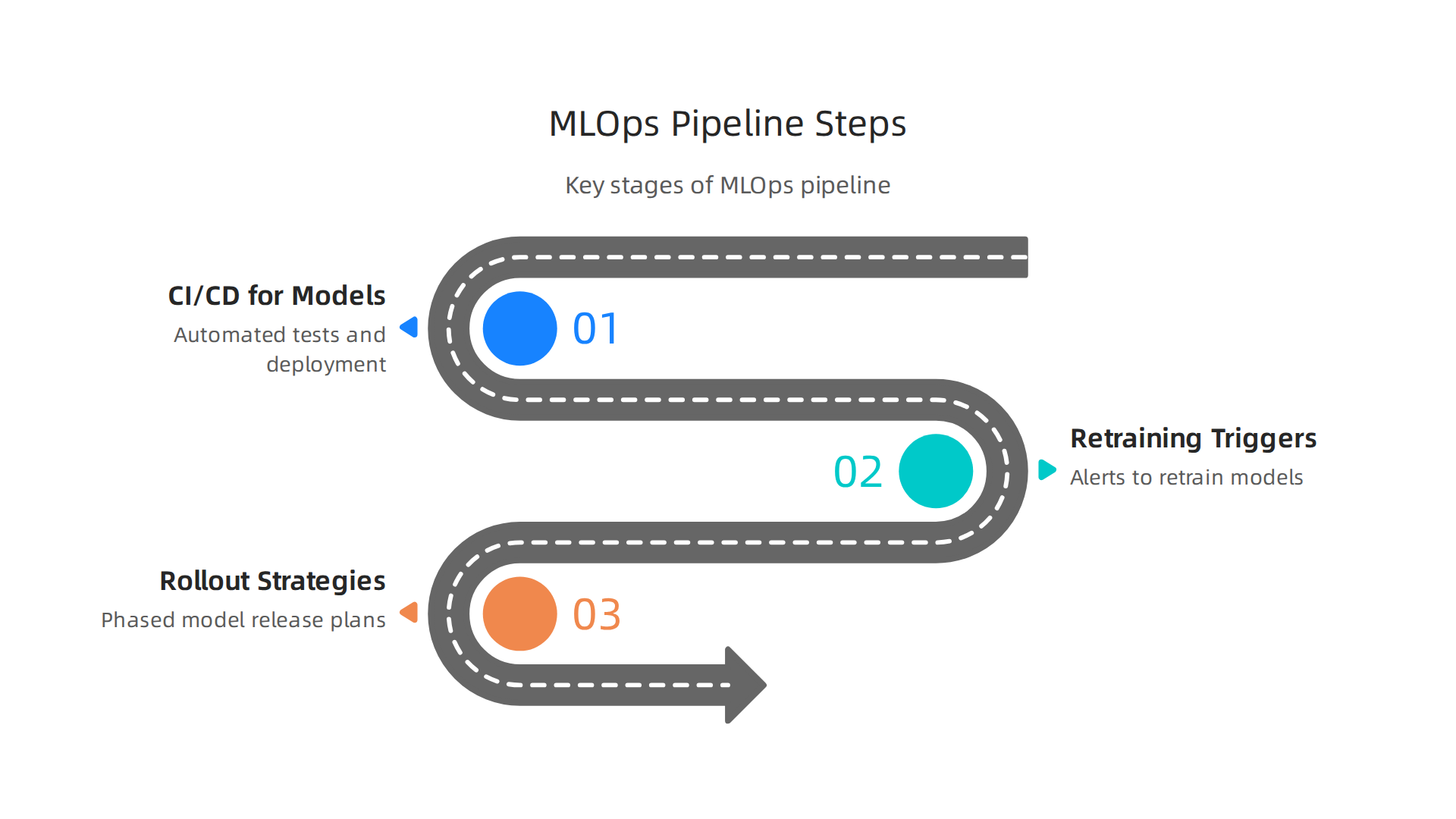
- CI/CD for Models: This is about having automatic steps to test your AI model and put it into use.
- Continuous Integration (CI): Every time you make a change to your AI code, it automatically gets tested. This catches problems early, so you don’t find out your AI is bad much later.
- Continuous Delivery (CD): Once the tests pass, the new AI model is ready to be put into action. It can be rolled out to users, either fully or slowly over time.
Many teams have special CI/CD pipelines for their AI models, helping them manage new models, new data, and even new ways to test, as noted in a 2026 guide on MLOps Pipeline Architecture: Building Production-Grade ML.
- Retraining Triggers: AI models need to learn new things or refresh what they know because the world changes. Retraining triggers are like alarms that tell your AI, "Hey, it’s time to learn again!" This can happen when the data starts to change, or after a certain amount of time.
- Rollout Strategies: When you have a new and improved AI model, you don’t always want to switch it on for everyone all at once. Rollout strategies help you do this smartly. For example, you might try the new model with a small group of users first (this is called "canary deployment" or "shadow deployment") to make sure it works perfectly before everyone gets it. This is a common practice in 2026 for those using advanced MLOps tools.
Choosing Your Tools: Managed vs. In-House
When setting up your AI architecture and MLOps pipelines, you have a big choice: do you use ready-made tools from cloud companies, or do you build everything yourself?
- Managed Cloud Services: Companies like Amazon, Google, and Microsoft offer many tools specifically for AI projects. These "managed services" handle a lot of the tricky parts for you, like setting up servers and keeping them running. This can save you a lot of time and effort, especially for smaller teams or those just starting with AI. You can find many guides on using these services as part of your overall strategic choices for developer tools and cloud platforms in 2026.
- In-House Stacks: Some larger companies choose to build their own tools and systems from scratch. This gives them a lot of control and allows them to customize everything exactly how they want it. However, it takes more time, money, and skilled people to build and maintain.
The best choice depends on your team’s size, skills, and how much control you need over every little detail. Many companies find a mix of both works well, using cloud services for some parts and building their own custom solutions for others. If you’re looking for a deeper understanding of how these different parts fit together for production-grade AI systems, there are comprehensive guides on MLOps in 2026: The Definitive Guide that cover tools, cloud platforms, and architectures.
After thinking about how your AI systems are built and managed, it’s clear that having the right people on your team is just as important. Think of it like this: even the best house design needs skilled builders to make it real. For successful ai projects, you need people with special skills who know how to work together.
Team Composition & Hiring: Roles, Skills, and Ramping Up AI Capability
Bringing AI ideas to life needs a special kind of team. The roles are often different from classic software teams, and you need smart ways to find or teach people these new skills.
Essential Roles for AI Projects
When you’re building AI products, you’ll need roles that focus on different parts of the AI journey:
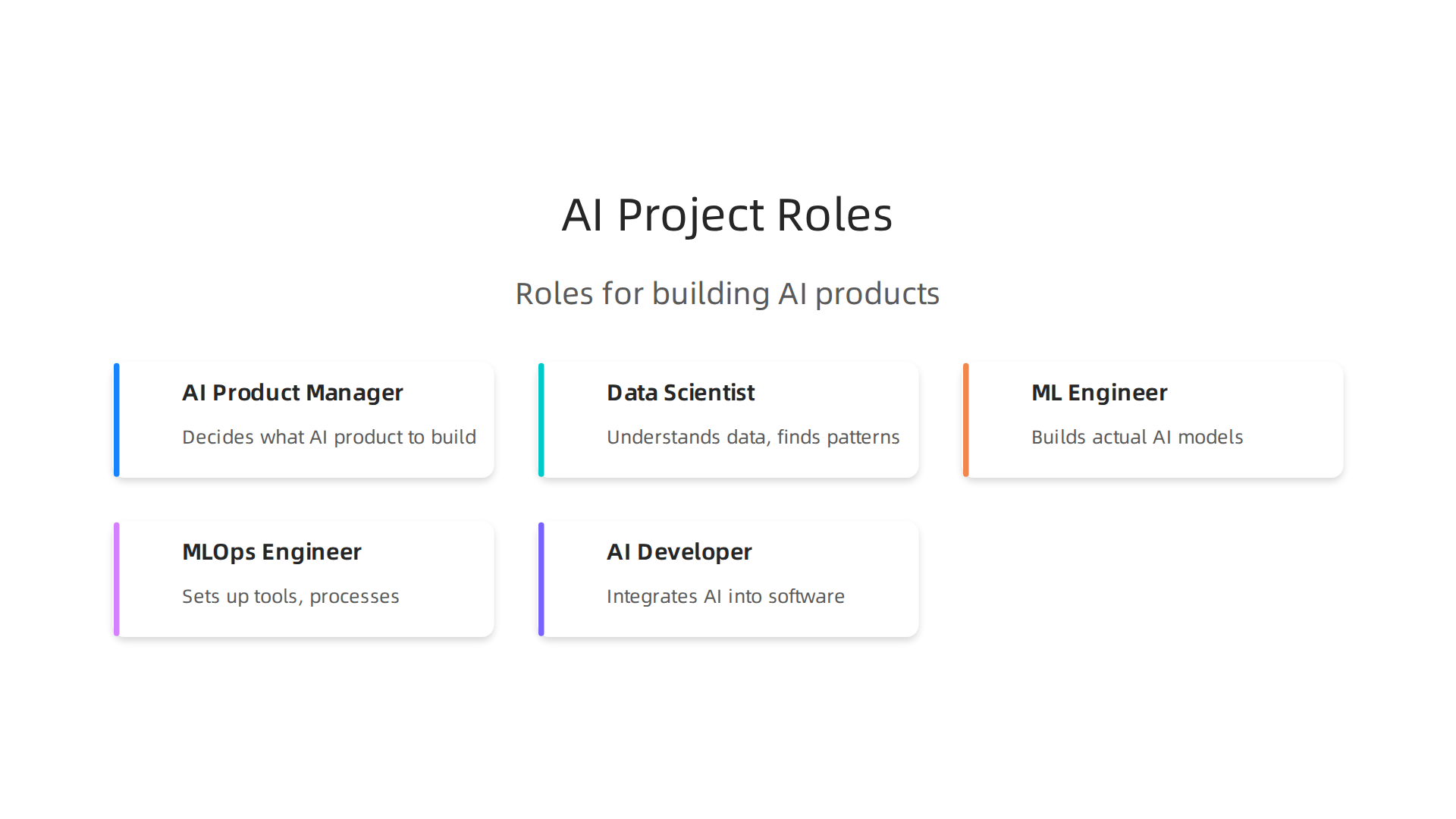
- AI Product Manager: This person helps decide what AI product to build. They understand what users need and how AI can solve those problems. They make sure the team builds the right thing.
- Data Scientist: These are the people who deeply understand data. They clean it, find patterns, and help create the ideas for AI models. They ensure the AI learns from good information.
- Machine Learning (ML) Engineer: These engineers take the ideas from data scientists and build the actual AI models. They write the code, train the models, and make sure they work well. They also set up the systems that let the AI run.
- MLOps Engineer: As we talked about earlier, MLOps is about making AI run smoothly. The MLOps engineer sets up the tools and processes to build, test, and put AI models into use, and then keeps an eye on them. Their work helps connect the data science part with the software part.
- AI Developer: Sometimes a general developer who knows how to work with ai coding platforms and use existing AI tools is needed. They focus on integrating AI into existing software.
These roles often work more closely with data and model performance than traditional software roles. A typical early-stage AI-native team might include two to three AI/ML engineers, one to two data engineers, one MLOps engineer, and one AI product manager, according to a 2026 guide on AI-Native Team Structure: Roles and Composition.
Getting the Right Skills on Your Team
Once you know what roles you need, the next step is to fill them. You have a few ways to do this:
- Hiring New Talent: Look for people who already have the skills you need. The developer job market 2026 is very active for AI specialists. You might find people specializing in areas like prompt engineering best practices or specific AI frameworks.
- Upskilling Current Employees: Many companies choose to train their existing staff. This can mean offering special courses or certifications. For instance, your current software engineers might learn how to become ML engineers by taking best AI certification courses in 2026. This helps close skill gaps quickly and keeps your team growing.
How AI Teams Are Set Up
How your AI team fits into your larger company structure is super important for how well they work. There are a few common ways companies do this in 2026:
- Centralized Model: One big AI team handles all AI projects for the whole company. This team, sometimes called an "AI Center of Excellence," builds standards and shares expertise. This works well for companies just starting with AI, as it helps set strong foundations and consistent practices.
- Embedded Model: AI experts are placed directly within different product teams. For example, an ML engineer might work full-time with the team building a specific customer app. This helps the AI team understand the product’s needs deeply, but can sometimes mean less shared learning across the company.
- Hybrid Model: Most companies in 2026 use a mix of both. They might have a small central team that builds shared tools and sets company-wide rules, while also embedding AI engineers within product teams to work on specific features. This "hub-and-spoke" approach is very popular because it gives companies both control and flexibility, as noted in reports on AI Team Structures 2026: Central, Embedded, and Hybrid. This model helps ensure that ai projects get the specialized attention they need while still benefiting from shared knowledge and resources.
Choosing the right structure depends on how big your company is, how mature your AI efforts are, and how much control you want over your AI strategy. A common structure for larger companies often involves a central platform group that manages shared AI infrastructure, with embedded engineers working directly on product delivery within smaller teams, as further explained in a 2026 guide to AI Engineering Org Structure.
To stay on top of the latest developments in AI team structures and all other critical AI news, consider getting daily updates.
Get clear daily AI updates from The AI Newsletter Worth Reading.
After setting up your AI team and getting the right people in place, the next big step is to show everyone that your hard work is paying off. It’s not enough to just build great AI models; you need to clearly show how these ai projects help your business grow and save money.
Measure, Iterate, and Show ROI: Metrics That Matter to Executives
Executives and business leaders want to know that the money and time spent on AI are bringing real value. This means you need to speak their language, which often involves numbers like return on investment (ROI). Many companies in 2026 are still figuring out how to measure the value of their AI efforts. Actually, only 29% of executives feel they can properly measure AI returns, according to one 2026 report on the AI ROI Gap.
Connecting AI Metrics to Business Value
When your team works on ai projects, they look at technical details like how accurate an AI model is. But executives care more about how that accuracy helps the company. For example, if an AI model is 95% accurate, how does that translate into faster customer service, fewer errors, or more sales?
You need to connect these technical measures to clear business benefits. Think about:
- Cost Savings: Did the AI help reduce spending? For instance, by automating tasks that used to take many hours.
- Time Saved: Did the AI make processes faster? This can mean employees finish work quicker or customers get answers sooner.
- Revenue Growth: Did the AI help bring in more money? Maybe by suggesting better products to customers or improving marketing efforts.
Leading companies are much better at this. AI leaders are 80% more likely to keep track of how AI projects help their business, according to a PwC AI performance study. They use key indicators like the time saved per task and the impact on revenue to show real results for AI adoption. The 2026 AI Automation ROI Benchmark Report offers detailed public metrics for different AI use cases, which can help you understand common benchmarks.
Monitoring for Health and Impact
Once an AI model is running, your job isn’t over. You need to keep a close eye on it to make sure it continues to perform well.
- Drift Monitoring: AI models can sometimes "drift," meaning their performance slowly gets worse over time because the real-world data they see changes. Regular monitoring helps catch this early.
- User Impact: How are real users interacting with the AI? Is it helping them, or causing problems? It’s important to monitor user feedback and how the AI affects their experience. This also ties into how you can balance AI productivity with responsible AI practices to avoid negative impacts.
- Maintenance Costs: Keep track of how much it costs to keep the AI system running, including computing power and team effort. This helps show the full picture of its value over time.
Ignoring these checks can lead to problems, making people think "ai is bad" or not trustworthy. Monitoring helps you ensure your AI delivers long-term value. For example, knowing how to measure the return on investment for enterprise AI search can show big gains in time saved and user satisfaction, as highlighted in a 2026 guide on How to Measure Enterprise AI Search and Agentic AI ROI.
Communicating Progress to Leaders
Non-technical leaders need to quickly grasp how AI is performing without getting lost in technical details. A clear dashboard is your best friend here.

- Consistent Dashboards: Create easy-to-understand dashboards that show the key business metrics we talked about. This could include charts showing cost savings, time saved, or how many tasks the AI has handled.
- Clear Language: Explain progress and risks in simple, everyday language. Avoid jargon that only your AI team understands.
- Focus on Outcomes: Instead of saying "model accuracy is up by 2%", say "the AI now resolves customer issues 10% faster, saving us X dollars per month."
Many tools today help create these kinds of dashboards. For example, platforms like Oracle offer a Business Value Dashboard to show the estimated ROI for AI agents, including time and cost savings. Microsoft Copilot also has analytics to help measure adoption and business value, showing leaders the impact and helping you keep them engaged. A comprehensive guide on Proving the ROI of AI Adoption: Metrics and Dashboards suggests core dashboard elements for different stakeholders. By clearly showing the money saved and new value created, you help everyone see the true benefit of your ai projects.
Summary
This article explains why so many AI initiatives fail and gives a practical playbook to avoid the most common traps. It covers how to scope outcome-first goals and measurable KPIs, embed governance and ethics from day one, choose the right research-to-product path, and build a solid data foundation with versioning and quality gates. You’ll also learn how to design reliable architecture and MLOps pipelines, decide between managed and in-house tooling, and assemble the team roles that actually move projects forward. The guide explains go/no-go decision gates, monitoring for drift and impact, and how to translate technical metrics into executive-facing ROI. Read it to gain concrete steps for reducing risk, improving delivery, and turning AI experiments into sustainable business value.