
Many companies in 2026 find it tough to build new software quickly.

They often need special skills, but hiring new team members takes a long time. This can slow down important projects. Imagine you have a great idea for an app, but your team is too busy, or they don’t have the exact skills needed. This is a common challenge for engineering teams today. You need a way to get work done fast, with the right experts, without the headache of long hiring processes.
This is where a strategic partner like a software services company comes in. These companies offer specialized skills and extra help for your projects. They can act like an extension of your own team, helping with everything from creating new software to giving expert advice. Think of them as comprehensive IT services for engineering leaders in 2026 for your software needs.
Working with a software services company can bring many good things. It helps your team move faster, delivers high-quality work, and brings in fresh ideas. For example, some partnerships have been shown to increase investment in research and development, helping companies grow even more, according to a 2023 report titled Knowledge Transfer Partnerships Evaluation: Final Report. These partners can fill skill gaps, whether you need help with an e-learning software development company project or are looking for a top software development company in India or a software development company Canada to meet specific project needs. This kind of engineering consulting can make a big difference.
This guide is here to help you. We will show you how to look at different options, pick the best software services company for your needs, and work with them so your projects move smoothly. Our goal is to make sure your partnership helps you build products faster and adds value for a long time. Staying updated on the latest tech trends, especially in AI, can also give your team an edge. The AI Newsletter Worth Reading offers daily updates to keep you informed.
Define the strategic goals a software services company should meet
Before you choose a software services company, it’s really important to know what you want to achieve. Think about your big goals for your business. Do you need to build software faster so it gets to your customers sooner? Do you want to lower risks, like making sure new features don’t break old ones? Or do you want to bring in new skills, like using Artificial Intelligence or Machine Learning? These are called business outcomes.
You need to turn these big business outcomes into clear needs for your software partner. For example, if you want faster project completion, a good software services company should have quick ways of working. If you want to avoid problems, they should have strong quality checks.
Next, you need to decide what special skills or help you need. This means picking what kind of work the partner will do. Here are some common types of help you might need:
- Making New Features: Maybe you need extra hands to build new parts of your software or app quickly.
- Building the Core System (Platform Engineering): This is about creating the main tools and systems your own team uses to build other things. It makes everyone’s work easier and faster.
- AI/ML Expertise: In 2026, many companies need help with Artificial Intelligence and Machine Learning. A partner can help you add smart features to your products or use AI to make your processes better. For instance, AI can be used to find problems in your software development pipeline before they cause big delays, as shown in research on artificial intelligence for failure detection in CI/CD pipelines.
- DevOps Automation: This is about making sure your code is built, tested, and sent out smoothly and automatically. A software services company can set up these systems for you.
By clearly listing these needs, you can find a software services company that truly fits what you’re trying to do. This kind of thoughtful approach is key to understanding engineering technology trends in 2026 and how a partner can help.
After you know what you want to achieve, the next step is to pick the right way to work with a software services company. There are a few main ways a company can help you. Each one is a bit different in how it works and what it means for your business. Let’s look at the most common types: staff augmentation, outcome-based, and managed teams.
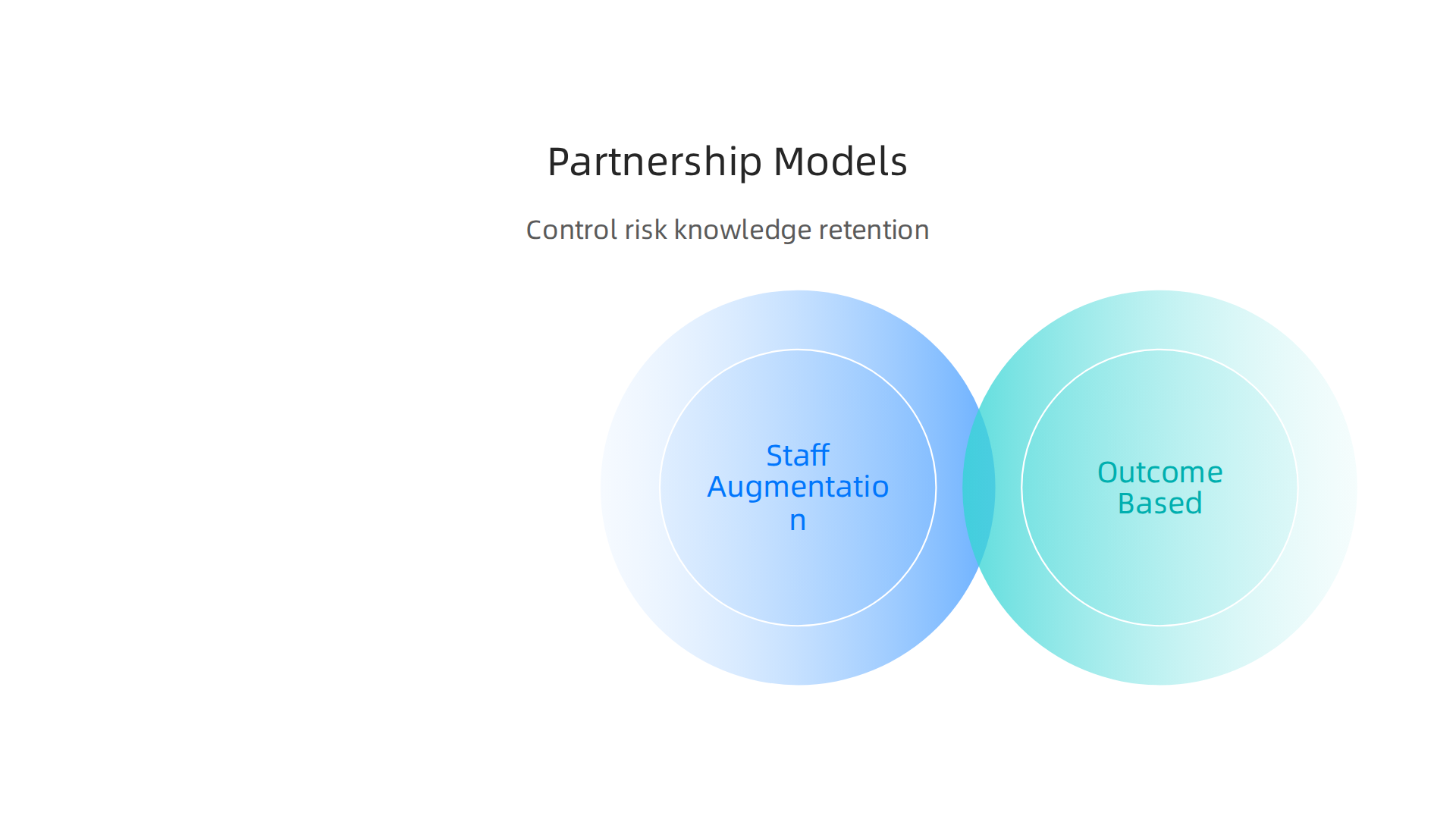
Staff Augmentation: Adding Extra Hands
Think of staff augmentation like bringing in a temporary helper for your team. A software services company sends you one or more of their experts, like a programmer or a tester, to work directly with your existing team. These experts follow your rules and work on your projects just like your own staff.
- Pros: You have a lot of control over the work they do. It can be a fast way to get special skills you need quickly without hiring someone full-time.
- Cons: You still manage them a lot, and when they leave, they take their knowledge with them. It’s not usually a long-term solution for building up knowledge within your company.
Outcome-Based Engagements: Paying for Results
With an outcome-based partnership, you tell the software services company what final result you want, like "build this new feature" or "fix this problem." They then figure out the best way to get it done. You agree on the "outcome" or result beforehand, and you pay them when they deliver that specific result.
- Pros: It’s often less risky for you because the company is focused on delivering a clear result. You don’t have to worry about managing their day-to-day tasks. This approach often uses what is called engineering consulting.
- Cons: You have less control over how they do the work. If your needs change a lot during the project, it might be harder to adjust.
Managed Teams: Letting Them Handle It All
A managed team model means the software services company takes full responsibility for a whole part of your software project or even an entire product. They provide the team, manage them, and make sure the work gets done. It’s like having a small, expert team of their own running a piece of your business for you. This can be great for a growing business, whether you’re working with a software development company Canada or a top software development company India.
- Pros: This option offers full service. The partner keeps the team together, so knowledge stays within their group and doesn’t leave your project if one person moves. It can lead to strong, long-term partnerships.
- Cons: You give up a lot of direct control, though you still guide the overall goals. It might cost more upfront than just adding extra staff. Finding the right partner for this kind of work is critical, as highlighted in current IT Procurement Best Practices 2026.
Choosing the best partnership model depends on what you need most: control, speed, or long-term knowledge.

Each option has its benefits and drawbacks. To dive deeper into making the right choice, learn how to pick the right software development company in 2026 for your specific needs.
To stay sharp on tech advancements and trends that impact these decisions, consider getting daily updates.
Ready to level up your AI knowledge? The AI Newsletter Worth Reading delivers clear, daily insights directly to your inbox.
After deciding how you want to work with a software services company, the next big step is to make sure they are really good at what they do. You need to look closely at their technical skills and how their team works together. This helps you find a partner that can build great software and also fit well with your own company.
How to Evaluate Technical Capabilities
When you look at a software services company, check their technical skills very carefully.
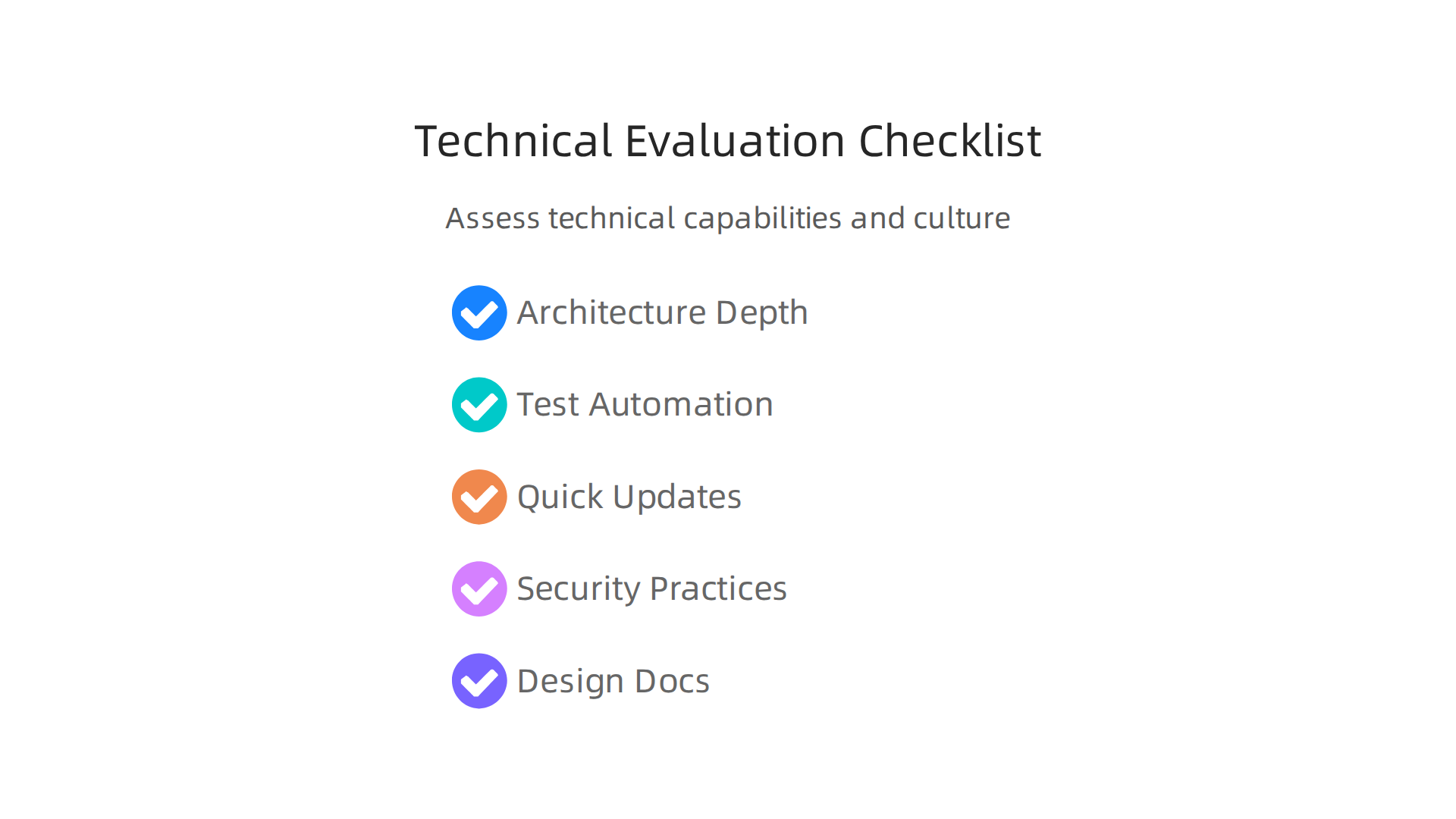
This means looking at how they build things, how they check their work, and how they keep things safe.
- How They Build Software (Architecture Depth): Think of software architecture as the blueprint of a house. A good company creates a strong plan that makes software easy to update and fix later on. Ask them how they design their software to last and grow.
- Automatic Testing (Test Automation): Good software teams use automated tests. This means computers check the code for mistakes very often. They should have tests like unit tests (checking small parts), integration tests (checking how parts work together), and regression tests (making sure new changes don’t break old features). This is a core part of good software building, as it helps prevent many problems down the road. You can learn more about different kinds of testing in CI/CD pipelines when evaluating a team’s approach to quality CI/CD Testing Explained: Strategies, Best Practices & Tools.
- Quick Updates (CI/CD): CI/CD stands for Continuous Integration and Continuous Delivery. It’s about how fast and smoothly they can add new features and fix bugs. A strong CI/CD process means they can make changes often and safely. You should ask about their main goals for CI/CD, like how fast they release updates or how often things go wrong, which are key measures of success, as highlighted in "Top 15 CI/CD Metrics: What to Track & Why They Matter" (Top 15 CI/CD Metrics: What to Track & Why They Matter).
- Keeping Things Safe (Security Practices): In 2026, keeping software safe is super important. Ask about their security steps, like how they protect your data and make sure their code doesn’t have weak spots. Government guides, like the Software Acquisition Guide for Government Enterprise Consumers, also stress the importance of secure development practices.
- Good Plans (Design Docs): Do they write down their plans clearly? Good design documents show that they think through problems before they start coding. This saves time and avoids mistakes.
How to Look at Engineering Culture
Beyond technical skills, the way a team works together makes a big difference. This is their engineering culture.

- How They Work Together (Collaboration Style): Do they share ideas openly? Are they good at teamwork? A software services company that works well together will be a better partner for you.
- How They Improve (Feedback Loops): A good team is always learning and getting better. They should have ways to give and get feedback, not just from each other but also from clients. This shows they care about improving their work.
- Keeping Good People (Retention Rates): Do people stay at the company for a long time? If a software development company India or any top software development company keeps its staff, it means they are happy and skilled. This is good for you because the team working on your project won’t change all the time.
- Always Learning (Learning Practices): Technology changes fast. The best engineering consulting teams always try to learn new things and get better at what they do. This ensures they use the latest and best tools for your projects.
By looking at both their technical skills and their team culture, you can pick a great software services company that truly helps your business grow. For a deeper dive, consider how engineering teams evaluate technology services to prevent failures.
After you know what good technical skills and a strong team culture look like, you need a clear way to compare different companies. This helps you pick the best software services company for your needs.
Selection Checklist and Comparison Table
It’s helpful to have a plan for how you will look at each company. This way, you can compare them fairly and make a smart choice.
Your Vendor Evaluation Checklist
Think of this as a scorecard for each potential software services company. You can give points or notes for how well they do in each area.
- Technical Skills:
- Strong Plans: Do they build software with good long-term plans?
- Automatic Testing: Do they use computers to find mistakes often?
- Fast Updates: Can they add new features and fix things quickly and safely?
- Security First: Do they have good ways to keep your data and software safe?
- Clear Designs: Do they write down their plans before starting to code?
- Team Culture:
- Work Together Well: Is their team good at sharing ideas and working as one?
- Always Improving: Do they ask for feedback and learn from their work?
- Happy Staff: Do people stay with the company for a long time?
- New Learning: Do they keep up with new technologies and ways of doing things?
- Money Matters (Commercial Fit):
- Fair Prices: Are their costs clear and do they fit your budget?
- Payment Plans: Do their payment rules work for you?
- How They Deliver (Delivery & Project Management):
- Good Communication: How often do they talk to you about progress?
- Meeting Deadlines: Do they usually finish projects on time?
- Problem Solving: How do they deal with issues that come up?
- New Ideas and Growth:
- Does the company invest in new ways of thinking and working? Many companies are increasing how much they put into research and new ways of doing things, as shown in the Knowledge Transfer Partnerships Evaluation: Final Report.
This means they are often ready for the future.
Comparing Your Top Choices
After you use your checklist, you’ll likely have a few top companies. You can make a simple table to see how each software services company scores. List your top 2-3 choices side-by-side.
Then, it’s time for deeper checks:
- Talk to Past Clients: Ask the software development company Canada, the top software development company India, or any other company on your list for references. Hearing from their other clients gives you a real look at what it’s like to work with them.
- Look at Their Work: Can they show you examples of similar projects they’ve done? If you need an e-learning software development company, for example, look for their experience in that specific field.
Choosing the right software services company is a big step for your business. For more help on this important choice, read our guide on how to pick the right software development company in 2026. Staying informed about new tools and methods, especially in AI, is also very helpful. Get clear daily AI updates from The AI Newsletter Worth Reading.
Choosing a good software services company is only the first part. Next, you need clear agreements about how you’ll work together.

This is where contracts, Service Level Agreements (SLAs), and good ways to manage the work come in. They make sure everyone knows what to do and what to expect, helping to build a lot of trust.
Essential Parts of Your Contract
Think of a contract as a rulebook for your project. It makes sure that both you and the software services company are on the same page. A good contract has important sections to protect everyone.
Here are some key things your contract should cover:
- Scope of Work: This part clearly says what work the company will do and what they will deliver. It’s like a detailed to-do list for the project, making sure there are no surprises about what needs to be built or done for your business. Good contracts lay out all the details, including timelines and milestones, to prevent misunderstandings later on Vendor Contract Types, Clauses, and Best Practices.
- Intellectual Property (IP): This is about who owns the new software or ideas created during the project. You’ll want to make sure your business owns the work.
- Warranties: These are promises from the company that the software will work correctly and be free from major problems for a certain time.
- Exit Clauses: These explain how either party can end the contract if things don’t work out. It’s important to know the steps for a smooth separation if needed.
- Success Metrics and Penalties: This section connects to Service Level Agreements (SLAs). It should clearly state how success will be measured, like how fast the software runs or how few bugs it has. If the company doesn’t meet these goals, there might be agreed-upon steps or penalties. Knowing these helps you evaluate technology services to prevent failures.
Service Level Agreements (SLAs) for Clear Expectations
A Service Level Agreement (SLA) is a special part of the contract. It focuses on the quality of service the software services company promises to deliver. It makes sure that performance standards are clear for both sides Service Level Agreement Guide: Clauses, Metrics.
Key parts of an SLA often include:
- Description of Services: Exactly what services are covered, like software updates, support, or response times.
- Performance Metrics: How the company’s work will be measured. For example, how quickly they respond to issues or how much time the software is working without problems. These should be clear and easy to track The Basics of Service Level Agreements for Vendor Contracts.
- Remedies or Penalties: What happens if the service levels are not met. This could be discounts, extra service, or other agreed actions.
Keeping Things on Track with Lightweight Governance
"Governance" sounds fancy, but it just means how you oversee the project to make sure it’s going well. You want to have enough checks in place to keep things on track, but not so many that it slows everything down. This balance is key for any software development company, whether you’re working with a top software development company India or engineering consulting experts.
Here’s how to set up simple but strong governance:
- Regular Meetings (Cadences): Schedule short, regular meetings to check on progress, share updates, and talk about any issues. This could be daily stand-ups or weekly check-ins.
- Key Performance Indicators (KPIs): These are the main numbers or goals that tell you if the project is successful. Look at them often to see how things are going.
- Escalation Paths: Have a clear plan for what to do if a big problem comes up that the usual team can’t solve. Who do you talk to next? This ensures problems get fixed quickly.
Many companies, including government bodies like those in Canada, are simplifying how they buy software services and products in 2026. They are looking for ways to be faster and more efficient The procurement reset: Adopting a simplicity-first mindset. This means focusing on clear, simple processes that still offer good oversight.
For engineering leaders looking for comprehensive IT services, understanding these details can make a big difference in successful partnerships. Learn more about comprehensive IT services for engineering leaders in 2026.
Keeping up with how the tech world changes is always important for making smart decisions about your software services company.
Get clear daily AI updates from The AI Newsletter Worth Reading.
Once you have clear agreements and ways to check progress, the next big step is making sure everyone works well together from the start. This means helping new people from your chosen software services company get up to speed quickly. It also means making sure their important knowledge doesn’t leave with them if they move on. This is key to making sure your project keeps going smoothly and you don’t get stuck relying too much on one team.
Onboarding Vendor Engineers
When a new engineering team or even just a few new engineers from a software services company join your project, getting them started right is very important. This is called "onboarding." You want them to understand your project’s goals, rules, and how things work as fast as possible.
Good onboarding can include:
- Welcome Kits: Simple guides that explain your company culture, tools, and project setup.
- Introductions: Making sure they meet key team members and understand who does what.
- System Access: Giving them all the right computer access and tools they need to start working without delays.
A smooth start helps the vendor team feel like part of your group, whether they are from an engineering consulting firm or a dedicated software development company.
Capturing Important Knowledge
Sometimes, people on a team know a lot of important things that aren’t written down anywhere. This is often called "tribal knowledge." If these people leave, that knowledge can be lost, which can cause problems for your project later. It’s especially important to capture this knowledge when working with an external software services company.
To make sure this doesn’t happen, you need ways to share and save this information.
Here are some ways to keep important knowledge from getting lost:
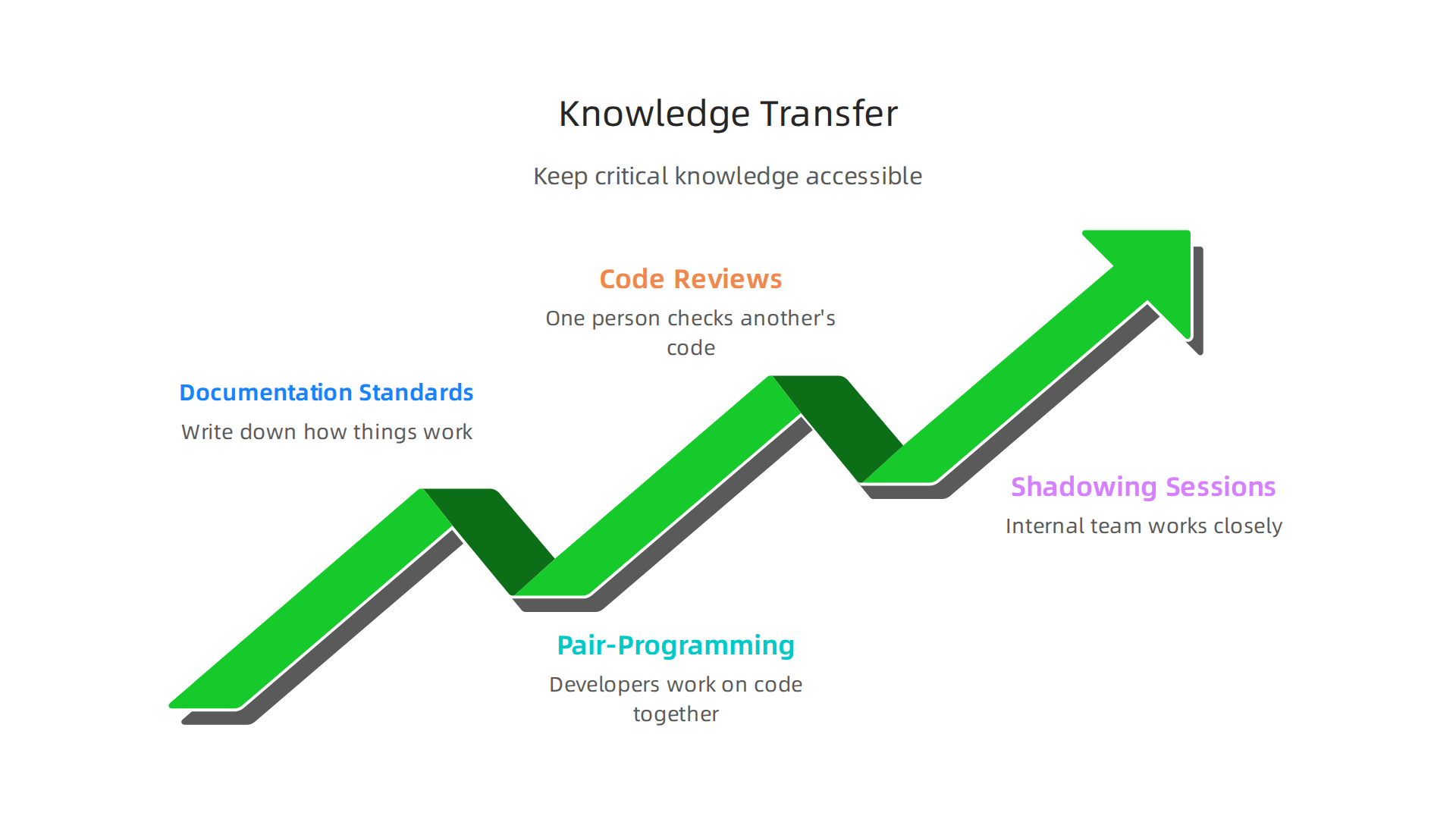
- Clear Documentation Standards: Make sure everyone writes down how things work in an easy-to-understand way. This includes how the software is built, how it’s tested, and how to fix problems. Good documentation means anyone new can quickly learn the ropes.
- Pair-Programming and Code Reviews: When two developers work on code together (pair-programming), they share ideas and knowledge. When one person checks another’s code (code review), they also learn from each other and ensure the work meets quality standards.
- Shadowing Sessions: Have your internal team members work closely with the vendor engineers, watching how they do things and asking questions. This helps transfer skills and understanding naturally.
These methods help build a shared understanding across your team and the vendor’s team. They also make sure that critical information about your project is not held by just a few people. This is true whether you’re working with a top software development company India or an e-learning software development company. Measuring how well vendors share knowledge and meet quality standards can be tracked with specific metrics, helping you maintain oversight Measuring Vendor Performance: 10 Key Metrics & KPIs.
Reducing Vendor Lock-in
"Vendor lock-in" means you’re too dependent on one software services company. If you ever need to change vendors, it becomes very hard or costly because only they know how everything works. The practices above, like good documentation and shared knowledge, help a lot to avoid this problem.
By making sure you always have access to the project’s details and can understand the code, you keep control. This makes it easier to bring in new people or even take the project fully in-house if that’s what your business needs down the road. It also helps you choose the right partner from the start, which is a big part of how to pick the right software development company in 2026. This way, your team has the skills needed to manage the project and keep it going, no matter who you work with.
When you work with a software services company, it’s not enough to just start a project and hope for the best. You need to know if they are doing a good job. This means having clear ways to check their work and decide if the partnership should grow or change.
Measuring Success and Scaling the Partnership
To truly know if your partnership with a software services company is working, you need to set up clear ways to measure their success. These measurements are like report cards for their work. They help you see what’s going well and what needs to get better.
Defining Key Metrics
Good contracts with software service providers often include specific measures called Key Performance Indicators, or KPIs. These help make sure everyone agrees on what "good" looks like. Here are some important things to measure:
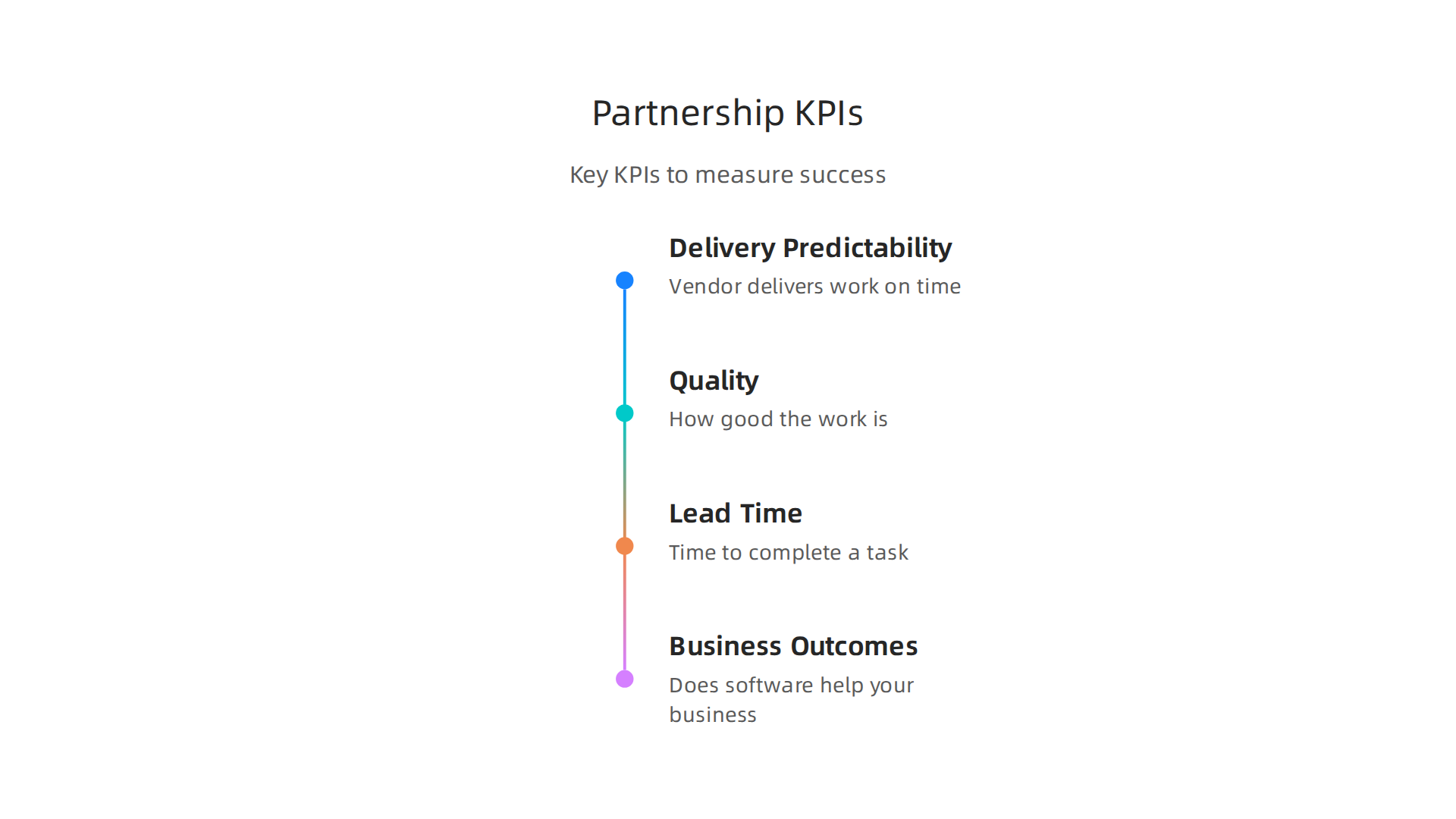
- Delivery Predictability: This checks if the vendor delivers their work on time, as promised. It’s about how often they meet deadlines. When a vendor consistently delivers on schedule, it shows they can manage their work well. You can track this by looking at the percentage of orders delivered on time, which is a key part of vendor performance management Vendor Performance Management: A Short Guide.
- Quality (Defects): This looks at how good the work is. Are there many bugs or mistakes? High quality means fewer problems later on. You can measure this by looking at things like defect rates, or how many problems are found after delivery. Many agreements use performance metrics like this to make sure the work is top-notch Supplier Service Level Agreements (SLAs) in Procurement.
- Lead Time: This is about how long it takes for the software services company to complete a task, from when you ask for it until it’s finished and ready. Shorter lead times often mean they are efficient.
- Business Outcomes: This is the most important one. Does the software they build actually help your business? Does it save you money, make customers happier, or help you sell more? Measuring this shows the real value of the partnership. Things like return on investment (ROI) or how well they meet your Service Level Agreements (SLAs) can tell you a lot about these outcomes Vendor management KPIs you need for success.
When you set these metrics, make sure they are clear and easy to understand. They should also be things both sides can agree on and track easily. This is true whether you are working with an engineering consulting firm or a large top software development company India.
When to Deepen or Diversify the Partnership
Once you have these measurements, you can decide what to do next with your software services company.
- Scaling Up: If your vendor consistently hits all their targets for delivery, quality, lead time, and business results, it might be a good idea to give them more work. This could mean expanding the project, giving them new projects, or deepening your partnership. They’ve proven they are a valuable team, much like a trusted software development company Canada would be.
- Renegotiating or Diversifying: If a vendor often misses deadlines, produces low-quality work, or doesn’t help your business goals, it’s a signal to rethink the partnership. You might need to talk about their performance, change your agreement, or even look for other vendors. Sometimes, having more than one software services company for different parts of your work can prevent too much reliance on just one. This also ensures that if one vendor struggles, your whole project isn’t at risk. This applies to all types of partners, including an e-learning software development company.
Tracking these metrics carefully helps you make smart decisions. It ensures your projects stay on track and deliver real value to your business.
Want to stay updated on the latest trends in technology and how they impact software engineering? Get clear daily AI updates from The AI Newsletter Worth Reading.
Summary
This article explains how engineering leaders can pick and work with a software services company to move projects faster, fill skill gaps, and reduce hiring delays. It covers how to turn business goals into technical needs, the main engagement models (staff augmentation, outcome-based, managed teams), and what to check in a vendor’s technical skills and engineering culture. You’ll find a printable vendor checklist and guidance on contracts, SLAs, and simple governance to keep projects on track. The guide also shows how to onboard vendor engineers, capture tribal knowledge, and reduce vendor lock-in. Finally, it explains which KPIs to track so you can measure success and know when to scale, renegotiate, or diversify your partnerships. After reading, you’ll be able to compare vendors objectively, write tighter agreements, and run vendor relationships that deliver predictable business outcomes.