
In today’s fast-moving world of technology, job titles can sometimes be a bit confusing. You might hear about many different types of engineering roles, like those in software engineering or even general IT specialist jobs. But one title that is becoming super important for companies, from small startups to big businesses, is the product engineer.
What Does a Product Engineer Do?
A product engineer is someone who does more than just build things. They are a special kind of engineer who deeply understands what customers need and want. They use this understanding to design, build, and send out software features or even physical products. Their main goal is to make sure the product works well and gives users a great experience. They blend coding and technical skills with strong product thinking. For example, a good product engineer will ask: "What problem are we trying to solve?" and "Who is this for?" to make sure they are building the right thing for the right people, as outlined in a Product Engineer Job Description.
Why the Product Engineer Role is So Important Now
In 2026, companies are realizing that it’s not enough to just create new technology. They need to create useful technology that people will love. This is why the role of a product engineer has grown so much. They help make sure that engineering teams are always focused on creating value for the customer. Without clear roles, teams can struggle with understanding who does what, what skills are needed, and how to grow their careers. This can lead to slow work and products that don’t quite hit the mark.
This guide is here to clear up that confusion. We will give you a clear, helpful plan to understand everything about product engineers.

We will cover the skills they need, how companies hire them, how teams are set up, and what new trends are coming. By the end, you’ll have a strong grasp of this vital role in the tech world.
Want to keep up with all the big changes in AI and tech that product engineers need to know about?
The AI Newsletter Worth Reading delivers daily updates to your inbox.
Let’s talk more about what a product engineer actually does. This special kind of engineer is not just about writing code. They play a big role in making sure a product is useful and loved by people.
Core Jobs of a Product Engineer
A product engineer’s main work involves making sure the product does what customers need. They help build and improve the product from start to finish. This means they often work on many parts of a product, from the front-end (what you see) to the back-end (how it works behind the scenes).
Here are their key duties:
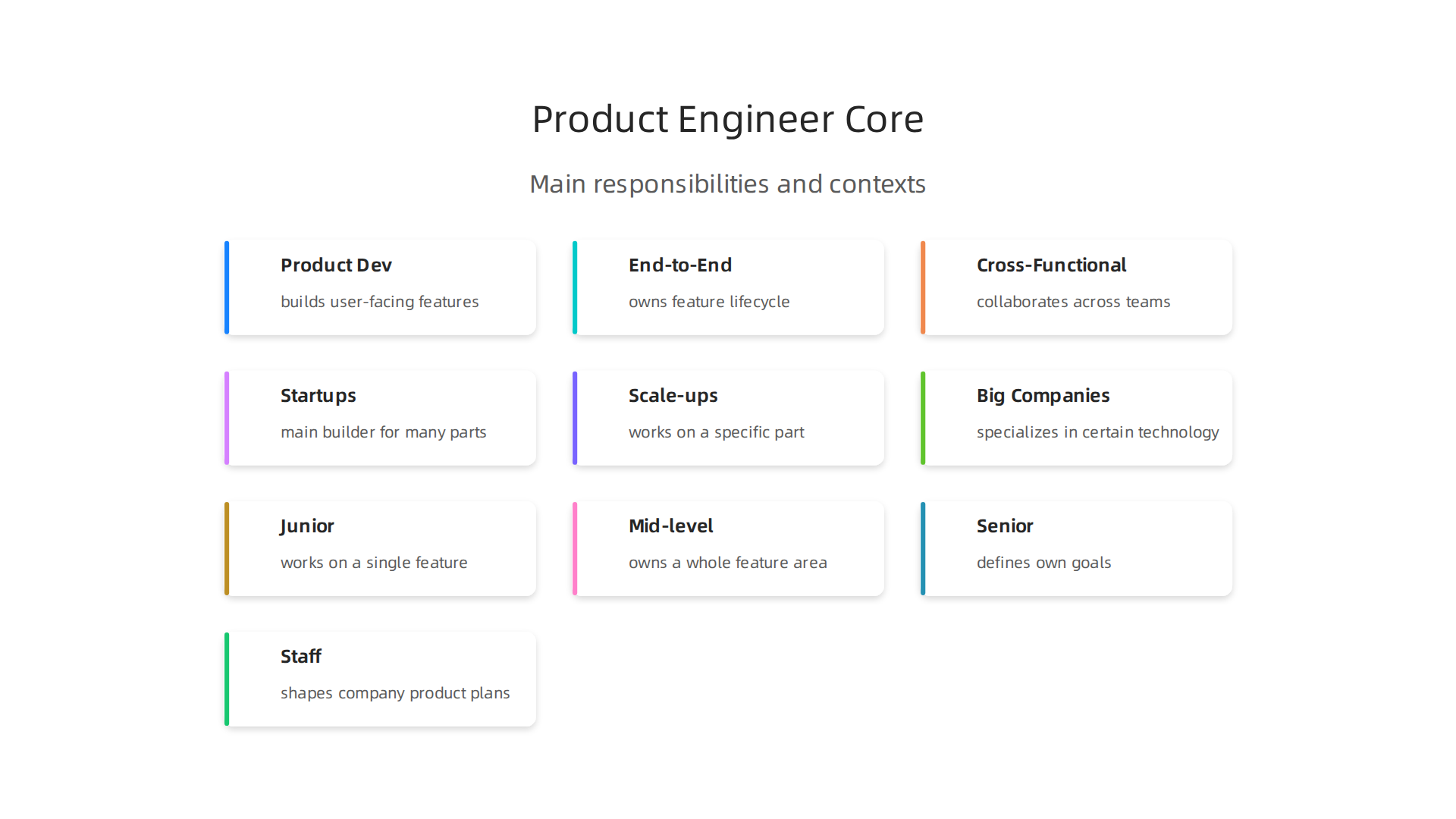
- Product-Facing Development: They build features that users directly interact with. They think about how each part of the product will feel and work for the person using it.
- End-to-End Ownership: A product engineer doesn’t just pass work along. They often see a feature through all its steps. This includes planning, building, testing, and even watching how people use it after it’s out. They help choose the best ways to build things, like picking the right Software Development Life Cycles for a project.
- Working with Others: They talk a lot with different teams. This includes product managers (who decide what to build), designers (who make it look good), and other engineers. This helps make sure everyone is working towards the same goal and understands the big picture.
A product engineer’s role is all about bringing ideas to life and making sure those ideas truly help the customer. They focus on turning what a user wants into a working product, often starting with a clear understanding of the customer’s needs, as explained by Indeed. They also help guide the strategic website software design to ensure a great user experience.
How the Job Changes with Company Size
The daily work of a product engineer can look different depending on how big a company is:
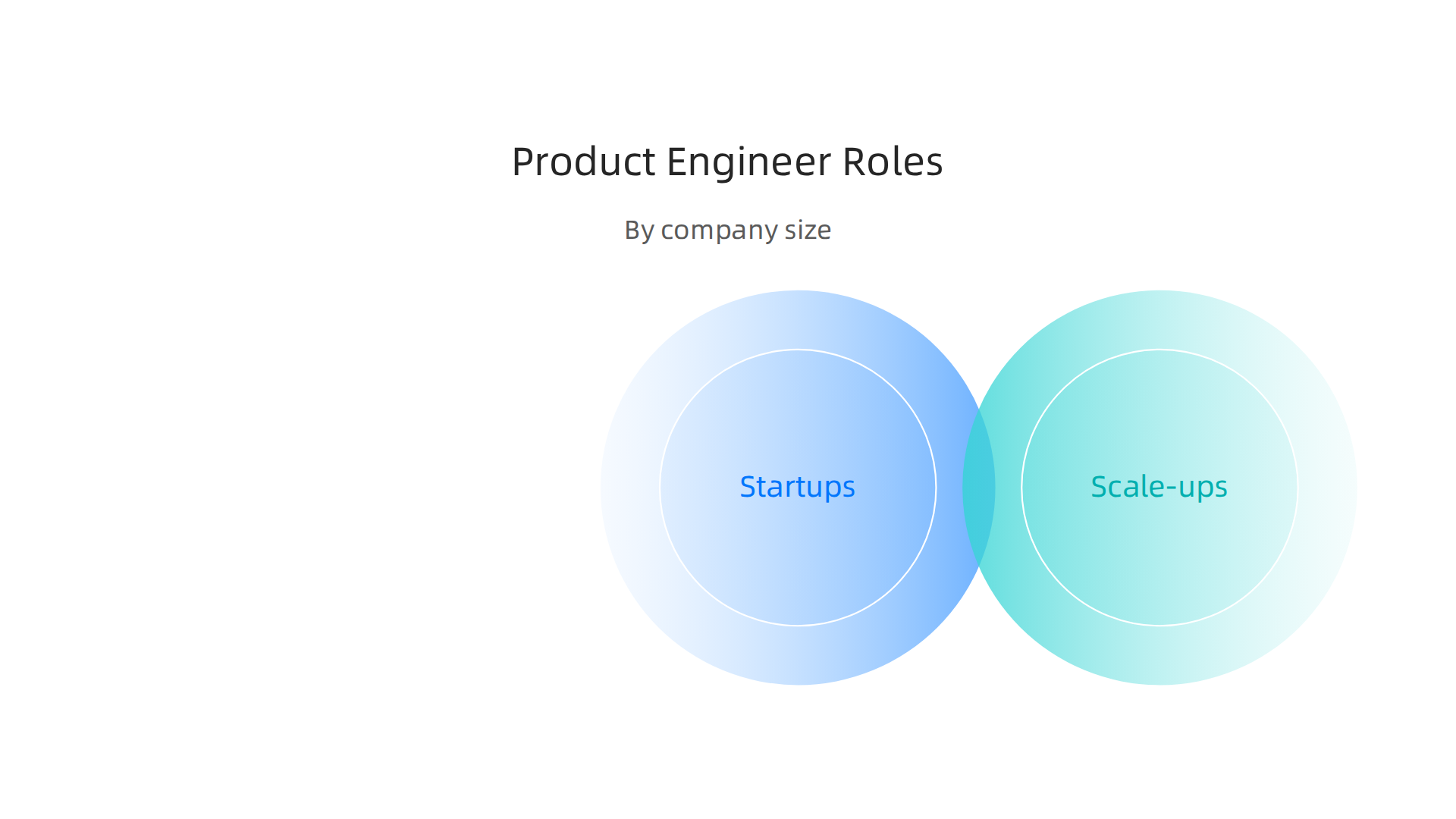
- Startups: In small, new companies, a product engineer might do a lot of things. They could be the main builder for many parts of the product, moving fast and trying new ideas. Their job is very broad.
- Scale-ups: As a company grows, the product engineer role might become a bit more focused. They still have a lot of say, but they might work on a specific part of a larger product.
- Big Companies (Enterprises): In very large companies, a product engineer often works on one small piece of a huge product. They might specialize in a certain technology or part of the user experience.
Confusing Job Titles
Sometimes, finding a product engineer job can be tricky because different companies use different names. You might see titles like "full-stack engineer with a product focus" or "software engineer, product team." These roles are often doing the work of a product engineer, even if their title doesn’t say "product engineer." The key is that they combine strong technical skills with a deep understanding of customer needs and the product itself. They are focused on building useful things for people, not just writing code.
To be a successful product engineer, you need a special mix of skills. It’s not just about writing code; it’s also about understanding people and how products work in the real world.

This blend of technical smarts, product know-how, and good teamwork makes these jobs very important.
Core skills, technologies, and competencies for product engineers
Becoming a great product engineer means learning many things. You need to be good with computers, understand what users want, and work well with others.
Technical Foundations
First, a product engineer needs strong technical skills. This means knowing how to use different programming languages like Python and Java. Many jobs in 2026 also ask for skills in Artificial Intelligence (AI), which was the second most requested skill in some job postings behind communication alone according to data from 2026 job markets most-in-demand skills-2026. They also need to know about different frameworks and tools that help build software. Think about cloud platforms like AWS, which are super common today.
A good product engineer also knows about testing their code and making sure it works right before anyone uses it. They understand how to get new features out to users smoothly. For more on the skills needed in this field, check out our guide on Software Developer Skills 2026. And as AI becomes a big part of software, learning how to use it in your work is key. You can find out more in our article about Apply AI in Software Development 2026 Strategies for Engineering Teams.
Product-Facing Competencies
Beyond just coding, product engineers need to think like a user. This is called user empathy. They try to feel what the user feels to build products that truly help. They also use data to make choices, like looking at how people use a product to decide what to change or build next. This is called "metrics-driven delivery." They might even try out two different versions of a feature to see which one users like better, which is known as A/B experimentation. They also keep an eye on how the product performs once it’s live, a process called observability. These skills help them turn ideas into working software and make good decisions about speed versus quality Product Engineer Job Description & Responsibilities.
Soft Skills and Cross-Functional Practices
Lastly, a product engineer must be a great communicator. They work closely with product managers, who decide what features to build, and designers, who make sure the product looks good and is easy to use. Being able to explain technical ideas clearly to non-technical people is very important. They help make sure everyone is on the same page about what needs to be built and when. This includes helping to plan the future roadmap of a product and talking with all the important people involved to keep things moving forward.
Staying informed about the newest tech advancements, especially in AI, is a game-changer for any product engineer.
For daily, in-depth insights into AI and broader technology developments, consider subscribing to The AI Newsletter Worth Reading.
Being a product engineer is a special role, but it’s often confused with other important jobs in tech. Let’s look at how product engineers are different from product managers, software engineers, and platform engineers. This will help clear up what each role does and why companies might choose one over another.
How product engineers differ from product managers, software engineers, and platform engineers
Think of a team building a house. Each person has a clear job, but they all work together. It’s the same in software development.
Product Engineer vs. Product Manager
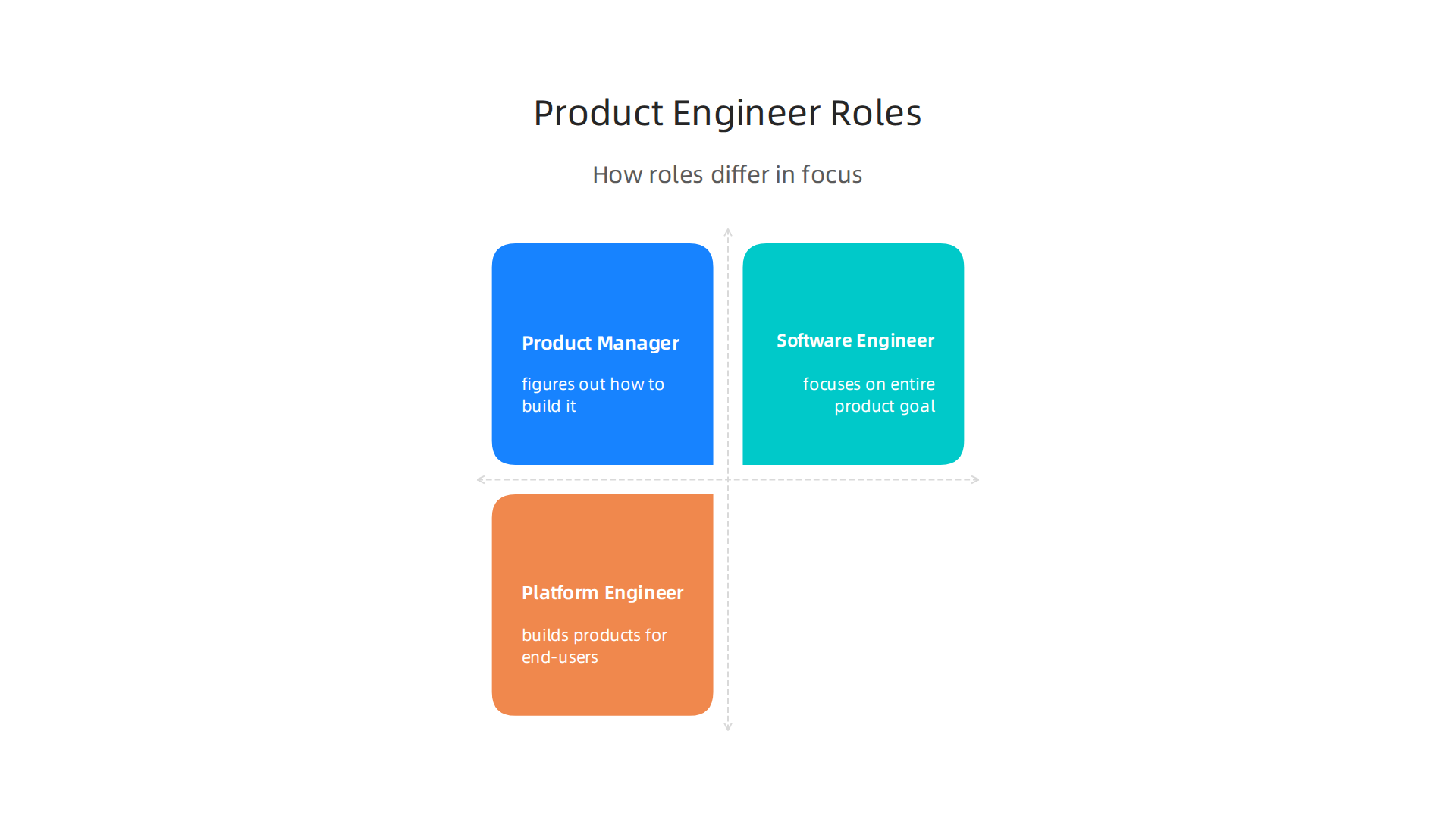
A product manager usually decides what product to build and why. They look at the market, talk to users, and figure out what problems need solving. They set the vision and goals for the product.
A product engineer takes that vision and figures out how to build it. They are deeply involved in the actual creation. While a product manager focuses on strategy and market fit, a product engineer brings that strategy to life with code. They own the product’s journey from the first idea to how it performs after launch. They might even help spot problems or ideas the product manager didn’t see.
Product Engineer vs. Software Engineer
A software engineer (also sometimes called a developer or part of "software engineering developer jobs") is a coding expert. They might specialize in certain areas, like building the parts you see (frontend) or the parts behind the scenes (backend). Their main job is to write clean, working code.
A product engineer also writes code, but their focus is broader. They don’t just build features; they make sure those features solve real user problems and help the business. They think about the entire product, not just the code itself. A helpful way to think about it is that a software engineer focuses on the execution of code, while a product engineer focuses on delivering the complete product goal Product Engineer vs Full-Stack Developer: ¿Cuál es la diferencia?. In many ways, a product engineer is a type of software engineer who also has strong product sense, making them skilled at building customer-focused software Product Engineer > Fullstack Engineer. If you want to know more about the different paths in coding, you can read about a Software Engineer vs Full Stack Developer 2026.
Product Engineer vs. Platform Engineer
A platform engineer builds and maintains the internal tools and systems that other engineers use. Their "customers" are the other developers in the company. They make sure the building blocks and infrastructure (like servers or databases) are strong and easy to use. This kind of work is a big part of Engineering Technology Trends 2026.
A product engineer, on the other hand, builds products for the end-users or outside customers of the company. While they use the tools made by platform engineers, their goal is directly tied to the external product.
Deciding Who to Hire
Companies choose these different types of engineering roles based on their needs:
- Hire a product manager when you need someone to define the product vision, understand the market, and set the strategy.
- Hire a software engineer when you need dedicated coding power and deep technical expertise for specific parts of the system.
- Hire a platform engineer when your internal developer tools or infrastructure need to be built and maintained so other teams can work better.
- Hire a product engineer when you need someone who can not only build the product but also think about the user, make smart decisions about features, and drive the product’s success from a technical perspective. This role is a great fit for companies that want to blur the lines between technical execution and product strategy, making fewer "it specialist jobs" and more all-around product builders.
A product engineer’s journey doesn’t stop at building a feature. There are many ways to grow in this exciting field, offering different types of engineering challenges. In 2026, companies are getting better at mapping out these paths.
Growing as an Individual Contributor (IC)
Many product engineers choose to get really good at building products and move up what’s called the Individual Contributor (IC) ladder. This means they focus on technical skills and product impact, not managing people.
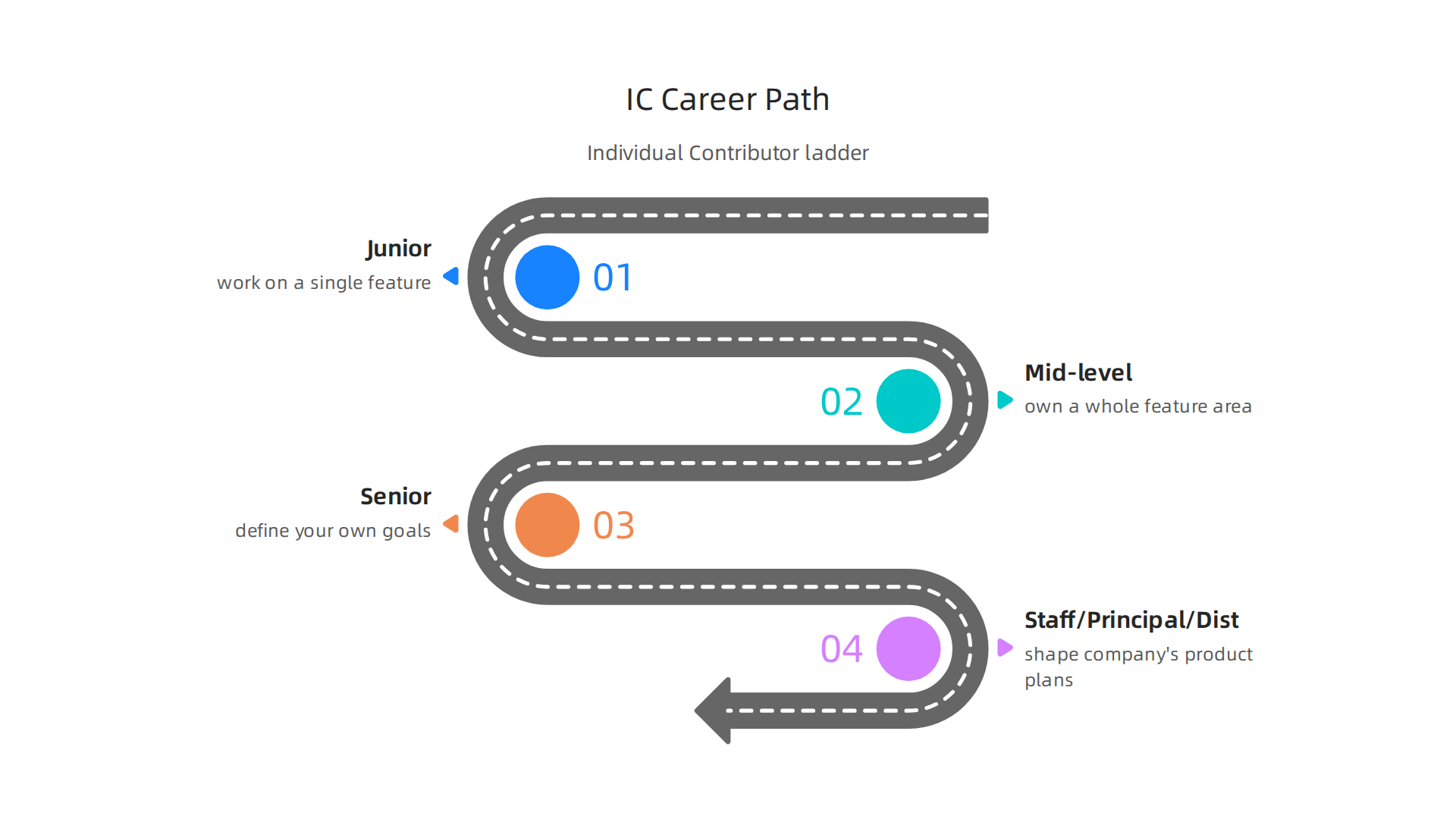
Here’s a common path:
- Junior Product Engineer: At first, you might work on a single feature, needing clear goals. You’re learning how things work.
- Mid-level Product Engineer: You start to own a whole feature area, breaking down bigger problems into smaller parts. The main focus here is on how users experience the product.
- Senior Product Engineer: You can define your own goals for a product area and make a big impact on the company’s success. You become known as a trusted expert.
- Staff, Principal, or Distinguished Product Engineer: These are top IC roles. You might guide many teams or even help shape the company’s big picture product plans. Your work has a huge effect across the whole company or even the industry, as detailed in the Product Engineer Career Path: From Junior to Staff.
Companies often define these levels based on how much impact you have and how broad your work is, not just how many years you’ve worked. For example, some companies use frameworks like L1 to L6, where L1 is a junior engineer and L6 is a distinguished engineer, with each level having clear responsibilities and freedom SmithSpektrum Blog. This helps everyone understand what is expected at each step. These career ladders are carefully built to make sure there’s fair pay between IC roles and management roles at the same level Engineering Career Ladders in 2026: How to Structure Levels ….
Moving into Leadership or Product Management
Beyond the IC path, a product engineer can also move into management or even product management.
- Engineering Leadership: With strong technical skills and a good understanding of how teams work, product engineers can become engineering managers. They would lead teams of other engineers, guiding them to build great products. Climbing this ladder means showing a mix of technical know-how, people skills, and thinking ahead Climbing the Product Engineering Ladder: Leadership Prep.
- Product Management: Since product engineers already think deeply about users and business goals, moving to a product manager role is a natural step for some. They can use their hands-on experience to better define what to build and why.
Learning and Growing Your Skills
To move up, product engineers need a special mix of skills. It’s not just about coding anymore. You should work on:
- Technical Skills: Keep up with new programming languages, tools, and ways to build software. Think about cloud services and new development methods.
- Product Sense: Learn more about user research, how to design good experiences, and how to use data to make smart decisions.
- Communication: Being able to explain complex technical ideas simply is super important.
- Problem Solving: This means being able to take a big, unclear problem and turn it into a working solution.
Many resources can help, like online certifications or specialized computer courses that cover both coding and product strategy. For instance, there are many best computer courses 2026 for software engineers at every career level that can boost your skills. You might also look into online certifications for software engineering keep you ahead in 2026 to gain new expertise.
Companies define what "meets expectations" looks like for each level. They review performance regularly, often with a mix of manager and peer feedback Our Roles & Levels – Activepieces. Staying on top of industry trends, especially in fast-changing areas like AI, is key for any software engineering developer job in 2026.
To keep ahead of the curve and get insights into the latest AI trends, consider subscribing to The AI Newsletter Worth Reading.
For companies to build amazing products, they need to organize their product engineers in smart ways. In 2026, many companies use different team setups to make sure product engineers can do their best work.
How Product Engineers Fit into Teams
You’ll find product engineers working in a few main types of teams:
- Feature Teams: These are perhaps the most common. A feature team usually has a mix of product engineers, designers, and a product manager. Their goal is to own a specific feature or part of the product from start to finish. They work closely to understand users and deliver value. This setup lets product engineers see the full impact of their code.
- Pod Models: Similar to feature teams, pods are small, self-sufficient groups that act almost like tiny startups within the larger company. They have clear goals and a lot of freedom to decide how to reach them. This often means a product engineer gets to wear many hats.
- Platform-Enabled Models: Some big companies also have "platform" teams. These teams build tools, services, and shared technologies that other product teams use. This helps make building new features faster and more consistent across many different types of engineering work. Product engineers on platform teams focus on making the underlying tech strong and easy to use for other developers.
No matter the setup, the goal is always to help product engineers focus on building great things that users love and that meet business needs.
Finding the Right Product Engineer: Hiring and Interviewing
Hiring for product engineering roles needs a special touch. Companies are looking for more than just coding skills. They want someone who understands the user and the business side too. In interviews, you might face questions that test:
- Technical Knowledge: Can you write clean code? Do you understand how software systems work?
- Product Thinking: Can you talk about user problems? How would you make a product better?
- Problem-Solving: How do you break down a big, unclear problem into smaller, doable steps?
Companies often have a clear plan for what each level of product engineer should know and do. This is called a career ladder or leveling framework, and it helps them assess candidates fairly. For instance, a detailed Engineering Career Ladder & Leveling Framework helps define the needed skills for each step. Creating these clear levels helps companies make sure they are looking for the right mix of skills for different types of software engineering developer jobs. Also, many companies use frameworks to compare how engineers progress, ensuring consistent evaluation across roles and teams as shown by resources like Progression.fyi.
Helping New Product Engineers Succeed
Once a new product engineer joins, how do companies help them get started smoothly? Good onboarding is very important. This is more than just getting a laptop. It involves:
- Clear Goals: Making sure the new engineer knows what is expected of them in their first few months.
- Mentorship: Pairing them with an experienced teammate who can guide them and answer questions.
- Training: Giving them access to learning materials about the company’s specific tools, code, and products. This helps them quickly learn the ropes and start making an impact.
- Feedback: Regular check-ins to see how they’re doing and offer support.
Getting new team members up to speed quickly is key for any modern dev organization. It makes sure that everyone, from a junior product engineer to an experienced it specialist, can contribute effectively. By setting clear expectations and providing good support, companies help their product engineers grow and become valuable parts of the team from day one.
After a product engineer gets settled, the next big question is: how do we know they are truly making a difference? It’s important to measure impact so everyone can see what’s working well.
Measuring impact: metrics, KPIs, and productivity signals for product engineers
Knowing how well a product engineer is doing means looking at more than just how much code they write. Smart companies focus on how the work affects the users and the business. This means using special ways to measure success.
Looking at Real Outcomes
Good metrics look at actual results, not just tasks completed. For a product engineer, this includes:
- Adoption: How many people start using a new feature or product?
- Retention: Do users keep coming back to use it over time?
- Time-to-Value: How quickly do users find the product helpful after they start using it?
- Experiment Success Rates: When we try new things, do they make the product better as we hoped?
These kinds of measures help us understand if the work truly helps users and the company grow. They link engineering efforts directly to how the business does. This is a key part of what "engineering productivity metrics" are about in 2026, helping companies understand how effectively their engineering system works to create results, not just effort Engineering Productivity Metrics: What to Track in 2026.
Real Productivity vs. Just Looking Busy
It’s easy to get tricked by "vanity metrics" that look good but don’t show real value. For example, counting lines of code written might seem like a good idea, but it does not tell you if that code is useful or buggy. Instead, good product engineer teams look for true productivity signals.
In 2026, many companies are seeing how AI helps with productivity. About six out of ten people think AI helps increase how fast developers work by at least 25%, and it makes their jobs more satisfying too 2026 State of Engineering Management Report – Jellyfish. In fact, AI makes a much bigger difference for teams that are not doing as well, helping them deliver things faster and better 2026 Engineering Productivity Benchmarks | Report – Plandek.
But here’s a thing: constantly switching between different tools can actually slow down a software engineering developer job. Almost nine out of ten engineers say that tool-switching harms their productivity DAta report – 2026 Engineering Reality Report. This shows that thinking about how personal AI is the productivity revolution software teams need](https://softwareengineeringnewstoday.com/personal-ai-is-the-productivity-revolution-software-teams-need) is more important than ever.
Tools for Measuring Impact
Companies use special tools to keep track of both how well a product is doing and how efficiently engineers are working. These tools help gather information without making engineers feel like they are just being watched. The goal is to give everyone a clear picture of what’s going on and where things can get better. It is about finding ways to apply AI in software development 2026 strategies for engineering teams in a smart way. When setting these measures, it is important to be careful not to create "perverse incentives." This means avoiding situations where engineers might do something quickly that is not good for the product just to make a number look better. Balancing the speed of development with ethical practices is crucial to balance AI productivity with responsible AI practices for software teams.
Now, let’s look ahead. How will the job of a product engineer change in the future? In 2026, new tools and ways of working are making big waves, especially with AI.

Future trends: AI-assisted development, platform thinking, and growing specializations
The way product engineers work is changing fast. We’re seeing more help from AI and new ways teams are set up.
AI is becoming a helpful teammate
Imagine having a super-smart assistant that helps you write code. That’s what AI coding assistants are like in 2026. Many engineers now use AI tools every day to help with their work. In fact, most developers, about 90%, use at least one AI tool regularly, and more than half use them daily How AI Coding Assistants Are Reshaping Software Development in 2026.
These tools are not just for simple tasks. They are changing the day-to-day work for a product engineer. AI can help with writing common bits of code, making tests, and even translating code between different computer languages AI coding assistants in 2026: where they help, where they hurt. Some reports show that more than half of the code being written today is made with AI help The State of AI Impact in Engineering: Q2 2026 | daily.dev. This means product engineers can spend less time on repeated tasks and more time on solving big problems and making new things for users. AI is truly amplifying how well software engineering teams perform AI Is Amplifying Software Engineering Performance, Says ….
If you want to stay on top of all the new AI changes and how they affect your work, there’s a great way to do that. Get clear daily AI updates from The AI Newsletter Worth Reading.
New kinds of engineering jobs are appearing
The world of engineering is also seeing more and more special jobs. Instead of just general software development, we see different types of engineering becoming popular. For example, some product engineers might focus only on "observability," which is about making sure you can always see how a product is working. Others might focus on "data integration," making sure different parts of a system talk to each other smoothly. Then there are specialists in "ML infrastructure," who build the backbone for smart AI features.
These new specializations mean that software engineering developer jobs are becoming more detailed. This trend is part of larger engineering technology trends 2026 that are reshaping how development happens.
How to get ready for what’s next
For teams and people working in these roles, it’s important to keep learning. To future-proof your skills as a product engineer, you should:
- Learn about AI tools: Get comfortable using AI coding assistants and understand how they can help you. Knowing how to integrate top AI tools into cloud native applications is a big plus.
- Understand new specializations: Even if you don’t become a specialist in observability or ML infrastructure, knowing what they do helps you work better with others.
- Focus on problem-solving: AI can handle many coding tasks, but humans are still best at understanding user needs and solving complex problems.
- Keep your skills sharp: The world of tech moves quickly. Always look for ways to grow your software developer skills 2026.
Summary
This article explains the rising importance of the product engineer — a hybrid role that blends strong technical abilities with product thinking to build useful, user-focused software and products. It walks through what product engineers do day-to-day, their core responsibilities like product-facing development and end-to-end ownership, and how the job shifts across startups, scale-ups, and large enterprises. The guide outlines the technical foundations (languages, cloud, testing), product competencies (user empathy, metrics, experimentation), and soft skills needed to collaborate with PMs and designers. It also compares product engineers to product managers, software engineers, and platform engineers so you can see when to hire each role. You’ll find practical advice on hiring, onboarding, career ladders (IC and management paths), and sensible ways to measure impact with adoption, retention, and time-to-value. Finally, the article surveys future trends—AI-assisted development, new specializations, and platform thinking—and recommends how to prepare through learning, tools, and responsible AI practices.