

In 2026, the world of software development changes faster than ever. New tools, ways of working, and smart AI helpers pop up all the time. This quick pace can make it hard for everyone in tech to keep up. Engineers might feel like their skills are getting old, and leaders might not know which new tools to pick. This often leads to big gaps in what people know how to do.
Actually, it’s a real challenge for many companies. A recent study from 2026 showed that almost 88% of tech leaders find it "difficult" or worse to hire skilled engineers today Software Engineer Shortage & AI Coding [2026 Survey]. This tells us that many people need better software development training.
That’s why good, planned software development training is super important in 2026.

It helps engineers learn new things and keeps them ready for what’s next. It also helps managers and company leaders make smart choices about technology and their teams.
This guide is here to help you understand all about training. We will look at different types of learning, from simple beginner coding courses to advanced topics and online software testing courses. We will also help you find trusted places to learn and show you the best ways to grow your skills, no matter if you’re an engineer, a manager, or a leader. You can discover how to design high-impact software developer training programs that truly make a difference.
With AI becoming a core part of coding, staying updated is key. Tools like youlearn ai and others are changing how we build software. To stay ahead and make the best use of these changes, you need a clear path for learning.
Want to make sure you’re always in the loop with the latest AI trends affecting software development? Get clear daily AI updates from The AI Newsletter Worth Reading.
As we saw, having a clear plan for learning is super important in 2026. But what exactly should teams be learning? The truth is, many companies struggle with big gaps in the skills their software teams have. These software development training needs pop up for everyone, from the coders doing the daily work to the leaders making big decisions.
Today, certain skills are highly sought after. For instance, knowing about Artificial Intelligence (AI) and Machine Learning (ML) is a huge deal. A 2026 survey showed that over half of big companies have skill gaps in AI and machine learning Strengthening the tech and IT skills bench to deliver on 2026 …. This means understanding how to use AI tools, like those for AI-assisted development, is no longer a nice-to-have, but a must-have. Tools like youlearn ai are changing how engineers approach coding.
Other big areas where skills are often missing include cloud-native architecture, which is about building apps that live in the cloud. Also, practices like DevOps and DevSecOps are key for making software faster and safer. One study pointed out that many IT leaders feel a big gap in DevOps and DevSecOps skills, mainly because cloud systems are getting more complex and security is so important Qubit Labs Reports Data Showing Deep Tech Talent Shortage and …. Knowing about Site Reliability Engineering (SRE) practices is also crucial to keep systems running smoothly. You can learn more about these big shifts in engineering technology trends for 2026.
So, how do you decide what to focus on? It’s all about figuring out what your team needs most and what helps your company reach its goals.
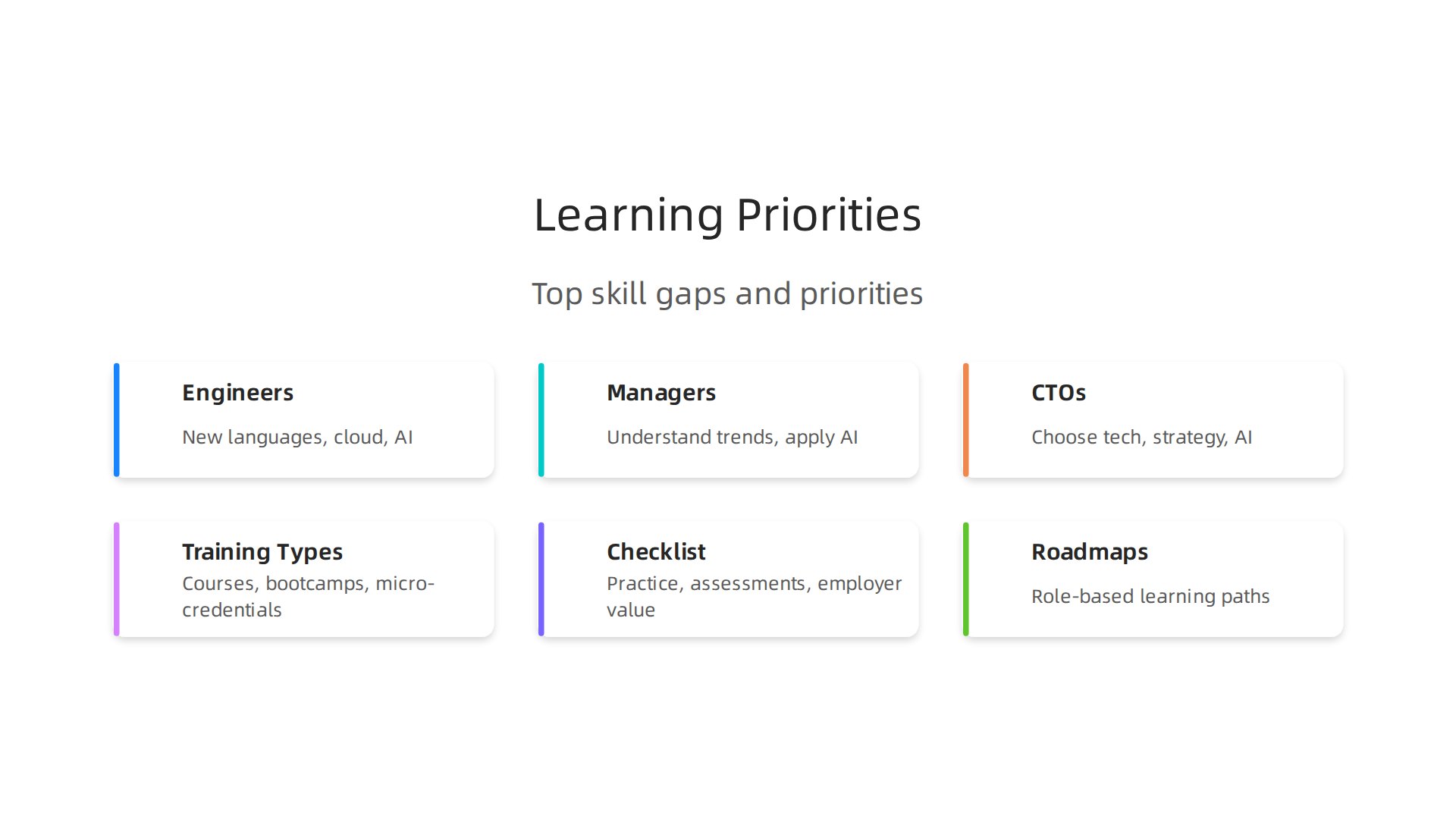
- For individual engineers: They might need beginner coding courses to learn new programming languages, or more advanced lessons on topics like cloud security or specific AI frameworks. They might even need online software testing courses to improve how they check code.
- For managers and leaders: Their learning might focus on understanding new tech trends, like how to best apply AI in software development, or how to guide their teams through big changes.
The most important thing is to make sure your software development training plans are smart. They should match what your company wants to achieve and help every person on the team grow their skills in a way that truly matters. This often means focusing on the top skills employers are looking for in 2026, such as AI literacy and generative-AI competency Top 10 Skills Employers Are Prioritizing for 2026.
To make those smart plans work, you need to pick the right ways to learn. There are many types of software development training available in 2026. Each one helps teams learn new skills in different ways.
Let’s look at the main options.
Different Ways to Learn
-
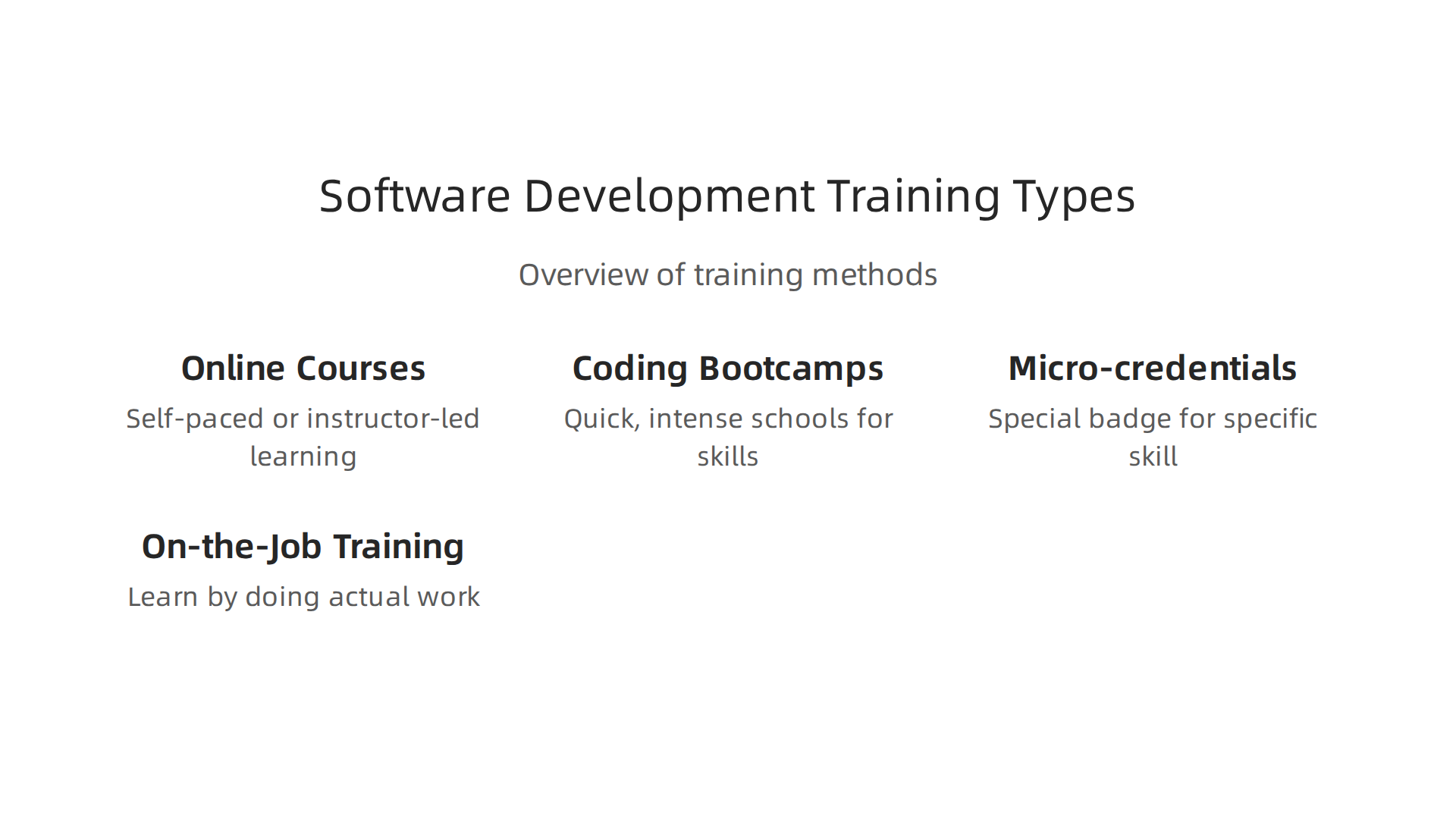
Online Courses (Self-Paced or Instructor-Led)
These are popular ways to learn. Some online courses let you learn at your own speed. You can start and stop whenever you like. Others have a teacher who guides a group, much like a regular classroom but online. You can find many options, from beginner coding courses to advanced topics like how to build AI tools. There are even specialized online software testing courses to help people test code better. Tools like youlearn ai can make these online lessons even more helpful by using AI to guide your studies. -
Coding Bootcamps
Bootcamps are like quick, intense schools. They are for people who want to learn a lot very fast to get a new job or skill. They usually run for a few weeks or months. Many focus on practical skills you need for a job right away. In 2026, many of the best online coding bootcamps cost between $7,000 and $16,000 for part-time programs, or around $13,000 for full-time options, according to one report on the best coding bootcamps. You can learn more about these programs in our guide to Software Bootcamps 2026 Your Guide to Costs Curriculum and Jobs. -
Micro-credentials and Certifications
These are smaller learning programs that give you a special badge or certificate for a very specific skill. Think of it like getting a small award for knowing how to do one thing really well. They are shorter than full courses or bootcamps. Many employers look for these as proof of skills. For example, a 2026 report found that 87% of people who got micro-credentials found a job in their field within a year Introducing Coursera’s Micro-Credentials Report 2026. This shows how important they are becoming for getting hired and growing your career The State of Microcredentials in 2026: What the Data Reveals. -
On-the-Job Training and Apprenticeships
This is where you learn by doing the actual work. A newer team member might work closely with an experienced person, learning from them every day. This is great for getting real-world experience and understanding how things work inside your company.
When picking the best software development training for your team, think about how quickly you need new skills, how much you can spend, and how you will check that everyone learned what they needed to. To make sure your training programs are effective, you’ll want to design high-impact software developer training programs.
Get clear daily AI updates from The Deep View Newsletter. The AI Newsletter Worth Reading
Choosing the right software development training for your team is a big decision. After looking at all the different types, you need a good way to pick the best one. It’s like shopping for something important: you want to make sure you get the best value for your money and that it actually helps your team.
Here’s how to look closely at different training programs and providers:
What to Look For in Training Programs
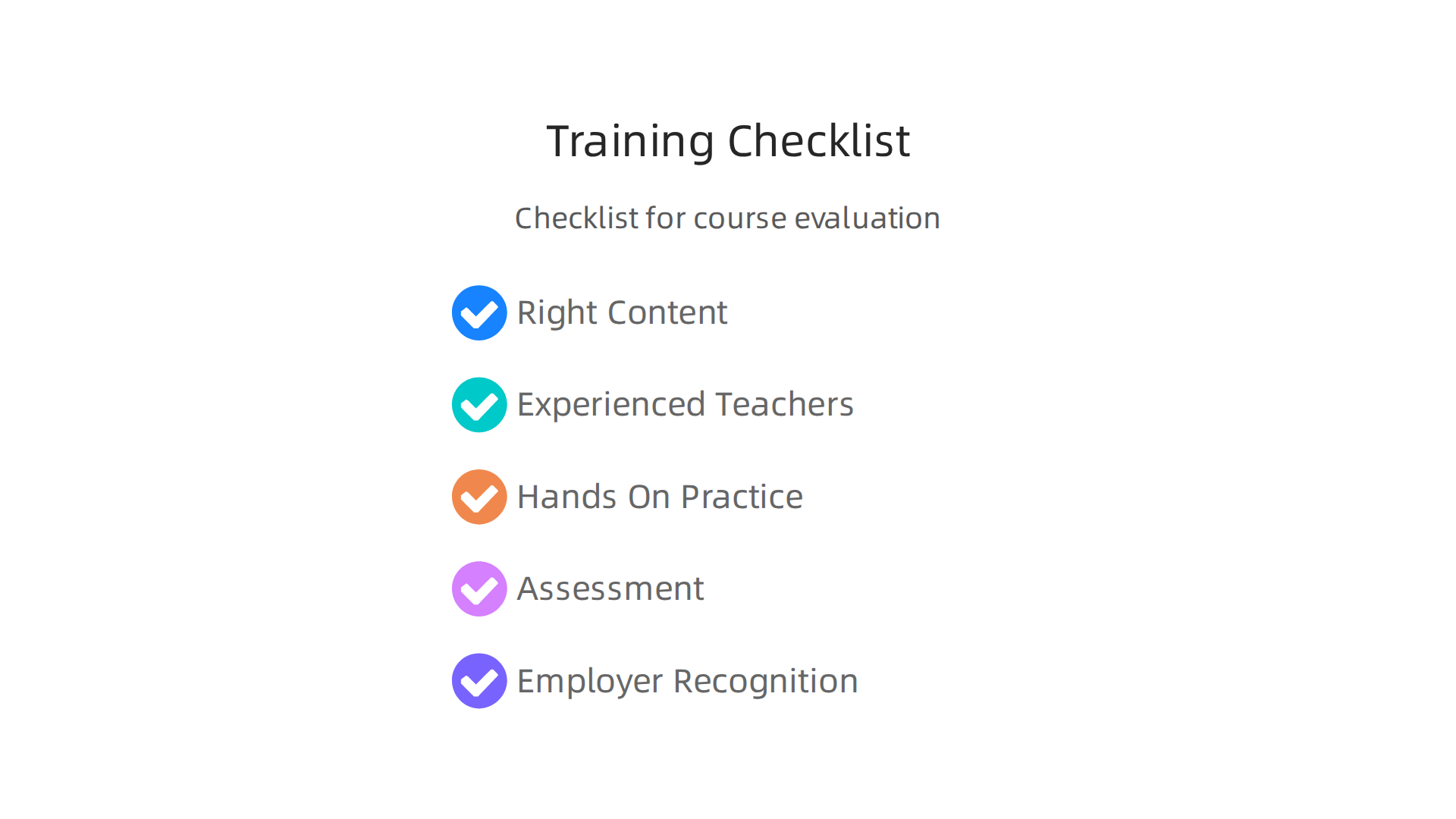
When you compare different courses, use this checklist to make sure you pick a good fit:
-
Does It Teach What You Need?
First, check if the training goals match what your team needs to learn. If your team needs to get better at writing clean code, does the course focus on that? Make sure the lessons directly help with your team’s current work or future goals. -
Are the Teachers Good?
Good teachers make a big difference. Look into who will be teaching. Do they have real-world experience? Are they good at explaining complex ideas in a simple way? Expert instructors can share useful tips and tricks from their own jobs. -
Is There Enough Practice?
Learning by doing is very important in software development. Good programs should offer lots of chances for hands-on practice, like labs or projects. Many good programs make sure that a big part of the learning, sometimes 60% to 70%, is practical work CODE OF PRACTICE FOR TVET PROGRAMME. This helps your team really get a feel for the skills. -
How Do They Check Learning?
It’s important to know how the training program checks if students are actually learning. Do they have tests, quizzes, or projects? A strong program will have clear ways to measure how well students are doing. Studies show that good ways to check learning can help students do better, for example, by writing better code Teaching Well-Structured Code. -
Do Employers Value It?
Think about whether other companies or employers recognize the training. Certifications and micro-credentials, for example, are becoming very important for showing skills. When training is well-known, it adds more value to your team’s skills. You can learn more about how online certifications can help your team stay current in the field of online certifications for software engineering.
Ask for Real Numbers and Details
Don’t just listen to promises. Ask for specific facts and examples:
-
How Many People Finish the Course?
A high completion rate usually means students find the course helpful and engaging. If many people drop out, it might be a sign of problems with the program. -
What Happens After the Training?
Ask about job placement rates or how many people get promoted or take on new responsibilities after completing the training. For example, some coding bootcamps report high in-field employment rates and good starting salaries for their graduates Coding Bootcamp With Best Job Placement: 2026 Rankings. This kind of information helps you see the real impact. -
Can You See the Course Plan?
Always ask to see the course curriculum or a sample of the lessons. This helps you understand what will be covered and how the lessons are put together. If you are looking for beginner coding courses or even online software testing courses, seeing the plan can confirm it fits your team’s needs.
By carefully checking these points, you can make a smart choice for your team’s software development training. Remember, tools like youlearn ai can also help make learning more effective by personalizing the study experience. To make learning even better, consider how to accelerate engineering team learning with AI-powered study tools.
After picking out the right software development training for your team, the next big step is making sure the learning journey itself is well-designed. Think of it like building a road: you want it to go in the right direction, have clear signs, and help everyone reach their goal smoothly.

This means creating strong learning paths, also known as curriculum design, for everyone on your team.
Curriculum design: building learning pathways for developers, managers, and platform teams
A good training program doesn’t just throw information at people. It carefully plans how skills are taught, step by step. This is true whether you’re looking for beginner coding courses, advanced topics for experienced developers, or even specific online software testing courses. The goal is to build clear paths that help each person grow in their role.
Here’s how to design these learning paths:
-
Start with the Basics, Then Specialize:
Every good path begins with strong foundations. For developers, this means learning the main parts of coding and software building first. Once they have a good grasp of these basics, they can move on to special areas like web development, mobile apps, or cloud tools. For managers, it might be learning how to lead tech teams. Platform teams need to understand the core systems they support. -
Practice, Practice, Practice:
Learning is best when it’s hands-on. Good training plans include many ways to practice, like working on small projects, reviewing each other’s code, and even rotating through different jobs. This kind of active learning helps people truly understand and use what they’ve learned. For example, studies have shown that hands-on projects can make software engineering learning more effective integrated software engineering curriculum through project-based learning. -
Teach More Than Just Code:
It’s not all about writing lines of code. Developers, managers, and platform teams also need "soft skills" like talking well with others and solving problems. They also need to know about system design (how all the parts of a program fit together), security (keeping programs safe from harm), and observability (knowing how a program is working). Making sure these skills are part of the curriculum helps build well-rounded and strong team members. -
Personalized Learning for Everyone:
Not everyone learns at the same speed or in the same way. A great curriculum can adapt to different needs. Tools like youlearn ai can help here by offering learning experiences that fit each person. This makes learning more effective for everyone, from those just starting with beginner coding courses to seasoned professionals seeking new skills.
By designing smart learning pathways, you make sure your team’s software development training truly leads to better skills and helps them meet their goals. If you want to dive deeper into creating effective training, check out how to design high-impact software developer training programs.
Designing good learning paths is just the first step. The real challenge comes in making sure that software development training can reach everyone in a big company.

You want to deliver quality learning to many people without things getting messy. This is what we call "delivering training at scale." It’s about finding smart ways to share knowledge widely and make sure it sticks.
Here are some ways companies handle this:
How to Deliver Training to Many People
- Internal Academies: Imagine having your own school inside the company. An internal academy is a special team or department that focuses only on training. They create the courses, teach them, and make sure everyone gets the right skills. This helps keep the quality high and makes sure the training matches the company’s goals.
- Train-the-Trainer Programs: Sometimes, it’s not possible for a small team to teach everyone. In these cases, a "train-the-trainer" program can help. The main training team teaches a few key people, who then become teachers for their own teams. This way, knowledge spreads faster and reaches more corners of the company.
- Blended Learning: This is like mixing the best of both worlds. Blended learning uses online tools, like beginner coding courses or online software testing courses, combined with help from real people. For example, a developer might take an online course on new coding skills, then meet with a senior mentor for hands-on practice and feedback. This mix makes learning flexible and personal. Studies show that learning is much better when it includes hands-on practice, with some research suggesting that lessons involving more than 60% hands-on time can lead to 40% higher retention after three months compared to less hands-on training Hands-on labs vs theory – what does science say – EITT.
Checking if Training Works: Measurement
It’s not enough to just offer training; you need to know if it’s actually making a difference. Measuring the impact of your software development training helps you see what’s working and what needs to change.
Here’s what to look at:
- Learning Transfer: This means checking if people are using their new skills at work. Are they applying what they learned in the course to their daily tasks? This can be seen through reviews of their work or how they solve problems.
- Fewer Mistakes and Faster Work: Good training should help reduce errors and speed up how quickly tasks get done. For example, if developers make fewer mistakes in their code or finish projects faster, that’s a good sign the training is paying off. You can track things like pull request cycle time, how often work needs to be redone, or the number of bugs found later AI Coding Assistant Buyer’s Guide 2026.
- Return on Investment (ROI): This is about looking at the money side. Did the benefits of the training (like faster work or fewer mistakes) save the company more money than the training cost? Measuring the actual impact of hands-on training means looking at not just if someone used the training, but what they actually achieved with it Measuring Hands-On Training Effectiveness: The Data ….
By setting up good ways to deliver training and carefully checking its results, you can make sure your company’s investment in software development training truly helps your team grow and succeed in 2026. For those wanting to stay ahead in tech, including the fast-changing world of AI, there’s a great resource available. Get clear daily AI updates from The AI Newsletter Worth Reading. Staying updated on the latest software developer skills is key for any engineer looking to advance their career in this ever-evolving industry software developer skills 2026 what every developer must master.
Effective software development training goes beyond just teaching; it’s about making sure new skills stick and can be used in real work. This is where hands-on learning truly shines, combining practical tasks with new tools like AI to make training more powerful.
Hands-on Learning: Labs, Projects, Assessments, and Using AI Tools in Training
To really learn something new in software development, you need to do it yourself. This means more than just reading about code or watching videos. It means working on realistic projects, using labs, and getting regular feedback.
- Real Projects and Labs: Think about a pilot learning to fly. They don’t just read a book; they spend many hours in a flight simulator. Software developers need the same kind of practice. Training should include projects that feel like real work challenges. For example, beginner coding courses can have small tasks where you build a simple app. Online software testing courses should let you test real-world software to find bugs. This helps you get comfortable with tools and how things work in a safe space.
- Automated Feedback and Checks: Imagine a smart helper that tells you right away if your code has a mistake. Modern training systems can offer automated feedback, checking your work and pointing out areas for improvement. This immediate feedback helps you learn faster and correct misunderstandings before they become big problems.
- Continuous Assessment: Learning isn’t a one-time test. It’s an ongoing journey. Good training includes small, regular checks to see how much you’re learning and remembering. This can be short quizzes or code reviews that happen often, rather than just one big exam at the end. These assessments help cement new knowledge and skills.
How AI Tools Are Changing Training
In 2026, AI tools are a big part of how we build software, and they are changing how we learn it too. Using AI in software development training can make learning faster and more personal.
- AI-Assisted Coding: Tools powered by AI can help developers write code, fix mistakes, and even suggest new ideas. In training, these AI coding assistants can speed up the learning process by handling some of the repetitive tasks. They can also provide insights into different ways to solve a problem. Companies should train their teams on how to use these tools effectively. For example, it’s good practice to write clear instructions for AI tools and always review the code they generate, rather than trusting it completely AI Coding Assistants in 2026: The Complete Developer’s Guide.
- Sandbox Environments: To use AI tools safely and effectively during training, companies can use "sandbox environments." These are like play areas where developers can experiment with new AI coding assistants without affecting real company projects. This lets them learn how to use the AI tools and apply them in different situations. It’s important to set clear rules for what AI can and cannot do during this practice, ensuring best practices are followed AI Coding Assistants in 2026: Benefits, Risks & Best Practices. This also helps teams understand how to apply AI responsibly in software development. You can learn more about how companies are using these tools to make their teams faster and smarter in our guide on clever AI engineering tools maximize developer productivity in 2026.
By combining hands-on practice with smart use of AI tools, companies can make their software development training programs much more effective. This helps developers learn skills that are ready for the real world of 2026.
To make sure software development training really helps, companies need to pick the right learning path for each person. This means thinking about what each role needs, from new coders to top leaders.
Training Roadmaps for Different Roles
Different jobs in software need different kinds of learning. Here is what each role should focus on:
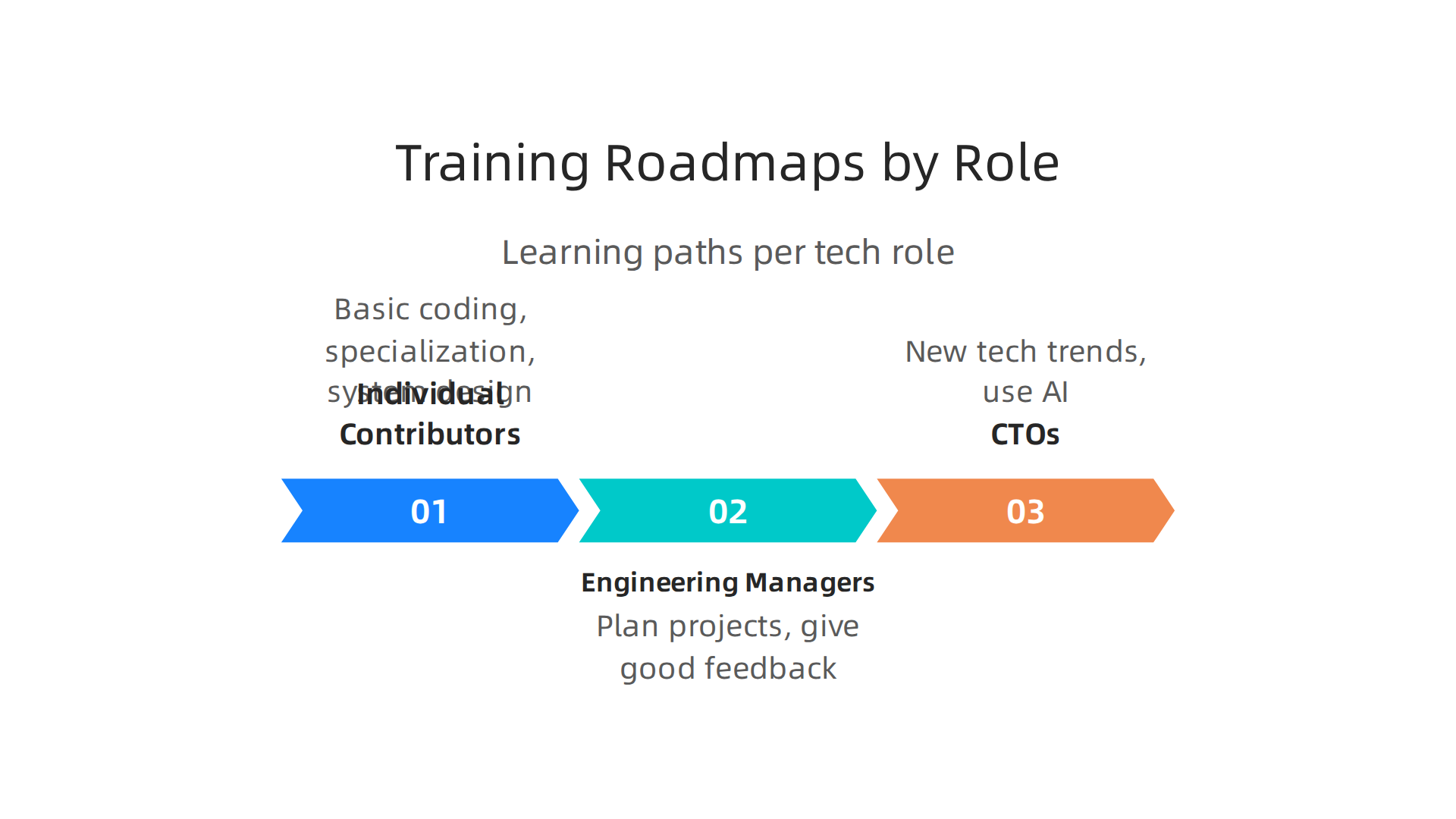
- For Individual Contributors (ICs):
- Entry-Level: If you’re just starting, focus on strong basic skills. This might mean taking beginner coding courses that teach you how to write code, solve problems, and understand basic computer science. Getting certifications can also help.
- Mid-Level: Once you know the basics, you can choose to specialize. Maybe you want to learn more about online software testing courses to find bugs, or become an expert in a certain programming language.
- Senior-Level: At this stage, you’re looking at bigger picture items. This could include learning how to design whole systems, lead other developers, or explore new technologies like advanced AI tools. You might also want to mentor newer team members.
- For Engineering Managers:
- Managers need skills to lead their teams well. This means training in how to plan projects, give good feedback, and help their team members grow. Programs that teach managers to be good trainers themselves, called "train the trainer" programs, can be very useful for sharing knowledge inside the company Train the Trainer: Effective Strategies for 2026.
- For CTOs (Chief Technology Officers):
- CTOs think about the future of technology for the whole company. Their training should focus on big ideas like new tech trends, how to use AI across all projects, and making smart choices about what tools and platforms the company uses. They also decide whether to build training in-house or buy it from outside. Companies often consider a mix of both, known as a hybrid approach Corporate AI Training: Build vs Buy vs Hybrid (2026).
A Checklist for Decision-Makers
When planning software development training, leaders need to make smart choices. Here’s a simple checklist:
- Budgeting: How much money can you spend on training? Make sure it’s enough to get good results.
- Vendor Selection: If you look for outside help, pick training partners who have a good track record. Ask to see examples of their past work.
- Internal vs. External Training: Should your own team teach, or should you hire experts from outside? Many companies find that a "blended learning" approach works best. This means combining online lessons with in-person workshops, which helps people learn skills faster Blended Training Blueprints: How to Combine ILT, Virtual, and Digital for Better Outcomes.
- Measuring Success: How will you know if the training worked? Look at things like how quickly developers finish tasks, how few bugs they create, or how happy they are with their new skills.
Staying updated with the latest in AI and technology is key for all these roles. Get clear daily AI updates from The AI Newsletter Worth Reading. This helps ensure that the chosen training paths keep your teams ahead in 2026.
Summary
This article explains why planned software development training is essential in 2026 and walks teams through what to teach, how to teach it, and how to measure results. It covers the biggest skill gaps—AI/ML, cloud-native architecture, DevOps/DevSecOps and SRE—and compares learning options from beginner coding courses and bootcamps to micro-credentials, apprenticeships and internal academies. The guide shows how to choose programs that match business goals, what to check in providers (instructors, hands-on practice, outcomes) and how to design curricula that move people from foundations to specialization. It also explains scalable delivery models (train-the-trainer, blended learning), the power of hands-on labs plus automated feedback, and practical ways to use AI safely in training. By following the advice here, engineering managers and individual contributors can build targeted learning paths, adopt AI-assisted study tools, and measure improvements in productivity and quality.